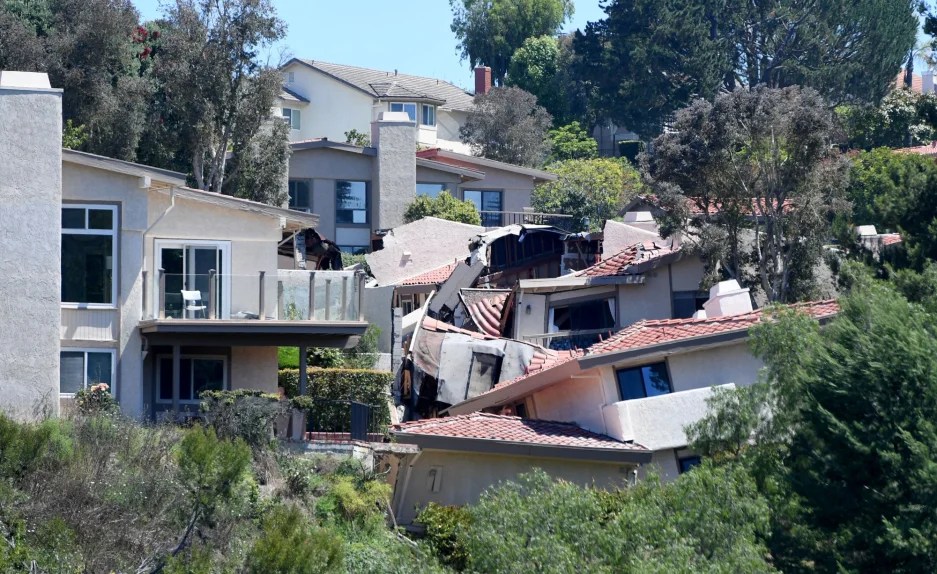
The July 2023 landslide that destroyed 12 homes and endangered at least 10 more on Peartree Lane in Rolling Hills Estates is a tragic but not unprecedented occurrence on the Palos Verdes Peninsula and nearby hillside areas.
The Peninsula once was an island surrounded by the Pacific Ocean. Its hills were formed by a seismic thrust roughly two million years ago. The waters north and east of it eventually receded, connecting the hills to the California mainland.
The Palos Verdes Fault traverses the area; in 2022, seismic experts estimated it capable of causing a quake as high as 7.8 in magnitude. The unstable nature of the Peninsula’s geology has resulted in often-devastating landslides, some of which have been caused by earth movements that have been progressing for thousands of years.
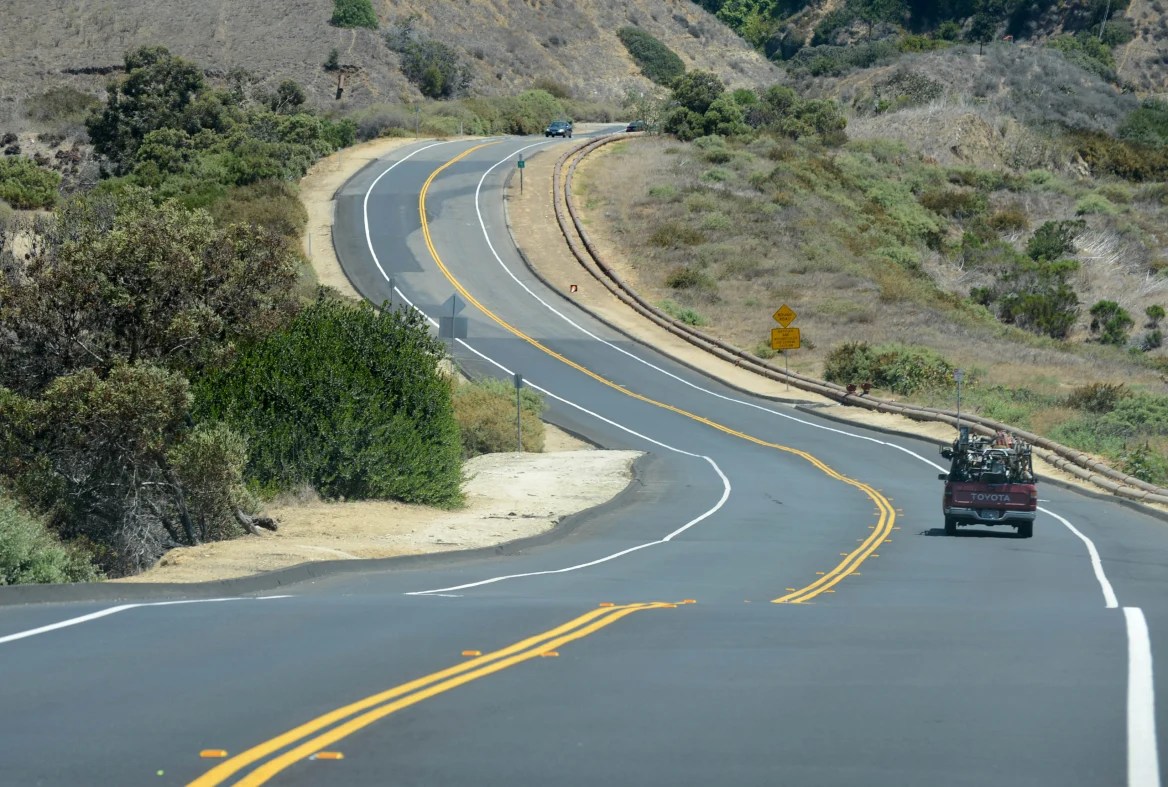
Geologists estimate that the Portuguese Bend landslide may be at least 5,000 years old. Road crews working on the extension of Crenshaw Blvd. southward noticed cracks in a road culvert above the upscale new Portuguese Bend Club housing development in August 1956.
The land was rapidly moving south, and the results were disastrous. Roughly 200,000 cubic yards of dirt gave way, eventually destroying 130 homes and portions of PV Drive South and Yacht Harbor Drive, the roadway inside the gates of the development. The one-time seaside paradise, opened with a star-studded gala just eight years earlier, would never be the same.
Residents won a $9.5 million judgment that claimed the Crenshaw roadwork exacerbated the slide. As a result, the southern extension of Crenshaw never was built; it ends just past Crest Road. To this day, the city of Rancho Palos Verdes spends a good portion of its annual budget repairing the ever-shifting surface of Palos Verdes Drive South in the area as a result of continual land movement.
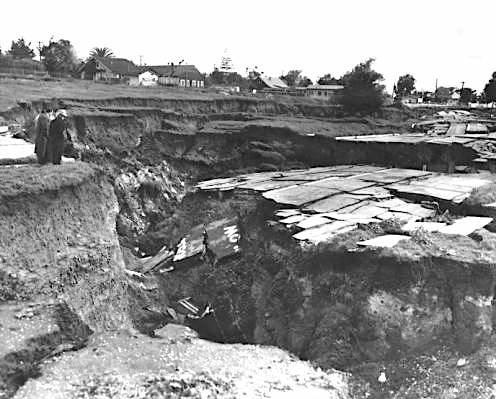
One of the earliest land movements to affect residents occurred at Point Fermin in San Pedro, just down the road from Portuguese Bend. Landowner and developer George Peck had begun building cliff-top homes on the site in the mid-1920s.
About a dozen homes had been built by Jan. 2, 1929, when engineers detected a movement of eight inches in cracks on the property south of Shepard St., just east of the Point Fermin Lighthouse. Several houses ultimately were lost, with at least two believed to have fallen into the sea.
A 1941 earthquake ended the possibility of erecting more houses in the area, and the rest of the planned development was never built. The abandoned area was cordoned off, and became the local landmark unofficially known as Sunken City.
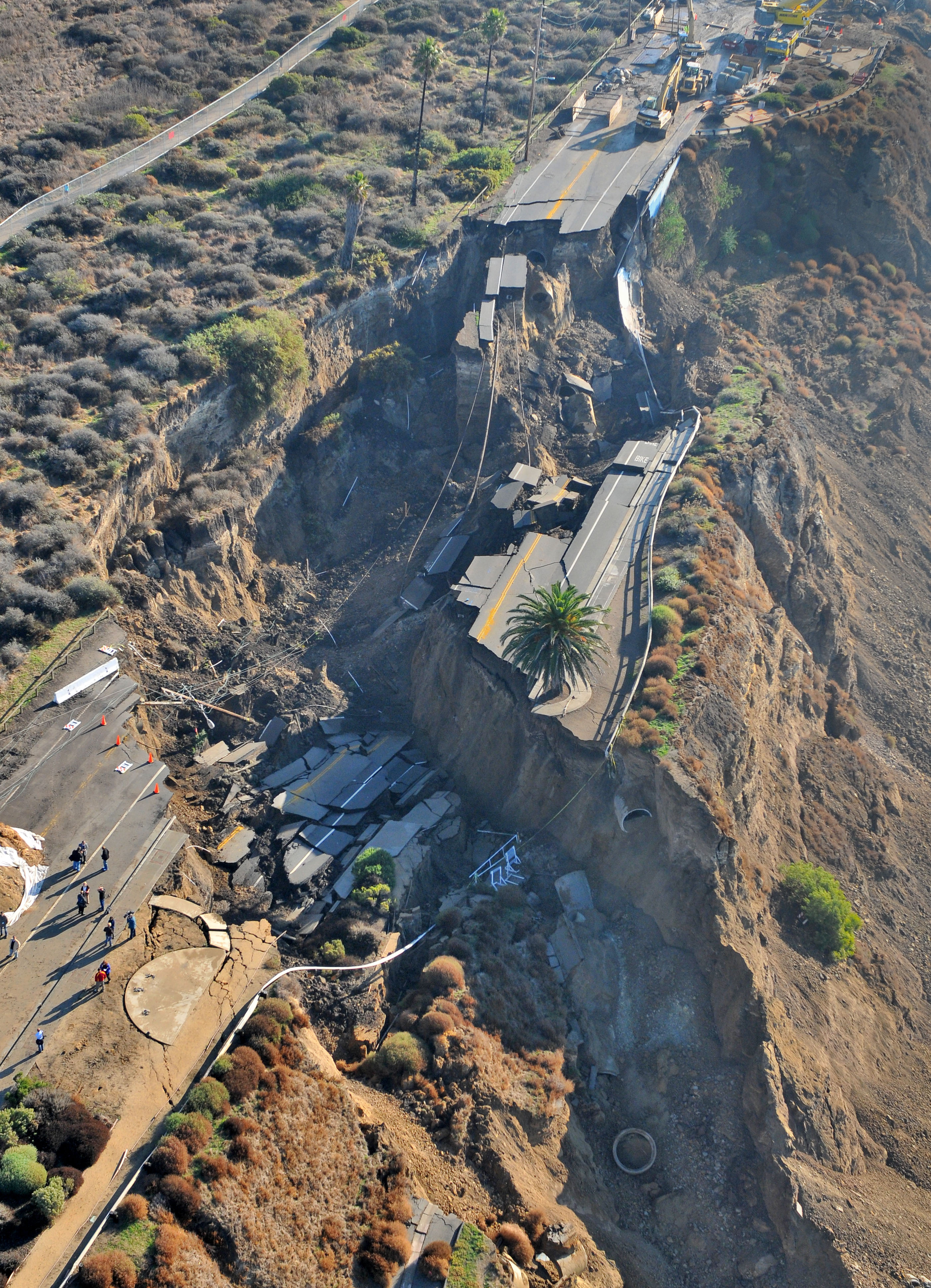
A major disaster occurred on Paseo del Mar a couple miles west of Sunken City on Nov. 20, 2011, when the White Point Landslide took down a huge chunk of the ocean bluffs and completely destroyed 400 feet of the roadway. Fortunately, no one was injured and no structures damaged. Almost a dozen years later, however, the affected stretch of road has yet to be repaired.
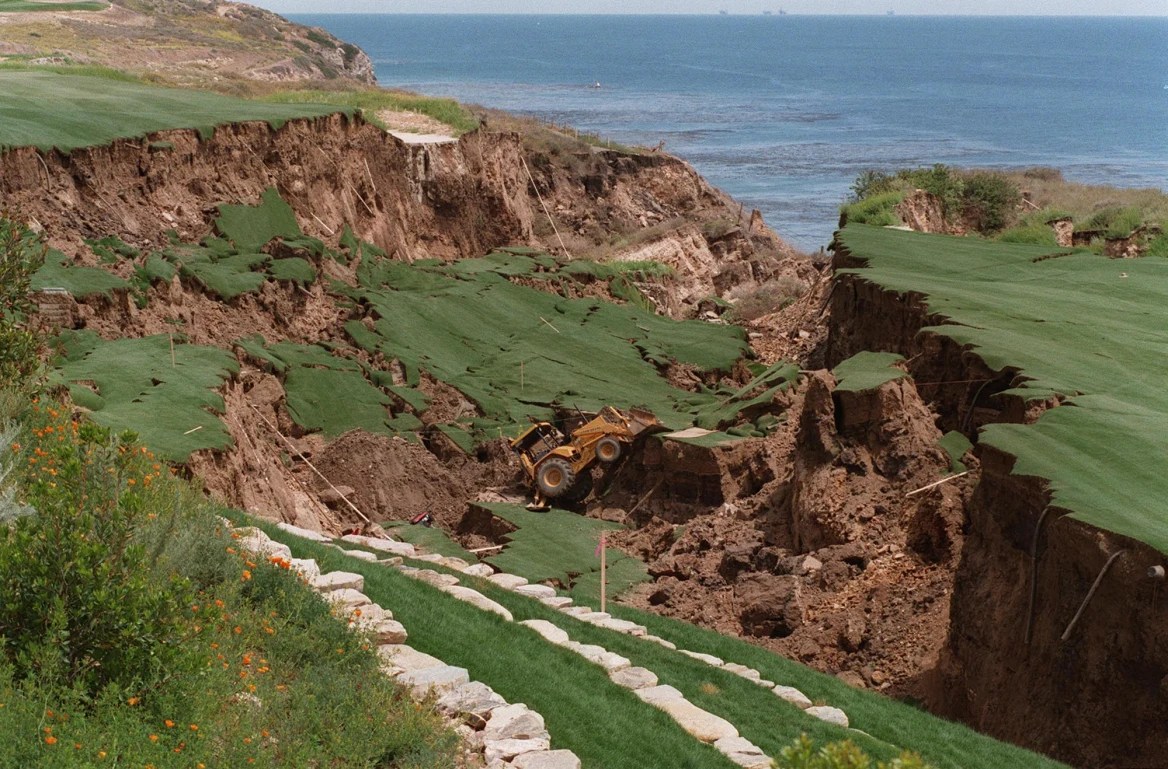
No one was injured during another landslide just up the coast at the under-construction Ocean Trails golf course in Rancho Palos Verdes on June 2, 1999. The slide, which completely destroyed the 18th hole, occurred just two weeks before the new course was slated to open. More than 80,000 pounds of earth slid toward the Pacific Ocean.
All work had to be halted while the cause of the 16-acre slide was determined. Results were inconclusive, with engineers mostly pointing toward general instability in the area, which lies about half a mile east of the Portuguese Bend slide area. Donald Trump bought the course in 2009, renaming it Trump National Golf Course, Los Angeles.
Smaller landslides on the Peninsula have had devastating results on houses in the area. A 1983 landslide in the Bluff Cove area of Palos Verdes Estates destroyed three houses and damaged several others. The city of PVE found the best resolution to the resulting lawsuits to be buying the seven damaged houses from their owners.
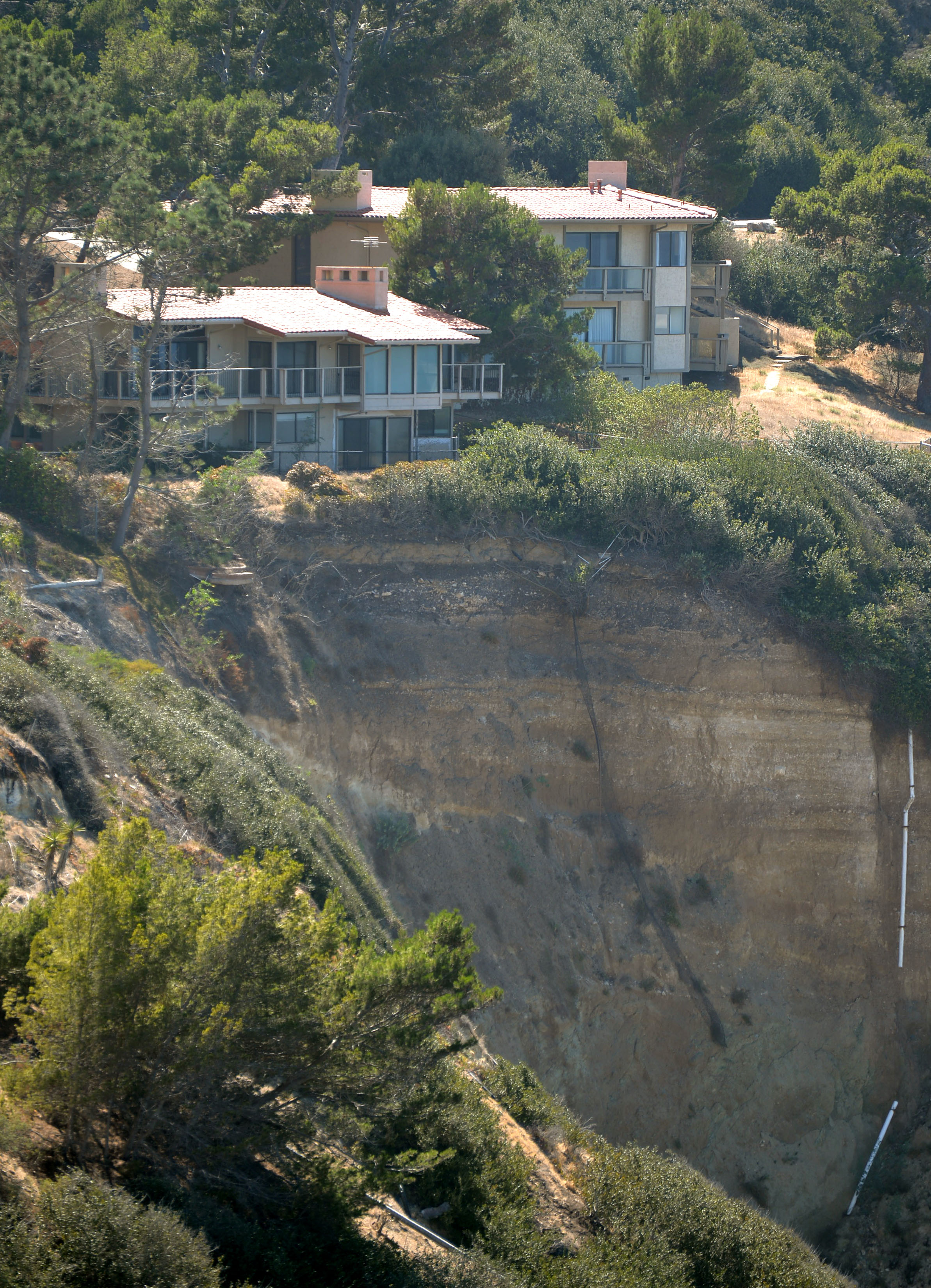
For several years, the city subsidized city employees, allowing them to live in the cracking structures to prevent vandals and squatters from occupying them. The seven houses finally were demolished in 2015 and the land converted to green space.
In 2005, a chunk of hillside in Rolling Hills fell 100 feet onto Poppy Trail, a curving street below. It blocked the road, leaving residents of eight multimillion-dollar homes stranded. It took years of lawsuits to straighten the situation out; in the meantime, the homeowners had to use four-wheel drive vehicles to navigate the slide.
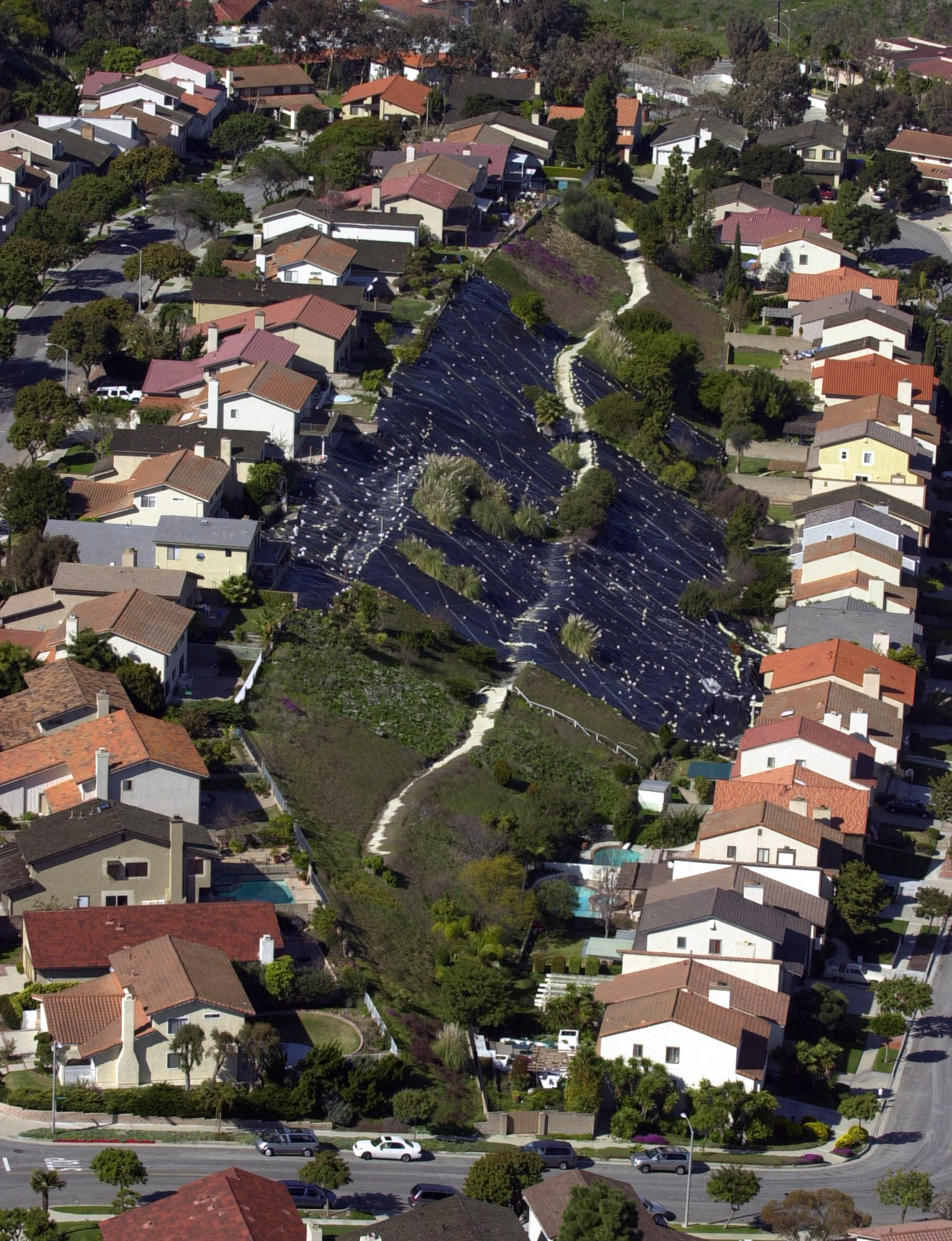
When the hillside began moving on Singingwood Drive and Carolwood Lane in southern Torrance in March 2001, nearly two dozen homes were threatened. Several were evacuated, and the city declared a state of emergency regarding the situation. Heavy rains sent walls of mud into homeowners’ backyards, and it took months of shoring up the hillside by city workers to allay the threat.
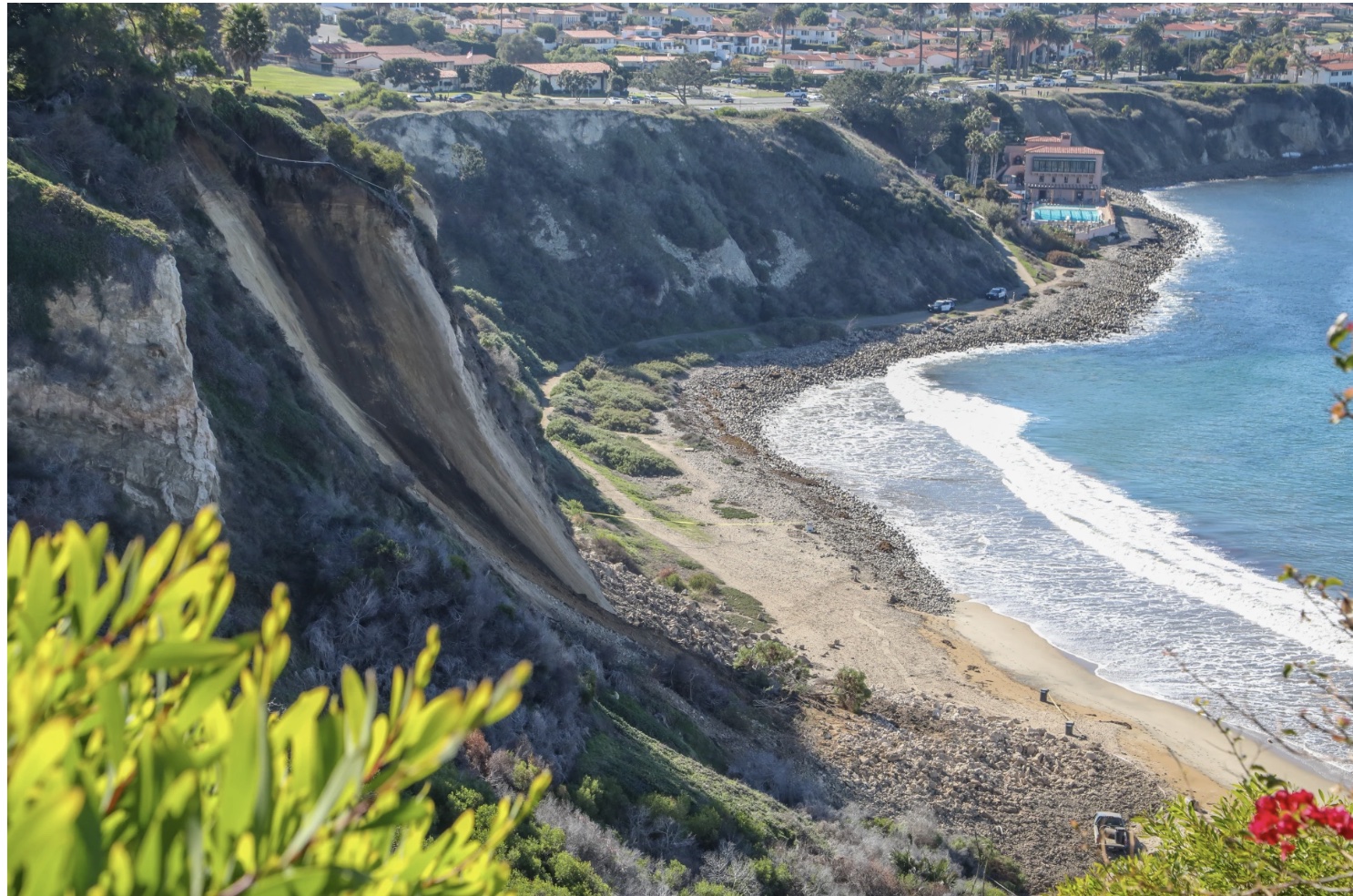
More recently, a 200-foot section of a Palos Verdes Peninsula hillside came crashing down onto Rat Beach on Dec. 9, 2022. The slide came down from an area near Rosita Place in Palos Verdes Estates near the city’s border with Torrance. Homeowners were evacuated temporarily, and the beach area was closed temporarily.
No one was injured, but an unoccupied Los Angeles County Beaches & Harbors truck parked below the cliff was battered by the onslaught, testimony to the dangers posed by geologic forces at work in unstable coastal hills.
Sources:
Daily Breeze archives.
“Landslide Inventory Map of the Palos Verdes Peninsula,” by Wayne D. Haydon, California Geological Survey, 2007.
Los Angeles Times archives.
Palos Verdes Peninsula News archives.