Relations between dockworkers in San Pedro and the police during the 1930s were more than just contentious. They often turned violent, and even deadly. The unionization of longshore workers at the port was then underway, and it had turned into a lengthy, often violent struggle.
Activist Harry Bridges began his labor organizing with the already established International Longshoremen’s Association (ILA) in the 1920s. His 1933 attempts to improve the brutal and downright dangerous working conditions on the L.A. Harbor docks were stonewalled by employers at the Port.
In May 1934, the local ILA chapter voted to strike. The shipping companies responded by organizing a group of 300 scab workers. Late in the evening of May 14, a group of bitterly resentful union men confronted the strikebreakers and police at Berth 145 in Wilmington, where the workers were quartered aboard a ship.
The scabs and police were armed, the confrontation quickly turned violent, and two local union members, recent San Pedro high graduate Dickie Parker, 20, and Lomita resident John Knudsen, 43, were shot and killed.
The confrontation was the precursor to “Bloody Thursday,” in San Francisco two months later. Violence broke out during a pro-labor march on city streets on July 5. Two union members were shot and killed. The strike finally was settled in the union’s favor in October 1934.
It became abundantly clear during all this unrest that the authorities sided with the employers at the ports, often supplying police muscle in addition to scab labor in attempts to break the unions. Union leaders and activists such as Bridges were uniformly denounced as being Communists, a charge that Bridges spent his lifetime denying. He would eventually break from the ILA and form the present-day International Longshore and Warehouse Union (ILWU), which he headed from 1938-1977.
Into this fractious environment stepped our two protagonists: union member and sometimes ship’s cook Norman “Big Bill” Gregg and LAPD Patrolman William H. Redding.
Gregg, 40, often frequented the bars and cafes on San Pedro’s raucous Beacon St., home to notorious joints such as Shanghai Red Cafe at Fifth and Beacon. He’d had a couple prior run-ins with the local law. In 1934, he was arrested during a gambling raid on Beacon St., and was later arrested and cleared of a battery charge against a woman resisting his advances in a Beacon St. tavern.
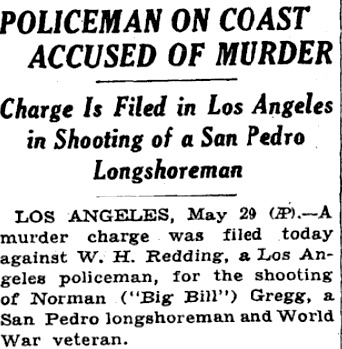
But, according to the San Pedro News Pilot, Gregg was “prominent and generally well-liked” along the San Pedro waterfront. The World War I veteran had lived at 1022 W. Santa Cruz St. with his mother, Bertha, and sister, Myrtle, for four years.
Patrolman Redding claimed that he encountered Gregg annoying Lucille Wisberger, a housewife who had come to the Log Cabin Cafe with a friend. When he intervened and ordered Gregg to get away from Wisberger, Gregg grabbed the officer’s blackjack and hit him with it.
He then ran outside to his car and tried to get his gun out of the glove compartment. Redding followed him, claiming that Gregg then moved menacingly toward him with one hand behind his back. “Take another step and I’ll shoot,” Redding said. Gregg kept coming, so Redding fired once, and then twice more as Gregg fell.
Other witnesses who supported Gregg saw it differently, saying that during the initial scuffle in the cafe, Gregg took away Redding’s blackjack and threw it outside after Redding hit him on the head with it. After the dispute moved outdoors, Gregg later approached Redding in the street with both hands empty at his sides before being shot three times by the officer.
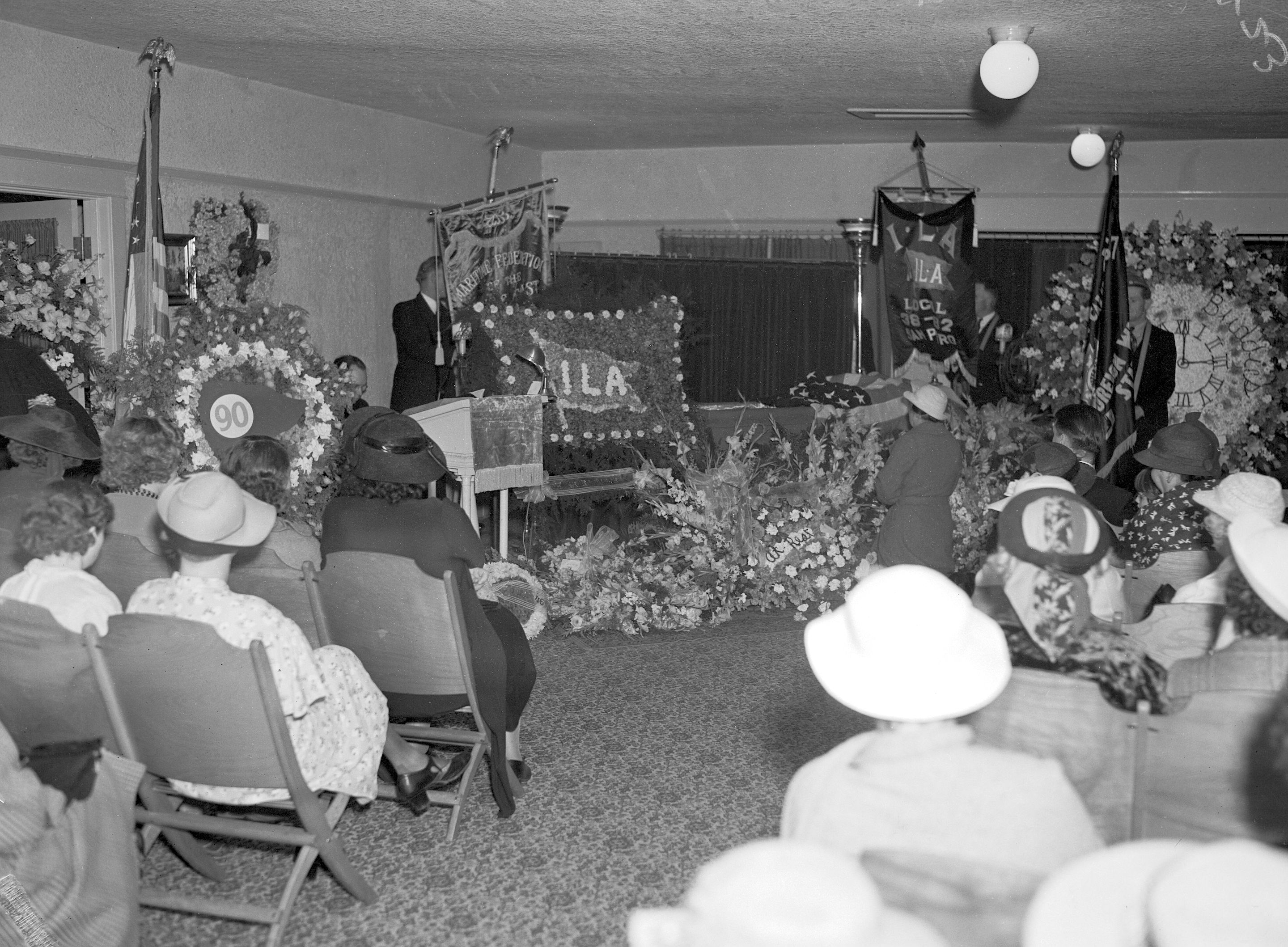
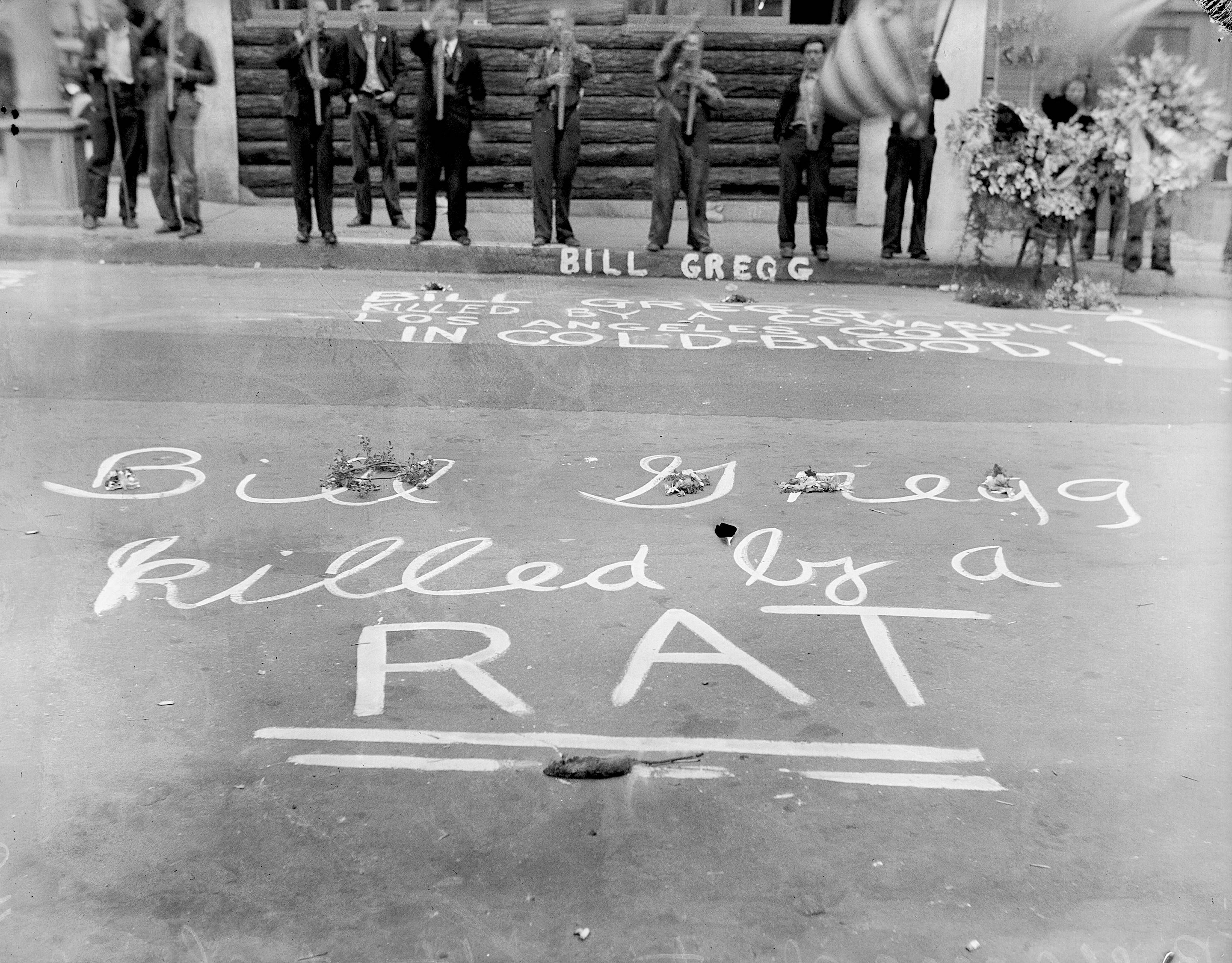
Union members were outraged by the killing. More than 3,000 of them assembled at the Wilmington Bowl the next day to express their indignation at what they saw as the unjustified slaying of one of their own. Anti-police sentiment ran high.
The union basically had shut down the town that morning. All cargo handling stopped, buses stopped running, and many union-staffed stores and restaurants closed down. The next day, a murder charge was filed against Redding. County Coroner Frank Nance then sent the case to the grand jury for investigation.
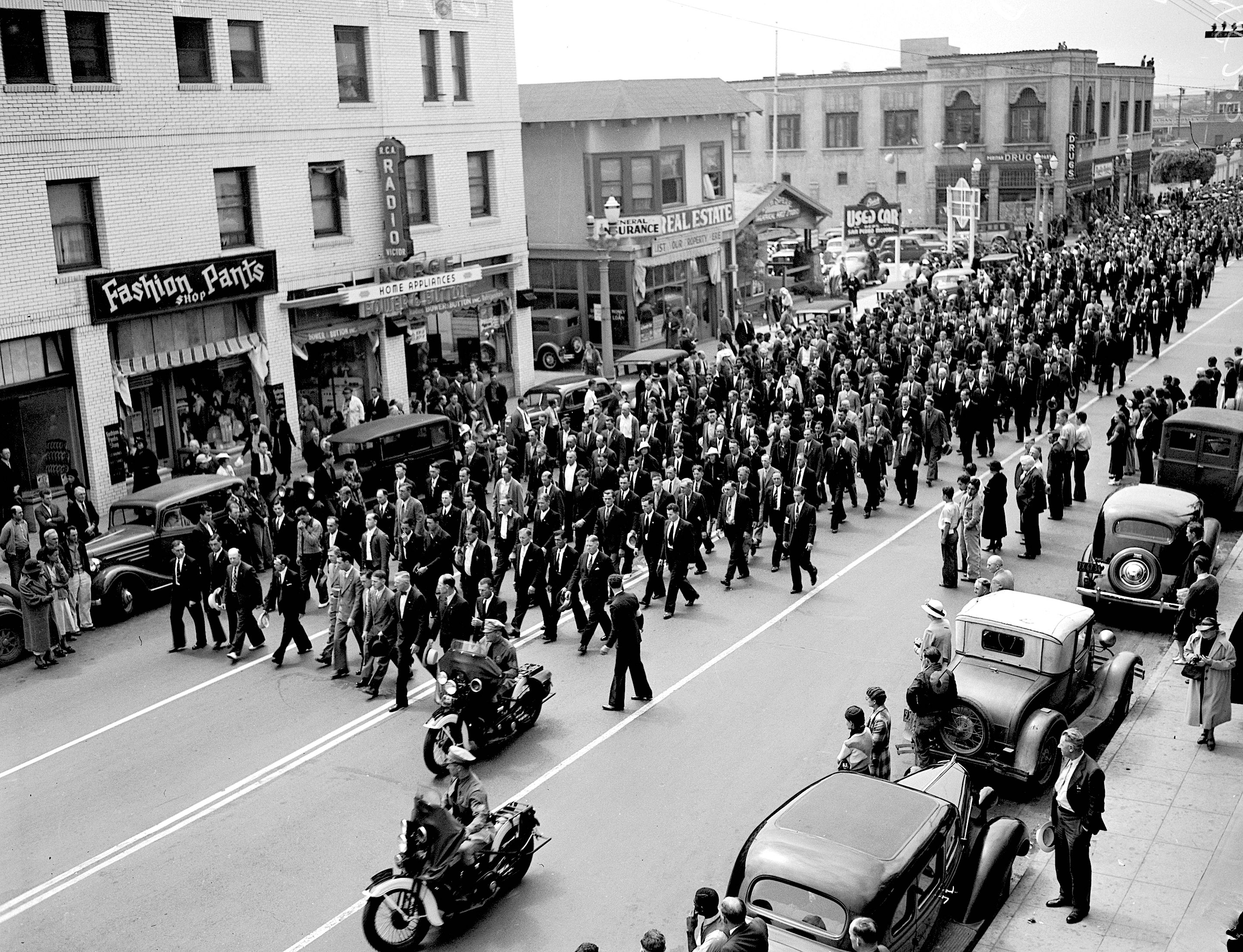
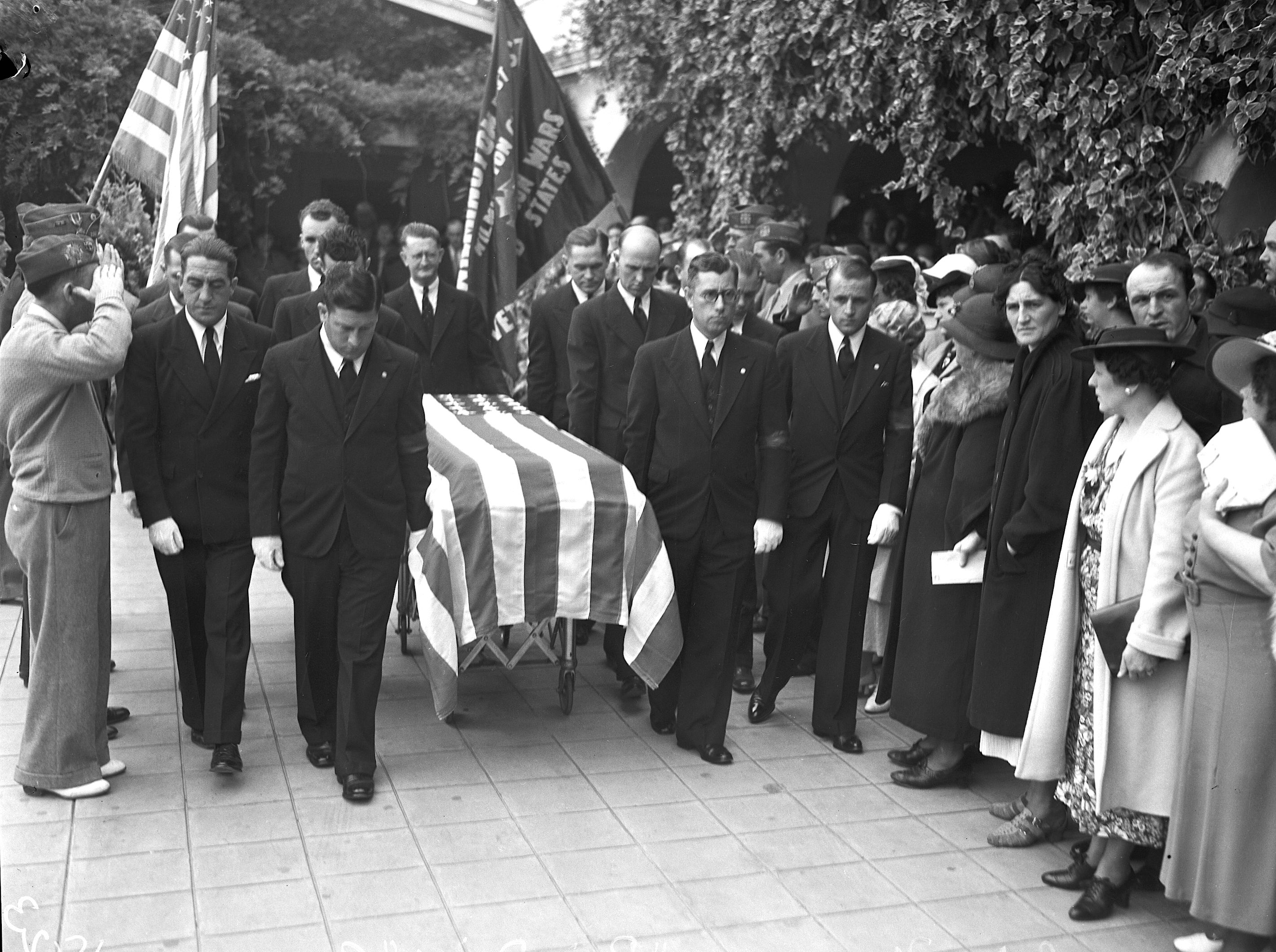
On June 2, thousands of union members marched in Redding’s funeral procession on Pacific St. from Ninth to First streets before getting in their cars to attend his burial at the Veterans Administration cemetery in Westwood. At least 50 additional policemen were called to the area as a precaution, but the march was peaceful.
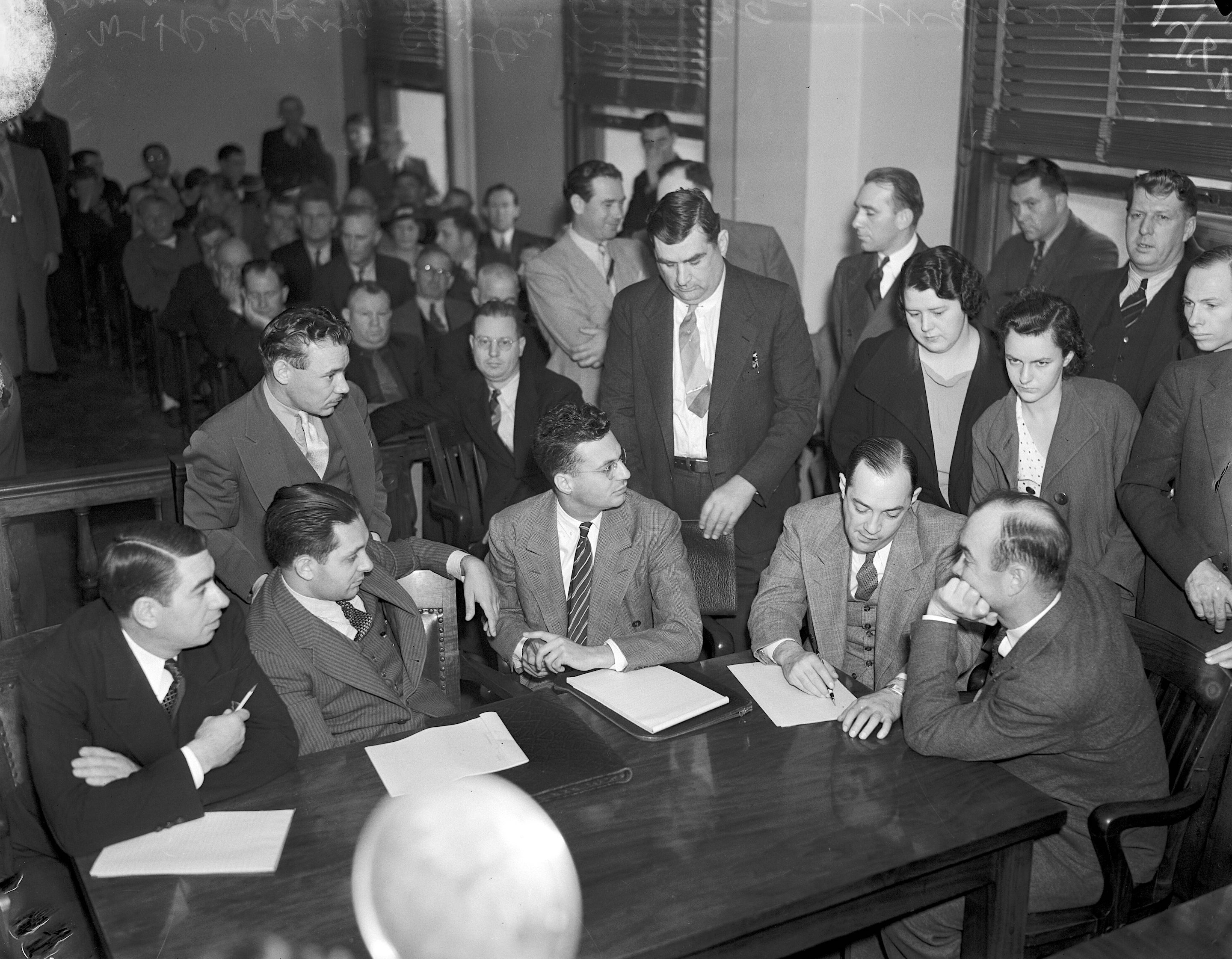
Testimony at the grand jury inquiry into the shooting was at turns both heated and contradictory, with Gregg supporters telling his side, and the police supporting Redding’s version.
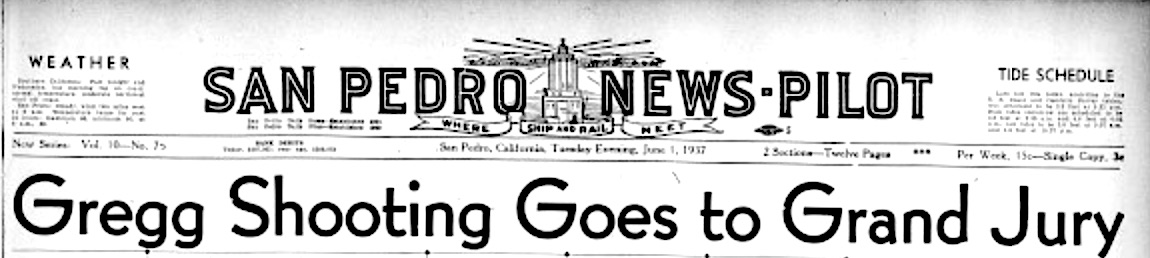
Ultimately, the inquest ended on June 7, when all charges against Redding were dropped. The union, convinced that the case against the officer was being whitewashed by the courts, appealed to both the California state attorney general and L.A. Mayor Frank Shaw, neither of whom chose to reopen the matter. (A year later, Shaw became the first mayor of a large U.S. city to be recalled from office on corruption charges.)
A year later, on Memorial Day, 1938, the longshore union held a five-minute work stoppage in honor of the deaths of Gregg, Parker and Knudsen. 20 LAPD officers were summoned to Fifth and Beacon as a precautionary measure, but union leaders assured them no demonstration was planned. Police still barred union members from placing memorial wreaths on the site of Gregg’s shooting, however.
Sources:
Los Angeles Times archives.
New York Times archives.
Port of Los Angeles: An Illustrated History from 1850 to 1945, by Ernest Marquez and Veronique de Turenne, Angel City Press, 2008.
San Pedro News Pilot archives.