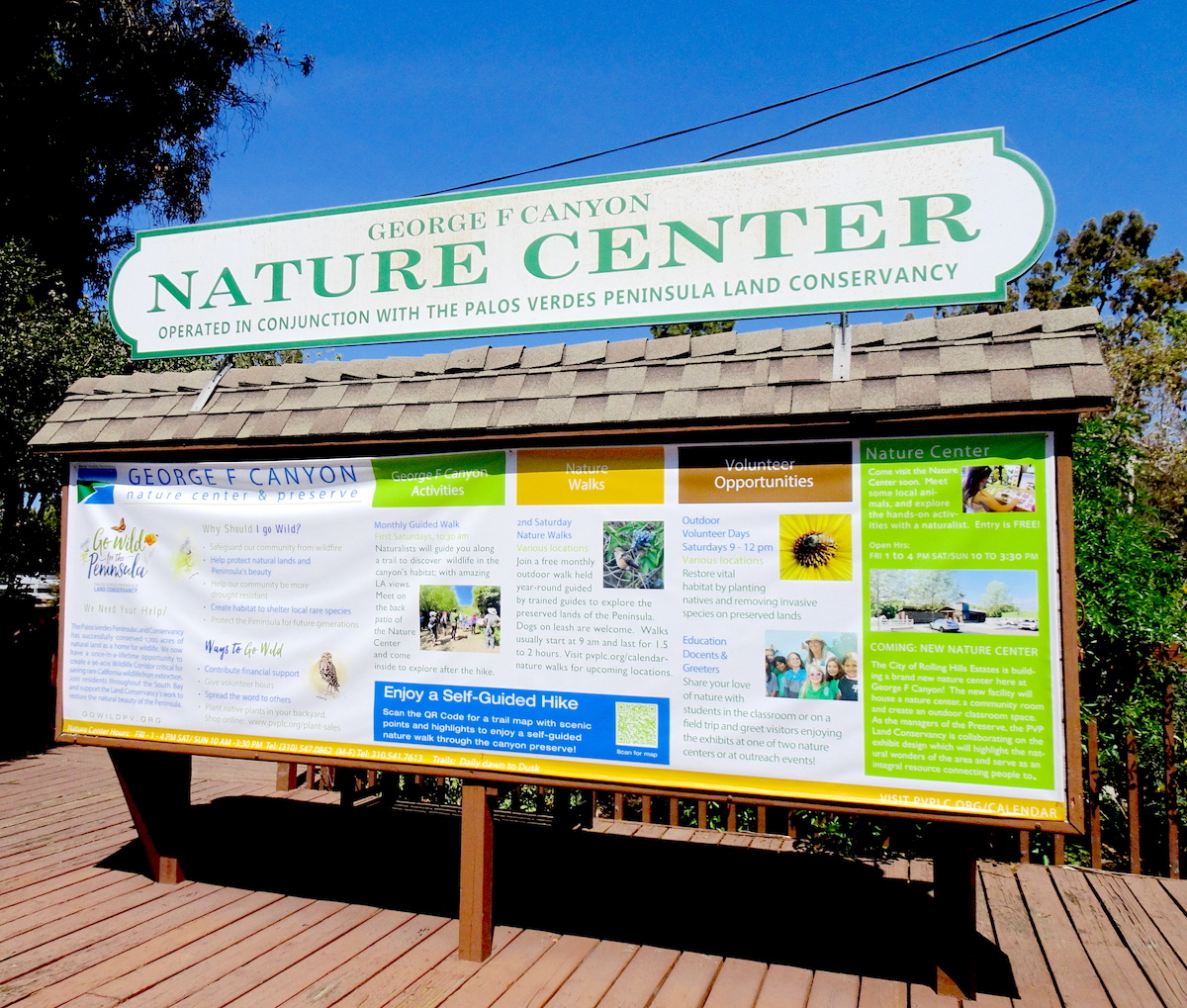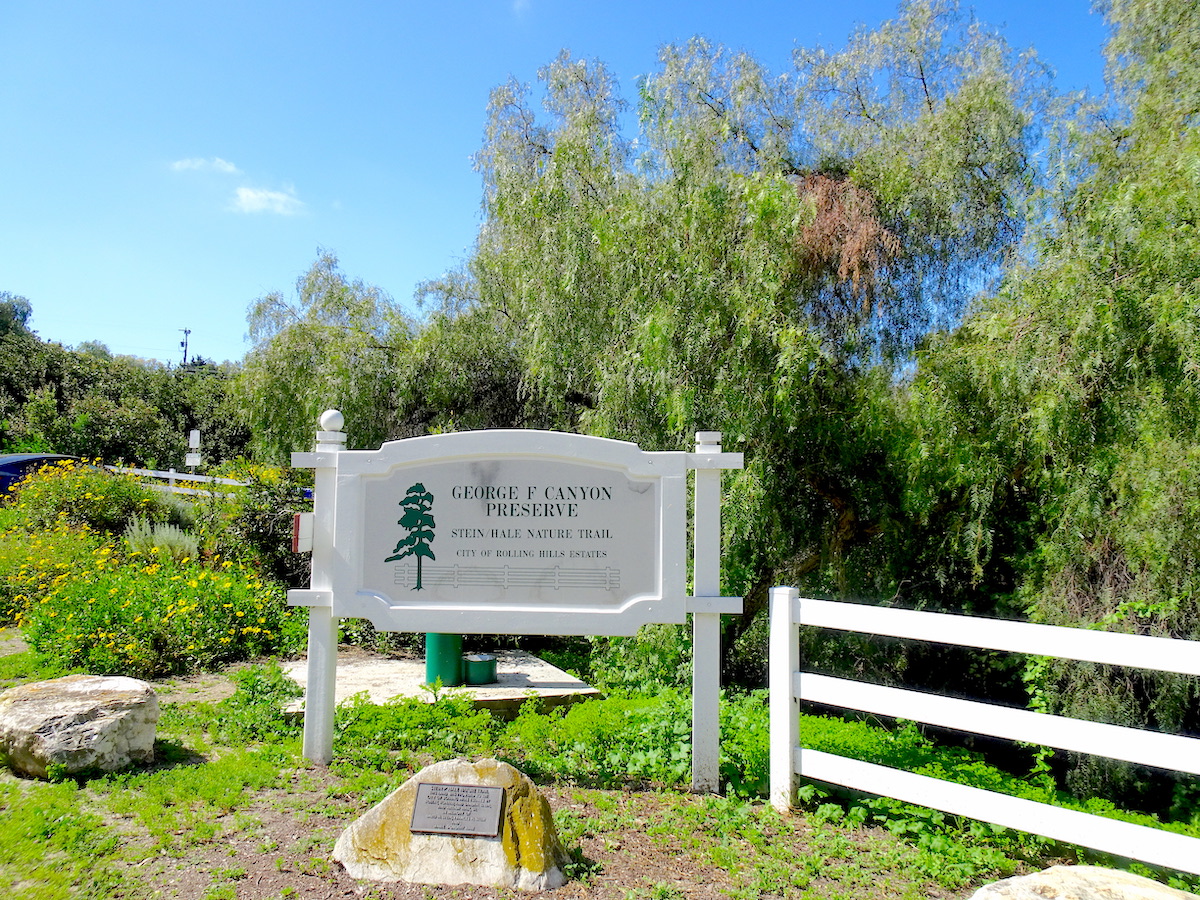
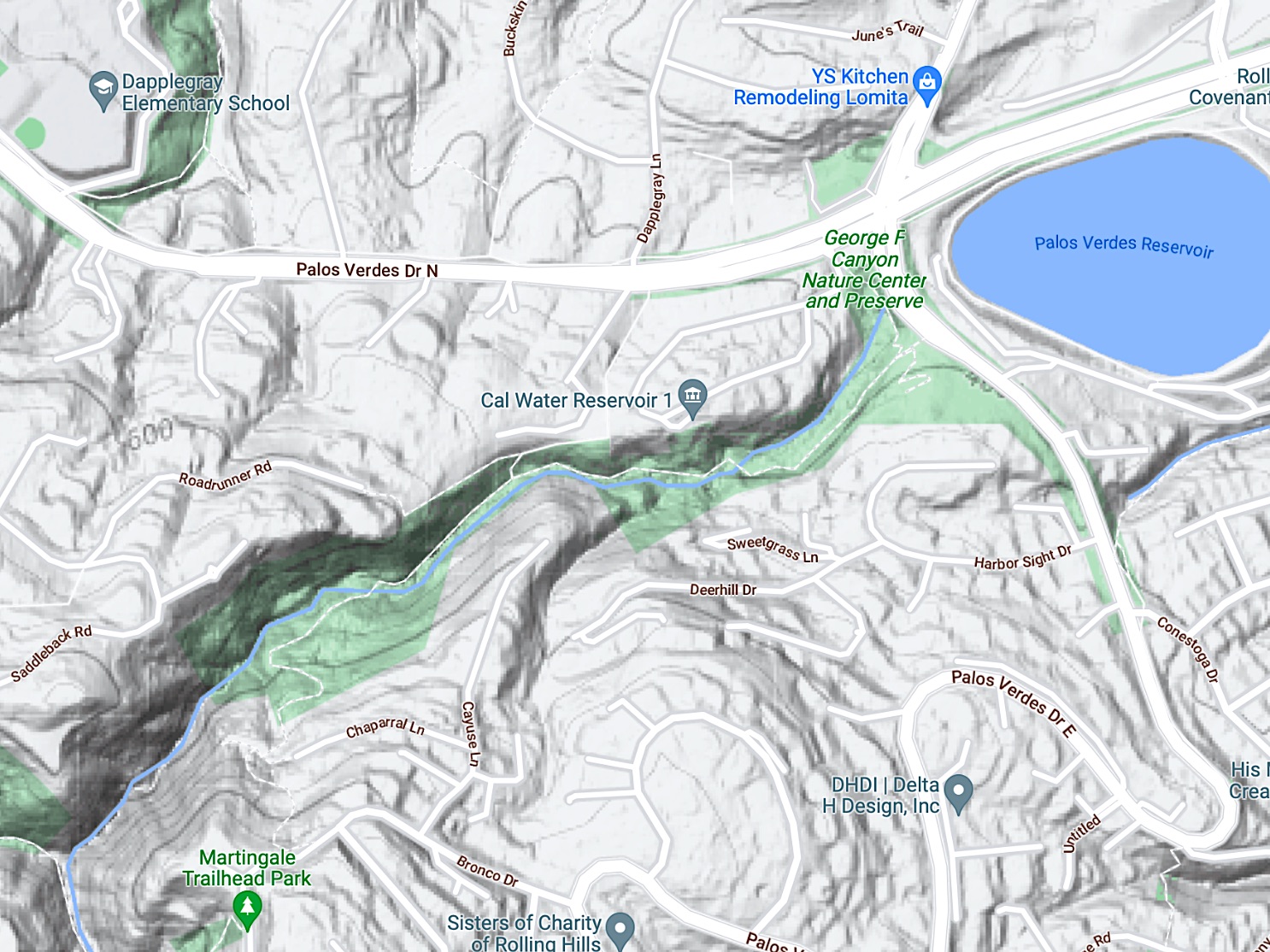
No one knows definitively why George F Canyon, which runs west from Palos Verdes Drive East in Rolling Hills Estates to the Rolling Hills border, officially has no period after the “F” in its name.
In addition, no one seems quite sure as to whom “George F” refers. Several theories on both have been put forth. A Daily Breeze story from Feb. 17, 2011, offered two:
“Theory No. 1: Whoever transcribed the name on an early topographical map meant to honor George S. Bixby, an early rancher who once owned vast tracts of land in the area. However, for some unknown reason, the middle initial is an ‘F’ and the last name is missing altogether.
Theory No. 2: The canyon is named after George F. Vickery, a San Pedro rancher who once grazed cattle on the slopes of the Palos Verdes Peninsula.”
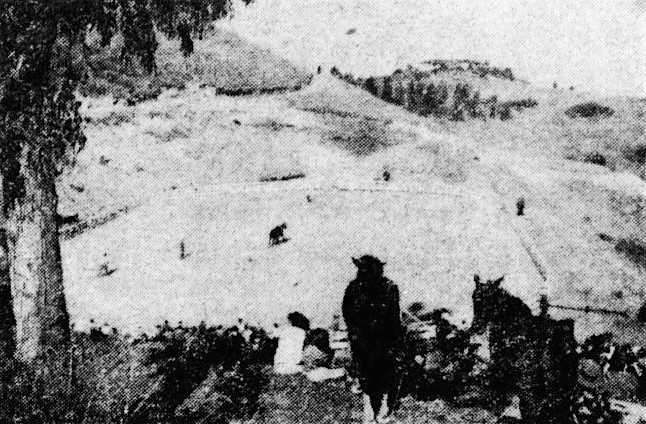
However it happened, the name has been used without the period since before any of the cities on the Palos Verdes Peninsula were incorporated. According to Torrance Herald issues dating as far back as 1922, George F Canyon, then undeveloped, was a favorite hiking spot for scouting groups, who used the area when testing their outdoor skills.
During the South Bay / Harbor Area oil boom of the 1920s and 1930s, at least 18 oil wells were drilled at various spots on the Palos Verdes Peninsula, including one in George F Canyon in 1937. Unfortunately, or fortunately, depending on your point of view, “Oil men reported they did not find the results encouraging,” according to the Palos Verdes Peninsula News.
In 1942, three Lomita boys hiking in the canyon found an unidentified skeleton after one of them saw a partially-buried shoe in a ravine in the canyon where grading work was being done. Authorities determined the man had been buried there for about 20 years and his death did not appear to be violent. He was never identified.
In May 1943, the Harbor Area Coordinating Council, a group of local civic organizations and leaders, proposed building a summer camp in the canyon to be used by youth groups. The plans never came to fruition.
George F Canyon has always been popular with horseback riders on the Hill. In 1956, the Caballeros Riding Club built a riding circle near the western end of the canyon near Saddleback Road in Rolling Hills in order to take advantage of the then-newly revamped trail through the canyon.
Nature lovers and conservationists had long eyed the canyon as an area that needed to be preserved. In December 1982, the owners of the land, Robert S. Stein, Ronald S. Stein, Sandra A. Stein Haveson and Arthur D. Hale Sr., agreed to donate the land to the city of Rolling Hills Estates.
The city agreed to pay off the $70,000 mortgage on the land, and declared it open space for the purpose of transforming it into a nature preserve. The city also purchased an adjacent parcel of land along Palos Verdes Drive East to the Palos Verdes Drive North intersection from the Metropolitan Water District on which it planned to build a nature center, parking lot, and trailhead.
With help from the Palos Verdes Peninsula Land Conservancy, formed in 1988, the city began the process of restoring the area. On May 12, 1993, the George F Canyon Nature Walk was dedicated. It would later be renamed the Stein-Hale Nature Trail in honor of the canyon’s former landowners.
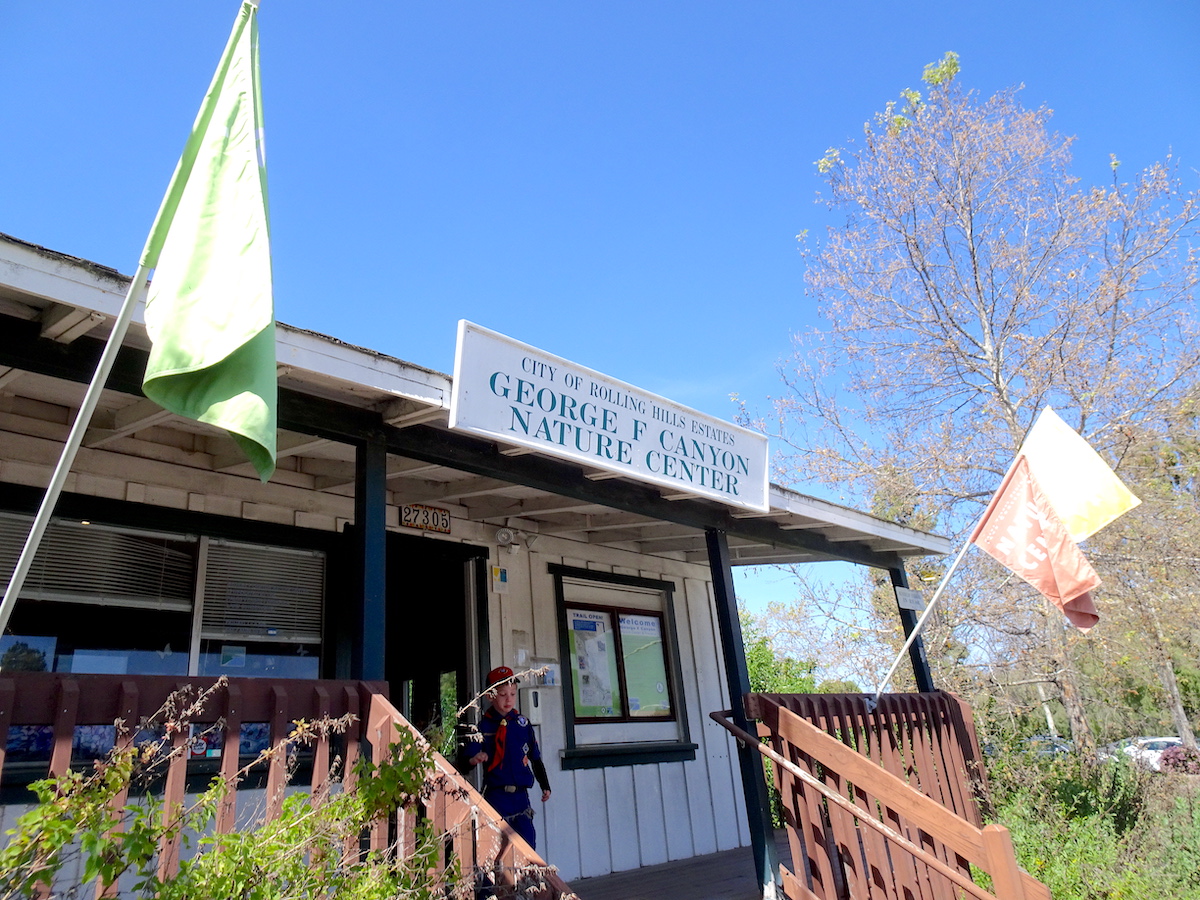
In 1994, RHE residents passed a bond issue that enabled the city to build the $150,000 nature center and to hire naturalist Aileen Bevan from the PVP Land Conservancy, which had been put in charge of management and operation of the facility.
Bevan pointed out to Daily Breeze reporter Diana Chapman in 1996 that, unlike much of the Peninsula, the canyon contained mostly native plants, in addition to the only year-round aboveground stream in the area.
Wildlife is abundant. The area supports habitats for sparrows, warblers, Allen’s and Anna’s hummingbirds, skunks, opossums, raccoons, foxes and several other species. Over the years, volunteers have worked doggedly to remove non-native plants and restore native ones.
The canyon’s natural vegetation has been described as being a combination of riparian willow and coastal sage scrub types. (Riparian refers to the varieties of flora found on and near riverbanks.) The recent rainy season has led to exceptionally lush beds of greenery in the Preserve.
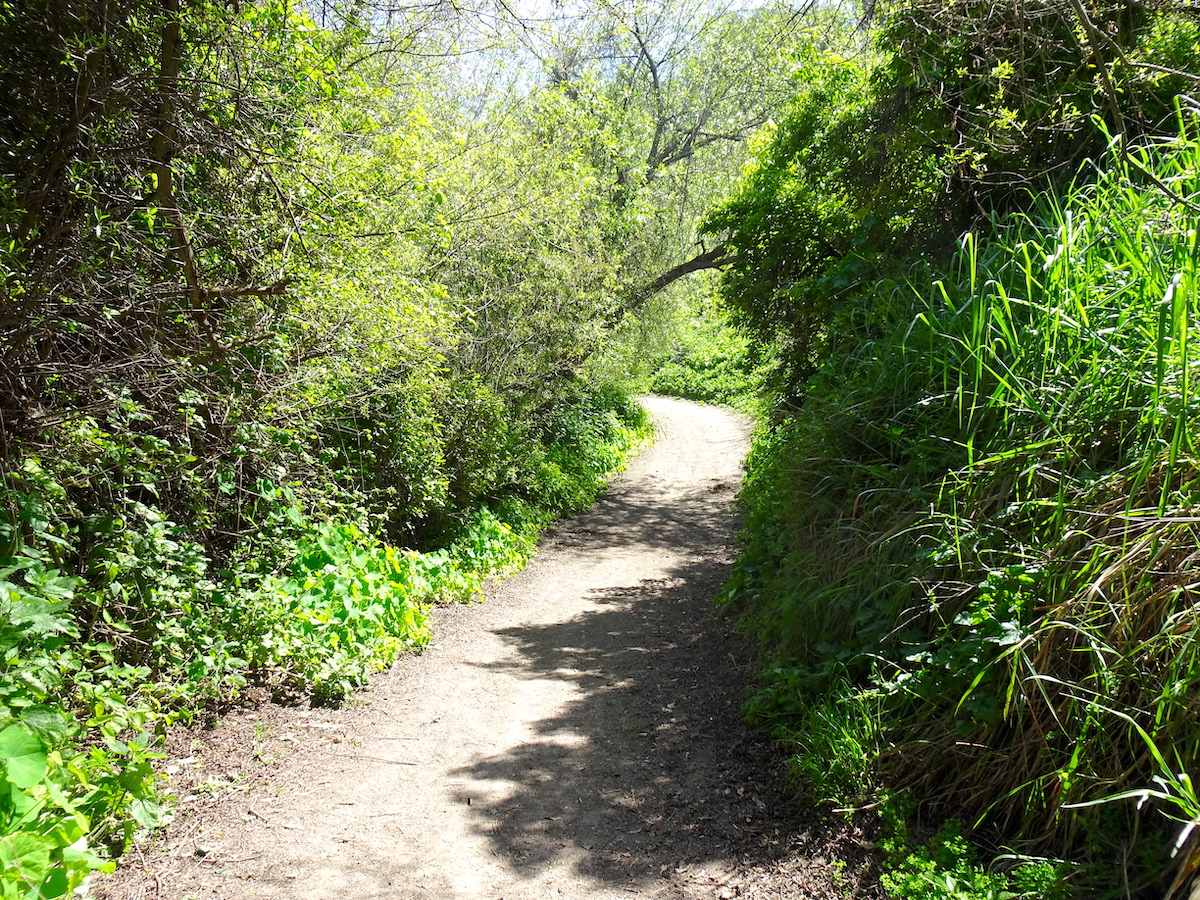
On June 1, 1996, the George F Canyon Nature Center opened on the southwest corner of Palos Verdes Drive North and PV Drive East. Its employees and docents regularly conduct nature walks and hikes in the 51-acre Preserve. Hikers are not permitted on the grounds after dark, but the Nature Center does schedule regular moonlight walks as well.
In 2016, the PVP Land Conservancy added to the Preserve by acquiring an additional 15 acres at the canyon’s western end.
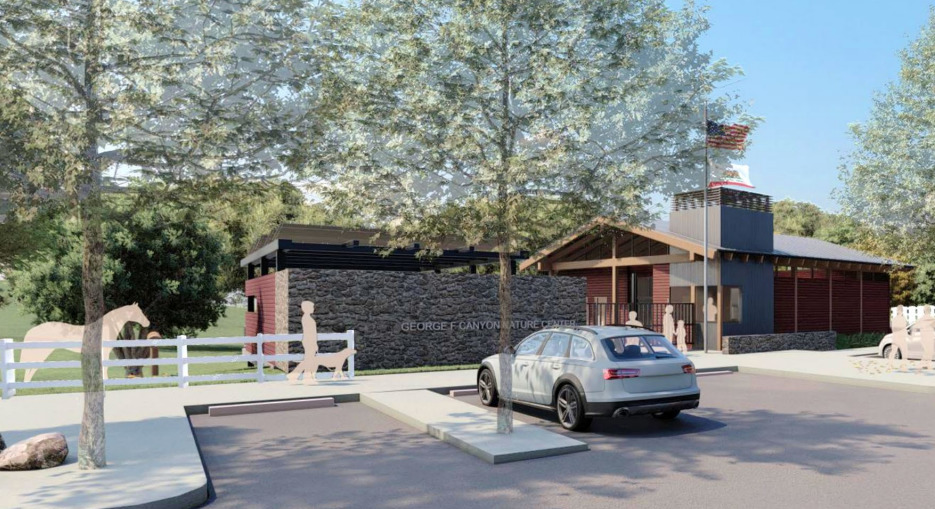
In recent years, RHE has been examining the possibility of replacing the park’s small Nature Center with a new and larger building. In September 2022, it announced that it will receive $1.2 million in state funds towards the building of the planned $2 million, 3,300-square-foot facility, which would include a large meeting room and a covered outdoor classroom space. Under the plans, the current Nature Center would be torn down.
The city also has earmarked some of its own funds to help pay for the new center. No timetable has been given for its construction and completion.
Sources:
Daily Breeze archives.
George F Canyon Nature Center & Preserve brochure, Palos Verdes Peninsula Land Conservancy.
“George F Canyon Nature Center & Stein-Hale Nature Trail,” City of Rolling Hills Estates website.
Los Angeles Times archives.
Palos Verdes Peninsula News archives.
San Pedro News Pilot archives.