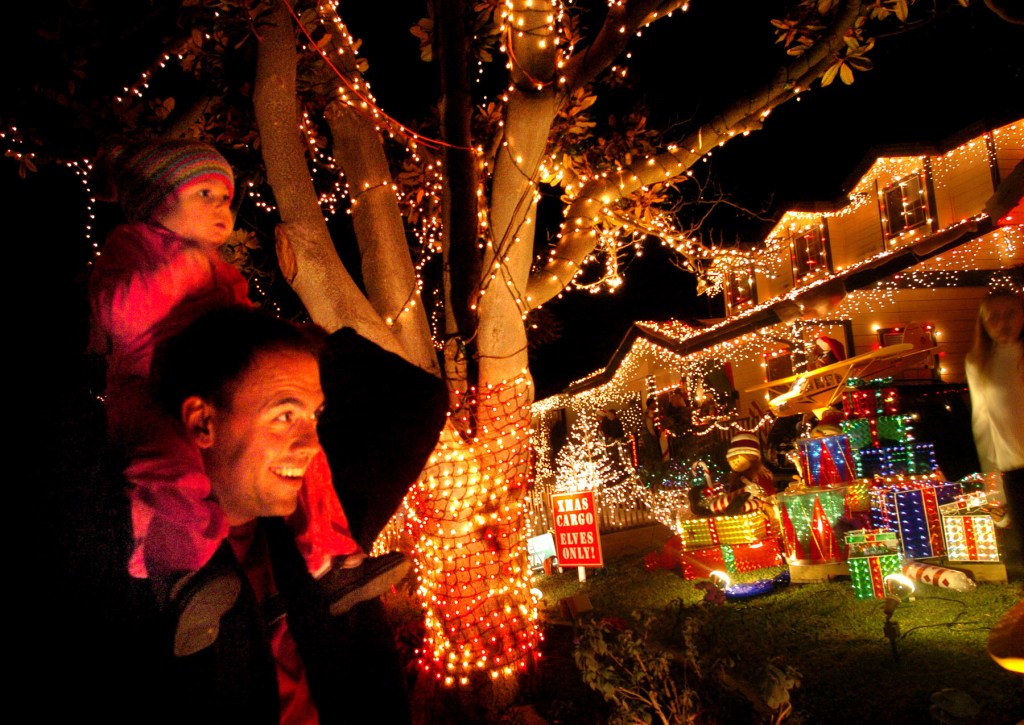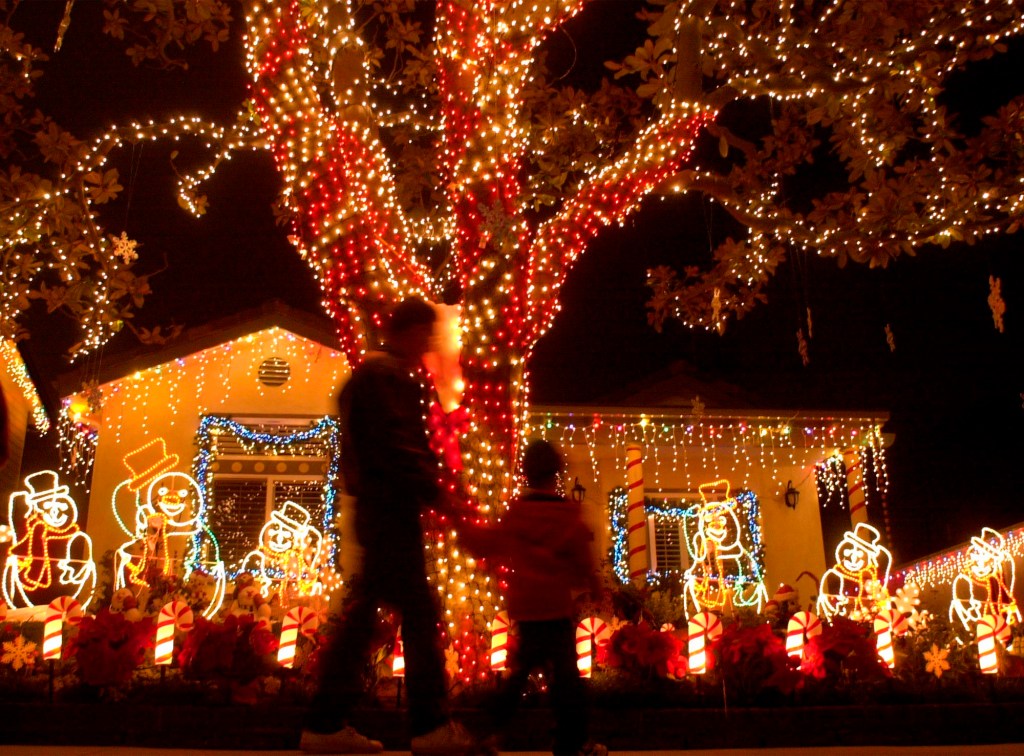
Torrance’s Sleepy Hollow Christmas lights and decorations displays perennially draw huge, traffic-stopping crowds to the city’s Seaside Ranchos area, and have done so since the early 1980s.
But they’re not the oldest neighborhood holiday displays in the South Bay. That distinction belongs to Candy Cane Lane, a cul-de-sac street in El Segundo with 26 houses on it.
The 1200 block of East Acacia Avenue in the city has been done up with Christmas finery ever since 1949, with two exceptions: a multiyear break that began in 1972 with the onset of the energy crisis, and 2020 festivities limited due to the COVID-19 pandemic.
In December 1949, shortly after the Acacia Avenue cul-de-sac segment was built and developed into single-family homes, resident Kenneth Bailey decided to plant a Christmas tree at the end of the street and decorate it with lights and ornaments. His communal tree inspired residents to band together and decorate their houses on the street.
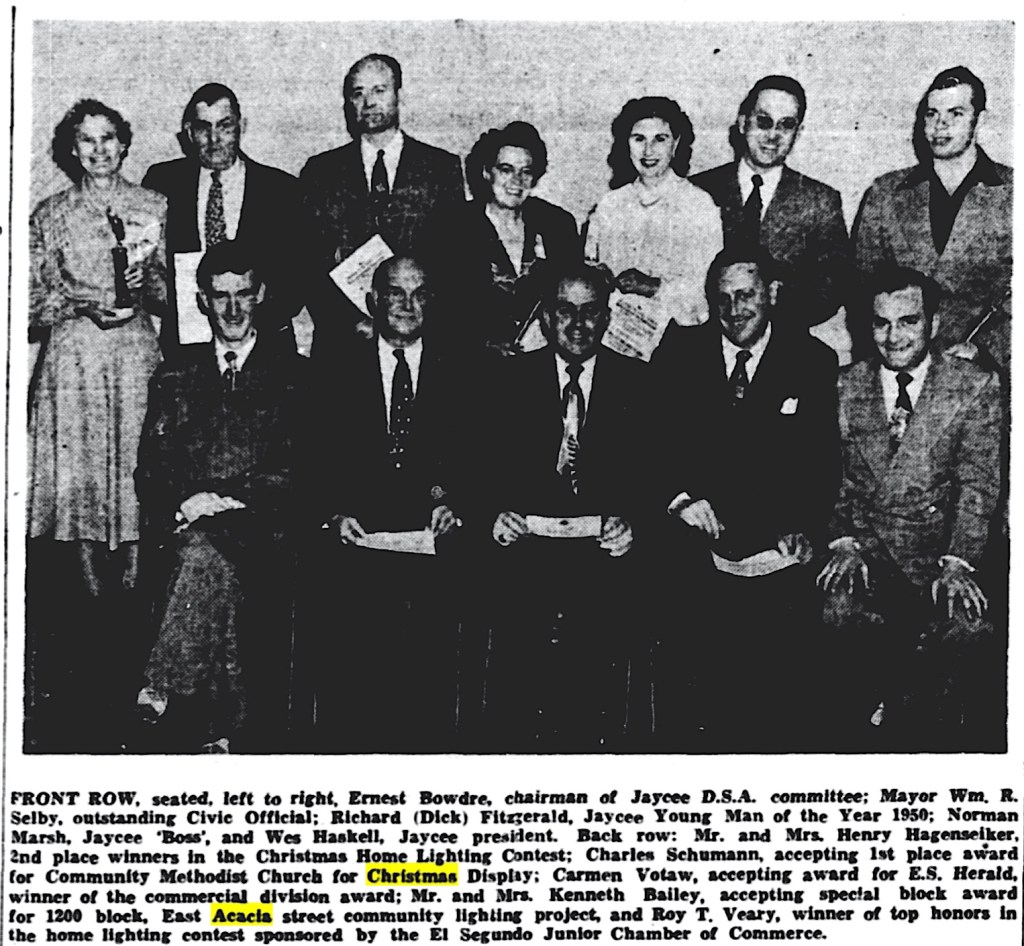
Bailey’s decorated tree at the end of the block returned during the 1950 holiday season, with the inscription, “Season’s Greetings from the Neighbors.” He and his wife were present to accept a special award for the block from the El Segundo Jaycees at the group’s inaugural holiday decorations award dinner in January 1951.
Candy Cane Lane, which was referred to in some early news stories as “Santa Claus Lane,” continued to grow in popularity throughout the 1950s. Many houses on adjoining streets began participating in the decorating frenzy, and neighborhood fathers took turns dressing up as Santa Claus and handing out candy to visiting children.
After North American Aviation built its general offices just east of Candy Cane Lane in 1957, the company began sponsoring and decorating the now-traditional Christmas tree at the dead end of East Acacia. By 1961, the city of El Segundo reported that 11,311 cars had passed through the holiday display area.
Seven years after El Segundo’s Candy Cane Lane began, one Torrance resident decided he liked the idea well enough to start something similar in his city. In 1956, Chuck Schoendienst fashioned an outdoor nativity scene on Toucan St., located a few blocks southwest of the intersection of Hawthorne Blvd. and 190th St. He followed that with themed displays every year for the next five years.
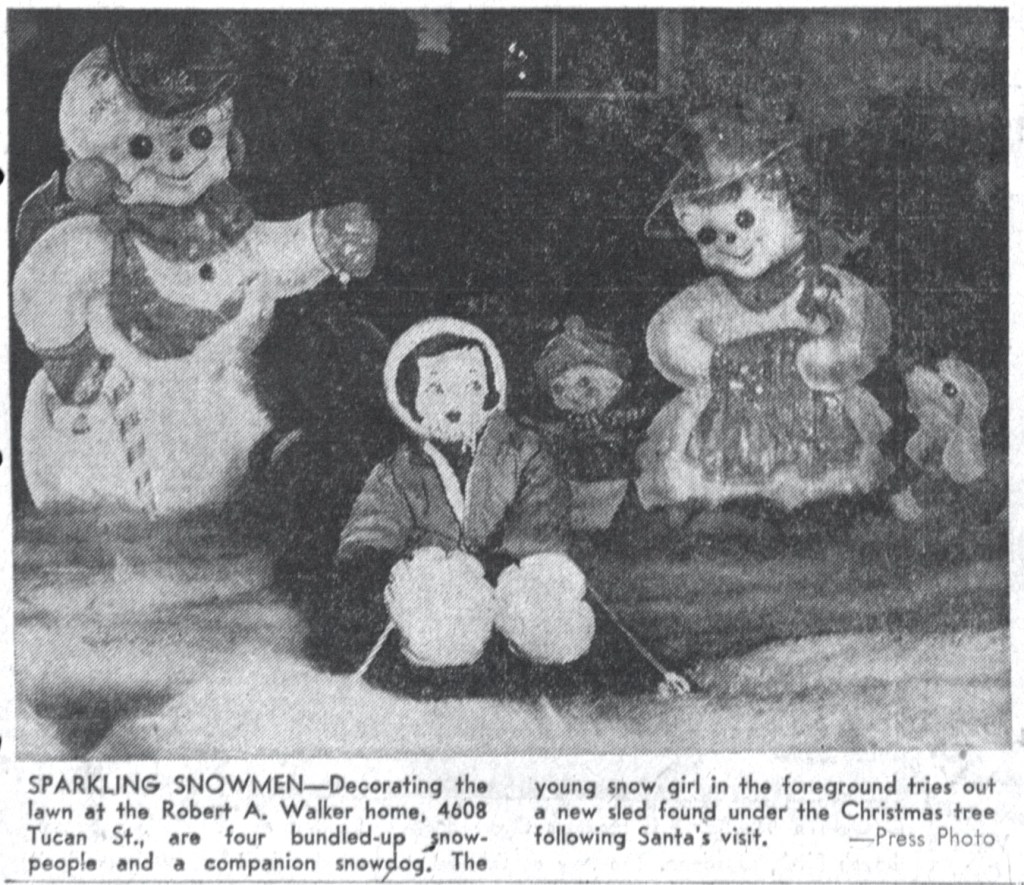
(Credit: Torrance Historical Newspaper and Directories Archive database, Torrance Public Library)
His fellow Toucan St. residents joined him in turning the small street into a winter wonderland. They decorated the houses and the street and dubbed it Candy Cane Lane. It drew enough attention to require traffic control, with the roadway being turned into a one-way street during the Christmas season to accommodate sightseers.
Apparently, the new tradition lost steam during the 1960s, as none of the area newspapers mention Candy Cane Lane in Torrance after 1962.
El Segundo’s Candy Cane Lane continued to thrive during the 1960s. But residents began to rethink the tradition with the arrival of gasoline shortages and the energy crisis in the early 1970s. In 1974, Candy Cane Lane went dark for more than a decade.
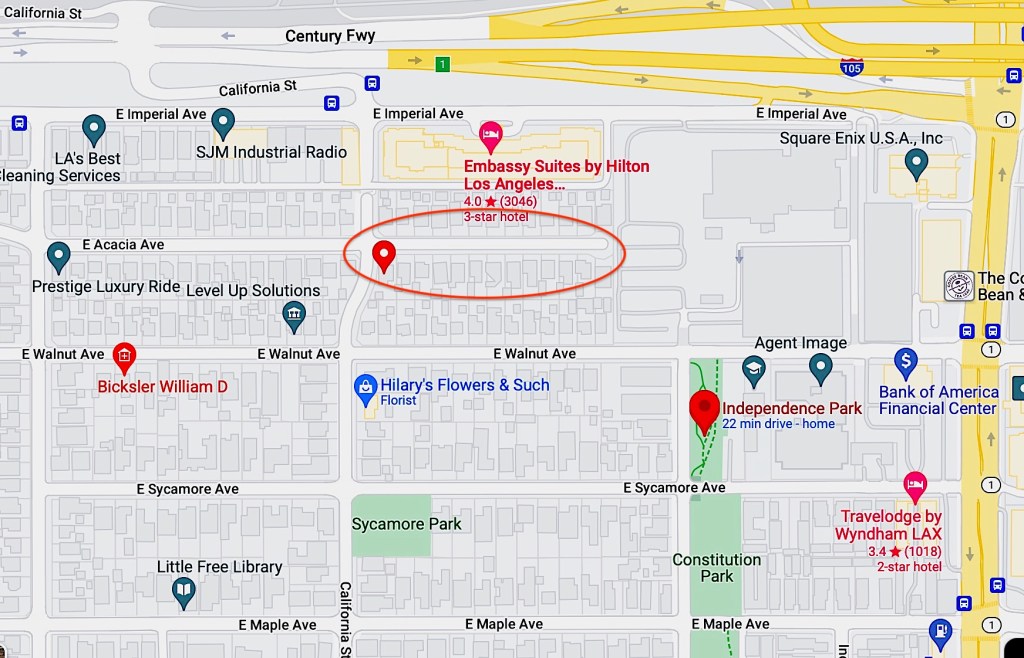
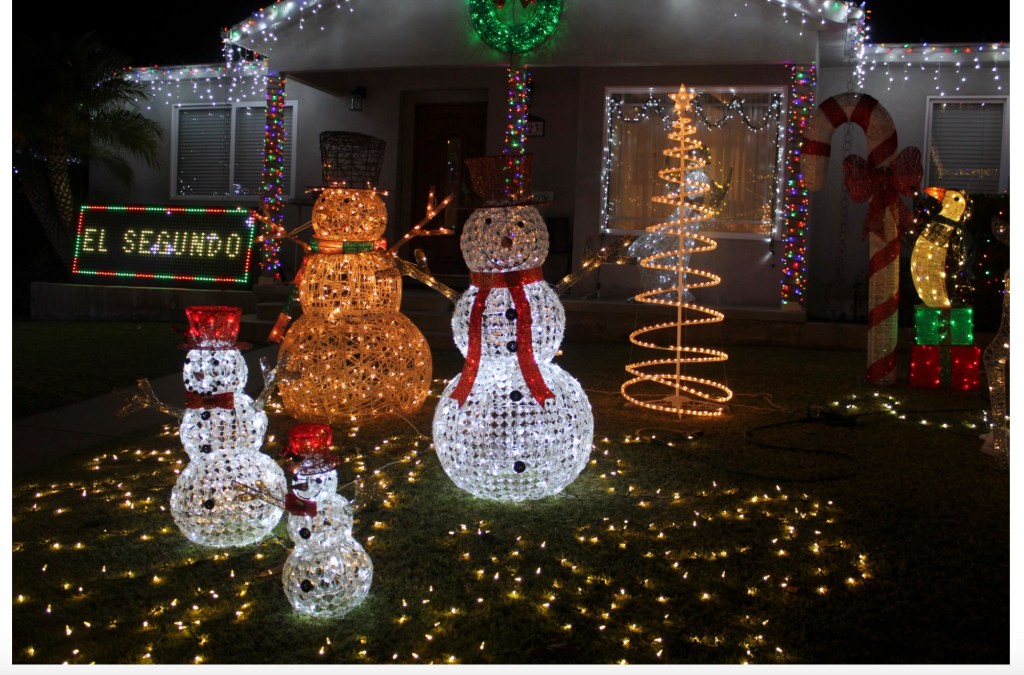
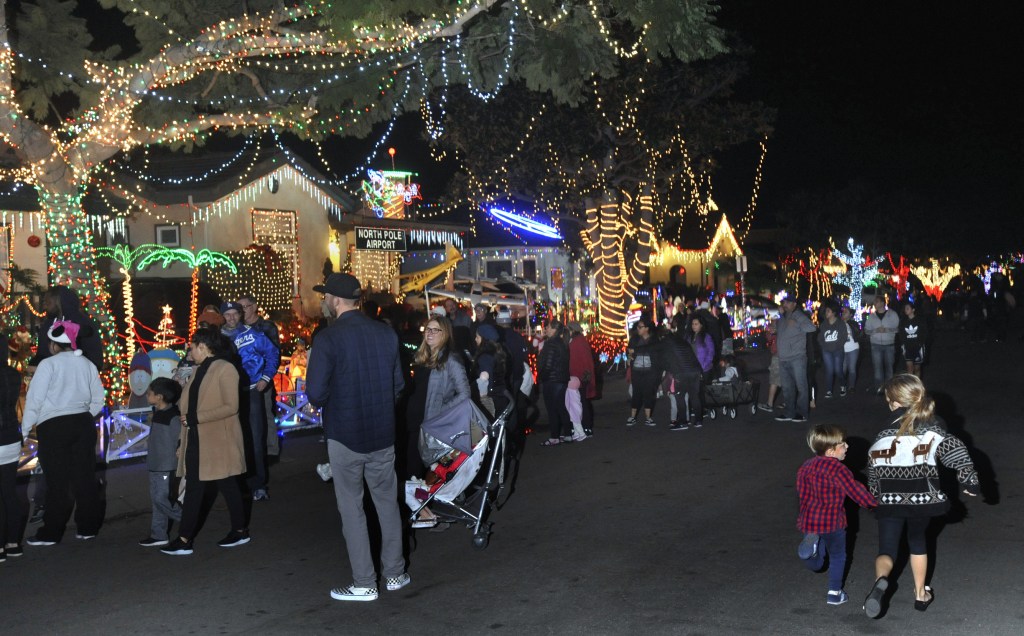
The tradition resumed in 1987, and has been going strong ever since. The light displays now feature LED bulbs, and East Acacia now is closed to automobiles. Visitors walk through the colorful holiday displays on foot instead of driving through in cars.
New residents moving to the street quickly learn of their responsibilities in upholding the tradition, and neighbors often work together to help each other with the lavish displays.
This year’s event runs from 7 to 11 p.m. nightly through Dec. 24.
Sources:
“Candy Cane Lane!”, City of El Segundo website.
Daily Breeze archives.
El Segundo Herald archives.
“Lights, Snow and Santa,” City of Torrance website.