
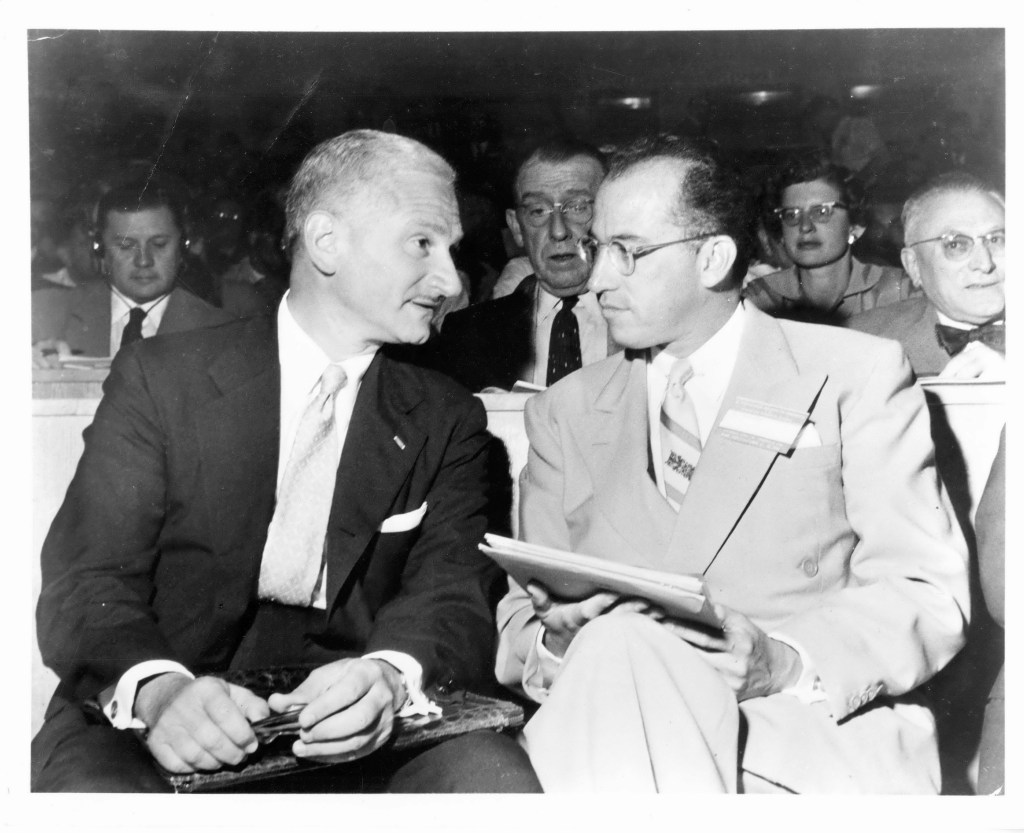
The first polio epidemic in the U.S. struck Rutland, Vermont, in June 1894. 132 cases were reported during that summer, with 18 fatalities, mostly children.
Poliomyelitis had been around dating back to ancient times, but very little was known about the disease, even after the increasingly serious spate of outbreaks that hit the U.S. in the early 1900s.
The poliovirus spreads person to person via contact with sneeze or cough droplets or human feces, often via flies, rats and other rodents. Roughly 70 percent of those infected by the virus show no symptoms. 25 percent of those infected display flu-like symptoms such as sore throat, fever, fatigue and headache.

A much smaller percentage, less than one percent, suffer serious effects when the disease spreads to the spinal cord and brain. These effects can lead to meningitis, partial and full paralysis, and can be fatal.
Polio’s most famous victim, future president Franklin Delano Roosevelt, contracted the disease in 1921. He would remain paralyzed for the rest of his life. Annual polio outbreaks during the summer months had become frequent and increasingly deadly.
FDR responded by creating the National Foundation for Infantile Paralysis in 1938, which became better known by the name of its fundraising drive, the March of Dimes. Its purpose was to raise funds nationwide for polio research and vaccine development.
As the disease spread, March of Dimes campaigns became ubiquitous, with the charity’s fundraising placards seemingly placed in every drugstore and market. The design of the dime coin was changed in 1946 to a profile of FDR to honor him posthumously for his efforts. (He died in 1945.)
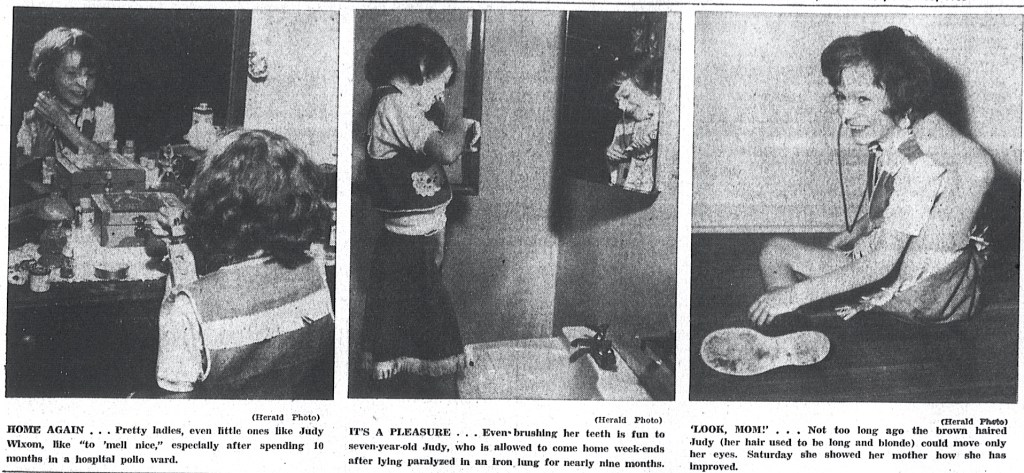
Los Angeles County and the South Bay weren’t spared by the polio outbreaks, which had occurred already in 1934 and 1938. Newspaper accounts from the second half of the 1940s detail increasing alarm from health officials over the increase in cases, beginning in 1946.
The outbreaks varied in strength. The 1946 outbreak hit the South Bay and Harbor Area fairly hard, while being mild nationwide. The reverse happened in 1949, with the local areas not as affected as other parts of the country. That year, 42,173 cases were reported in the United States, resulting in 2,720 deaths
Though it began to affect all ages as it spread, polio was considered at first to pose particular danger to children. Its continued presence cast a pall over summertime activities, as parents were warned to have their children avoid public swimming pools and any contact with children showing even mild cold or flu symptoms.
Polio obviously wasn’t going away as the 1950s began. In fact, 1952 turned out to be the worst year for the disease in the country’s history. From the 57,628 cases reported that year, 3,145 died and 21,269 were left with varying degrees of paralysis.
Various treatments and therapies were thought to be effective, from iron lungs to gamma globulin injections. A course of treatment offered by Australian nurse Sister Elizabeth Kenny involving physical therapy ran counter to prevailing methods, but proved somewhat effective in reducing symptoms.
On the other hand, an August 1945 attempt involving spraying the town of Rockford, Illinois, with DDT to stop the disease was not an overwhelming success, though residents at least were advised to close their windows during the application.
All the while, scientists and doctors worked on potential vaccines, seeing them as the only way to stop the disease. Finally, on March 26, 1953, Dr. Jonas Salk announced on CBS radio that he had successfully tested an injectable anti-polio vaccine. After further trials and tests, government officials approved the Salk vaccine for widespread use on April 12, 1955.
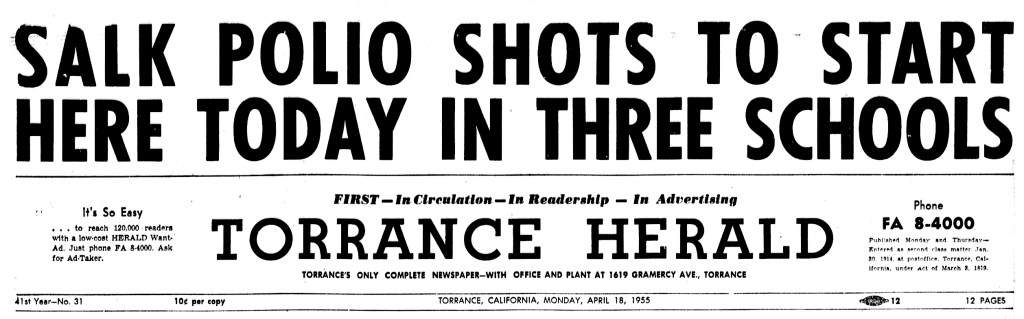
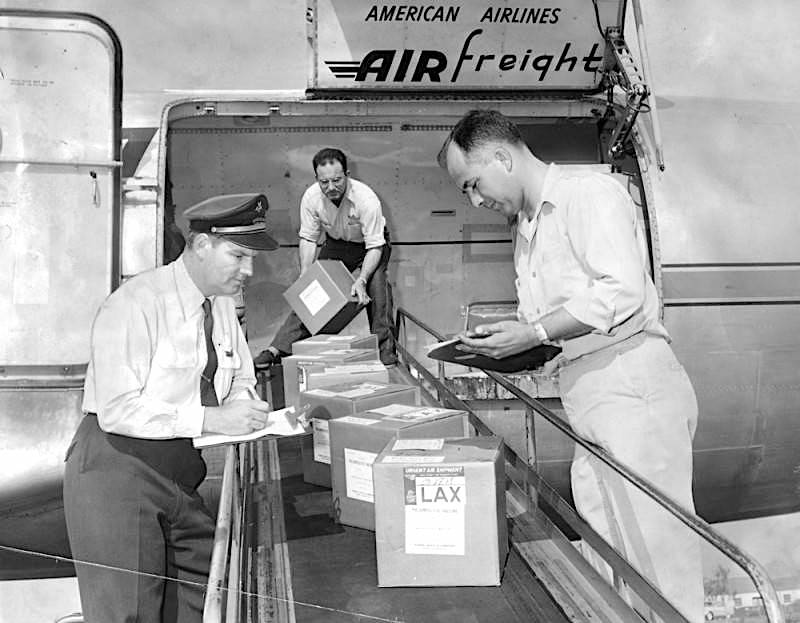
The very next day, the first shipments of the vaccine manufactured by Parke, Davis & Co. arrived at Los Angeles International Airport. By April 18th, vaccination of first and second graders in Torrance-area elementary schools had begun, with health officials completing vaccinations in late May. A round of follow-up doses began that October.
The effectiveness of the Salk vaccine can be measured in comparing polio statistics from 1955 versus those from 1956. In the Torrance area, 50 cases were reported in 1955, 29 in 1956, and only two through July 1957. Los Angeles County numbers also reflected the trend, with 109 in 1956 and only 31 during the first half of 1957. Total cases in the U.S. fell from 21,667 in 1955 to 4,851 in the first 10 months of 1957.
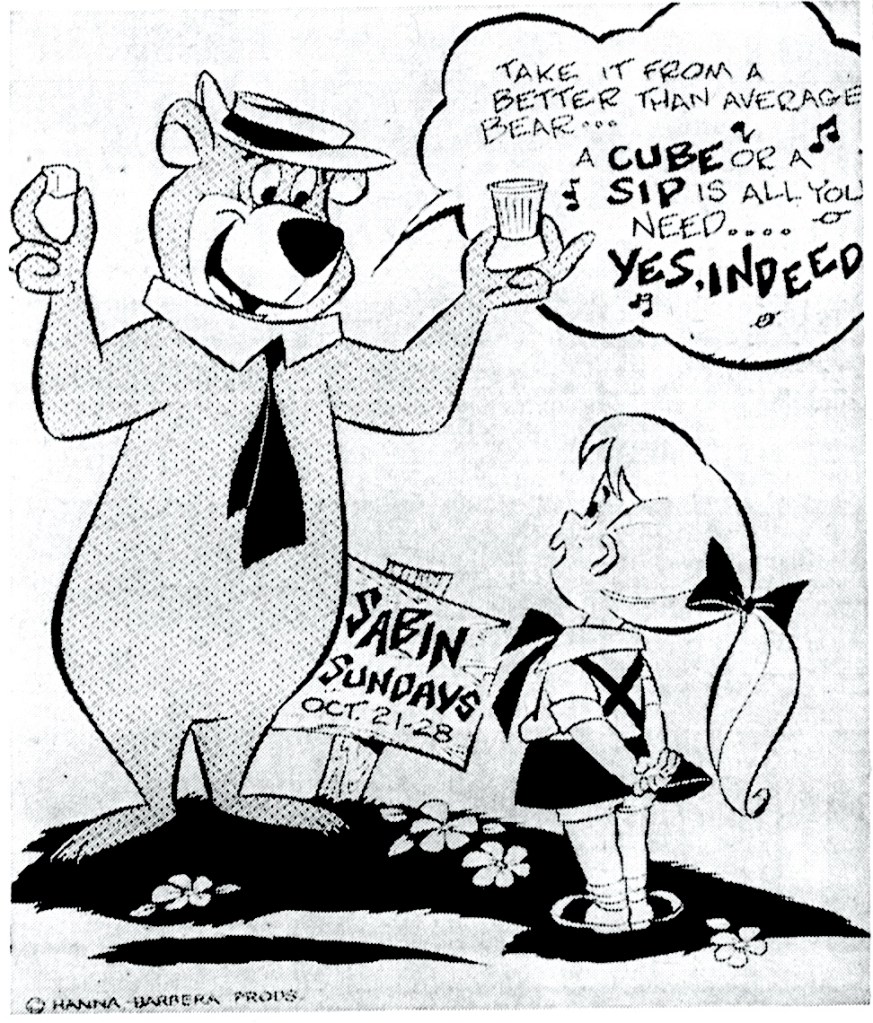
The numbers would continue to fall drastically. When Dr. Albert Sabin’s polio vaccine came into use in the U.S. in 1962, the fight against polio gained full steam. Sabin’s vaccine was taken orally instead of by injection. It was cheaper – he declined to patent it in order to keep its cost low – and much easier to administer.
In August 1962, South Bay and Harbor Area schools quickly implemented programs to distribute the Sabin vaccine to students. Los Angeles County health officials also opened vaccination clinics throughout the county, encouraging vaccination among adults as well.
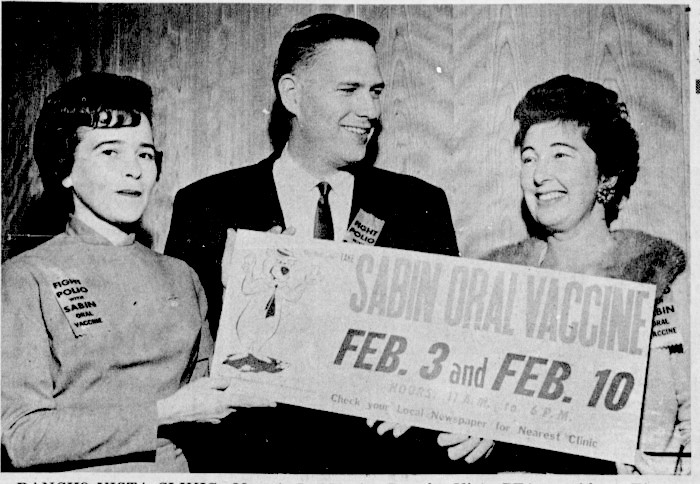

Sabin’s vaccine had the added benefit of preventing infection of the intestines, which kept the virus from spreading from carriers with no symptoms. Therefore, it complemented the Salk vaccine, and those who’d already gotten the Salk injection were urged to also take the Sabin vaccine.
The combination of the two vaccines effectively halted polio dead in its tracks. The last outbreak in the wild in the U.S. occurred in Amish communities in the Midwest in 1979. Efforts to stem the disease in other countries also fared well: by 1979, the Western Hemisphere was declared free from the virus. According to 2019 statistics, there were only 125 cases worldwide, and the disease occurred in the wild in only two countries, Afghanistan and Pakistan.
Sources:
“Albert Bruce Sabin: The Man Who Made the Oral Polio Vaccine,” by Davide Orsini and Mariano Martini, National Library of Medicine website, 2022.
Los Angeles Times archives.
“Polio Makes Its U.S. Debut in Vermont’s Otter Creek Valley in 1894,” New England Historical Society website.
Redondo Reflex archives.
San Pedro News Pilot archives.
Torrance Herald archives.
“What is Polio?”, Centers for Disease Control website.
Wikipedia.
Aug. 9, 2022:
Reader Louie Pastor of Manhattan Beach offered these comments on the polio blog post above:
From: louie Pastor <lapbsma@yahoo.com>
Sent: Saturday, August 6, 2022, 05:05:34 PM PDT
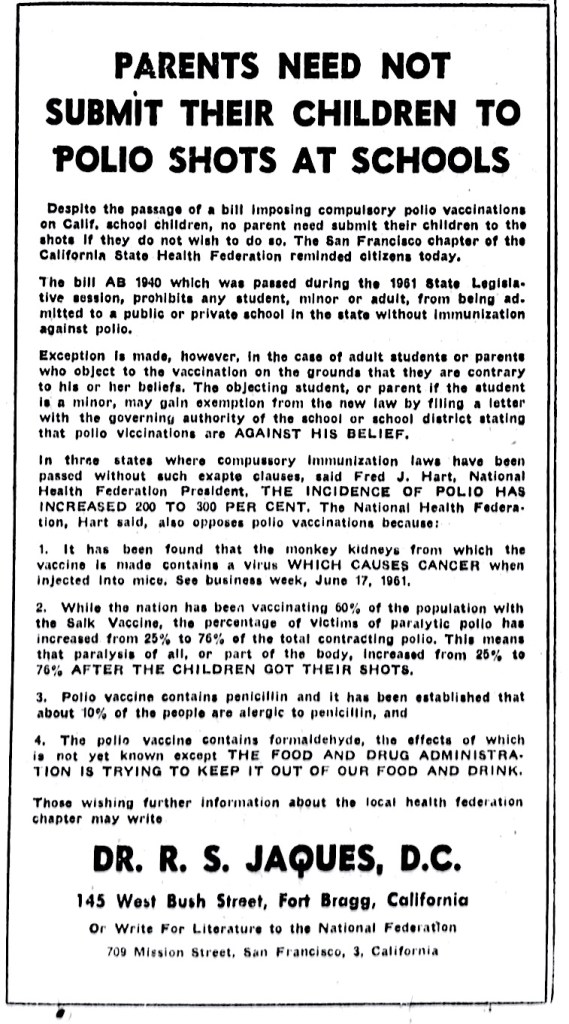
I enjoyed reading your article regarding the vaccines and the polio epidemic. At that point in history science was not overly influenced by political agendas and there was much less of a incestuous relationship between Big Pharma and the medical profession. Since then we have learned that Big Pharma and doctors can collect profits whether they help people or cause damage. Part of this is evident as vaccine companies are not liable for damages they cause. A result of a bill passed by politicians who were paid off by the CDC, Big Pharma and other corrupt organizations.
I have read about and wonder if you were aware of information correlating the use of DDT and the rise in cases of polio during those times you wrote about. In fact it has been brought out that Franklin Roosevelt contracted polio after swimming in water contaminated by DDT.
The lack of transparency and the exposed lies the current body of medical “experts” have been caught pontificating upon have made those with common sense question the integrity of our medical bureaucracy.
As a small example, here are a few products that were approved by the powers that be and that caused injury and/or death.
Fen-Phen
Posicor
Baycol
Vioxx (55,000 people lost their lives from taking Vioxx)
Bextra
Meridan
Avastin
Accutane
Cylert
Darvon
Thalidimide
So even though I enjoyed reading your article I hope you will understand that I along with thousands of others not longer trust a system that tries to mandate medical treatment.
The current political and medical agendas remind me of the the days when the majority of the U.S.population, the government, the military and other powers were forcing various Indian Nations to bow to rules that the Indians did not want to follow, limited their ability to move freely by forcing them on reservations, affected their food supply and other horrendous acts. I am hoping that those that are fighting the current draconian rules (that includes me) being given to them will have sort of a “Little Big Horn” moment and be able to throw off the tyranny we are currently facing.
I do not look at your article as vaccine “propaganda”. As I said, I enjoyed the article. I was a kid in the 1950’s and relate to some of the information you presented. I am hoping you look into some of the alternative information that is out there and does get equal coverage and help bring that information out.
Respectfully,
Louie Pastor (Not the French guy Pasteur) By the way you may want to look up the history of the scientists Louie Pasteur versus Antoine Beauchamp and see how that debate ended. I think you will find it fascinating as I did.

