
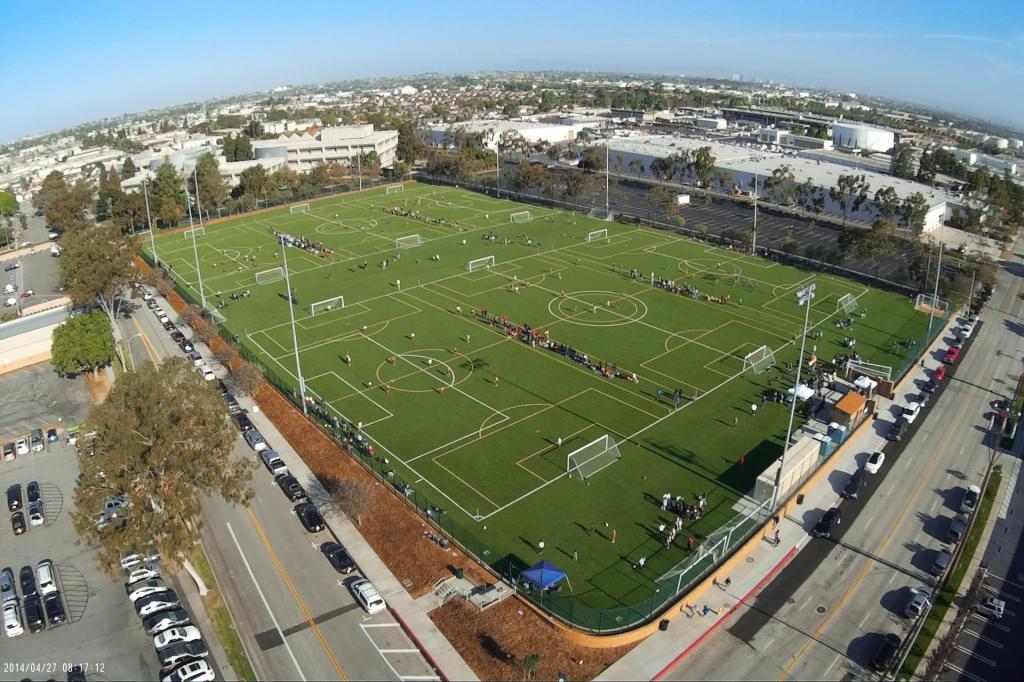
The Los Angeles Galaxy Major League Soccer team has signed a deal ensuring that the soccer fields just north of the courthouse in Torrance will stay open at least until 2028. The news has cheered fans and players in the town where the American Youth Soccer Organization (AYSO) was born.
But how did the prime 6.2-acre site at 555 Maple Ave. in the heart of the city become available in the first place?
The land sat unused until 1958, when the West Virginia Pulp and Paper Co., founded in 1888, opened the first of two plants there to produce paper bags in large quantities for the suburban market. Despite its name, the company had maintained a West Coast presence since 1925.
The firm opened a much larger adjacent plant on the site on Jan. 1, 1960. Part of the company’s Hinde & Dauch division, it covered 110,000 square feet and cost $500,000 to build and equip. Its main product: corrugated, moisture-resistant cardboard boxes suitable for use by fruit and vegetable growers for shipping.
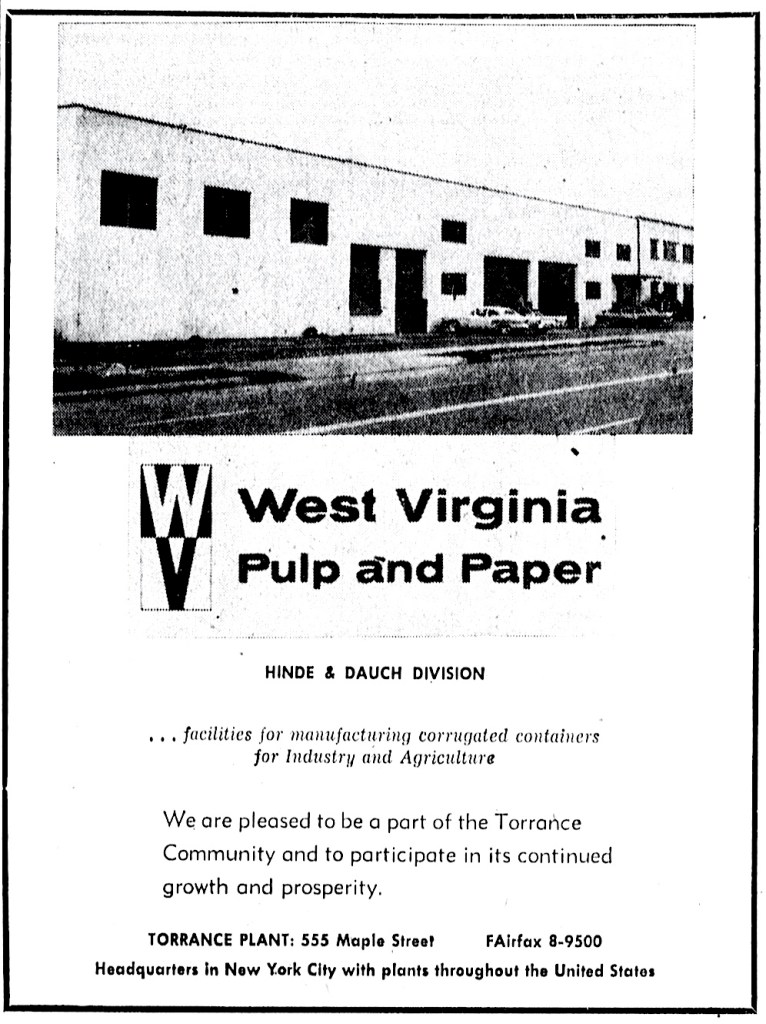
West Virginia Pulp’s tenure at the Maple Ave. plant ended just a few years later. By 1965, a new paper-products tenant had occupied the building. Boise Cascade had formed in a 1957 merger of a pair of Idaho and Washington lumber companies.
Its business took off almost immediately, and its growth in the lumber, building and paper products industry eventually would transform it into a multi-billion dollar conglomerate. In addition to its Maple Ave. plant, the company also operated a facility nearby at 540 Hawaii Ave.
Boise Cascade maintained that presence in Torrance until 1990, when it closed down the Maple Ave. plant. Epson America had bought the land from Boise in 1986, thinking that it might need it to expand its then-new plant nearby on Madrona Ave.
That never happened, and a new neighboring entity began talking about acquiring the parcel in 1991. The courthouse housing the Los Angeles Superior Court had been built just south of it in 1968 at 825 Maple Ave. It had quickly grown overcrowded when the decision was made to headquarter area municipal courts there also.
News of Boise Cascade’s abandonment of the large property just north of the courthouse sounded like it might be the perfect solution. After negotiations concluded, the county Board of Supervisors agreed to buy the 6.2 acres for $8.6 million from Epson, who had levelled the former Boise Cascade building in preparation for the sale.
It was a forward-thinking move. The county knew it might not have the funds to build the proposed $47.9 million additional courthouse for possibly another ten years or so. But, this way, it would have a place to put it once funding could be secured.
The court’s administrators had been trying to figure out a way to shoehorn a new building and giant parking garage onto the parking lot of its existing site, without success.
But the ten years became closer to twenty, and still the lot remained empty, full of weeds and dumped trash. California Assemblywoman Betsy Butler, D-El Segundo, came up with a plan to construct soccer fields on the vacant land for community use while everyone waited for the courthouse building plan to become reality.
Torrance city officials agreed to the plan in July 2011, stipulating that it would operate on a low-cost, month-by-month lease basis. A ten-year lease with the Judicial Council of California, the land’s official owner, was arranged for a fee of $1 per year, with Torrance committing to fund the building of the fields.
Construction on the $3.2 million facility began in 2013. In March 2014, Toyota secured naming rights to the project with a $500,000 donation to the city. The Toyota Sports Complex opened with much fanfare on March 26, 2014. It hosted its first major event that July when it hosted the AYSO’s National Games, which drew more than 500 teams from across the country.
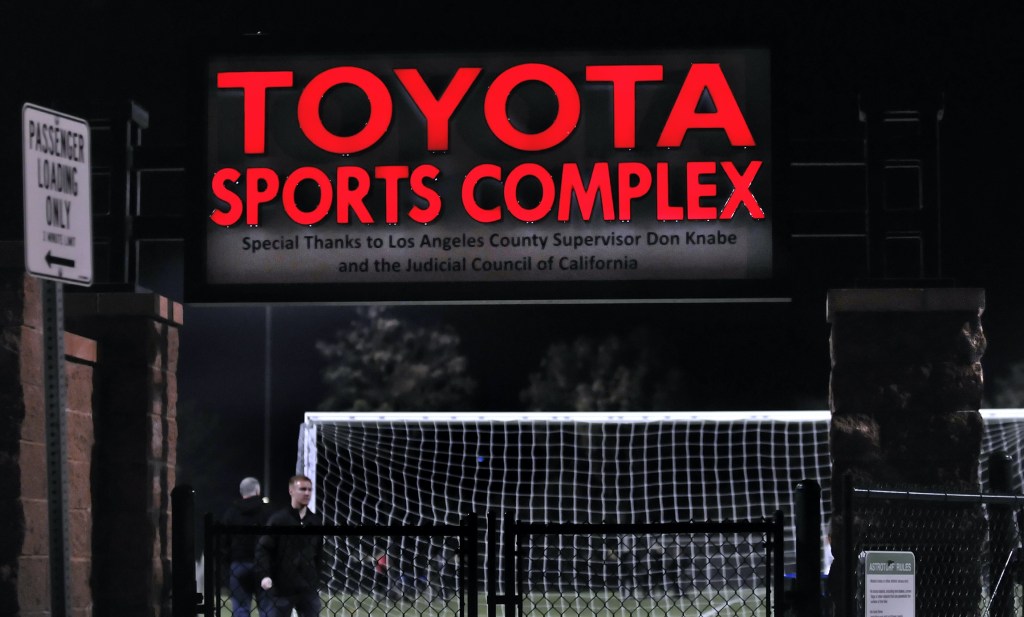
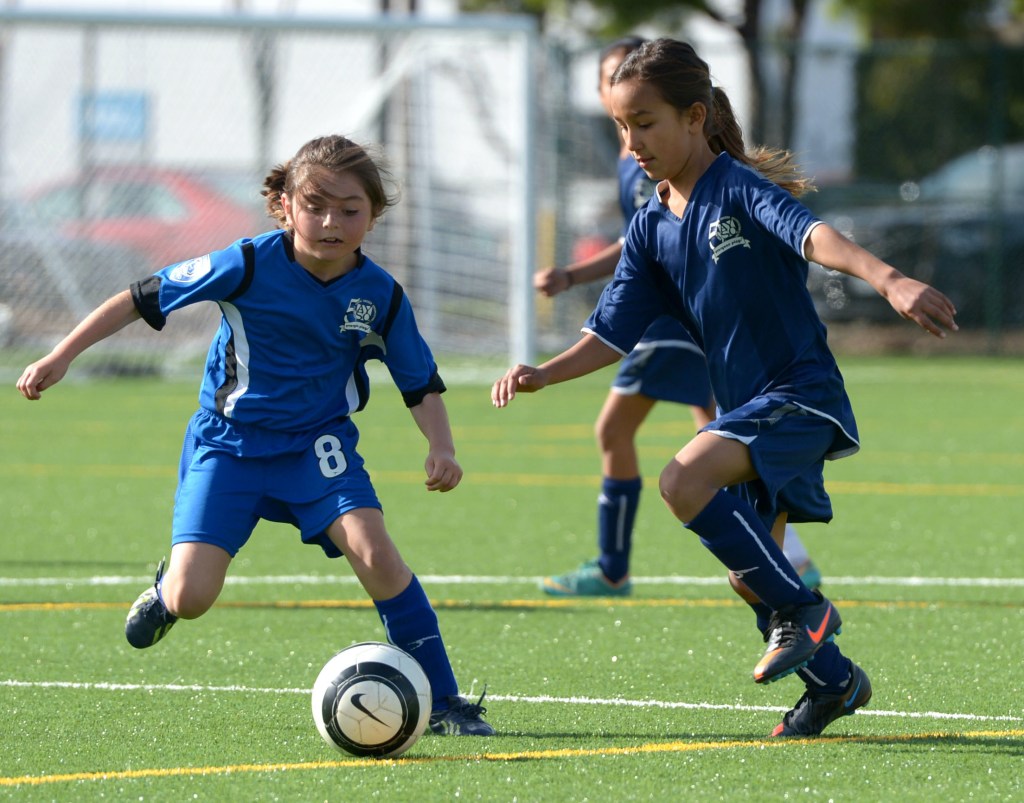
The heavily used facility quickly grew into a vital part of the Torrance youth sports community.
Hence, the alarm raised by the October 2021 news that the Judicial Council of California planned to raise its rent under terms of its new lease agreement from $1 per year to $33,000 per month.
The city couldn’t afford it, and closure seemed a very real possibility. Community response against the closure was strong, with a petition to save it garnering more than 4,300 signatures.
Fortunately, the Los Angeles Galaxy franchise stepped up in December and made a deal to pay $20,000 per month to use the facility for training. The team already operates the Kinecta Soccer Center building across the street.
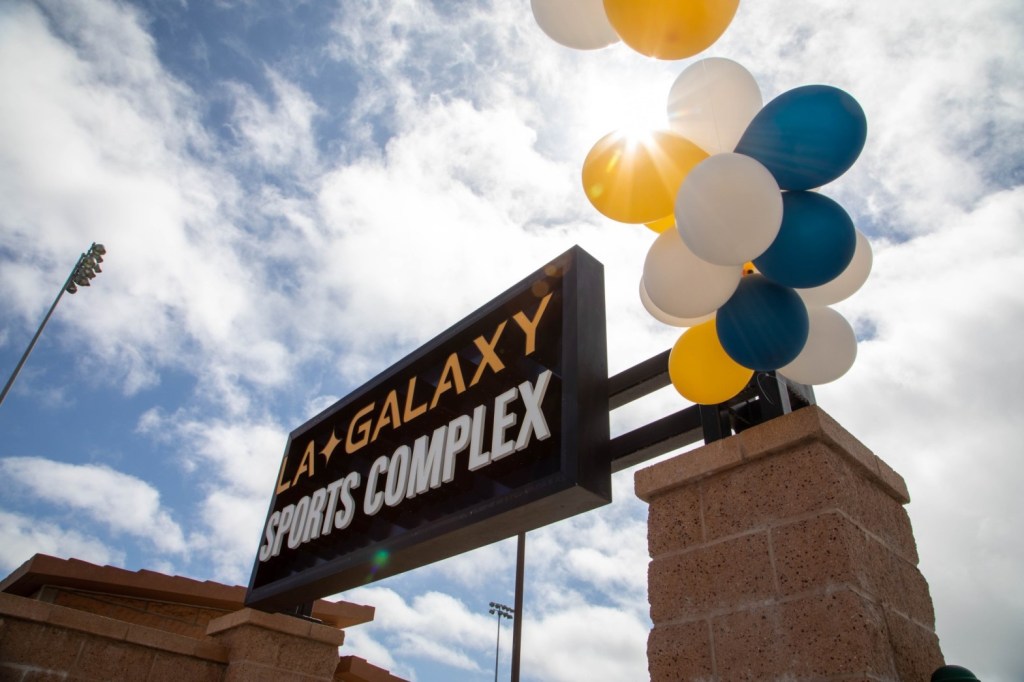
Under the terms of the deal, the Galaxy will use the the fields Monday through Friday from 9 a.m. to 2 p.m., and Tuesday and Thursday nights, with youth soccer groups having access the rest of the time.
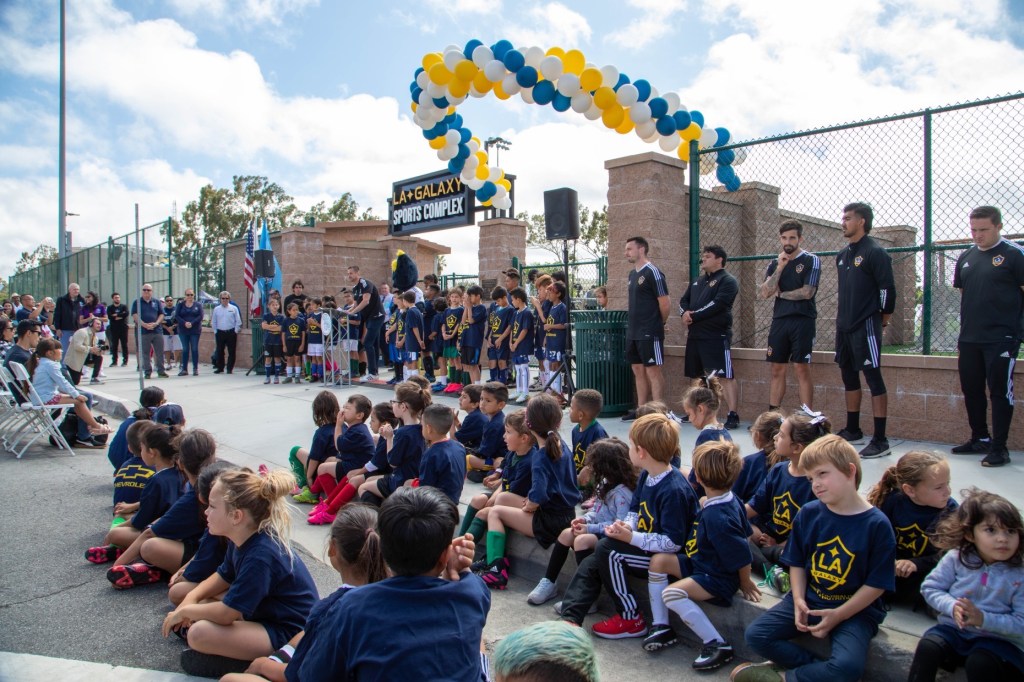
Galaxy and city officials officially opened the refurbished and renamed L.A. Galaxy Sports Complex on April 16, 2022, putting an end to community fears that the complex would be closed for at least another six years.
A new courthouse may yet appear on the site after 2028, but for now, soccer reigns supreme on Maple.
Sources:
Daily Breeze archives.
Los Angeles Times archives.
Torrance Press-Herald archives.
2014 City of Torrance video:


One thought on “Former industrial site in central Torrance will house soccer players for the near future”