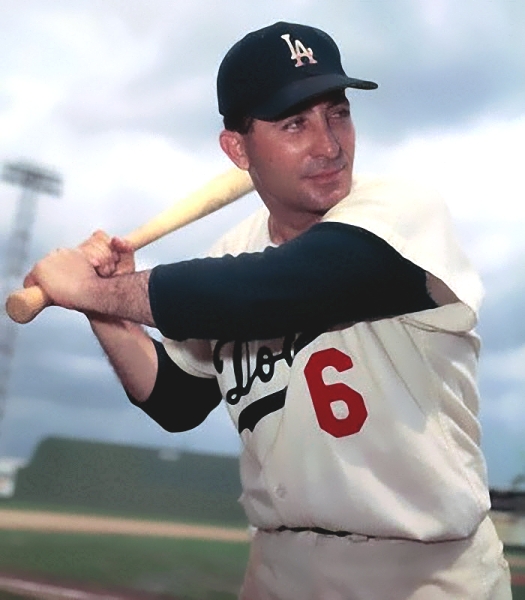
During the last few decades, a number of Los Angeles-area sports stars from the Kings, Lakers and other teams have decided to settle in the South Bay’s beach cities. Carl Furillo, a standout player for the Brooklyn Dodgers, pioneered the idea when he moved his family to Manhattan Beach after the Dodgers came to Los Angeles in 1958.
Born in Stony Creek Mills, Pennsylvania on March 8, 1922, Furillo was the son of Italian immigrant parents. He left school early to pursue his baseball career. He eventually signed with the minor league team in Reading, then unaffiliated.
The Brooklyn Dodgers caught wind of the young outfielder with the rocket arm – his throwing ability earned Furillo the nickname “The Reading Rifle” – and were so determined to sign him that they purchased the entire Reading minor league franchise.
Furillo eventually made his way to the big leagues, playing his first game for the Dodgers on April 16, 1946. That season would be the first of many exemplary campaigns with the team for which he played for his entire 15-year career.
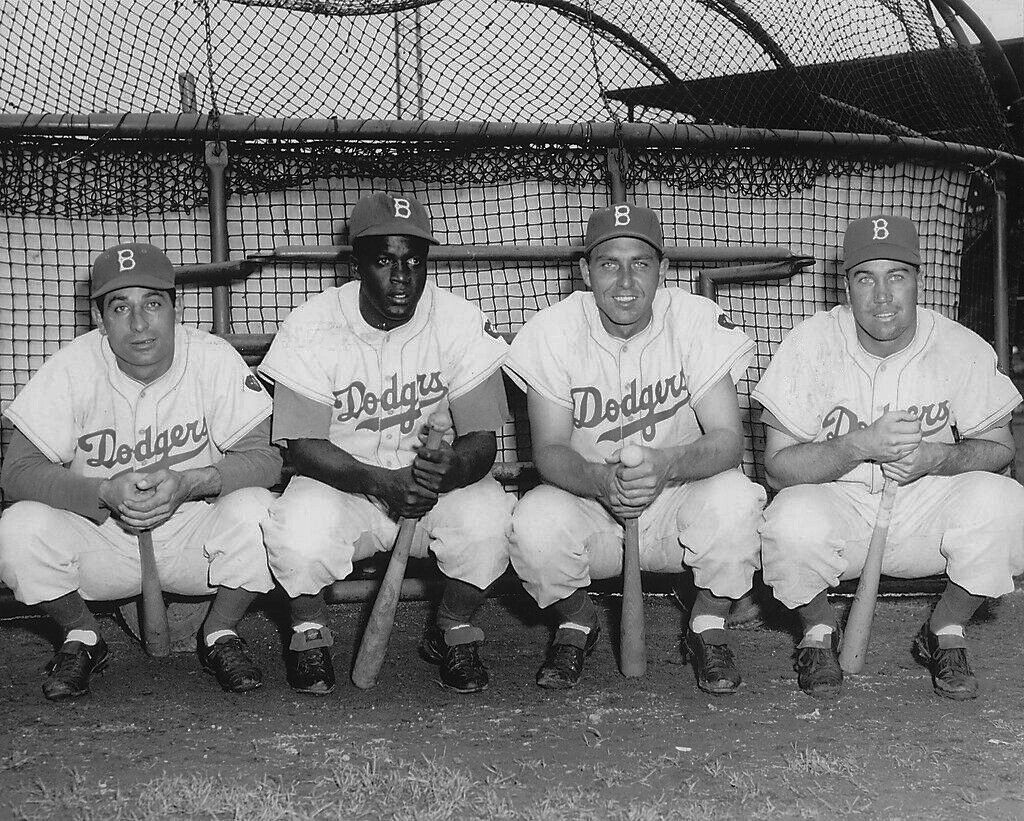
During Furillo’s tenure, the Dodgers won seven National League pennants, and World Series titles in 1955 and 1959. He was perennially among the league leaders in hitting, and baserunners learned not to challenge his throwing arm. He would narrowly miss attaining a lifetime .300 batting average, ending his career at .299.
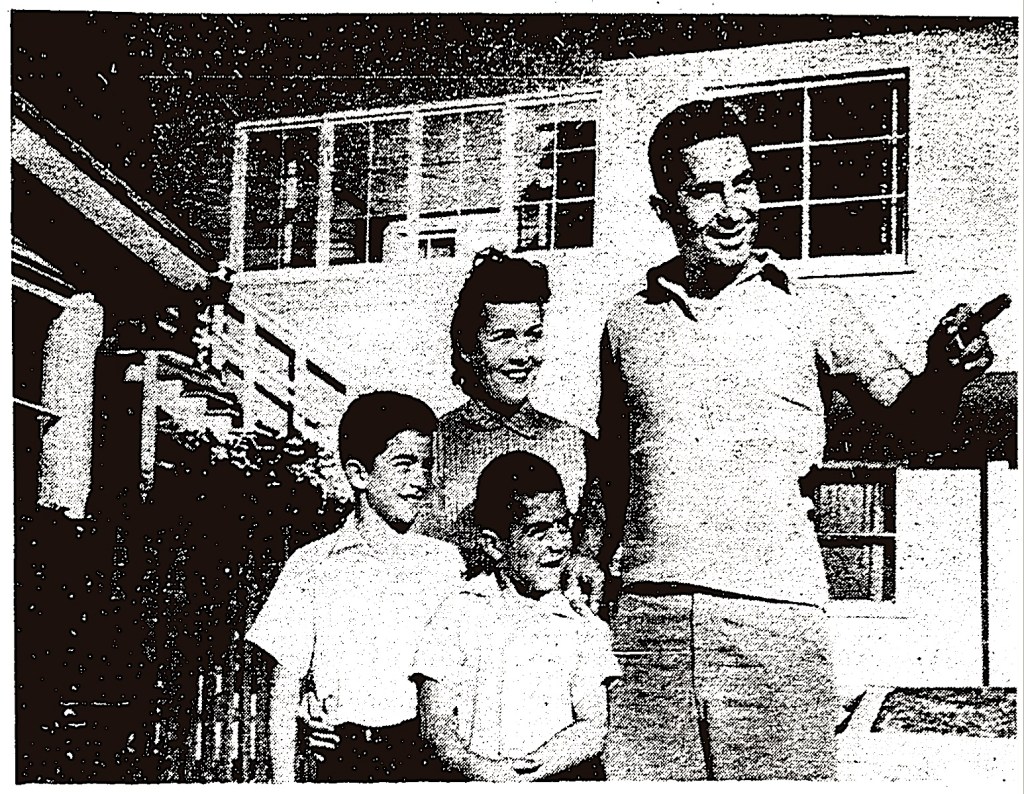
When the Dodgers left Brooklyn for Los Angeles in 1958, Furillo moved his wife, Fern, and their two sons, Carl and Jon, into a house with three additional apartments on Maple Ave. in Manhattan Beach’s tree district. He bought the house for $32,000 in October 1958. He quickly rented out the apartments, with teammate Joe Pignatano becoming one of his tenants.
The Furillos would live in Manhattan Beach for the next three years. Though he was used only as a pinch-hitter during the L.A. Dodgers’ first World Series victory against the Chicago White Sox in 1959, he got the key hit in Game 3 to give the team a 3-1 lead they never relinquished.
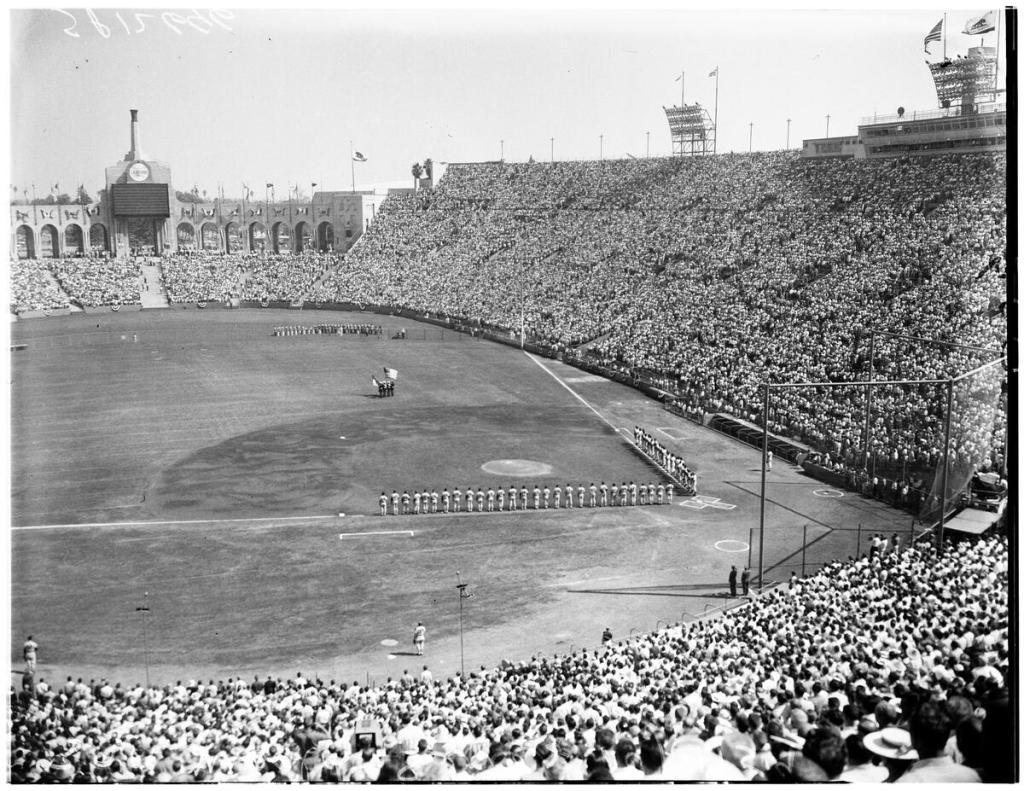
(Credit: USC Digital Library)
Things took a turn for Furillo in 1960, however. In January, Dodgers general manager Buzzie Bavasi took a hard line with the outfielder during salary negotiations. By this time Furillo, then 38, was nearing the end of his career. Bavasi forced him to take a pay cut from $33,000 to $25,000 so that the GM could give young catcher John Roseboro a raise.
Furillo didn’t complain publicly. But matters got worse in April when he tore a calf muscle during the first week of the 1960 regular season. The Dodgers then demanded that he voluntarily retire at a reduced salary and without receiving his 15-year pension.
Furillo insisted on getting the amount he was due, and thus began a dispute with team management that would end up in court and result in his complete disassociation from baseball for decades.
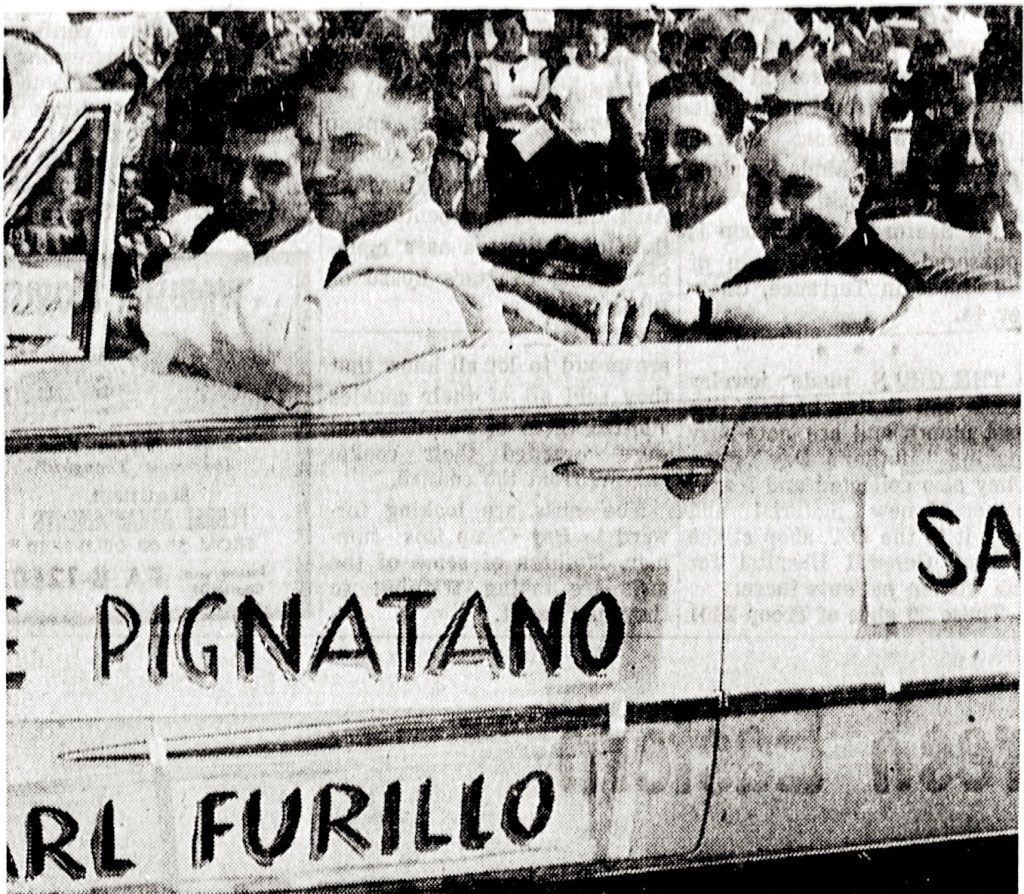
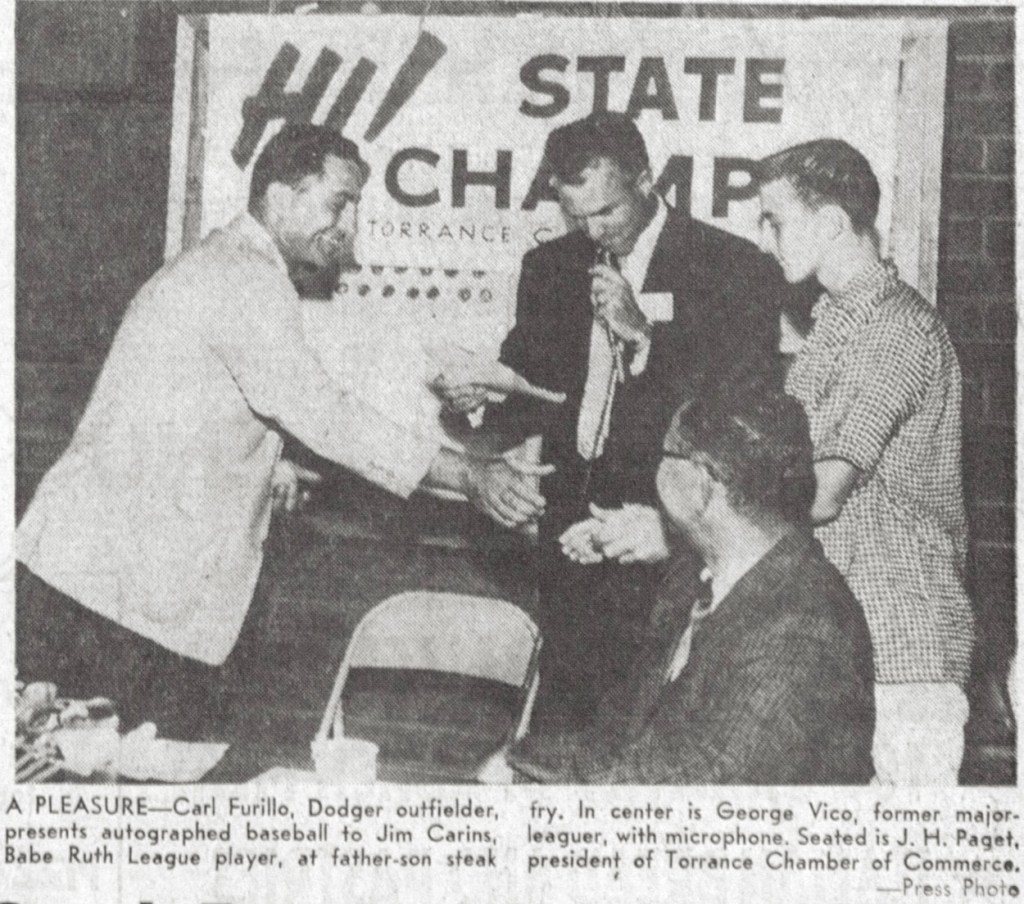
Despite the sudden turmoil in his professional life, Furillo continued to do his part as a representative of the team in the community, as he’d done all along. In October 1959, after the World Series win, Furillo appeared and spoke at a banquet honoring the Torrance Babe Ruth League state championship team.
Later, when newly elected Torrance city councilman and former Detroit Tigers baseball player George Vico reached out to Furillo to help boost the annual Torrance youth baseball parade 1960, his response was enthusiastic, especially considering his ongoing dispute with the team.
On May 7, 1960, Furillo brought not only himself, but also three other Dodgers to the Torrance Blvd. event. His tenant Pignatano, Chuck Essegian and future Hall of Fame pitcher Sandy Koufax appeared in the parade and participated in the subsequent festivities.
The results were remarkable. The Torrance Herald reported the next day that approximately 4,000 people attended the youth baseball celebration. A week later, the Dodgers officially released him from the team.
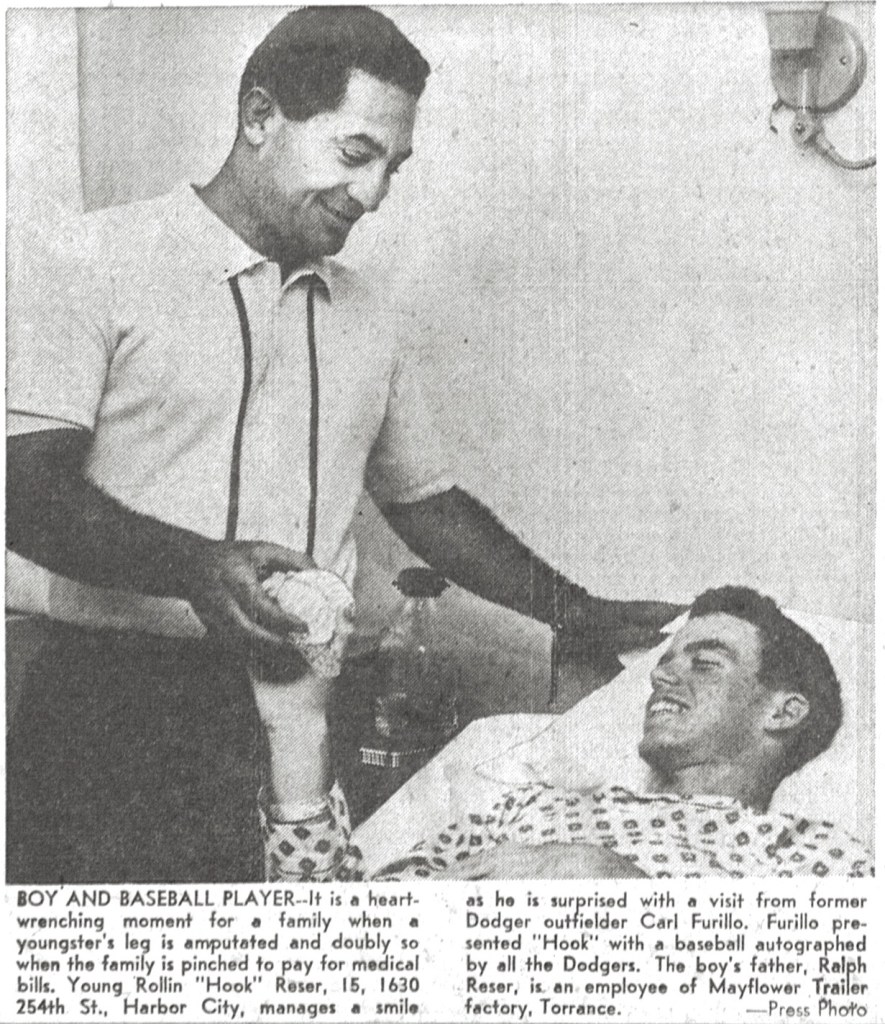
Furillo’s dispute with the Dodgers dragged on. He made another South Bay appearance in September, visiting former Babe Ruth player Rollin Reser in his Harbor City hospital room. Reser’s leg had been amputated after an accident on the baseball field.
By June 1961, an increasingly frustrated Furillo had given up on reaching an agreement with the Dodgers. He put the Manhattan Beach house on the market and moved his family back to Pennsylvania. He also scheduled a meeting in New York with Major League Baseball Commissioner Ford Frick to discuss his plight.
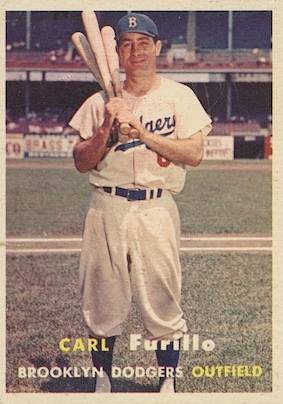
Furillo claimed he not only had been wronged by the Dodgers, but also had been blackballed from other jobs. Applications for coaching and related positions he made to 14 different teams, including the new Los Angeles Angels franchise, had been turned down flat. Frick denied that Furillo had been blackballed, though no team would hire him.
Furillo sued for back pay, and won a judgment for $21,000, but he’d lost his appetite for anything having to do with baseball. He worked as an elevator installer at the World Trade Center, operated a deli, became a night watchman and held many other jobs.
In his later years, his bitterness toward the game softened. According to the New York Times, he became a regular staff member at the Dodgers’ Fantasy Camp in Vero Beach, Fla., where he joined other Dodger greats in reminiscing with fans.
He died in his sleep of an apparent heart attack at 66 in his home town of Stoney Creek Mills, Pennsylvania, on Jan. 12, 1989.
Sources:
Carl Furillo, Brooklyn Dodgers All-Star, by Ted Reed, McFarland & Co., 2014.
Los Angeles Times archives.
New York Times archives.
Torrance Press-Herald archives.
Wikipedia.