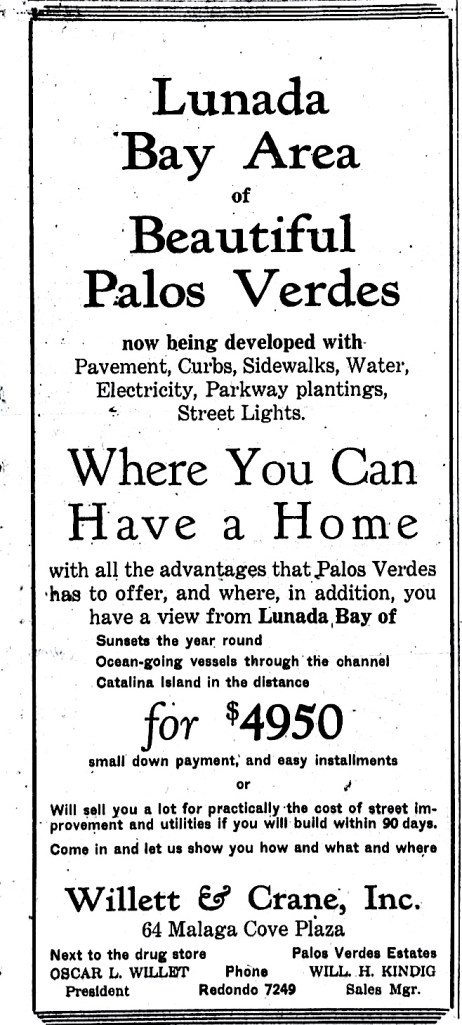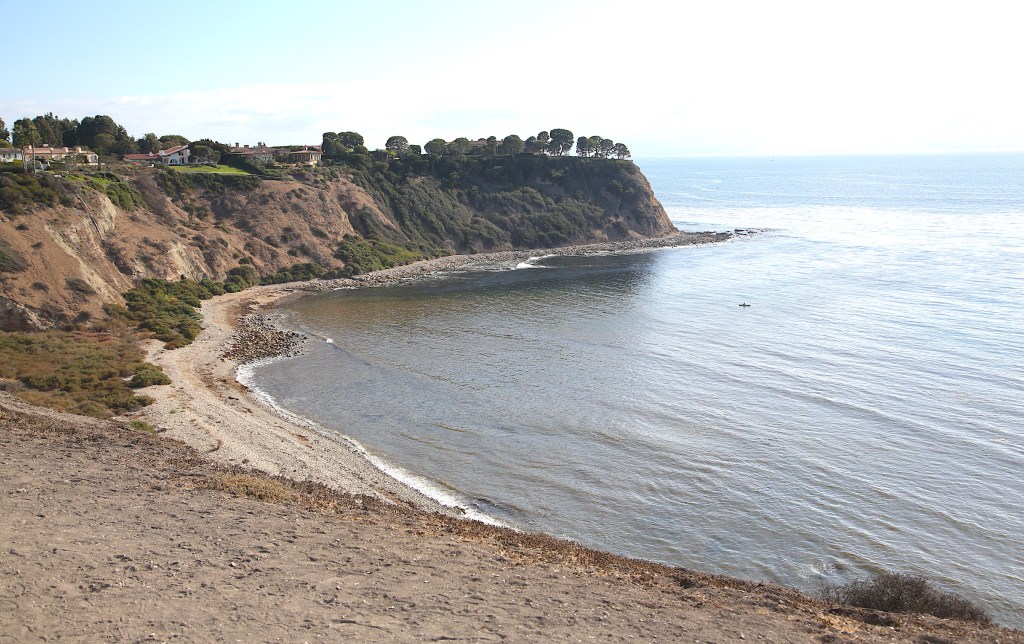
Even after nearly a century of residential development encroaching upon it, the view from the Lunada Bay cliffs in Palos Verdes Estates remains breathtaking.
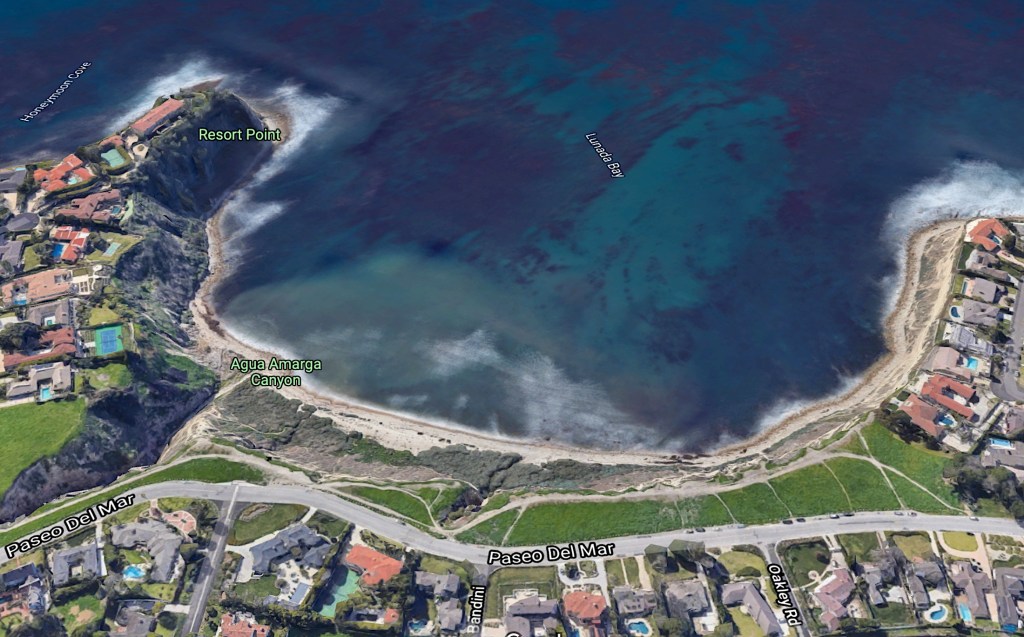
The cliff edges are unsullied by any manmade structures, leaving nothing to impede the sight of the gently curving arc of shoreline and the crescent-moon shaped bay which inspired the area’s name, Spanish for “half moon.”
When Frank Vanderlip took over the management of the Palos Verdes Peninsula in 1923, he did so with a goal in mind. He created the Palos Verdes Project, a carefully thought out plan for its development.
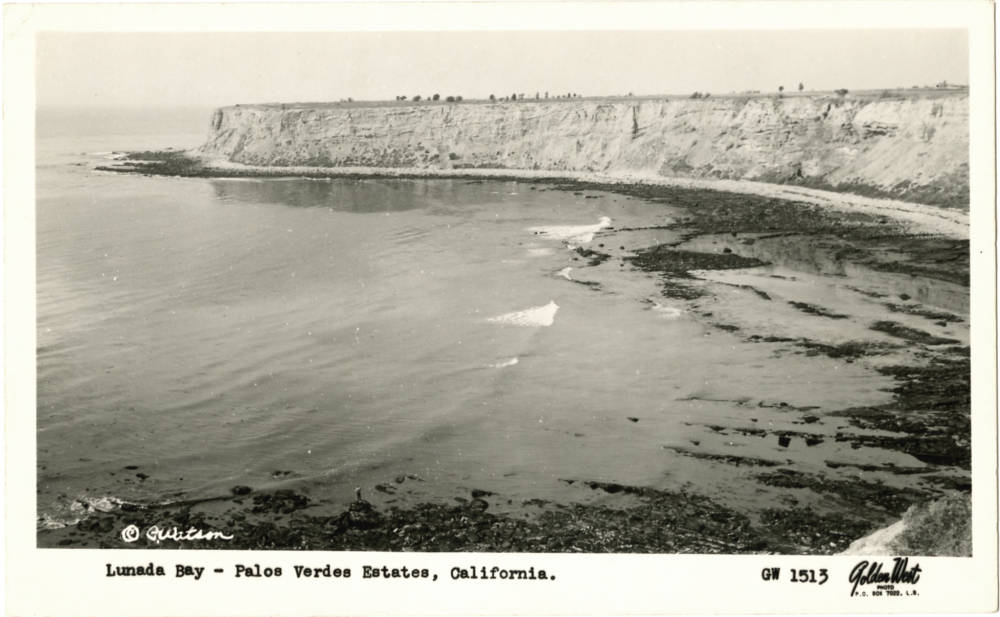
In order to assure the longevity of the plan, a deal was struck for the Bank of America to transfer ownership of four and a half miles of shoreline extending from Malaga Cove south to just past Lunada Bay for $10. The symbolic sale, which became final in July 1925, was predicated on the agreement that no development would ever take place on the beachfront land stretching from Bluff Cove south to Lunada Bay.
Under the terms of the deal, the Palos Verdes Home Owners’ Association, whose members were the property owners in Palos Verdes Estates, gained stewardship of the shoreline and how it would be used. Developers, who were eager to subdivide and sell lots in the area, were prevented from building on the coastline itself, as were commercial entities.
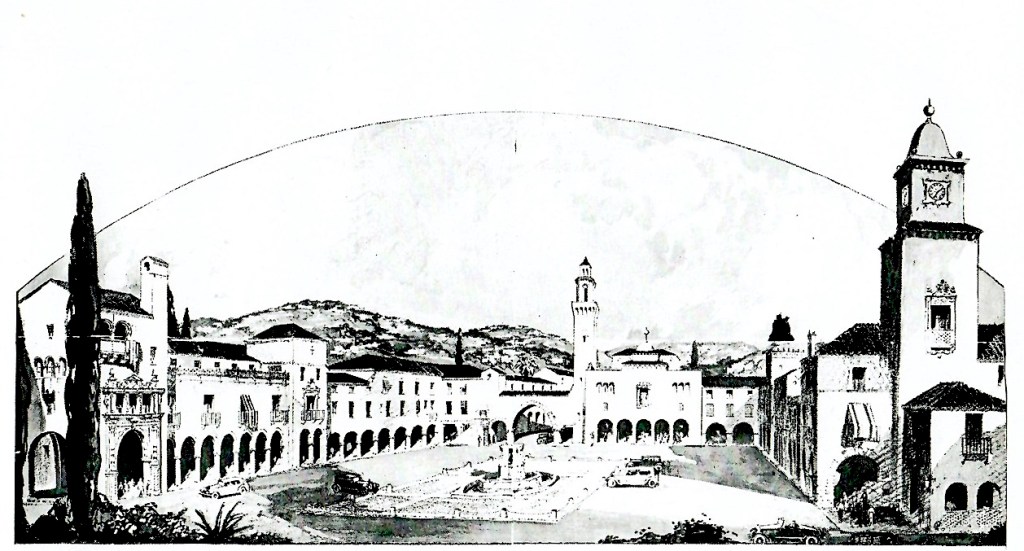
A Palos Verdes Project promotional brochure from 1926 titled “Palos Verdes Estates: Prominent among the world’s famous residential communities” shows ambitious plans for Lunada Bay. It was to house one of five central business plazas planned for Peninsula neighborhoods, but, of these, only Malaga Cove Plaza was completed. Too bad, as the Lunada Bay Plaza design featured elaborate Spanish colonial architectural elements.
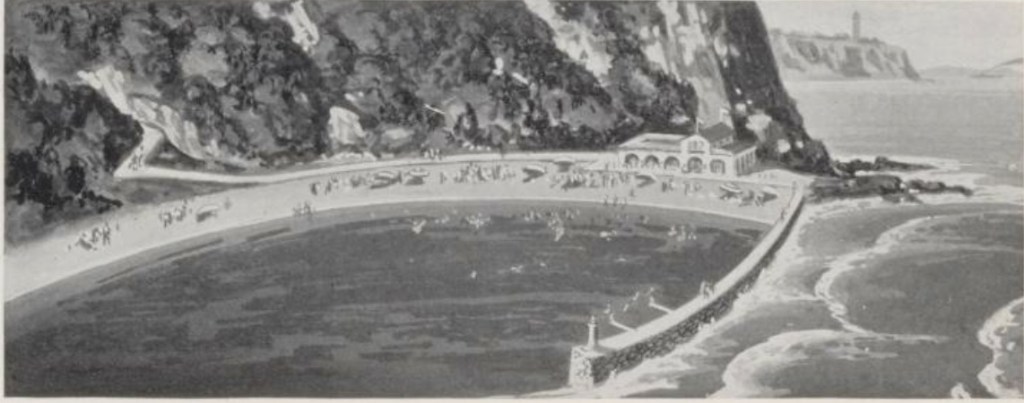
The brochure also mentions another plan that never became reality, and we quote: “Lunada Bay will be improved and converted into a swimming cove. A breakwater will be thrown out and a kiosk erected to accommodate bathing and beach parties.”
Both of these projects fell victim to the arrival of the Depression a couple of years later, with neither of them coming to fruition.
Another idea floated in 1936 called for gifting former King Edward VIII of England, who had recently abdicated the throne over his scandalous affair with Wallis Simpson, with a prime $150,000 homesite overlooking Lunada Bay. He never took them up on the sweet deal.
But another crisis would threaten the pristine coastline in 1938. The Palos Verdes Estates community was situated on unincorporated Los Angeles County land, and it was revealed that the Palos Verdes Home Owners Association had been unable to pay county property taxes since 1931, amassing $62,000 in debt in the process.
The fear was that the county would take control of lands along the shoreline and then develop them into public beaches and parklands in return for retiring the debt, which the Association otherwise was unable to pay.
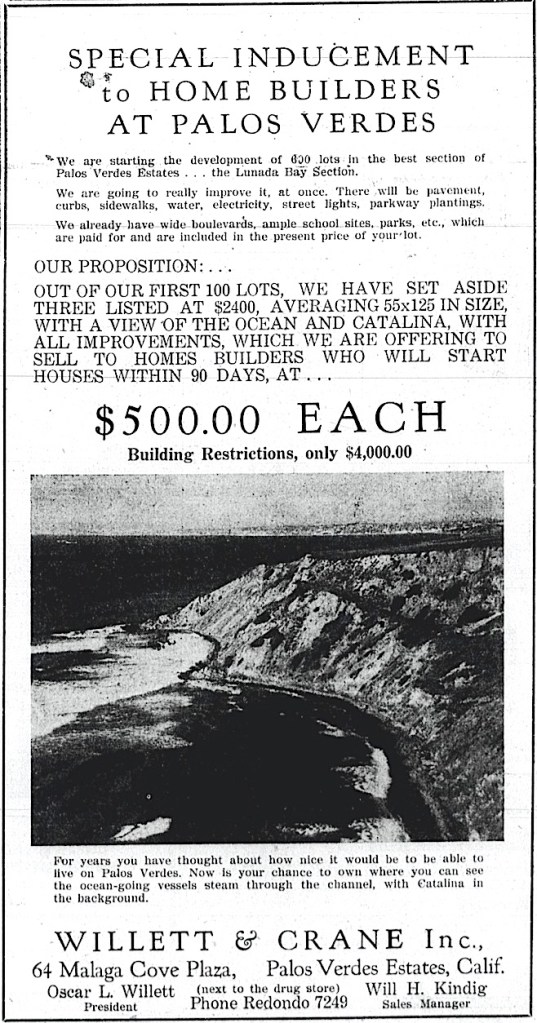
A possible solution came in the form of a movement for PVE to incorporate as a city of the sixth class. If that happened, the county would have no further influence on the future of the coastline. The new city would have complete control in perpetuity.
Debate raged over the pros and cons of incorporation, and the final vote was close. On Dec. 4, 1939, residents voted to incorporate by a margin of nine votes, 213-204. The shoreline was safe.
During World War II, the U.S. Army maintained a small station there, and housing for defnese workers was provided in the area.
Following the war, housing development in Lunada Bay ramped up significantly, with most lots snapped up for development. The city also succeeded in building new schools in the area, with Lunada Bay Elementary School opening in November 1956, and nearby Palos Verdes High School in September 1961.
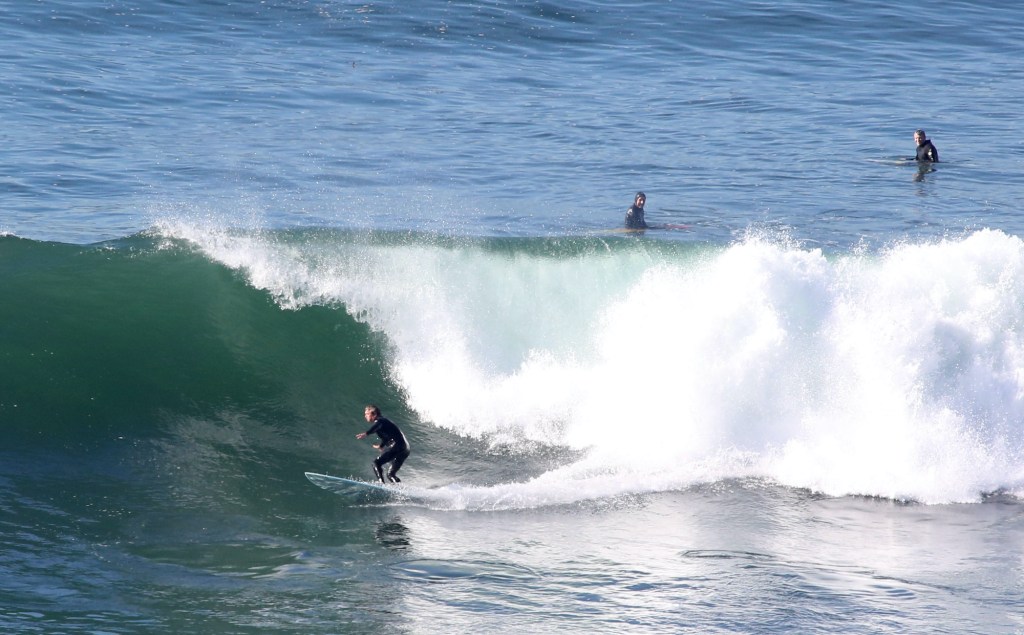
Through it all, the beachfront remained in its original undeveloped state. In 2016, the California Coastal Commission even put pressure on the city of PVE to add “amenities” to make the shoreline more accommodating to outside visitors. The city flatly refused.
The Commission’s recommendation came about as a result of the “locals only” activities of the Lunada Bay Boys, a band of surfers who have been accused of using harassment, vandalism and threats to discourage outside visitors from enjoying Lunada Bay’s excellent surfing conditions.
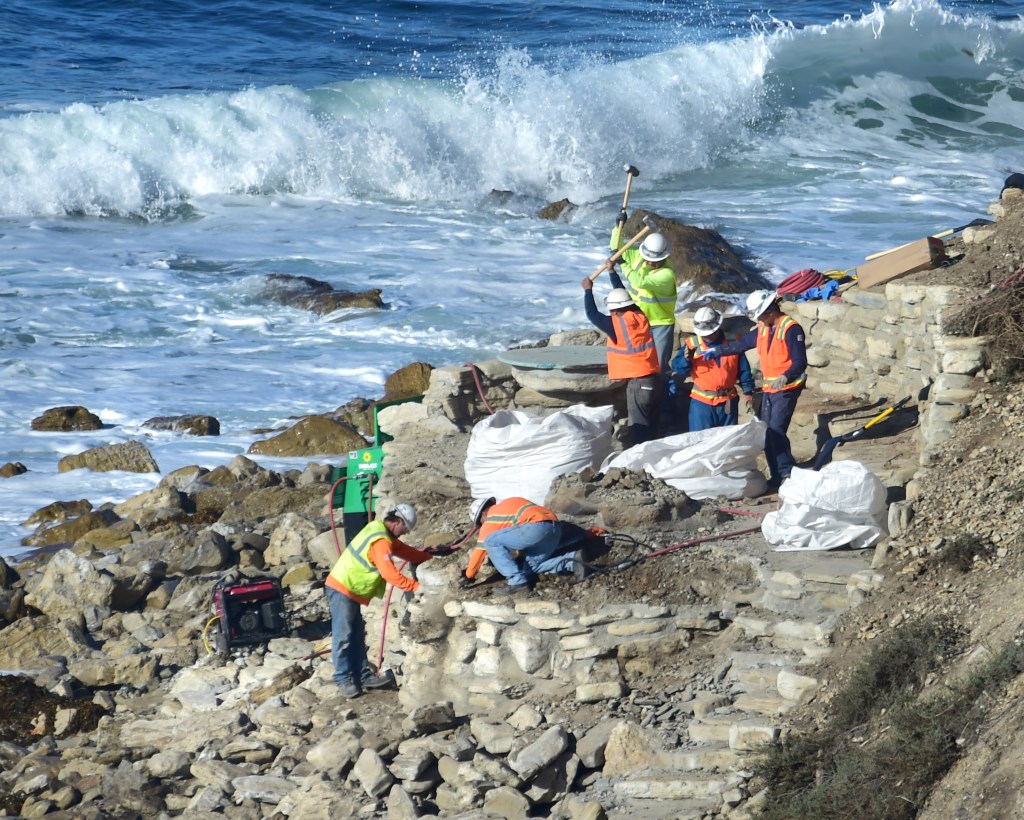
In fact, the Lunada Bay Boys built the only structure on the Lunada Bay beach, a rock patio that stood for years at the base of the rocky cliffs. Under pressure from the Coastal Commission, the PVE City Council voted to remove the structure. Crews finished demolishing it in December 2016.
The Coastal Commision felt that the addition of benches, new signs and a parklike atmosphere would discourage localism and allow everyone to use the area for recreation without fear of retribution.
PVE officials disagreed, and Lunada Bay’s shoreline remains undeveloped for now.
Sources:
Daily Breeze archives.
Los Angeles Times archives.
“Palos Verdes Estates: Prominent among the world’s famous residential communities,” Palos Verdes Project promotional brochure, 1926.
Palos Verdes Peninsula News archives.
The Palos Verdes Story, by Delane Morgan, The Palos Verdes Review, 1982.
San Pedro News Pilot archives.