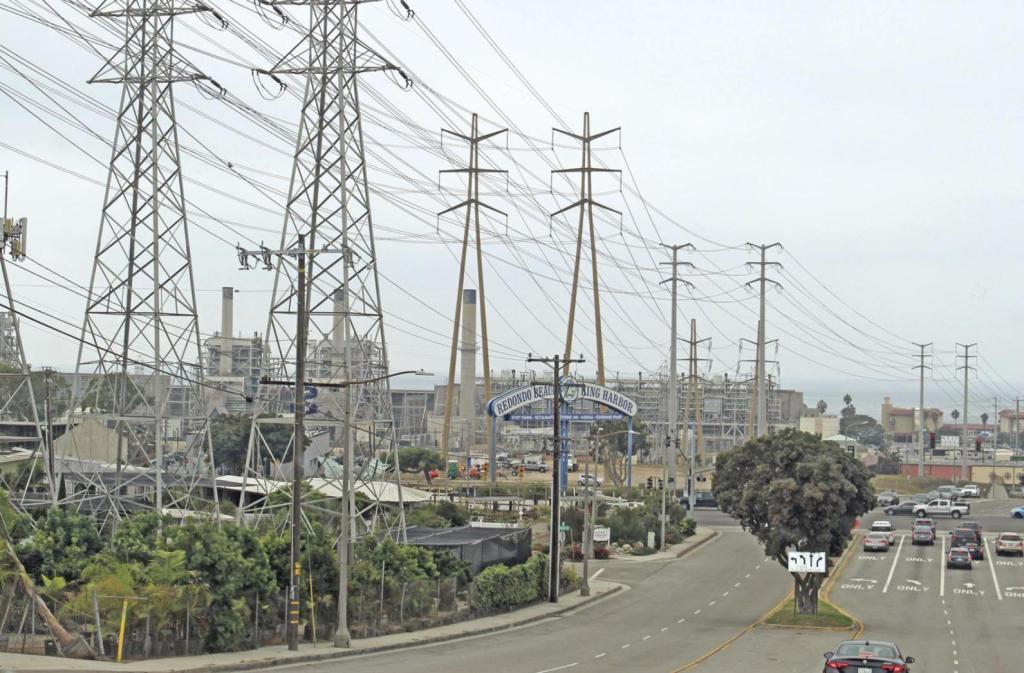
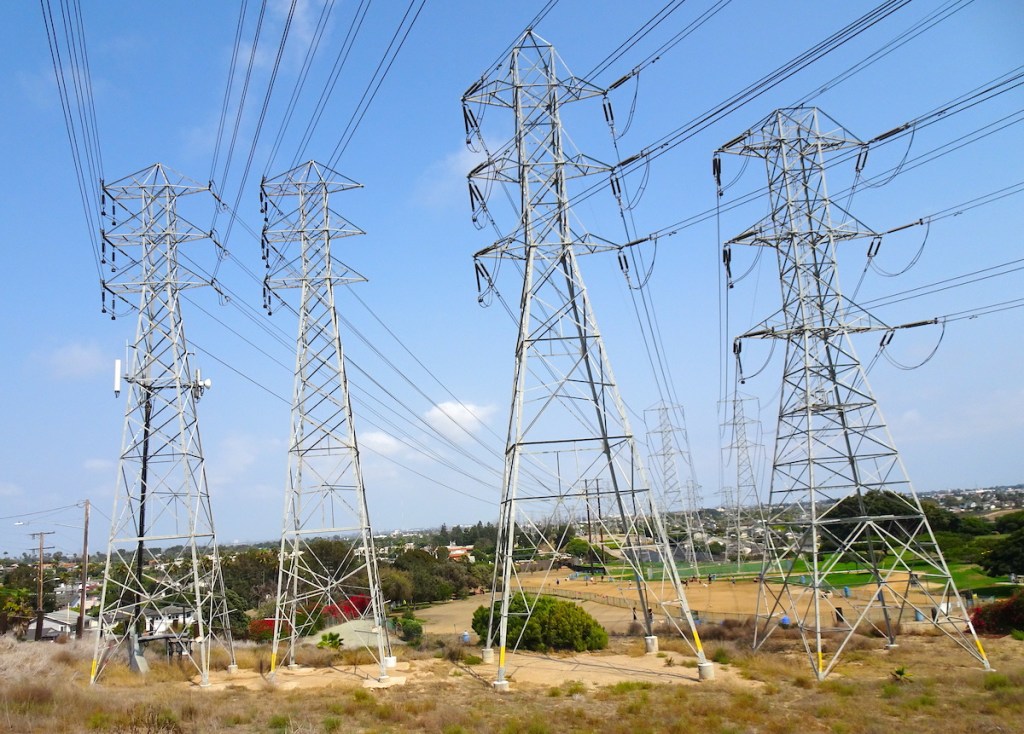
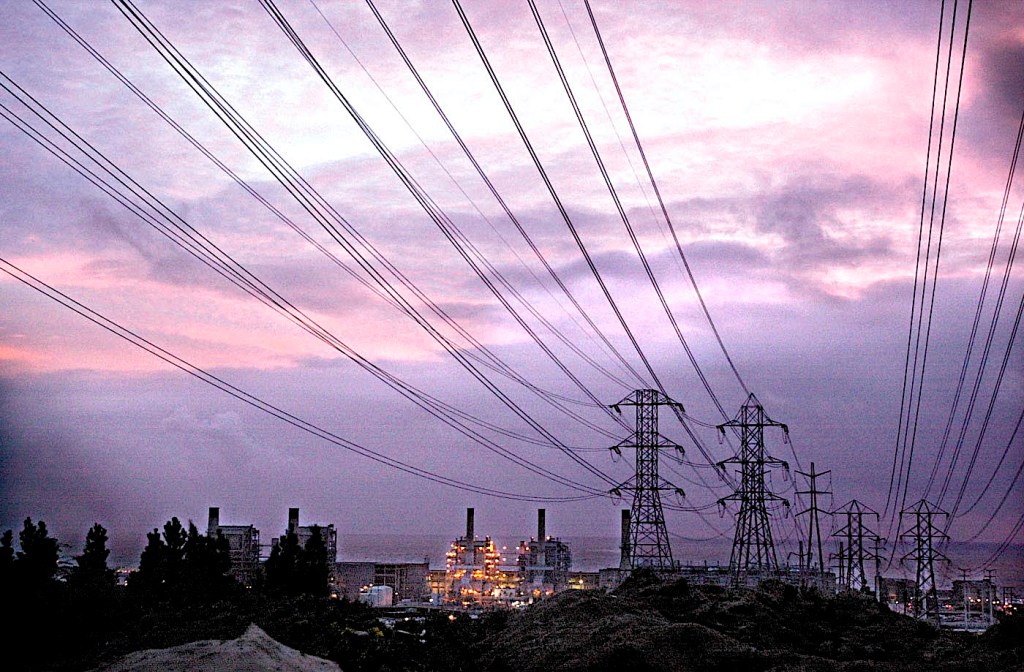
The 100-foot high electric towers dominate the skyline along the Redondo-Hermosa Beach border. They stretch east from the AES power plant near the shoreline, down Herondo and Anita streets, which become 190th St. in west Torrance. From there, their path follows the 190th St. corridor, eventually veering north to terminate at the Southern California Edison (SCE) La Fresa substation in north Torrance.
The high-tension wires carry a powerful 220 kilovolt current, which gets distributed along smaller lines from substations such as La Fresa to South Bay business and residential users.
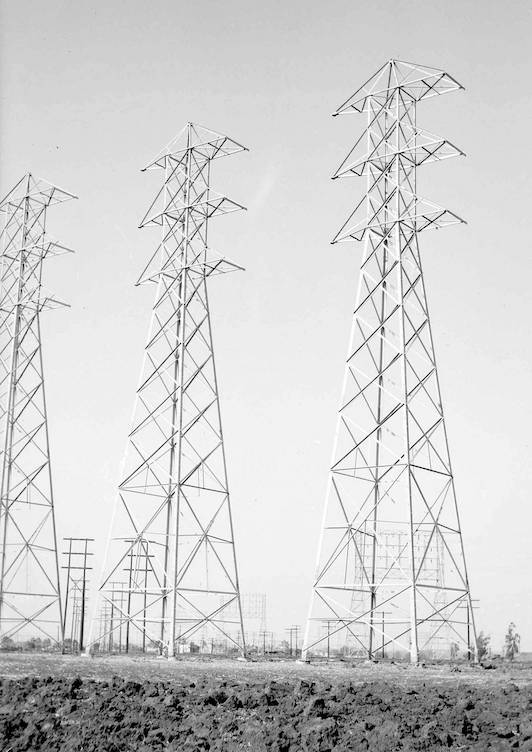
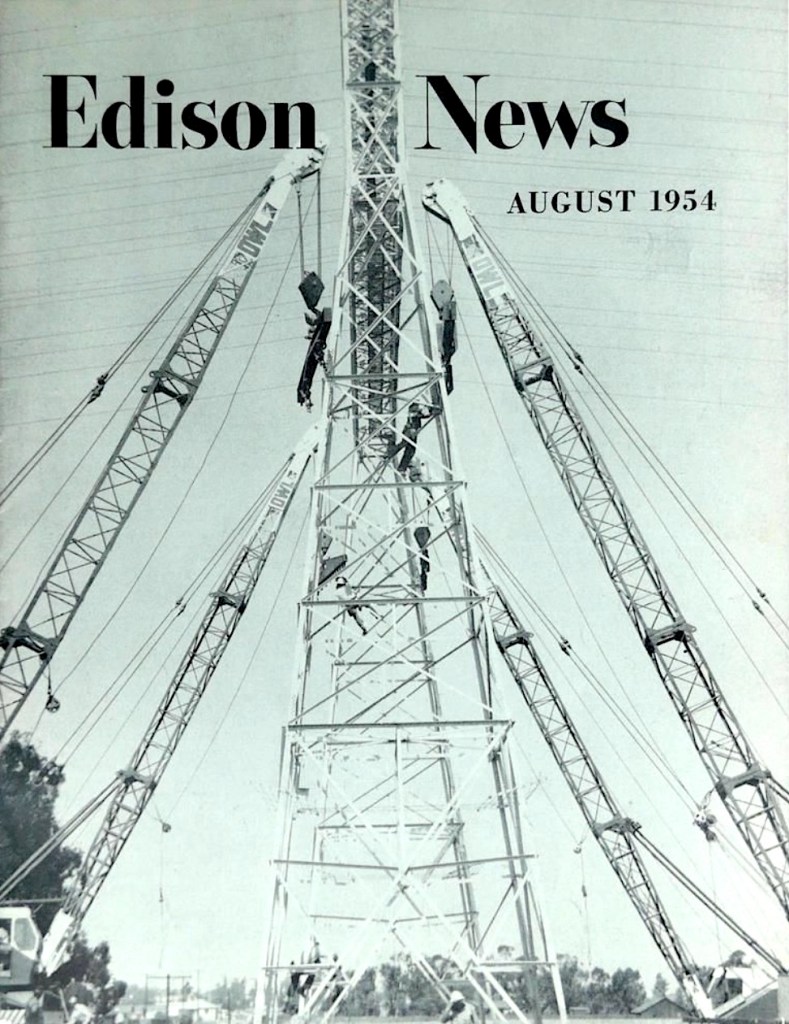
SCE built the line of huge steel towers beginning in the late 1940s. In 1917, it had purchased the old Redondo Beach steam plant property, which was built in 1907 by Henry Huntington, in large part to provide power to his popular Pacific Electric Red Car trolley lines.
As new sources of electric power came online, the plant’s role lessened, and it began to be used mostly as a backup. It closed in 1933. In 1946, SCE announced plans to build a modern power plant to replace it on the N. Harbor Dr. site near the city’s border with Hermosa Beach. It came online in 1948.
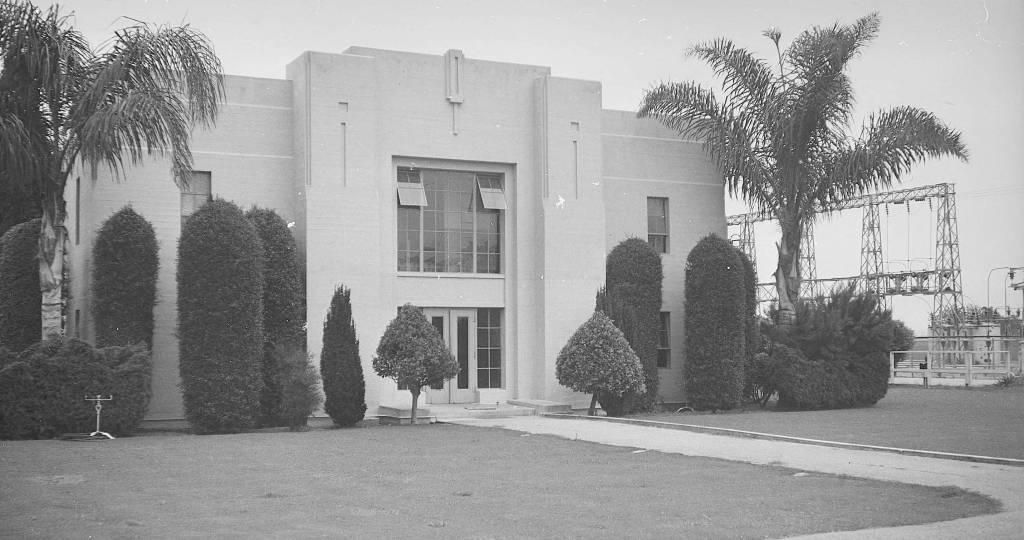
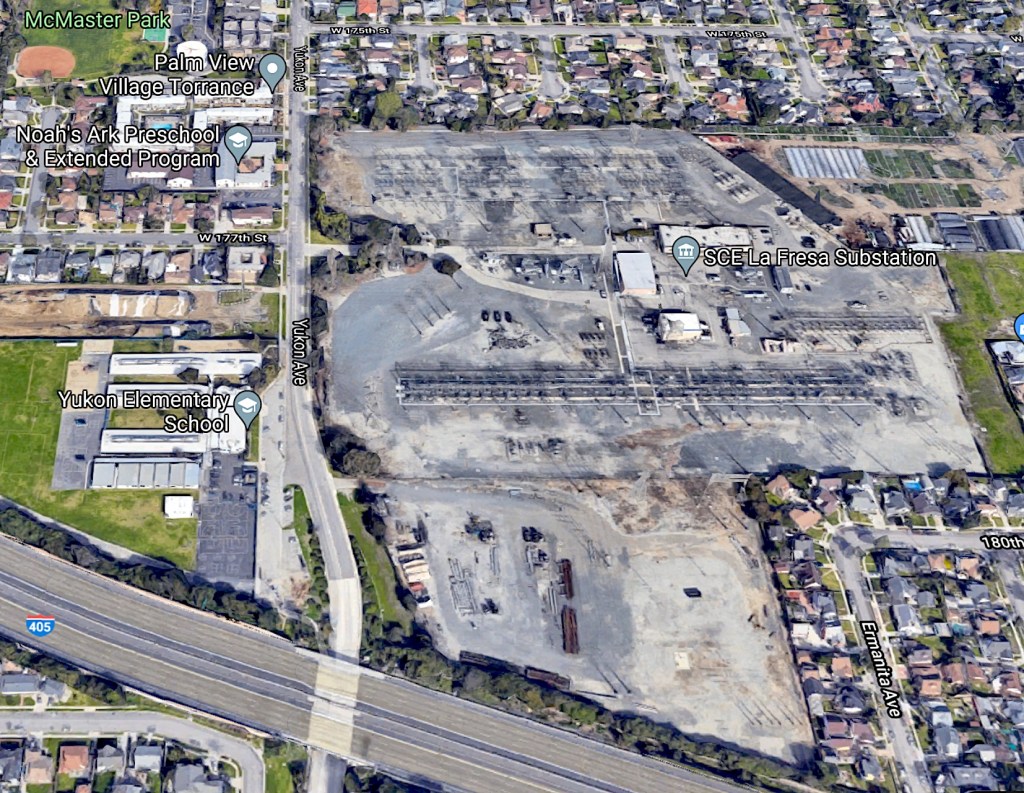
The purpose of the giant towers? To connect the new power plant with the main electrical substation for the Torrance-Redondo area, La Fresa. The substation’s name came from the Spanish word for strawberry, as the plant was constructed in 1930 in an area of mostly strawberry fields.
Located at 17860 Yukon Ave. in north Torrance, the substation underwent a $2.8 million upgrade completed in 1948 in order to be able to receive and distribute the high-voltage power coming from the Redondo station and other sources. It was part of SCE’s overall plan to conform to what was then becoming the modern de facto national standard of power transmission: 220 volts at 60 hertz. (La Fresa had been operating at 66 volts and 50 hertz.)
Many of the giant towers used probably were made of steel from Torrance’s Columbia Steel plant, then a major provider of steel used in electric utility structures.
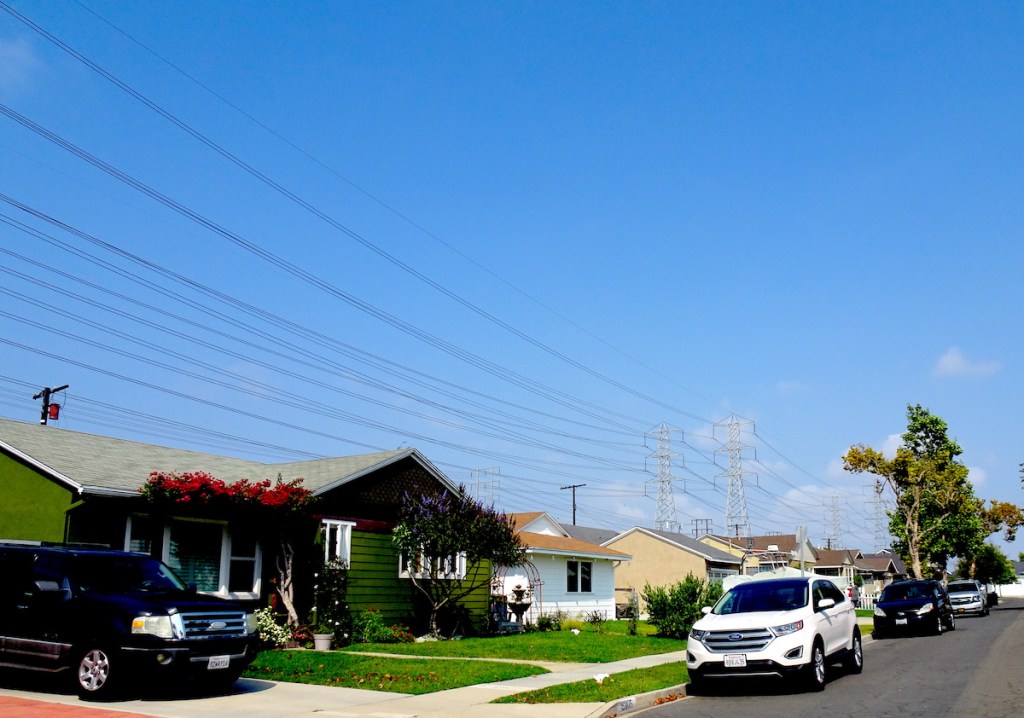
When they first were erected, the swath of electric towers marched across mostly farmland and vacant rolling hills. But the area quickly filled with housing developments during the post-WWII residential housing boom, and the unsightly nature of the towers became more noticeable, with houses built near the steel behemoths routinely selling for less than others in the area.
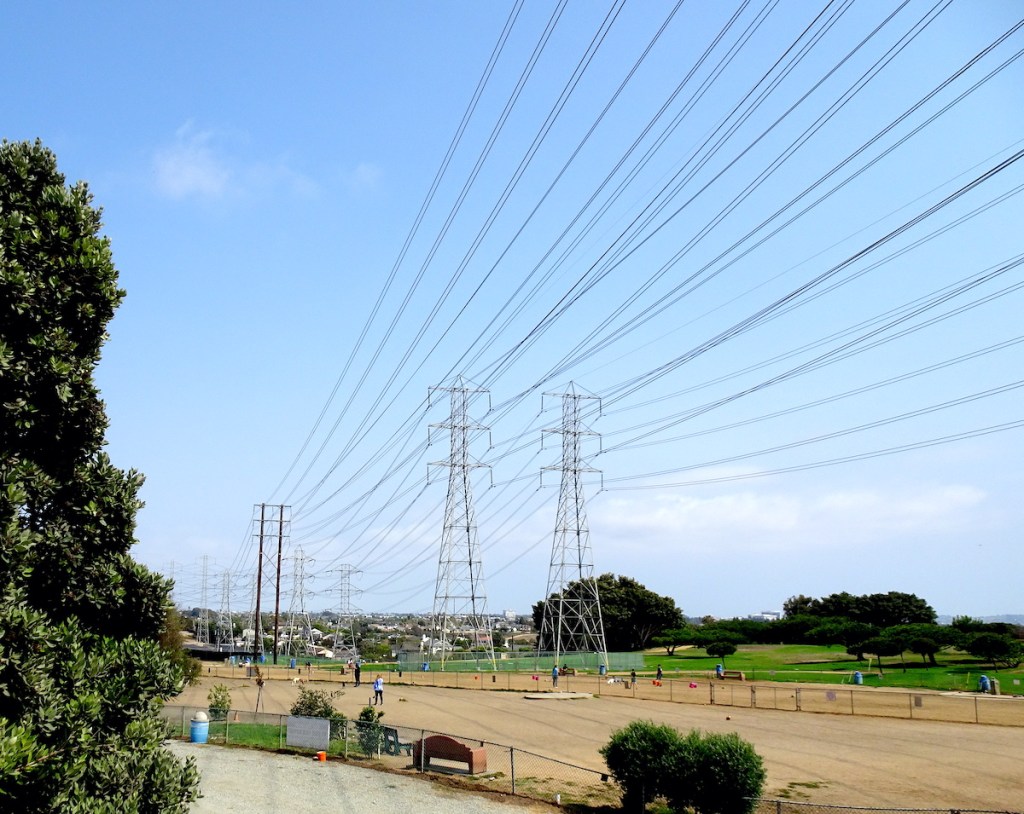
It wasn’t until many decades later that SCE allowed the land directly underneath the towers to be used for civic purposes. The Redondo Beach Dog Park, located directly beneath the row of towers at 190 Flagler Lane, didn’t open until 1992. Nurseries and community gardens also were allowed to operate under the towers.
The Redondo Beach King Harbor welcome sign also lies beneath the towers, and is dwarfed by them. Its water fountain had to be shut down in 2009 due to safety concerns over its spray potentially coming into contact with the tower’s electric current.
But the potential effects from electromagnetic fields in the area around the towers caused the most public outrage and debate. The furore began with a study conducted by the University of Colorado in Denver in the 1970s that linked some types of cancer in children to proximity to electromagnetic (EMF) fields created by electricity.
The 1992 publication of a major study conducted by Robert P. Liburdy at the Lawrence Berkeley National Laboratory at UC Berkeley describing a possible physiological link between EMF and cancer in children ramped up the intensity of concern around the topic.
Lawsuits began to pop in courts, including one in San Diego, with litigants claiming that high-tension wires had caused cancer in their children.
The hysteria began to die down in 1995, when an unknown whistleblower’s claims that Liburdy had fudged the data to make his EMF case in the 1992 study were verified to be true by an independent panel of scientists. Liburdy had to forego the $3.3 million in federal funds he’d received as a result of his study, and he left his job at the UC Berkeley lab.
The jury remains out on exactly what effects EMF areas near high-tension power lines have on humans, with the Environmental Protection Agency currently stating that the evidence of such links remains inconclusive.
The negative aesthetic effects of the towers remain real, however. Now that their once lightly populated path has become a dense urban landscape, calls for them to be removed, especially in the Redondo Beach portion of the pathway, have become louder.
Energy company AES purchased the Redondo power plant from SCE in 1997. It scaled back operations at the plant over the years, but continued to operate it despite opposition from the city, which wants to convert the property into parkland and possibly a mixed-use development, and to have the towers removed to improve the area’s scenic qualities.
AES agreed to sell the site to a private developer in 2020, but only after the plant has closed down. In April 2021, the company received permission from state power regulators to operate the plant until 2023.
In 2019, SCE offered to pay for the towers in the Redondo Beach section to be dismantled and the lines moved underground once the AES plant does close. The high-tension lines can’t be completely removed even with the closure of the plant, as they still serve as a crucial component of the South Bay’s power grid.
SCE’s cost for the proposed removal of the Redondo towers is prohibitive, with the project of moving them underground estimated to run as much as $7.9 million. At those prices, removal of the much longer Torrance segment of giant towers seems unlikely in the near future.
Sources:
Daily Breeze archives.
“Do High Voltage Power Lines Cause Cancer?”, by Steven Salzberg, Forbes magazine, Sept. 1, 2014.
Easy Reader archives.
“Electric and Magnetic Fields from Power Lines,” Environmental Protection Agency (EPA) website, updated June 2, 2021.
“EMF Researcher Faked Data,” by Dan Vergano,” Science magazine website, June 30, 1999.
Los Angeles Times files.
“Southern California Edison Company Substations, Monumental Type,” Historic American Engineering Record #CA-2318, National Park Service, Jan. 2, 2014.
Torrance Press-Herald archives.