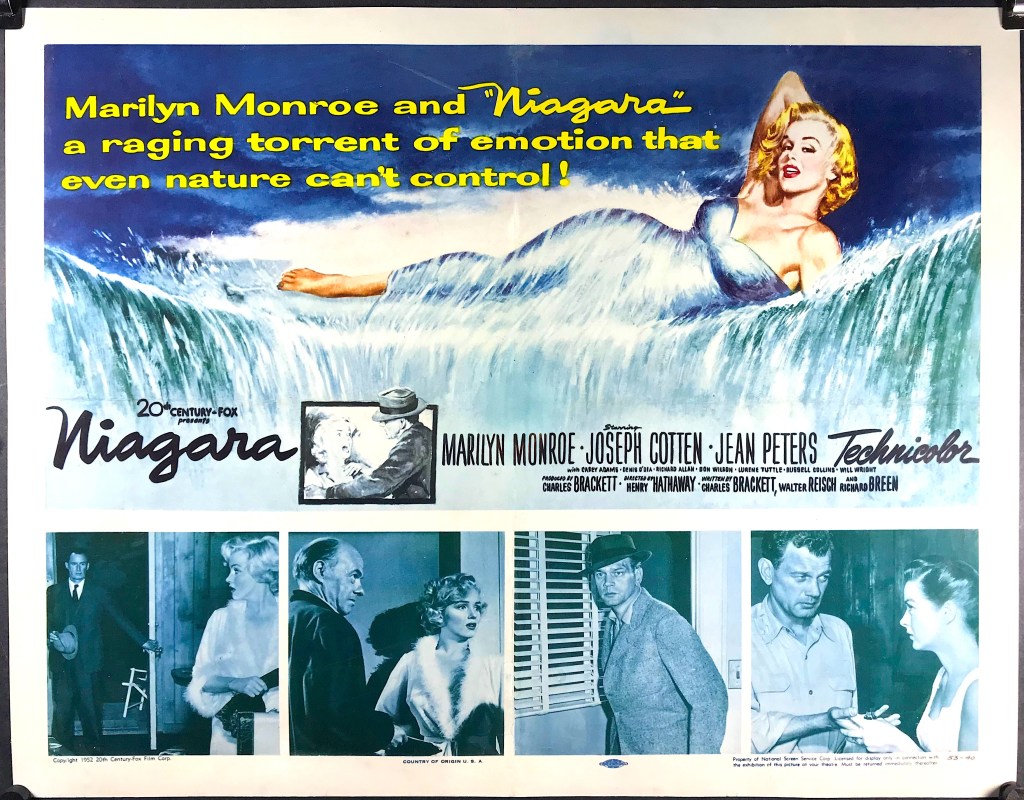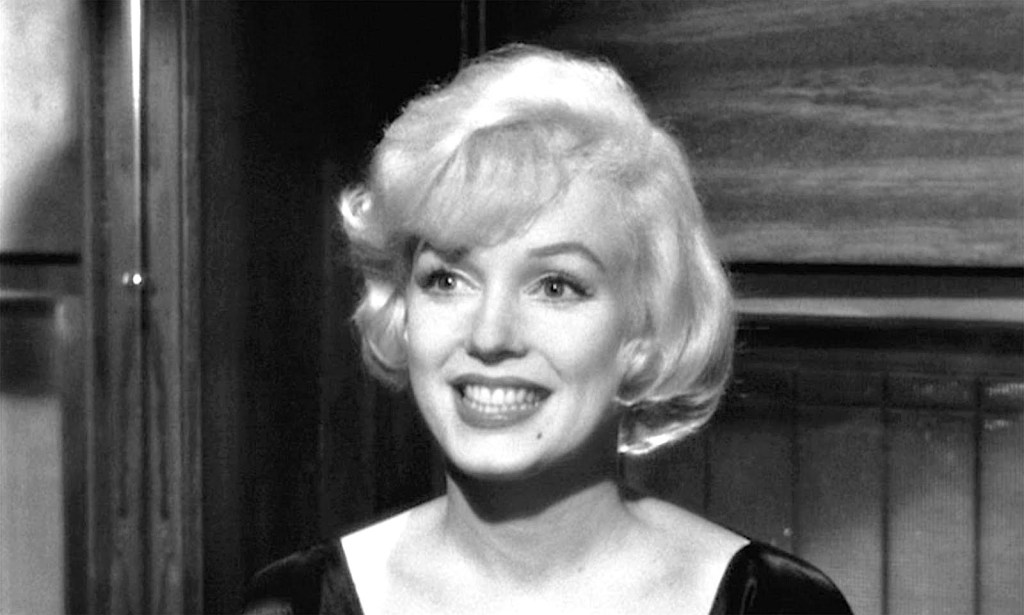
It sounds like a cliche to say that the quintessential glamorous movie star came from the humblest of beginnings, but, in Marilyn Monroe’s case, it’s true.
She was born Norma Jeane Mortenson at Los Angeles County General Hospital (now known as County/USC Medical Center) on June 1, 1926, in the charity ward. Her mother, Gladys Pearl Baker, worked as a film cutter in Hollywood.
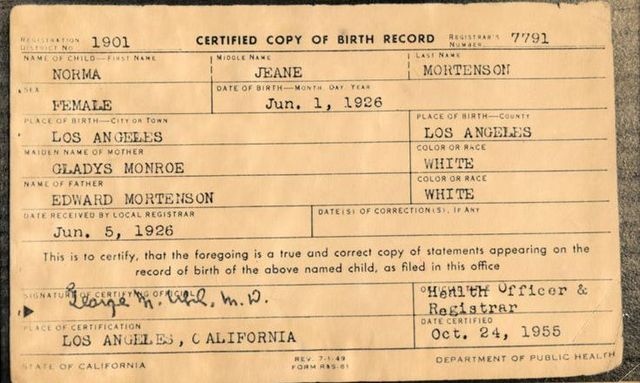
Gladys was married to Martin Mortenson at the time, though it’s not at all clear that he was Marilyn’s father. The pair separated months after their 1924 marriage, but didn’t get divorced until 1928.
Though her last name is Mortenson on her birth certificate, both Marilyn and her mother preferred to use the Baker surname. Due to a later clerical error, the “e” on Jean was dropped mistakenly, and Marilyn often is referred to as Norma Jean Baker.
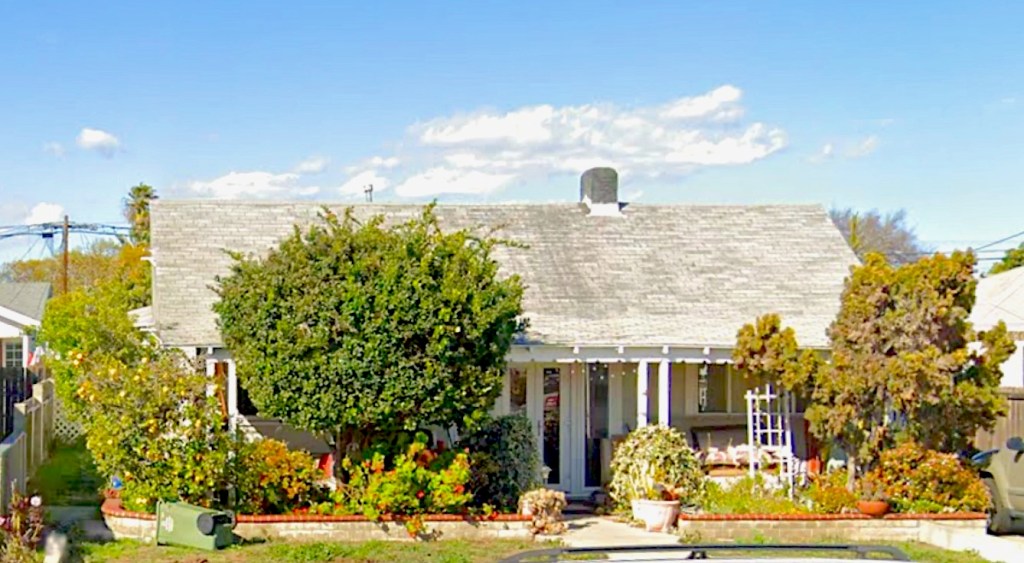
Unable to afford child care and struggling to make ends meet, Gladys turned to the Bolenders, who lived across the street from her mother, Della, in Hawthorne.
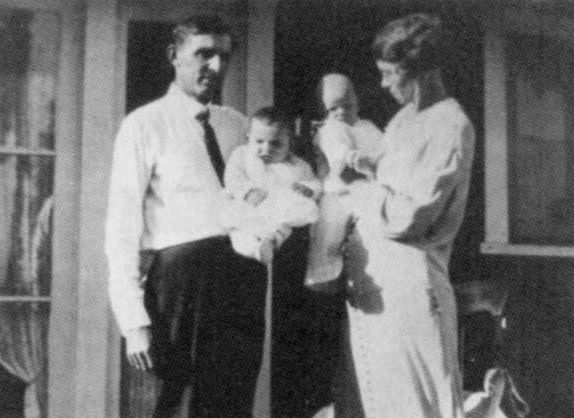
Albert Wayne Bolender and his wife, Ida, ran a foster care home in their three-bedroom house at 459 Rhode Island St. The house, which originally included an additional four acres of land, still stands pretty much as it was at 4201 W. 134th St., though on a much smaller lot. (Numerical street names carried down from Los Angeles replaced the original street names in Hawthorne beginning in the 1930s.)
The Bolenders were devout evangelical Christians who raised their foster children in a strict but nurturing environment. Biographer Donald Spoto, author of Marilyn Monroe: The Biography, describes Marilyn’s first seven years as among the most stable in her troubled life.
Her mother didn’t abandon her, and in fact lived with the Bolenders for Marilyn’s first six months until she was forced to return to work. She visited Marilyn at the house on weekends, staying at her mother’s home across the street.
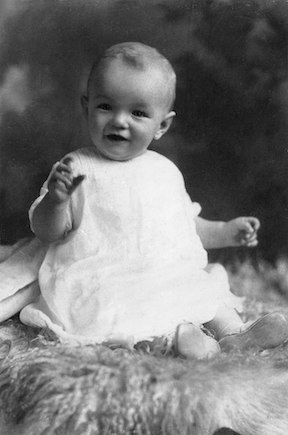
Unfortunately, Marilyn’s grandmother Della suffered from a weakened heart, which caused other ailments. Her condition worsened in 1927, and she began suffering from delusions. She broke a door window attempting to break into the Bolender’s house to see her grandaughter. Albert and Ida called the police, which resulted in Della being evaluated and sent to the state mental hospital in Norwalk, where she died at 51 a couple weeks later.
Gladys stayed at her mother’s house for a few months, but eventually sold it and moved back to Hollywood. She had great difficulty coping with her role as a mother while working full time and being enticed by the Hollywood lifestyle.
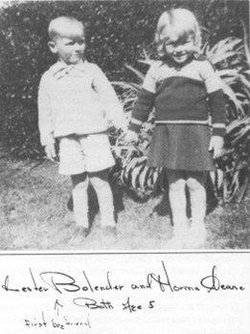
As for her daughter Norma, she began attending Washington Street School in Hawthorne as a first grader in 1932. She also formed a friendship with Lester Flugel, another child at the Bolender household who had been born in 1926. They were known in the household as “the twins.” The Bolenders later adopted him, and he became Lester Bolender. They tried to adopt Marilyn as well, but Gladys refused to allow it.
Author Spoto describes Marilyn’s early childhood as on the austere side, but happy. She took weekend trips with her mother to the South Bay beach cities, and they even toured a glass factory in Torrance. Marilyn adopted a dog, Tippy, who became her constant companion.
When a Hawthorne neighbor shot Tippy due to the dog’s incessant barking, Marilyn was inconsolable. Whatever her failings as a mother, Gladys wanted the best for her daughter, and was determined to reclaim her. In June 1933, shortly after Marilyn’s seventh birthday, she paid the Bolenders what they were owed and took Marilyn with her back to Hollywood, ending her days in Hawthorne.
Gladys had been able to afford to buy a house in Hollywood under a Depression-era federal program. Life there for her daughter turned out to be diametrically opposed to life with the Bolenders.
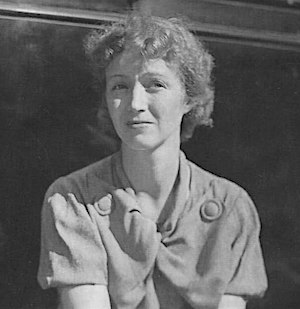
(Credit: Everlasting Star blog)
Working as film cutters, Gladys and her friend and co-worker Grace McKee were immersed in the world of Hollywood and would on occasion send Marilyn off to a movie theater all day while they worked. The Bolenders had viewed the film industry as “sinful,” and had refused to allow their charges to go to the movies.
Unfortunately, Gladys’ mental state was deteriorating in late 1933, especially after hearing of her grandfather’s death in Missouri. She fell into a deep depression, convinced that she and her family were cursed with mental illness. She was taken to a Santa Monica rest home in 1934, and would end up in and out of mental hospitals for the rest of her life.
Grace McKee became Grace Goddard when she remarried in 1935, and she also became Marilyn’s legal guardian. She’d always told young Marilyn that she could be a movie star, but Marilyn’s stay with her and her new husband only lasted for a few months.
The young girl ended ended up in and out of foster homes, orphanages and various homes of Goddard relatives for the next few years. When the Goddards moved to West Virginia, Marilyn had to stay behind. To avoid another orphanage stint, she quickly married factory worker James Dougherty in 1942 when she was 16.
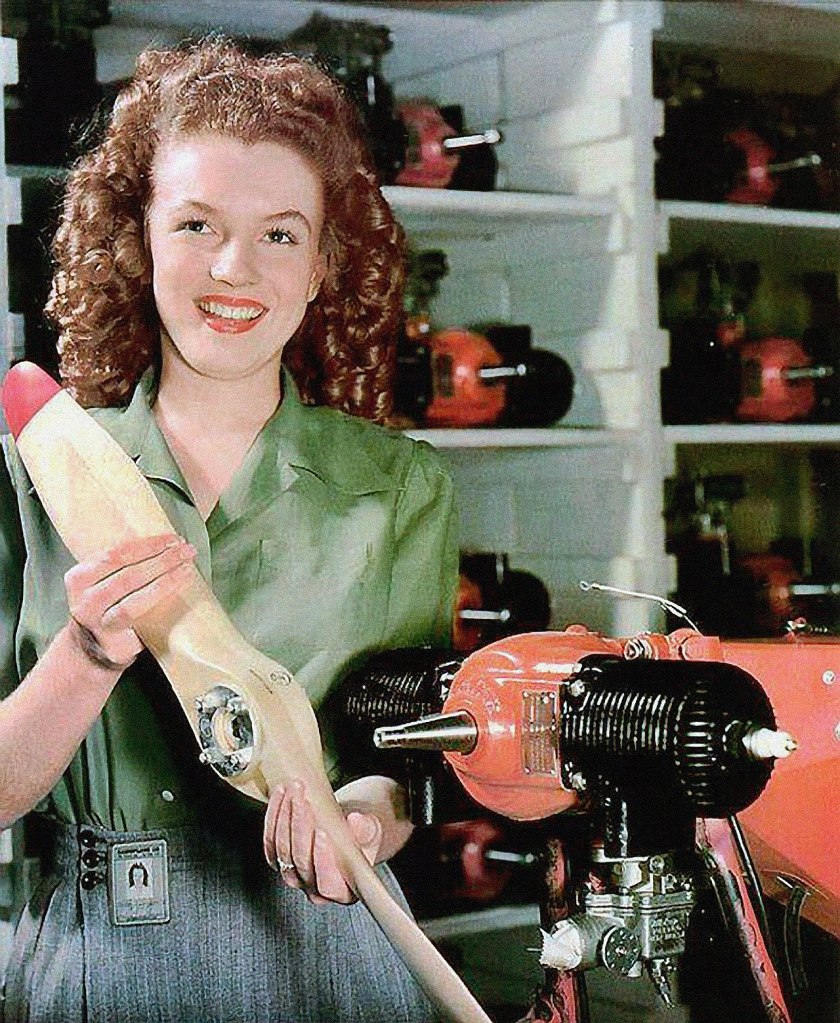
She got a job working at the Radioplane Co. defense plant in Van Nuys. There, she met photographer David Conover, who began using her for glamor photo shoots. After doing some pin-up modeling and appearing on several magazine covers, she came to the attention of Hollywood agents and film studios.
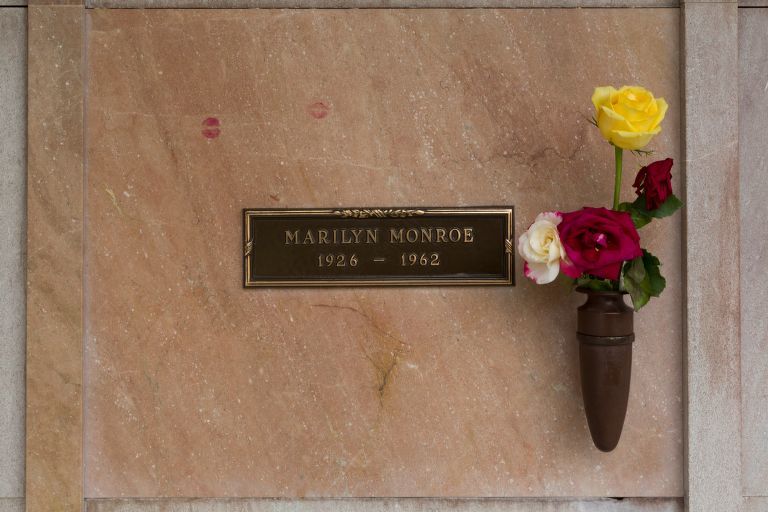
Daugherty opposed her new career choice, so in 1946, she divorced him and began working her way up through the movie star ranks on her way to becoming one of Hollywood’s greatest film icons. Her death by drug overdose in 1962 at age 36 remains grist for gossips and conspiracy theorists to this day.
And it all started in Hawthorne.
(Credit: Library of Congress, Prints & Photographs Division)
Sources:
Hawthorne and Centinela Valley: A Portrait of a Memory, by Douglas T. Robertson, self-published, January 1993 edition.
“Marilyn Monroe’s Childhood Home,” Iamnotastalker blog, Dec. 6, 2013.
Marilyn Monroe: The Biography, By Donald Spoto, HarperCollins, 1993.
Wikipedia.