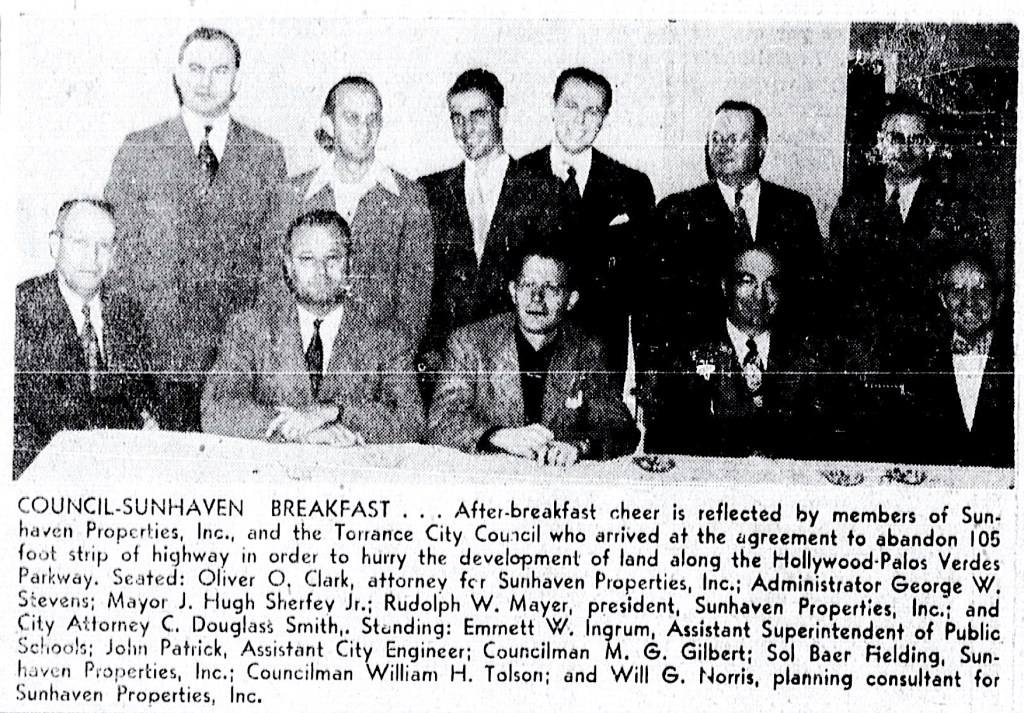
Dictatorial studio head Louis B. Mayer, head of Metro-Goldwyn-Mayer studio from 1924-1951, may not have been the most beloved movie mogul of Hollywood’s Golden Age, but he was downright angelic compared to his little brother Rudolph.
Rudolph W. Mayer was born Rubin Mayer in Long Island, New York, on April 17, 1889, to Jacob and Sarah Meir. His parents had emigrated to the U.S. from a small town near Minsk in present-day Belarus to New York in 1887, bringing along Louis and his two sisters, Yetta and Ida, and changing their name to Mayer. (A third brother, Jeremiah, was born in 1891.)
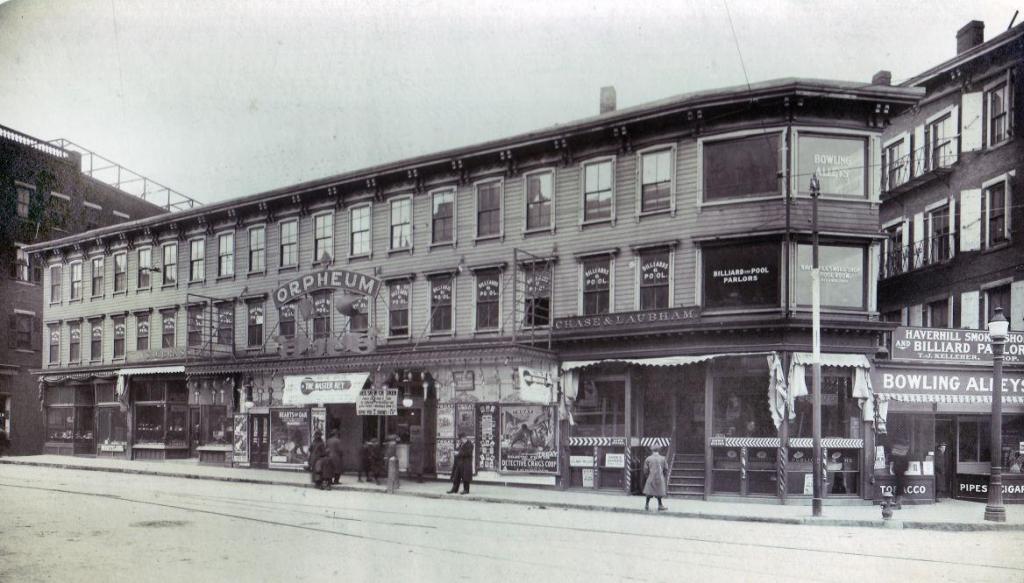
The young boys worked in the family scrap iron business, J. Mayer & Son, often roaming the streets looking for metal scraps. Louis eventually got married and moved to Haverhill, Mass., near Boston, where he became enamored with the entertainment business, renovating and reopening an old theater there in 1907.
The Orpheum, as he renamed it, became successful, and he was on his way. Rudolph was involved in the early phases of the project, but Louis decided his brother’s temperament was ill-suited to the hard work involved, and he was eased out of his role there.
Rudolph returned to the metal business, moving to Canada where he became president of the Dominion Iron & Wrecking Co. The company flourished when it began making war materials for World War I, but business suffered following the war’s end.
Rudolph left the scrap iron business after the downturn, and began a life as a roving entrepreneur. Some might call him a con man; he began with deals in the Florida real estate market, selling the proverbial “Florida swampland” to the unsuspecting.
In 1931, he formed a new venture, Rudolph Mayer Pictures Inc., which became a well-known precedent in legal circles for the case Rudolph Mayer Pictures, Inc., v. Pathe News, Inc. ( 235 App. Div. 774). Mayer had obtained rights to film footage of the Jack Sharkey-Mickey Walker boxing match at Ebbets Field in Brooklyn, and successfully sued Pathe News when they horned in by setting up a camera on a nearby rooftop to capture images of the fight.
Unfortunately, Mayer Pictures turned out to be more of an attempt to cash in on his brother’s more famous film operation than an actual going enterprise. Rudolph was arrested on fraud charges in 1932 for illegally selling stock in the shell company. The incident embarrassed his brother Louis, who had to intervene to get charges dropped and pay back duped investors.
Rudolph went from one such scheme to another. He became especially active following the end of World War II. In 1946, he became president of Nevada Desert Inn Inc., the company attempting to build the landmark casino and hotel in Las Vegas’ early days as a gambling mecca. He left soon after, and the hotel wouldn’t be completed and opened until 1950.
Sensing major financial opportunities in the California land market, which was particularly hot in the South Bay, he changed his career course once again.
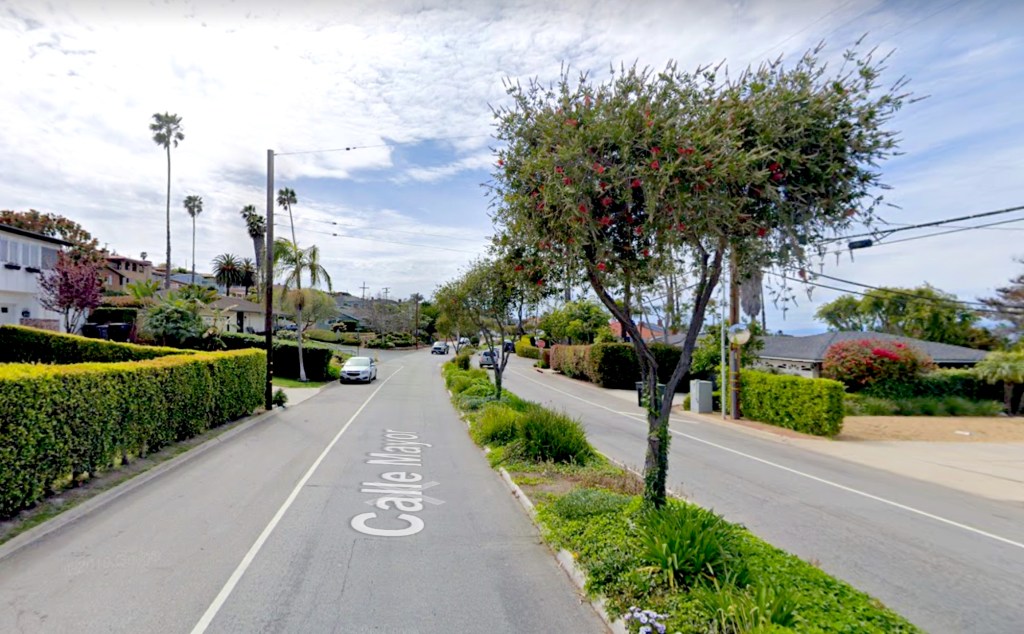
He began buying and developing vacant land in the Hollywood Riviera area of southwest Torrance through his Sunhaven Properties firm. His first major project, the 156-unit Palos Verdes Apartments, opened in spring 1949 at 444 Hollywood Palos Verdes Parkway (later renamed Palos Verdes Blvd.)
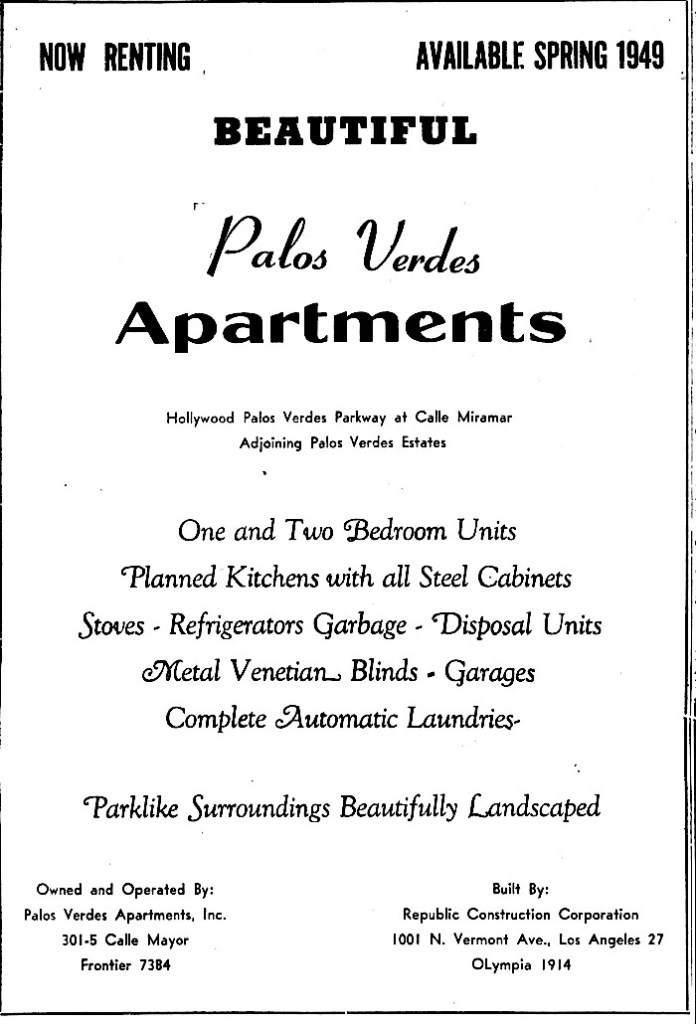
Renters quickly filled the new complex. But Mayer and his associates had borrowed $1,269,000 from an insurance company for its construction, which they then defaulted on in April 1951. The U.S. government ended up having to repay the insurance company under the National Housing Act, and it had to sue to reclaim the title to the complex in April 1952.
The Palos Verdes Apartments eventually became subsumed into the larger Village Palos Verdes residential complex that occupies the site today.
But his most underhanded, and, frankly, blatantly racist scheme was yet to come. He subdvided the remainder of his Hollywood Riviera property at the base of the Palos Verdes Hills into 400 lots in 1950, and set about getting permits to build houses there. The $10 million project would include not only houses, but a hilltop luxury hotel overlooking Torrance Beach.
He then ran into a snag with the Torrance planning commission, who insisted that the first 80 new houses he sought to build in 1950 must have sidewalks. Mayer absolutely refused to accede to this request, pointing out that none of the many other housing developments under construction in the booming city had such sidewalk requirements.
The impasse grew tense and more angry, until Mayer dropped his bombshell at a September 1950 city council meeting. He announced with great fanfare that a consortium of “wealthy Los Angeles Negro citizens” headed by one Clarence McFadden had made an offer to acquire the land and build houses there.
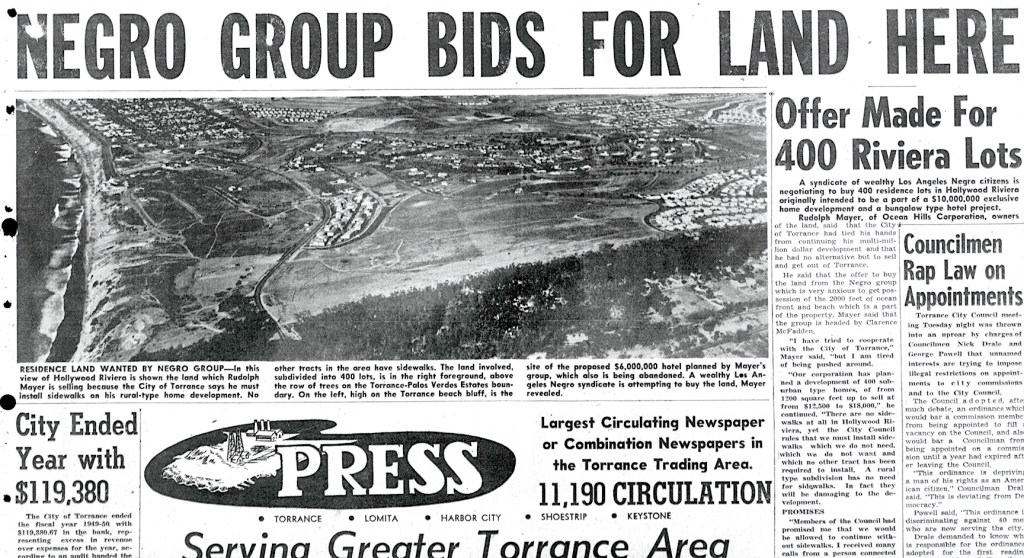
Torrance at the time was a “sundown town,” with an unspoken agreement not to sell homes to Black buyers. That stance would be challenged and receive nationwide attention during the civil rights protests at the Southwood development in 1963, thirteen years later.
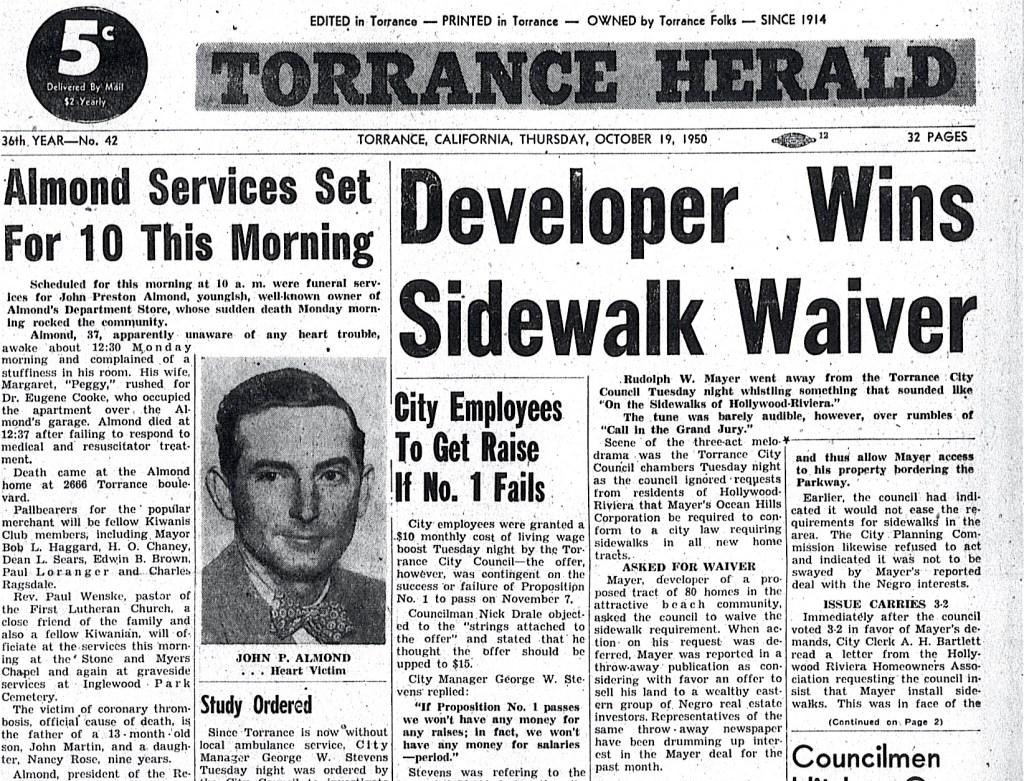
“We’re sick and tired of the actions of Torrance officials, and we’re selling out,” Mayer told the Torrance Press. He claimed the group and the offer were both legitimate, and The Press fell for Mayer’s cheap race-baiting tactics hook, line and sinker. It was the only newspaper outlet to do so; others, including the Torrance Herald, recognized that Mayer was bluffing.
Initially, the Torrance city council stood firm on the sidewalk requirement, but it eventually caved to Mayer’s ultimatum with a 3-2 vote in his favor on Oct. 17, 1950. The sidewalk requirement was rescinded; Mayer had won.
The houses were built without sidewalks, and much of the Hollywood Riviera residential area remains without them to this day. The luxury hotel never was built.
Mayer had little time to savor his victory. He died of an apparent heart attack after a fire believed to have been started by a cigarette broke out in the bedroom of his suite at the Gaylord Hotel at 3355 Wilshire Blvd. in Los Angeles on Feb. 27, 1951. He was 61.
Sources:
Daily Breeze archives.
Lion of Hollywood: The Life and Legend of Louis B. Mayer, by Scott Eyman, Simon & Schuster, 2005.
Los Angeles Times archives.
New York Times archives.
“Something Has Gone Very Wrong…” | The Homepage of James W. Loewen.
Sundown Towns: A Hidden Dimension of American Racism, by James W. Loewen, New Press, 2018 (illustrated edition).
Time magazine archives.
Torrance Press-Herald archives.