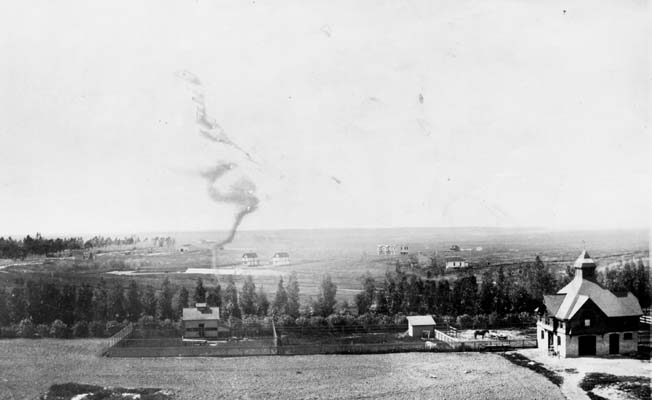
Real estate developer Daniel Freeman tried hard to convince people to buy lots in the Inglewood area after he acquired the Rancho Sausal Redondo and the Rancho Aguaje de la Centinela lands in the 1880s.
He became a central figure in the development of Inglewood through his Centinela-Inglewood Land Company, formed in 1887. Freeman eventually became a very wealthy man through subdivision and sale of his real estate holdings.
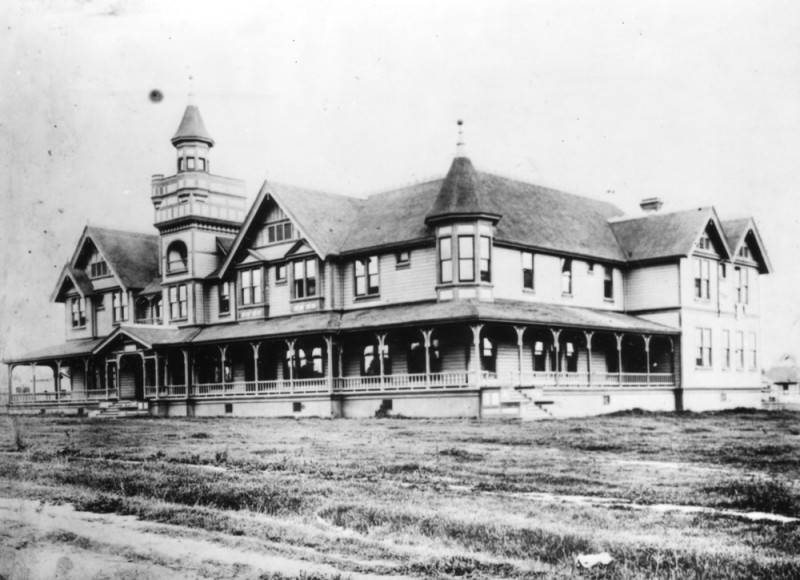
He built some structures on the mostly empty land in an attempt to portray the development as attractive and thriving. One of them, the Inglewood Hotel, went up in 1888.
At first it didn’t even operate as a hotel, serving more as an advertising facade than an actual business. By the early 1900s, private owners began taking guests, but the hotel was far from luxurious.
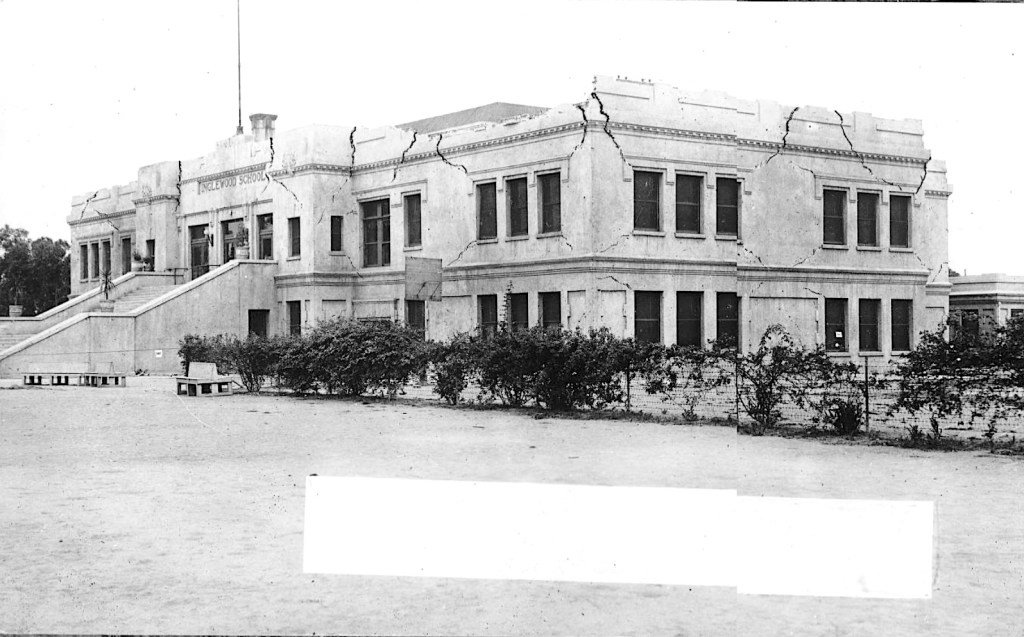
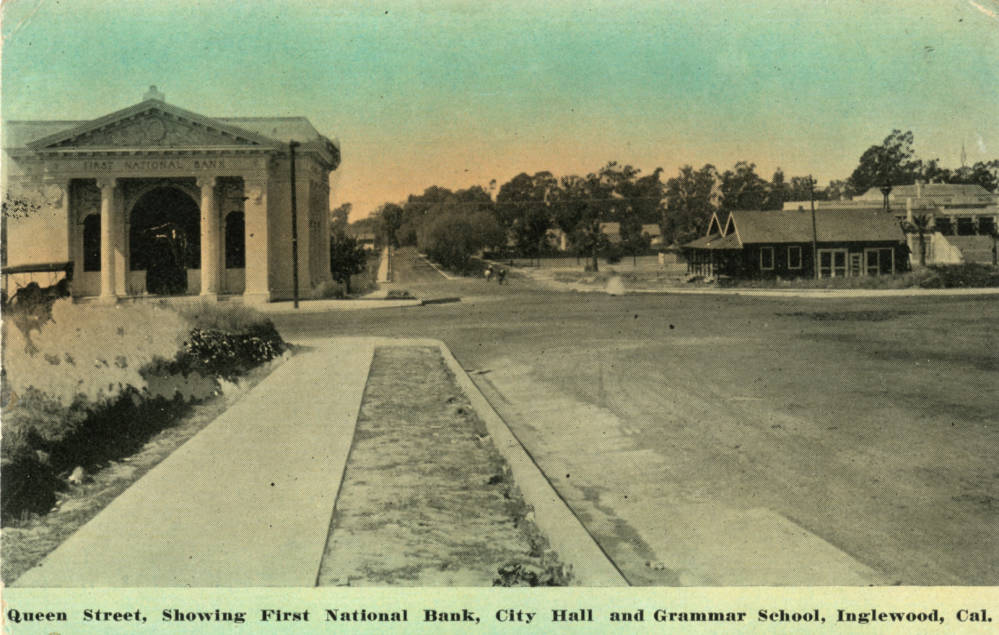
Other early buildings in the city included the nearby First National Bank of Inglewood, built around 1905, the Inglewood Grammar School, the city’s first school, built in 1888, and several business buildings in the town’s Commercial Ave./Queen St. business district. (Commercial later would be renamed La Brea.)
The city incorporated in 1908. By 1920, Inglewood wasn’t exactly thriving, but it did have about 4,000 residents and an assessed total valuation of just over $1 million.
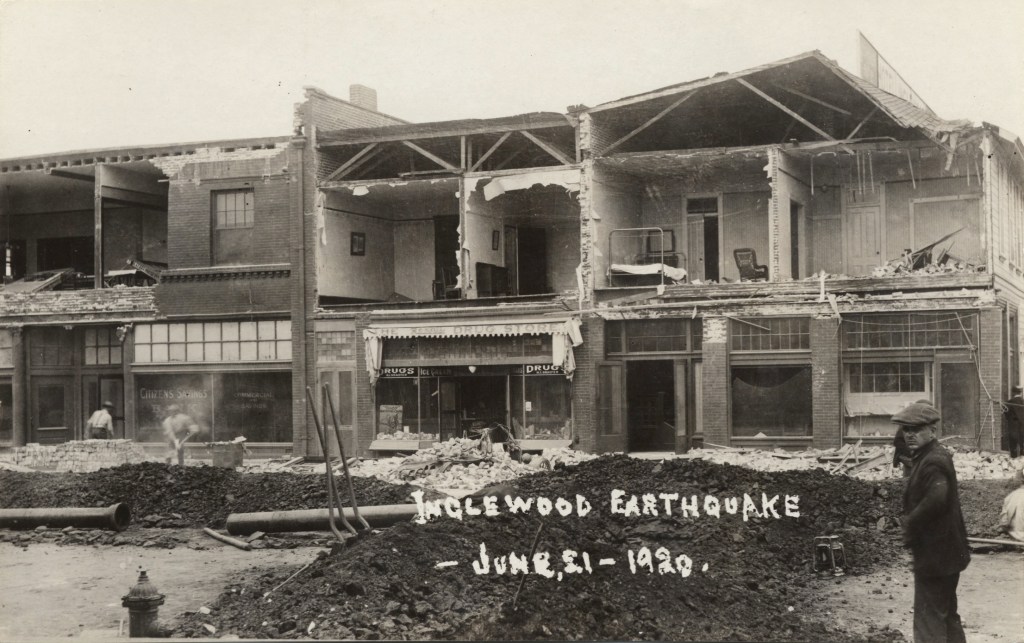
All of that changed on June 21, 1920, when a 4.9 earthquake on the Newport-Inglewood fault shook the city in the middle of the day, at 12:35 p.m.
While not a mammoth temblor by modern standards, the quake turned out to be plenty powerful enough to do major damage to many of Inglewood’s downtown buildings as well as to its water mains and streetlights.
Newspaper accounts of the event bent over backward to spin the damage as minor and relatively inconsequential. While it’s true that no one was killed in the quake, most of the buildings mentioned above did suffer major damage.
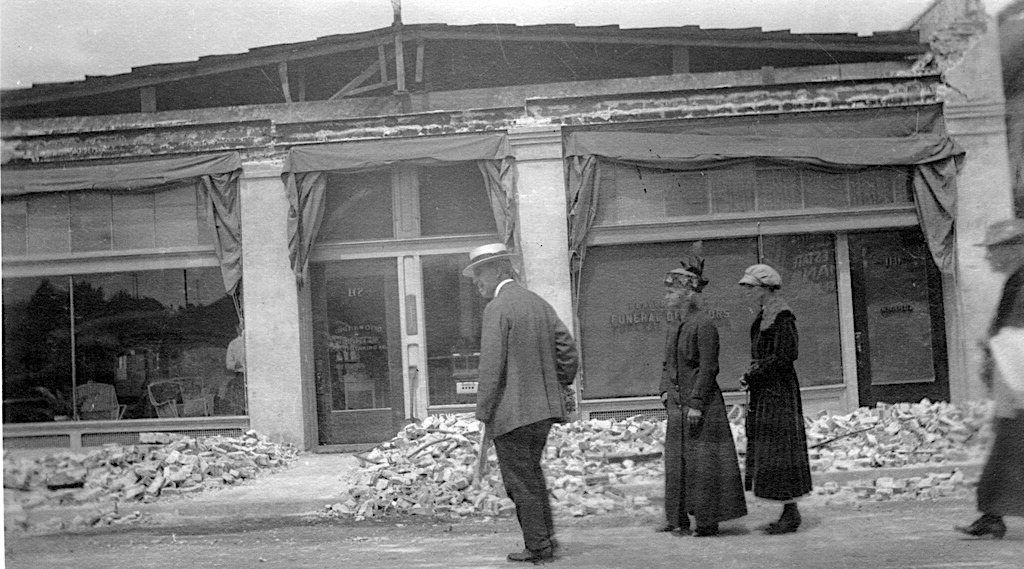
The aging hotel’s shoddy workmanship was revealed when it was seriously damaged by the quake. It marked the end for the hotel, which never reopened and would be torn down shortly afterward.
The First National Bank also was a total loss, and the Citizens Savings Bank was left with serious structural damage. The Inglewood Grammar School on Queen St. was devastated by the quake, and was a total loss.
Dozens of storefronts suffered damage, including pharmacies, grocery stores and the town’s movie theater. Some just had windows and merchandise broken, but several had at least one wall collapse.
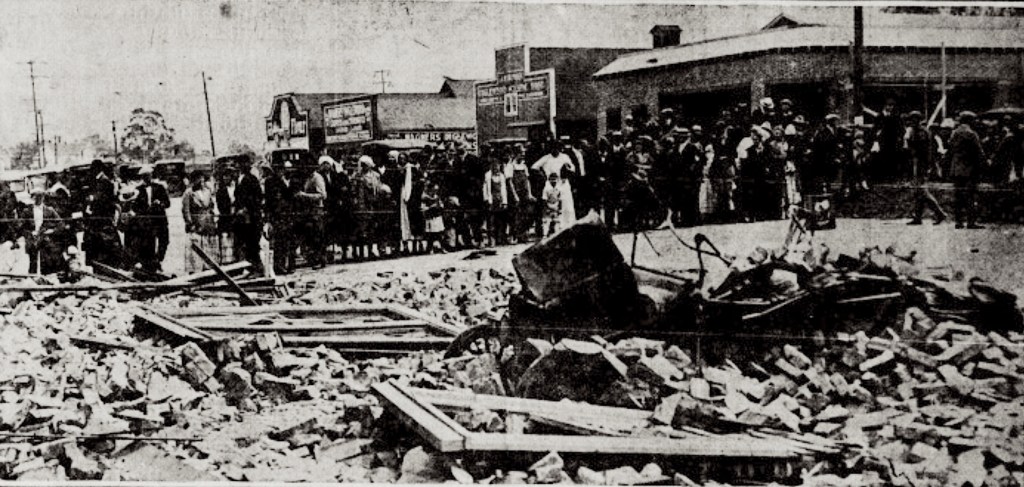
Thousands of spectators descended on the small city to view the effects of the temblor, climbing through the rubble to look at the buildings with their now-exposed interior rooms. Additional law enforcement had to be called to the scene to control the overflow crowds.
Initial estimates put the total damages in the city at about $100,000, which probably was on the conservative side. Work began quickly to clear the bricks, broken glass and other rubble from the streets even as aftershocks caused further jitters. The city’s water mains and streetlights also were repaired over the next few days.
Also, plans to rebuild the affected parts of the city were announced almost immediately. The First National Bank was rebuilt completely. Citizens Savings spent about $40,000 repairing its dinged building, and a new school began going up on the site of the old grammar school. It would eventually evolve into Crozier Middle School, which occupies the site today.
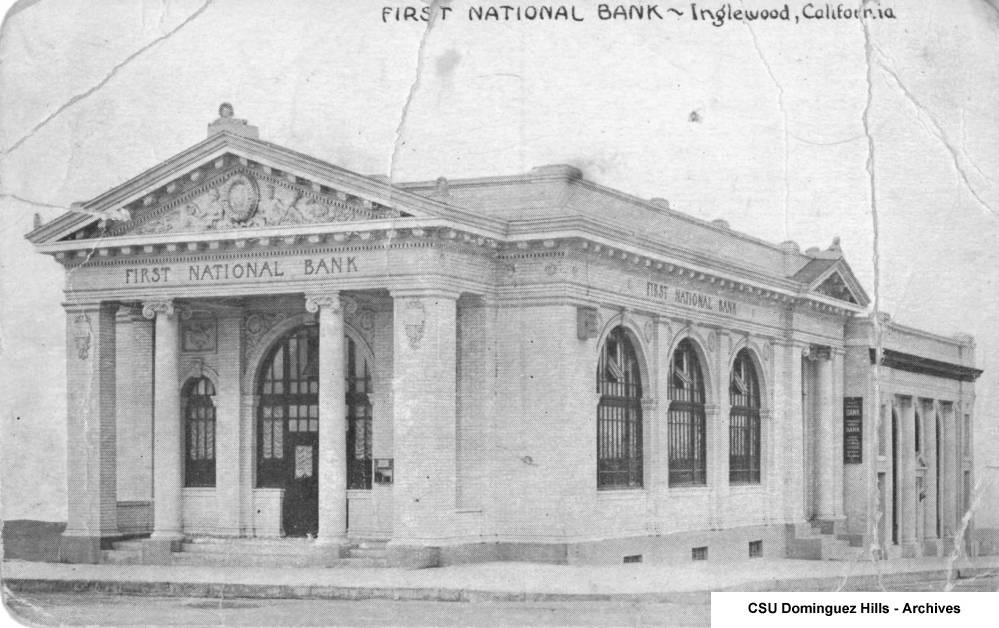
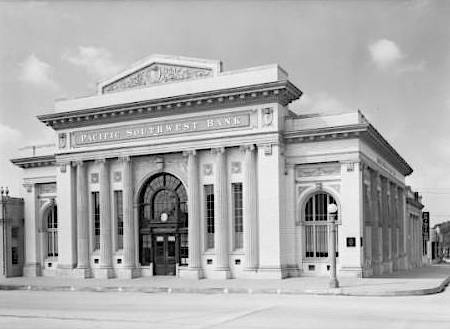
Businesses repaired their storefronts and interiors. As mentioned, the hotel wasn’t rebuilt, but a new city hall began to rise on Queen St. in 1923.
The 1920s brought a surge in prosperity to the area. Local historian Gladys Waddingham attributed the uptick partially to those visitors to the quake scene being attracted enough to the area to pursue resettling there in her book, The History of Inglewood (Historical Society of Centinela Valley, 1994).
Whether that or merely the 1920s business boom was the cause of the city’s rejuvenation, things changed quickly for the better in Inglewood. By 1927, just seven years after the earthquake, the city’s population topped 25,000, and its total valuation was estimated at more than $13 million.
And it’s hard to deny that its citizens had the 1920 quake to thank for the ensuing rapid urban renewal that changed the face of their city.
Sources:
Daily Breeze archives.
The History of Inglewood, by Gladys Waddingham, published by the Historical Society of Centinela Valley, 1994.
Los Angeles Herald archives.
Los Angeles Times archives.
San Pedro News Pilot archives.