The need for a two-year junior college in the South Bay area had been discussed as early as the 1930s. Ever since the first such school in California was established in Fresno in 1910, junior colleges bridging the gap between high schools and universities had been built in Los Angeles, Long Beach, Santa Monica, Fullerton, Santa Ana and many other communities.
But the South Bay/Harbor Area didn’t have one. Education officials from the Redondo Beach, Inglewood, El Segundo and Centinela Valley school districts, unhappy with their students being shut out of admission to those increasingly popular out-of-area schools, decided that the need for a local community college had become critical. (Torrance was not included initially because it was part of the Los Angeles Unified School District until forming its own district in 1947.)
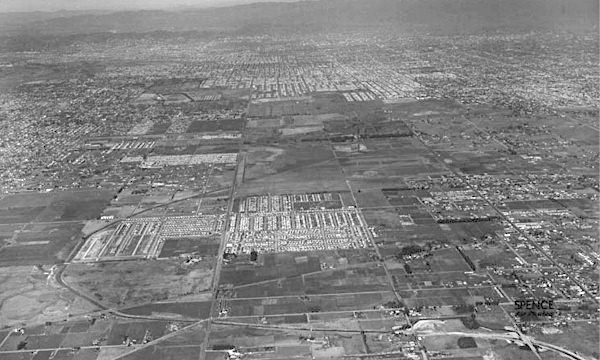
In 1943, they formed a committee to petition the State Department of Education to allow the formation of such an institution in the South Bay area. After a couple of years building up support for the idea in the community, committee members convinced the State Board that the area had the students and the economic infrastructure to support the school. The community overwhelmingly approved creation of the new community college district in a June 30, 1946 election. The district officially formed on the next day, July 1.
With the recent influx of veterans returning from service in World War II, time was of the essence. The local districts officially began the college on Sept. 10, 1946, when its roughly 600 students started attending classes located in temporary quarters on high school campuses in Redondo, El Segundo and Inglewood. The goal was to shift them to a permanent site as soon as possible, preferably in time for the start of the 1947 school year in September.
In October 1946, the new school got its name when trustees voted to call it El Camino Junior College, in honor of the historic missions road El Camino Real. Now they just needed to find a place to build it.
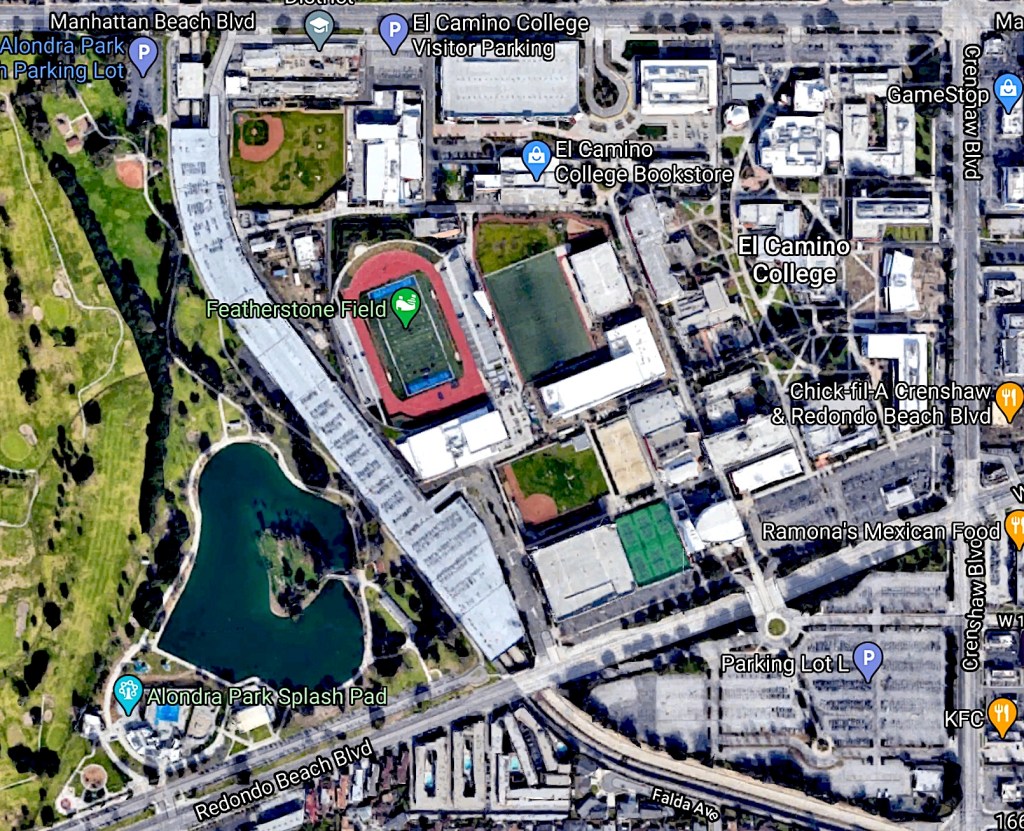
A good-sized chunk of land would be needed, and the acreage owned by Los Angeles County that concurrently was being developed into Alondra Park seemed like a good fit to the trustees. In February 1947, County Board of Supervisors Chairman Raymond V. Darby recommended a 40-acre chunk at the southwest corner of the park.
Later that month, he changed his mind, calling for the college to be built on 81 acres in the southeast corner just north of the Torrance city limit instead. Plans for a possible freeway route through the southwest parcel (which was never built), and also for the 18-hole Alondra Park golf course, directly conflicted with the plan for the new college.
The campus would be built on unincorporated county land. It remains in unincorporated territory to this day, though the it and the surrounding El Camino Village area often are mistakenly identified as being in Torrance, Gardena or Lawndale.
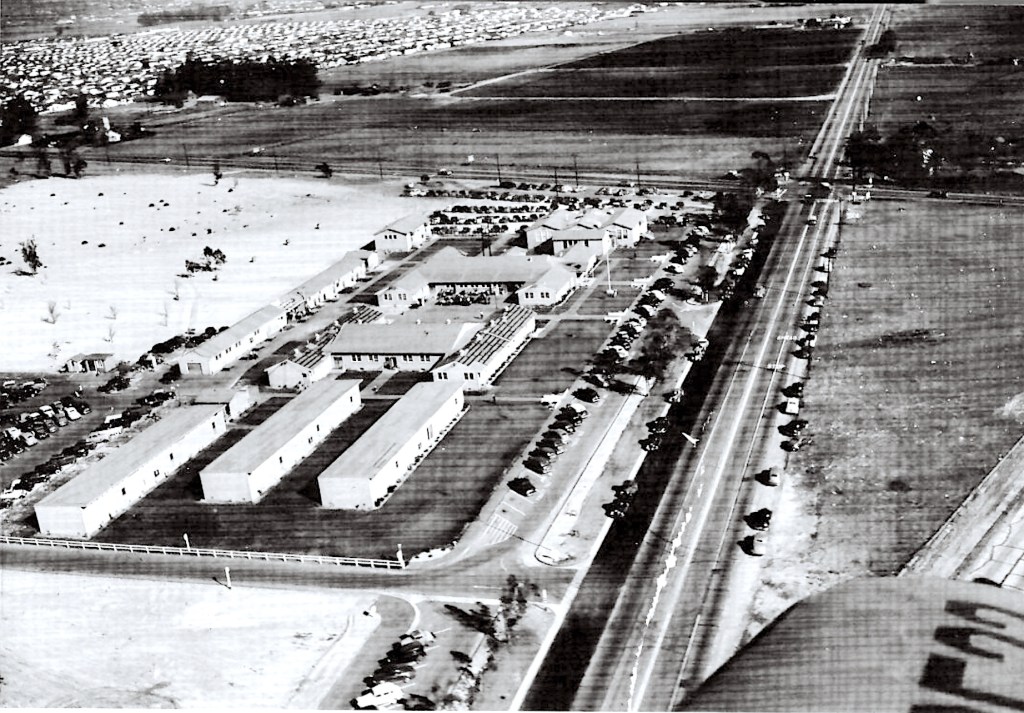
With the land issue settled, there was the matter of the buildings needed to house classes. The trustees turned to the U.S. Army to solve this immediate problem. The military agreed to donate several surplus buildings from the Santa Ana Air Base in March 1947.
The next month, the college trustees made a crucial decision to hire Forrest G. Murdock as the new college’s first president. Murdock had been principal of a San Jose high school, and was the superintendent of the Centinela Valley high school district when he accepted the job.
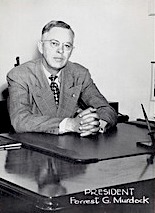
His leadership would take the new college from temporary classrooms in area high schools to classes held in military surplus buildings to a first class permanent community college over the next 12 years. (He retired in 1958.) Instead of incurring massive debt by attempting to build the college all at once, Murdock proceeded slowly, adding new facilities one by one.
Ground was broken for the campus on June 23, 1947, by Board of Trustees president Robert Russell. The new campus with its temporary military surplus classrooms was dedicated on May 23, 1948. Four days later, students began attending classes in the “new” buildings. The school graduated its first class of 87 students that June, all of whom had earned their degrees in the classes held in area high schools. El Camino College has been growing ever since.
The first permanent building at the school housed shop classes, as vocational education would be a key component at El Camino. Dedication for that building, a women’s gymnasium and a new 5,000-seat outdoor sports stadium was held on Thanksgiving Day, Nov. 24, 1949.
The El Camino football squad hosted East Los Angeles Junior College in the first game held at the stadium. Warrior Stadium was renamed Murdock Stadium in 1958 to honor Forrest Murdock upon his retirement as college president. (It was demolished and rebuilt as Featherstone Stadium in 2016, named for longtime football coach John Featherstone.)
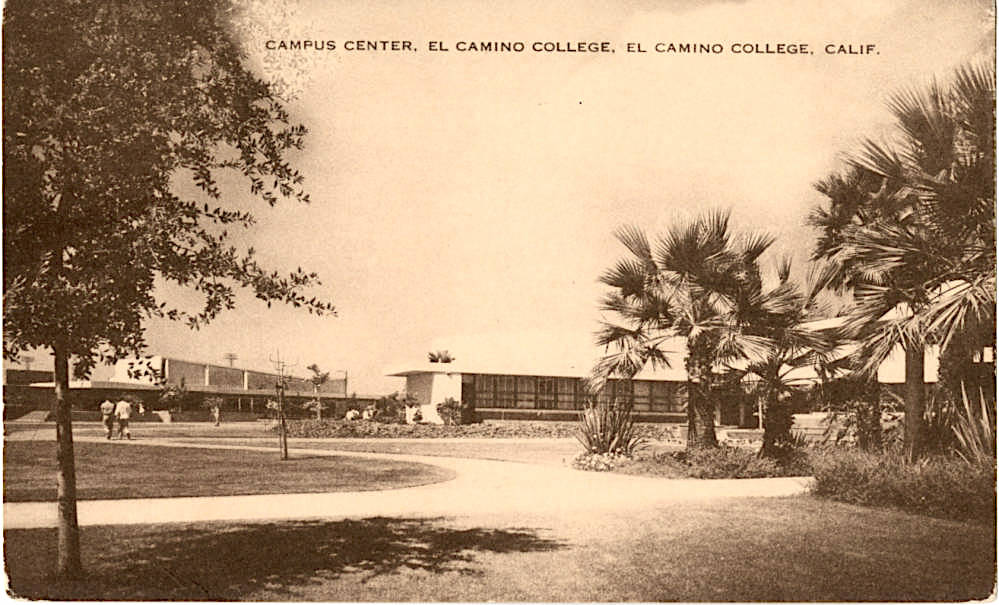
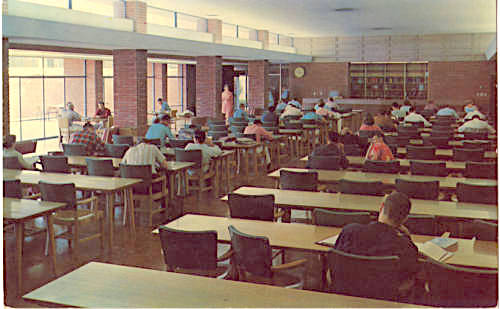
In the early 1950s, the other key buildings, including administration, library, cafeteria, social and life sciences and others, were added. The school’s enrollment grew rapidly during the postwar years, reaching just under 10,000 students in its first ten years.
Murdock’s successor, Dr. Stuart E. Marsee, served as the school’s president for 24 years. in 1968, the school’s performing arts showplace, Marsee Auditorium, was named in his honor.
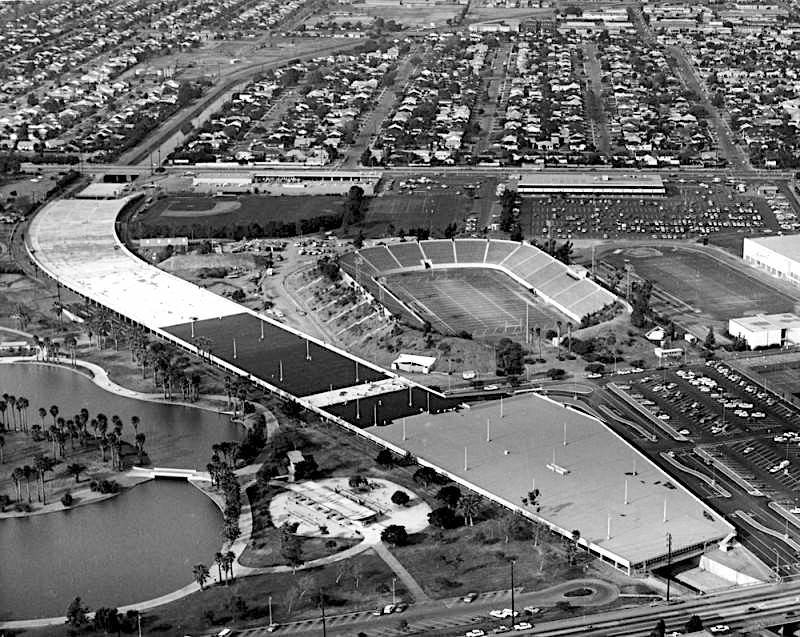
As parking grew more scarce during the college’s continuing expansion, an innovative solution was found. Parking for 2,000 cars was created in 1968 by building a $2.7 million concrete structure atop the Dominguez Channel, which runs along the school’s western perimeter.
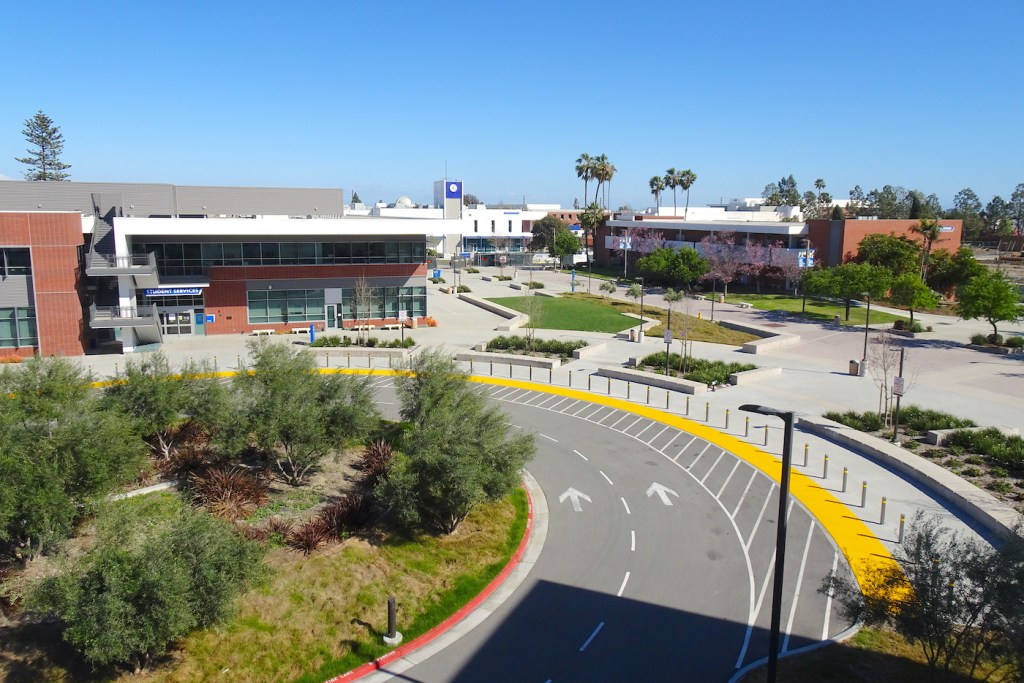
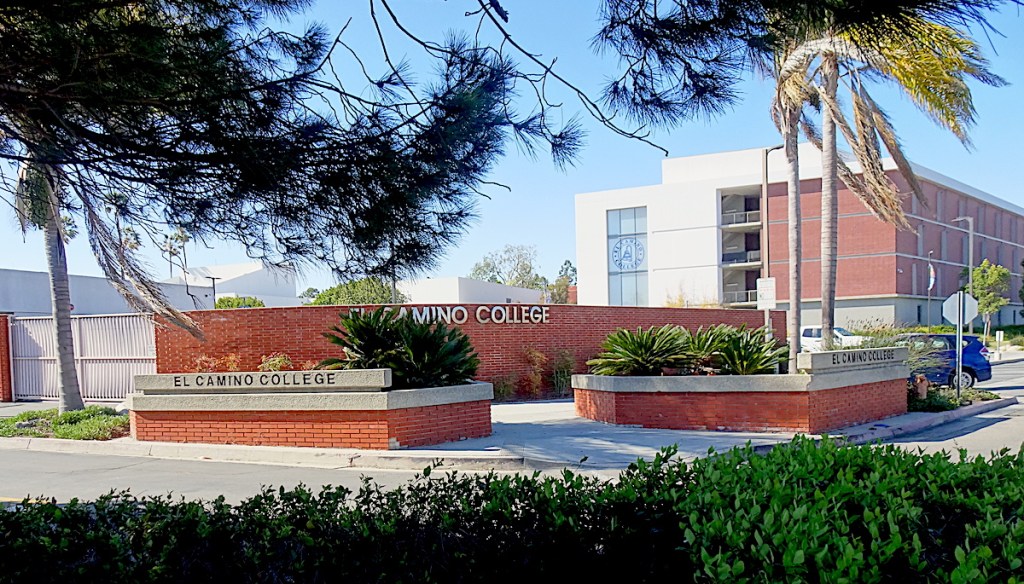
“Elco,” as the school is informally known, has grown to more than 25,000 students and now occupies 126 acres. It offers a diverse range of course offerings, and its innovative transfer program gives students a more easily navigable gateway to four-year Cal State and University of California schools.
Sources:
Daily Breeze files.
“El Camino College Area: 1946,” thehoffs.com website.
El Camino College website, especially “History,” by Dr. Bobbi Villalobos, based on information from The History of El Camino College, 1946-1966, a dissertation by Steven James Muck, El Camino College website.
Historic Torrance: A Pictorial History of Torrance, California, by Dennis F. Shanahan and Charles Elliott, Jr., Legends Press, 1984.
Los Angeles Times files.
Palos Verdes Peninsula News files.
San Pedro News Pilot files.
Torrance Press-Herald files.