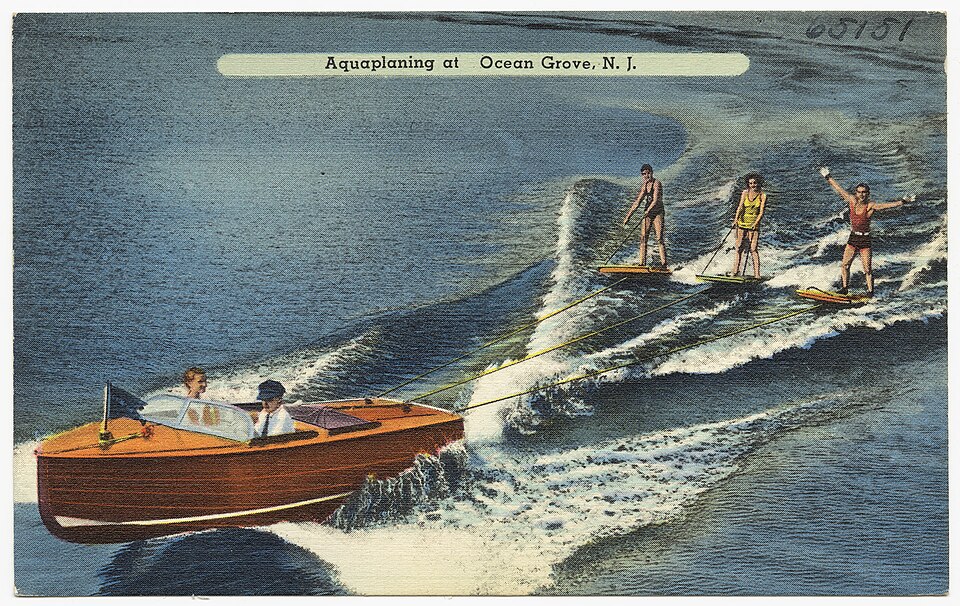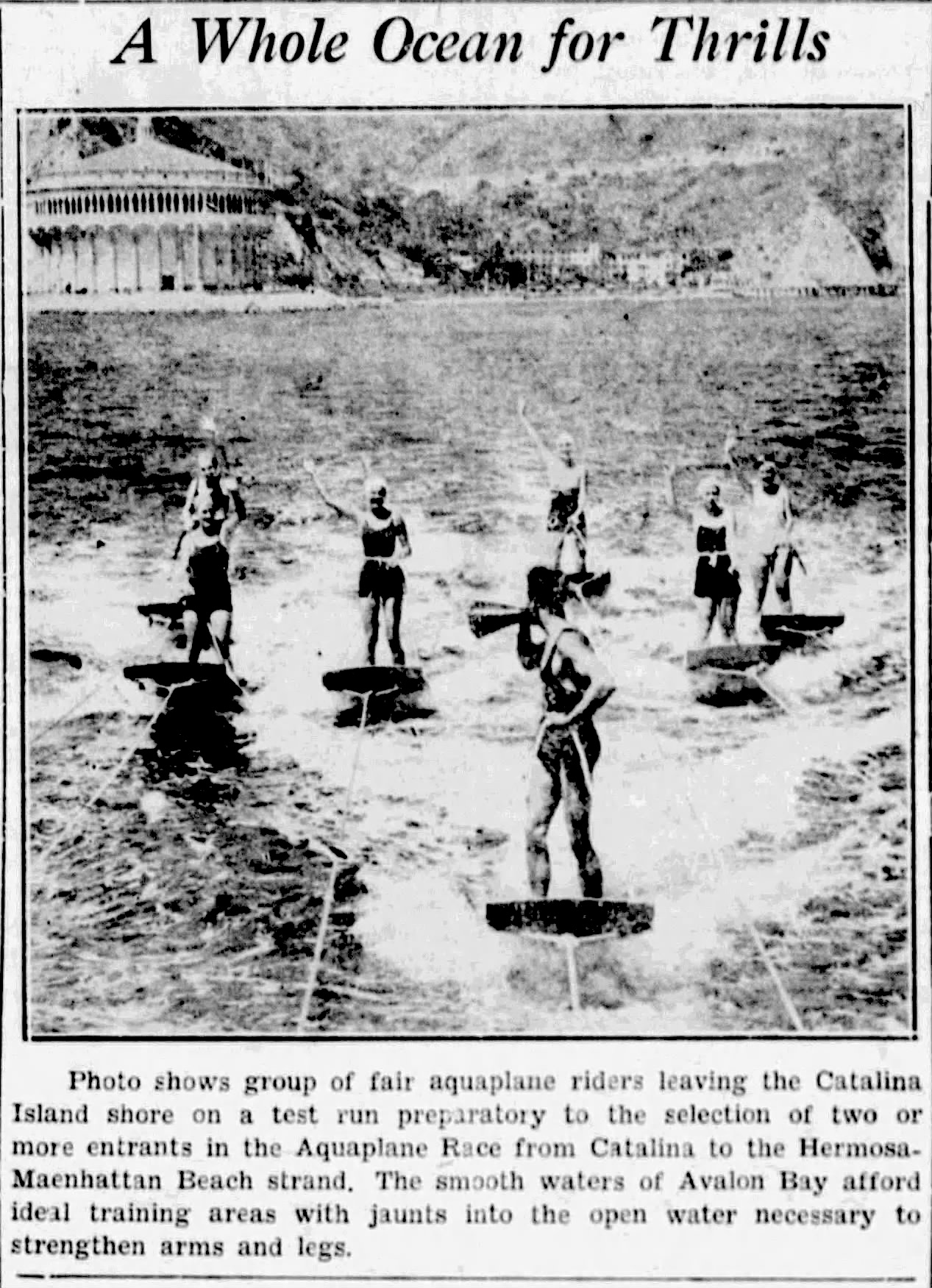
When the first aquaplane race from Catalina Island to Hermosa Beach by way of Manhattan Beach was held in 1935, the race got unofficially nicknamed the “ironing board derby.”
It would later officially be named the National Aquaplane Race. What in the world am I talking about? Let me explain.
Despite the name, aquaplane races had nothing to do with sea planes. They were open-sea ocean races between contestants standing on single wooden planks that were roughly the dimensions of an ironing board as they were towed over the water course by regular speedboats.
The riders would hold on to a rope attached to the boat, and have to balance themselves on the wooden planks as they were towed through the open ocean waters. Because of the physical difficulty of navigating the waves while moving through the choppy seas, many riders would be unable to finish the long races.
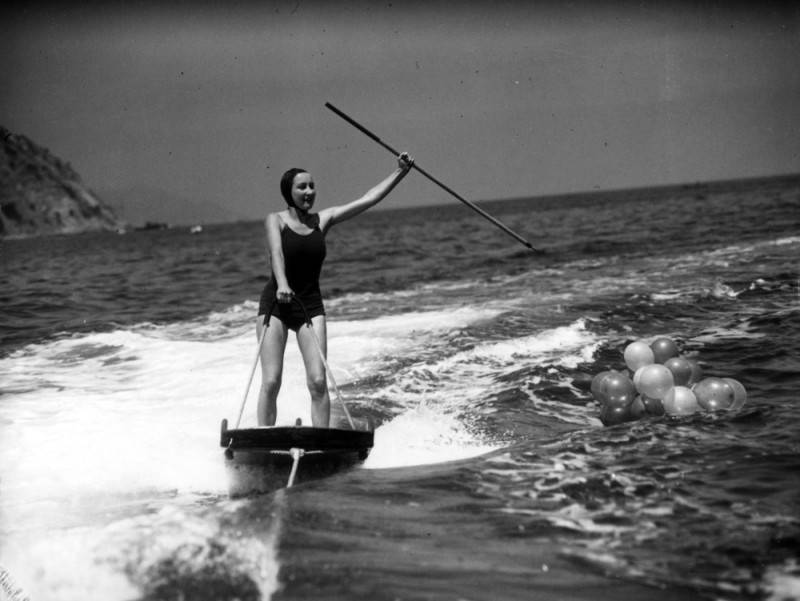
Aquaplane racing had originated in the early 1900s as a kind of precursor to water skiing. 18-year-old Jack Samuelson has been credited with inventing the latter sport when he used a separate board on each foot as he was towed across Lake Pepin in Minnesota in 1922. Water skis were patented in 1925 by inventor Fred Waller.
In early 1935, the Hermosa Beach Junior Chamber of Commerce came up with the idea of holding a national championship aquaplane race. They charted the race’s original 40-mile course from the Catalina Island’s Avalon Harbor across the Pacific to the Manhattan Beach pier where it zigged back to the race’s finish on the beach just south of the Hermosa Beach pier.
The inaugural race was held on Sept. 7, 1935. Jack Burrud’s entry, “Cats and Dogs,” won the event with a time of one hour and sixteen minutes. The event drew large crowds and received wide publicity for the beach cities involved. (Tragically, Burrud would later be killed in action during World War II.)
The aquaplaning event was so successful that Hermosa Junior Chamber members immediately began planning for the 1936 race. It was held on Aug. 2 of that year, and was even more successful than the first one. In fact, a movement arose in Hermosa Beach to make the aquaplane race into an Olympic event. (That never came to pass.)
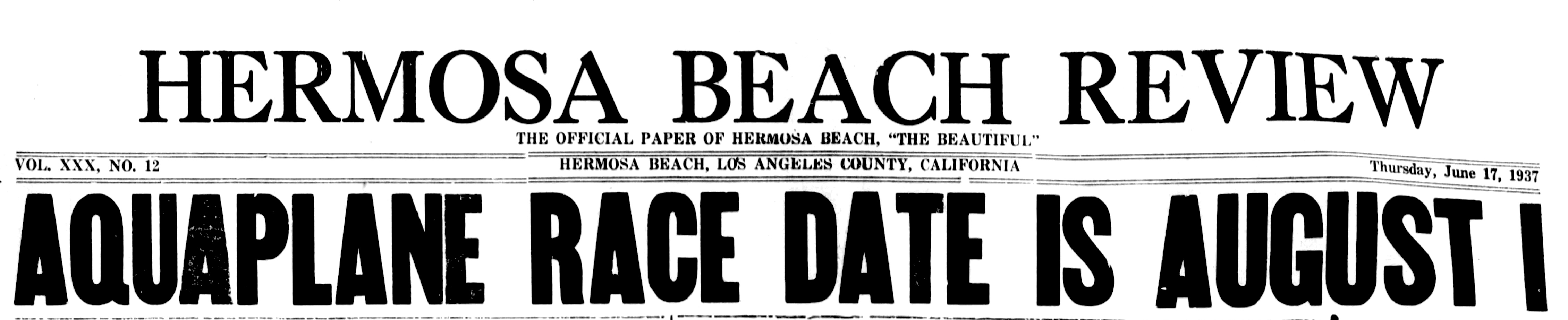
The event’s popularity grew after it was held again in 1937. Its burgeoning success led to more elaborate plans for the next year. Hermosa Beach Mayor G.V. Learned went so far as to declare Aug. 1-7, 1938, as “Aquaplane Race Week.”
A full slate of community events and water sports competitions took place in the week before the Aug. 7th race, which was watched from shore by an estimated 100,000 people.
The race even attracted participation from Hollywood stars Errol Flynn and the husband-and-wife team of Betty Grable and Jackie Coogan.
In 1940, the departure point of the race was changed from Avalon Harbor to the Isthmus at Two Harbors. The idea was to streamline the start, and increase the amount of time the racers would be visible from the mainland by lengthening the course at its end destination. The 44-mile distance remained the same.
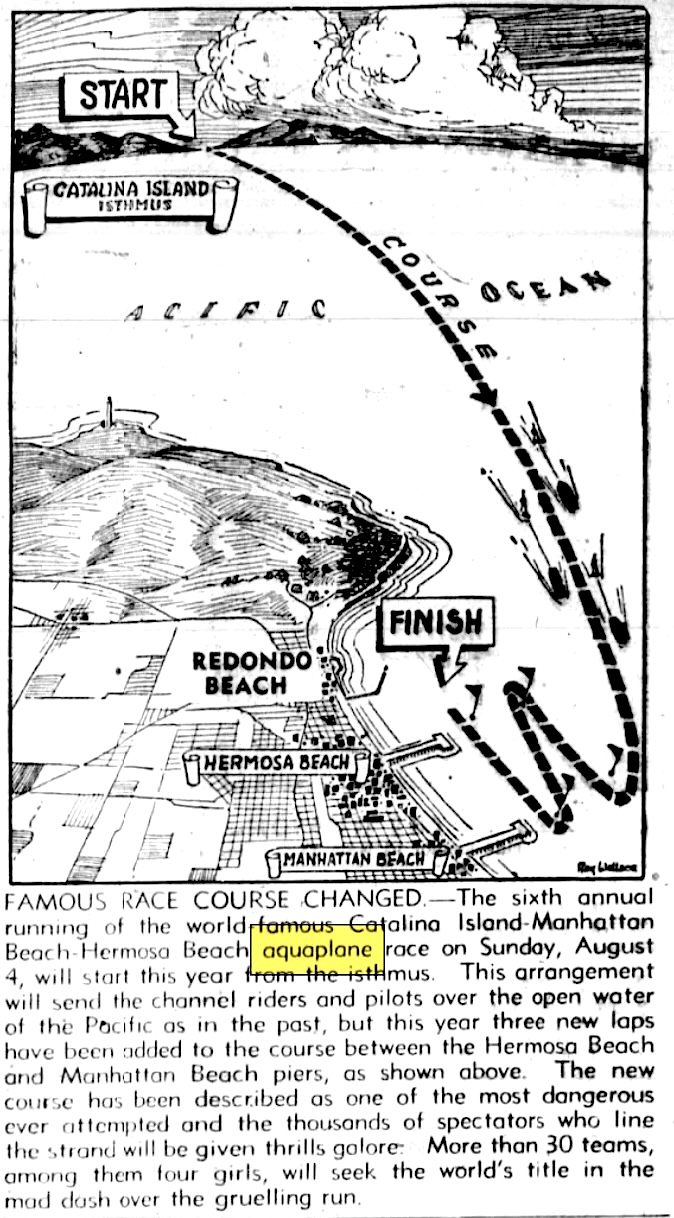
Bob Brown just nipped Miriam Williams before 150,000 spectators on Aug. 4th, 1940.
On Aug. 3, 1941, the seventh annual aquaplane race was won by Dave Vachon before an estimated 500,000 spectators. It would be the final race before the event was canceled due to World War II.
A version of the race returned to the beach cities on Aug. 11, 1946, but the distance was shortened to 20 miles, and the route ran across the offshore waters of the beach cities instead of across the channel from Catalina.
In 1947, the race returned to the prewar format and distance of 44 miles, beginning from Catalina Island again. Former Olympic swimmer turned glamorous movie star swimmer Esther Williams was named “Sea Goddess” of the festivities.
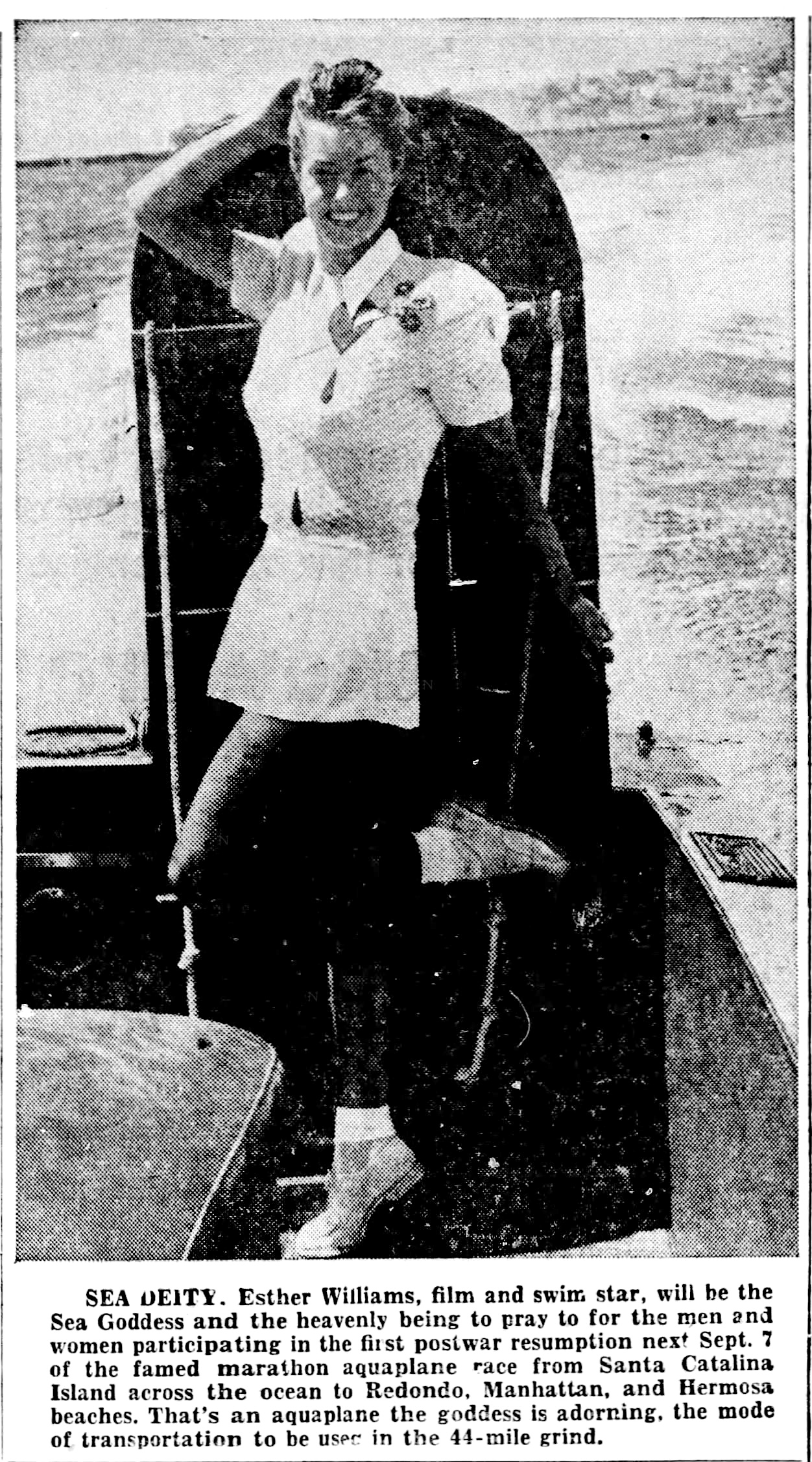
Municipal funds from the beach cities involved in sponsoring the race were hard to come by during 1946, so organizers turned to a public fundraising campaign which succeeded in raising the required capital.
Race contestant Price Sloan of Pasadena finished first in the Sept. 7, 1947 race. This ninth running of the National Aquaplane Race overall, six before and two after the war, would be its last, however.
Financial difficulties disclosed in May 1948 among both the sponsoring cities and the National Aquaplane-Water Ski Association resulted in the organizers of the event canceling the event for that year. It was never restarted.
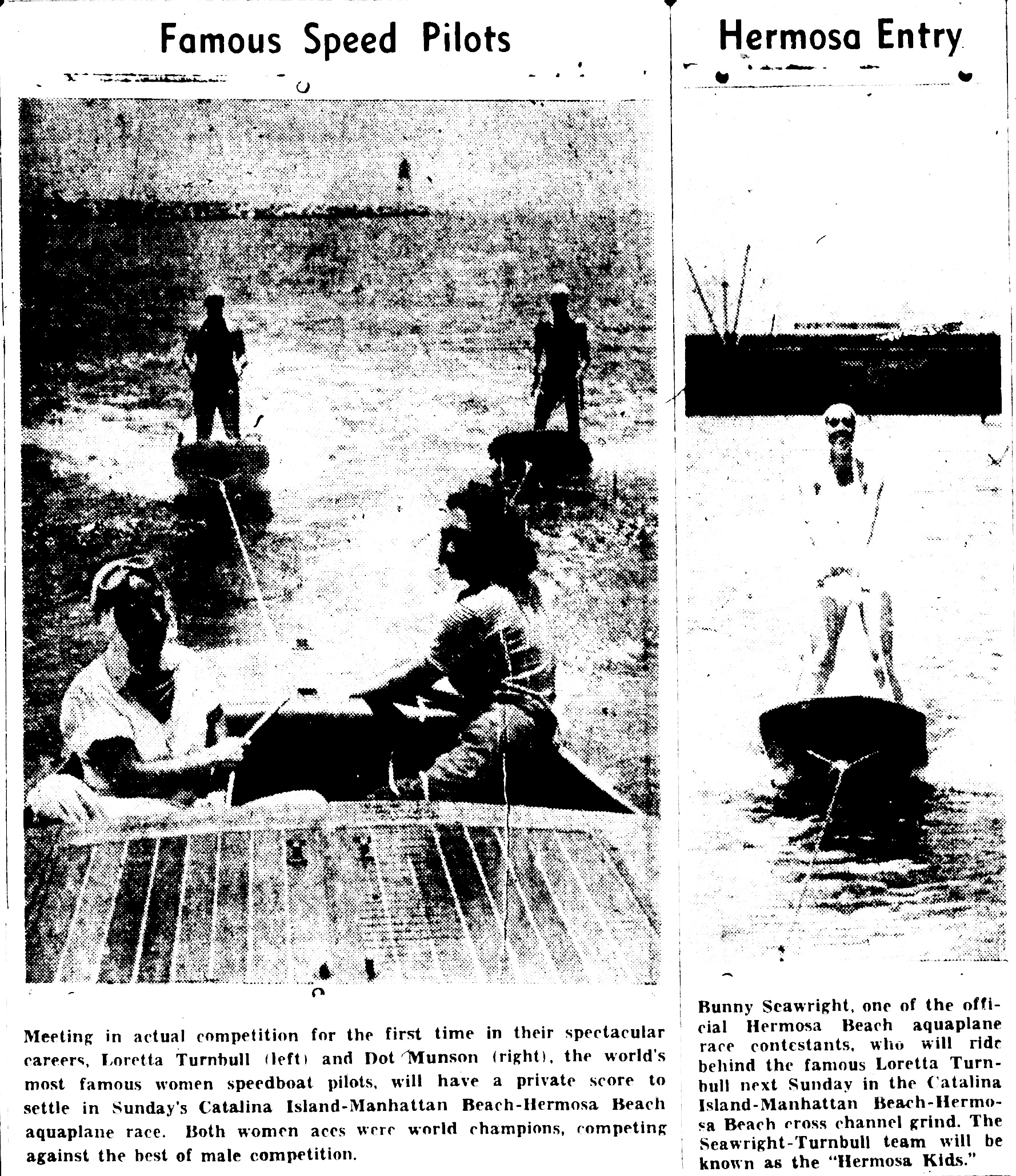
Note: This British Pathe video shows aquaplane competitors in action in the 1938 National Aquaplane Race.
Sources:
Daily Breeze archives.
Redondo Reflex archives.
Wikipedia.