After more than a century in operation, the owners of the Phillips 66 Los Angeles Refinery officially closed down operations at its plants in Wilmington and Carson on Dec. 31, 2025.
Union Oil owned the Wilmington refinery, located at 1660 W. Anaheim St., until 1997, when the company sold it to Tosco Corp. Tosco turned around and sold it to Phillips in 2001.
I wrote about the Wilmington refinery’s history – it began as a Union Oil facility in 1919 – in 2022. I briefly mentioned a major explosion and fire at the plant in 1951 that’s worth examining more closely.
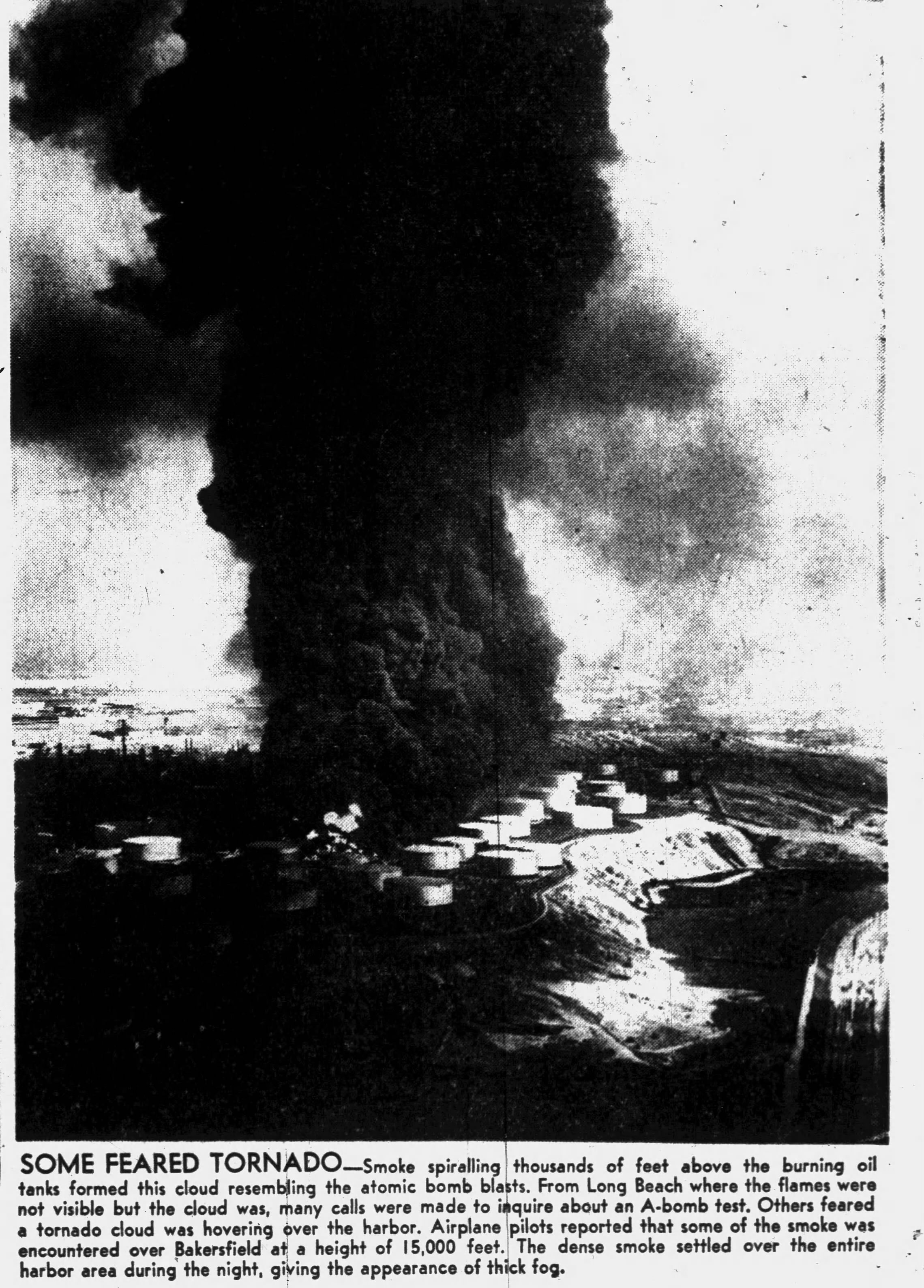
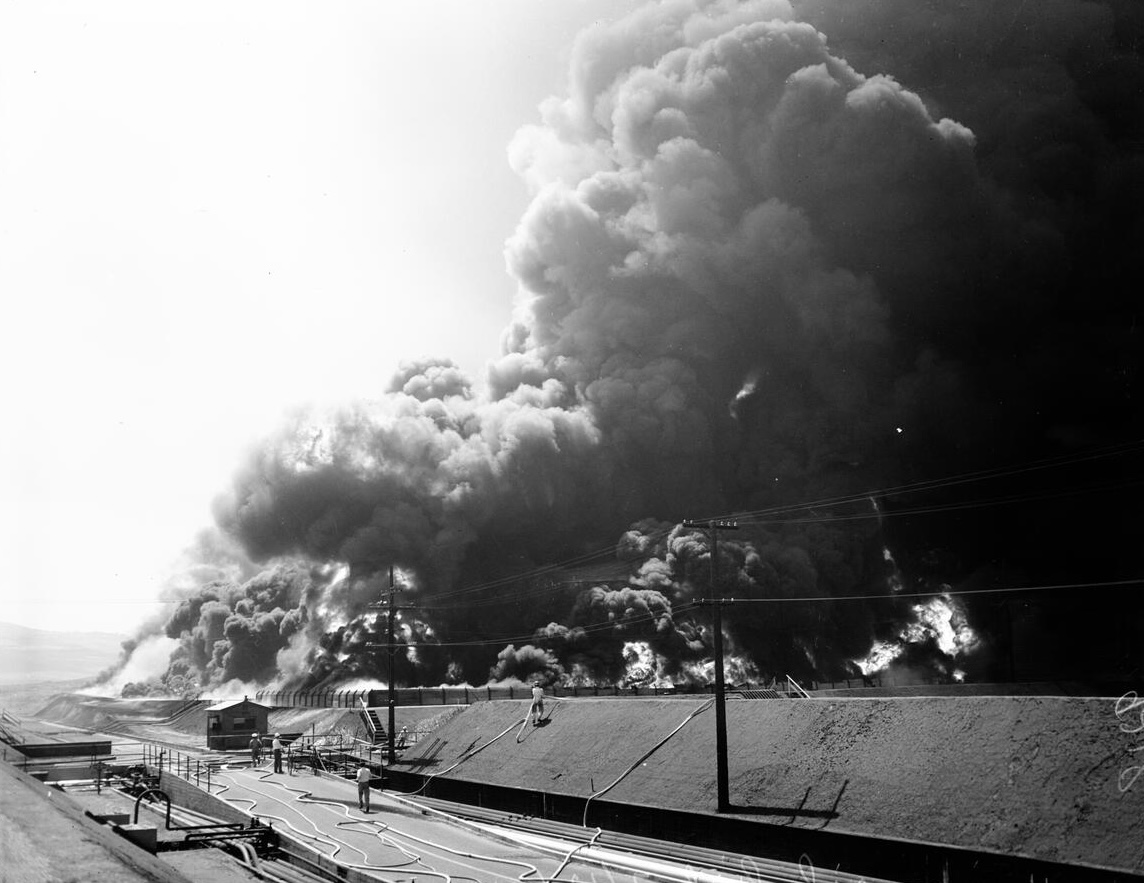
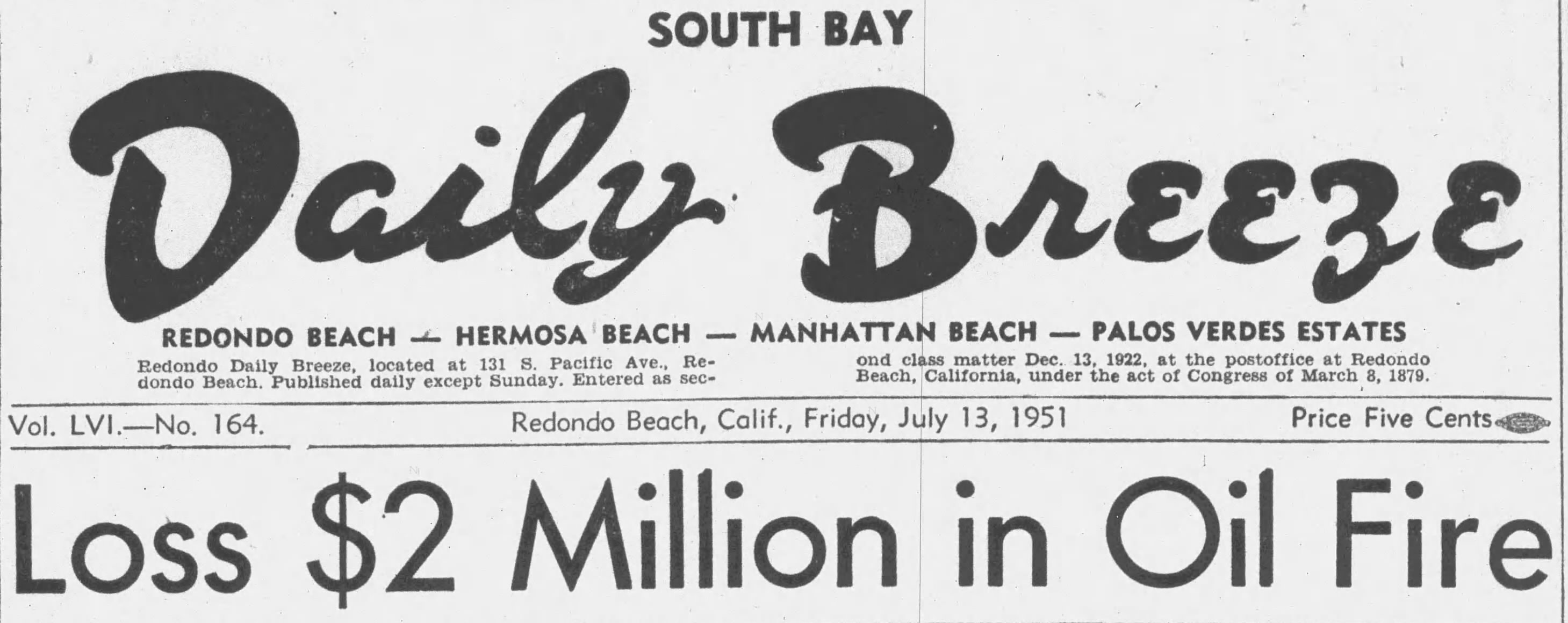
The blaze began with a bang on Thursday, July 12, 1951, when Tank #100 exploded suddenly at about 1:50 p.m. in the afternoon. The blast, which could be heard from as far as 10 miles away, blew the circular tank’s lid approximately 100 feet in the air and spread flaming gasoline among the other tanks nearby.
Great clouds of black smoke rose in the sky, blocking the sun for miles around. The ferocity of the ensuing flames posed a major and immediate threat to the nearby Port of Los Angeles.
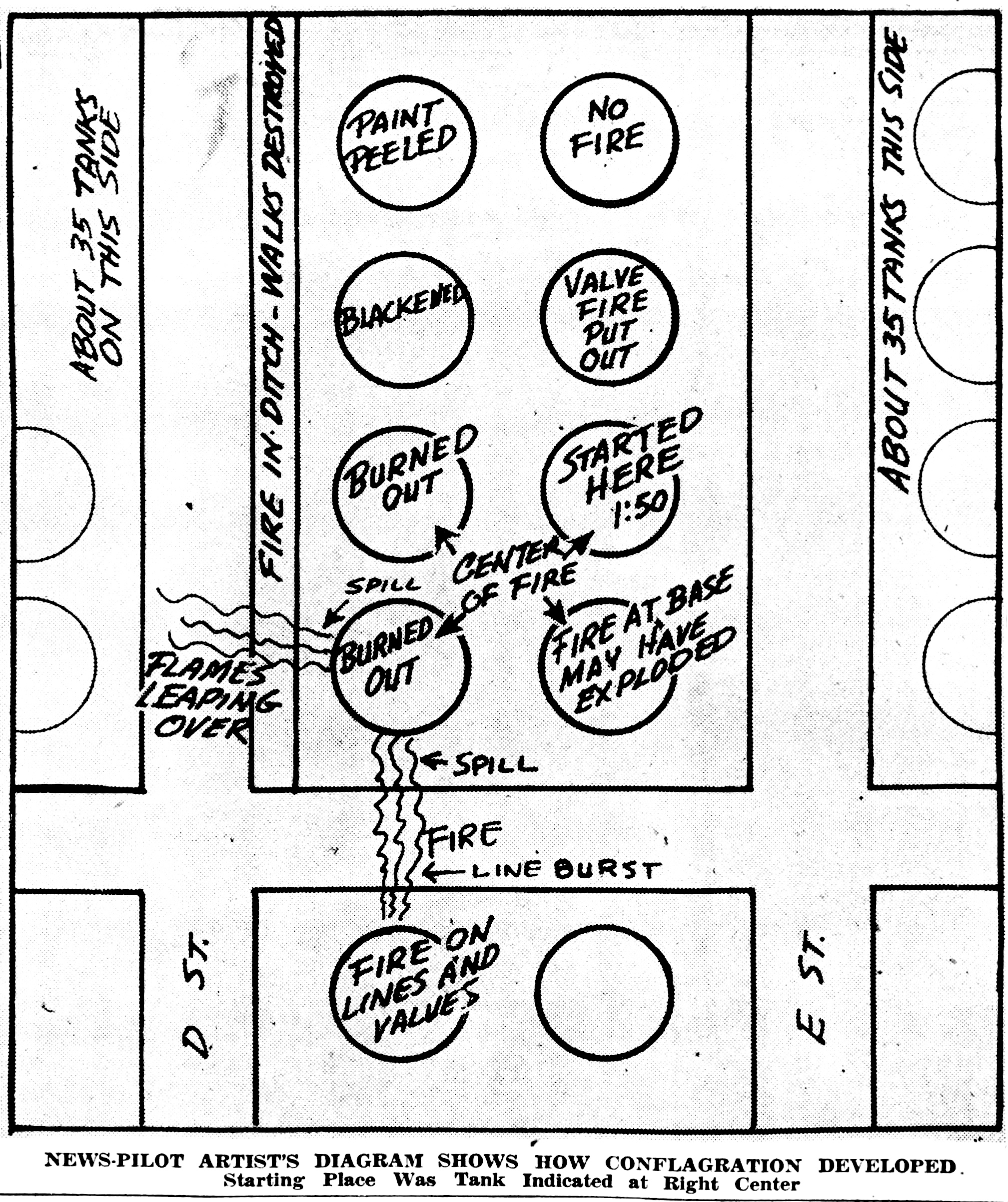
The refinery had more than 200 tanks at the time. The raging blaze spread to Tank 200 and Tank 72, causing further explosions and fire. A total of five tanks, each holding about 80,000 gallons of gasoline, ultimately would be lost in the blaze.
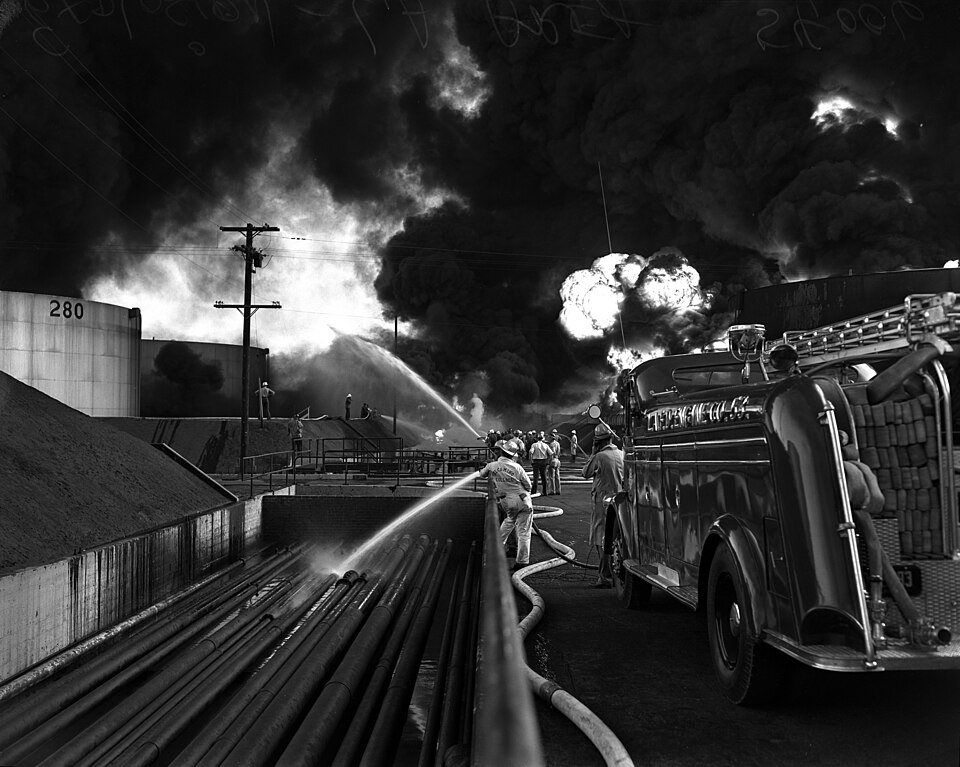
The flames spread quickly through ground fires, especially along pipe channels connected to the various tanks. With the blazing tanks burning wildly out of control, firefighters had to concentrate on keeping the fire from spreading on the ground to other tanks.
The emergency response was immediate. According to the San Pedro News Pilot, more than 100 Army and Navy servicemen from area bases joined 120 firefighters and more than 80 police officers and at least 300 Union Oil employees in battling the fires, which raged through the first night.
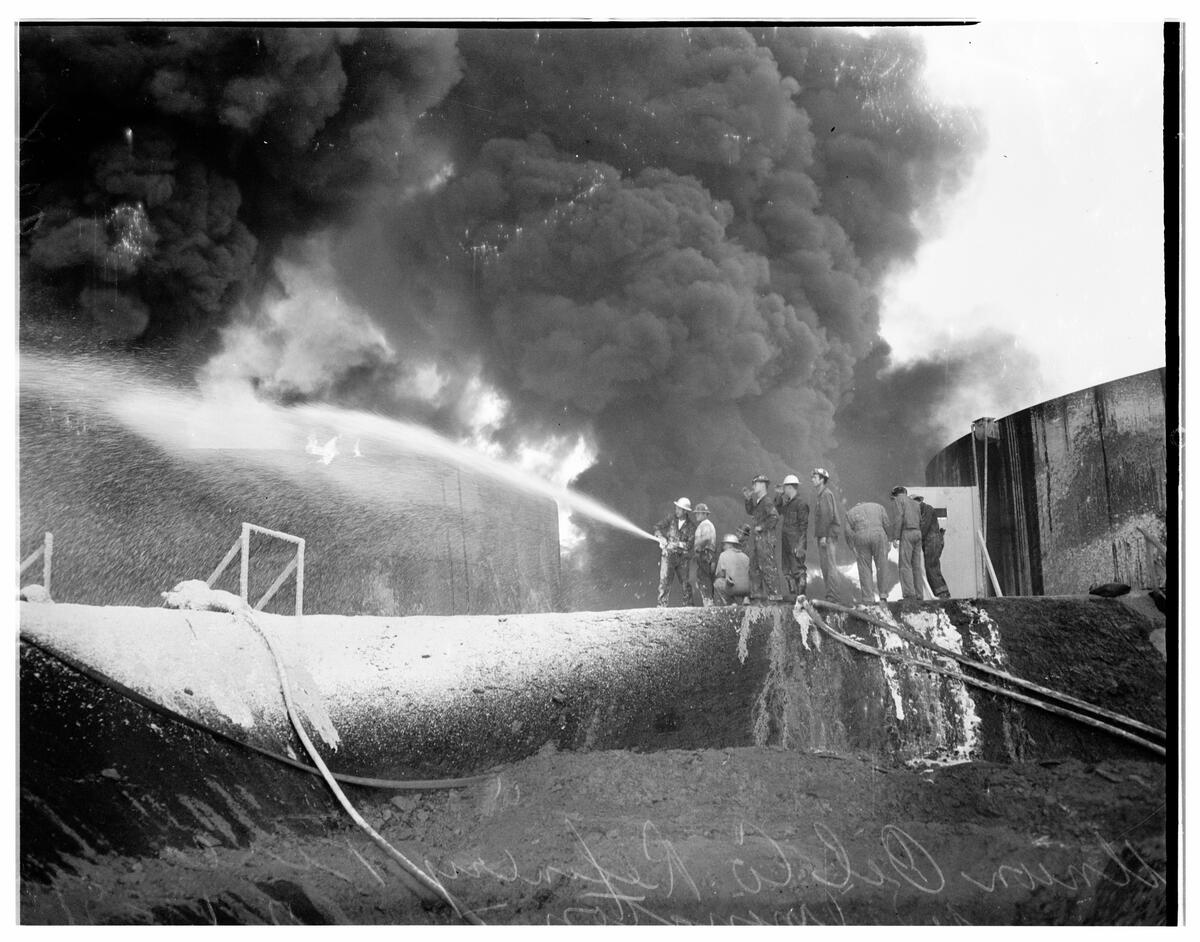
At one point during the battle, a fuel pipe burst, spraying diesel fuel into a group of firefighters. In the ensuing confusion, the Union Oil man holding the nozzle of a water hose inadvertently let go of it. The uncontrolled hose whipped around and knocked a group of six men holding onto the hose to the ground from the retaining wall on which they were standing.
Three of the men fell into a trench and had to be hospitalized for their injuries, while another trio of men received only minor scrapes and burns in the incident. Somewhat miraculously, all the injuries turned out to be non-life threatening, and would turn out to be the only ones suffered during the four-day conflagration.
The fire’s ferocity and the addition of more fire engines in an attempt to slow it put a great strain on the water resources needed to fight it. At first, four Navy tugboats were enlisted to help pump water up to the fire site, but they soon were replaced by a specialized fire boat.
The Los Angeles Fire Dept. acted quickly to hook up its Fire Boat 2, the Ralph J. Scott, to pump ocean water through hoses connected to the water sources being used to battle the fire. It would continue to pump water for the next 30 hours.
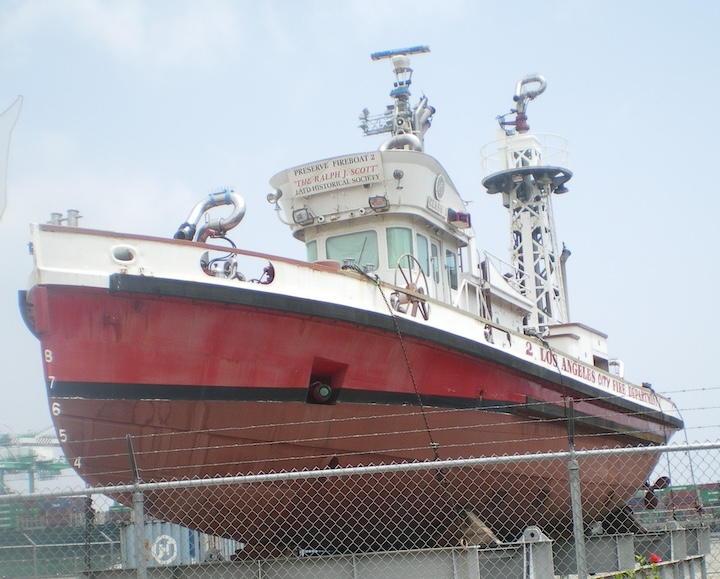
The Scott’s pumping power was so valuable that it wasn’t retired from service until 2003. (A group of volunteers from the LAFD Historical Society has preserved the Ralph J. Scott.)
In addition to water from the port, firefighters used special chemicals such as du-Gas, a dry chemical powder, and Foamite, a foaming fire retardant used on flaming liquids.
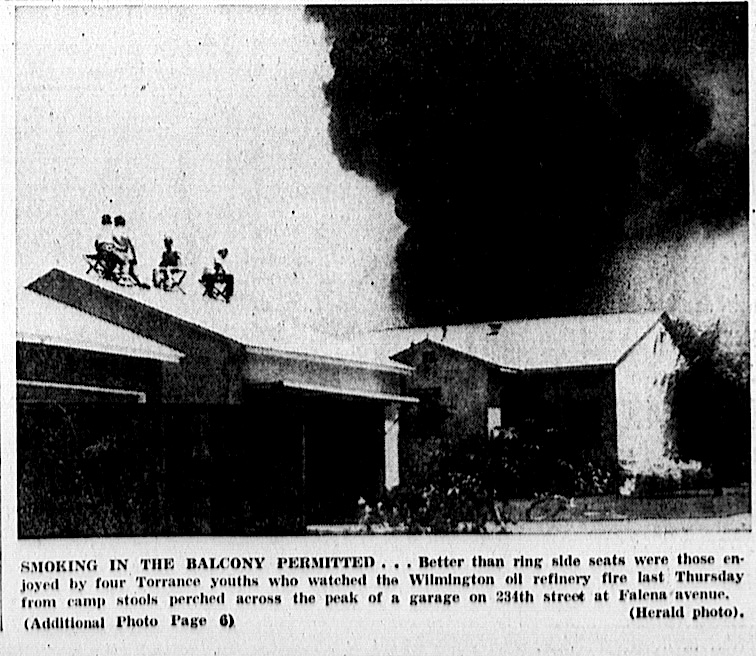
Hundreds of calls poured into the San Pedro LAPD station, as well as into the offices of the San Pedro News Pilot, mostly from people wanting to know not only what had happened, but also if they needed to evacuate. Thousands of spectators also flocked to the nearby Palos Verdes Peninsula hills and other Harbor area sites to try and get a look at the blaze.
When evening came, business at the nearby San Pedro Drive-In Theater fell by about half, according to what manager Frank Sohner told the News Pilot. Many of those who did show up were annoyed when intense brightness caused by flareups of the blaze made the picture on the screen difficult to see. Sohner had to issue several refunds.
By 8 p.m. of the first night, the fire was declared under control and contained. It was still burning furiously, but was no longer in danger of spreading. Firefighters would spend the next two days keeping flames from reaching other tanks while letting the fire burn itself out.
They extinguished the last of the flames at 4:32 p.m. on Sunday, July 15, 1951. Total damage estimates ranged from $1.5 to $2 million. No official cause ever was determined, though static electricity around the tanks was suspected by some. Operations resumed at the refinery on Monday, July 16th.
Current plans for the now-closed refinery site include a massive mixed-use project, called Five Points Union, featuring retail, outdoor space, indoor sports complexes and much more, assuming that the soil beneath the refinery structures can be remediated successfully and deemed safe for such a development.
Sources:
Daily Breeze archives.
Long Beach Press Telegram archives.
“LAFD History — Old Engine 49 and Old Fireboat 2 at the Union Oil Fire — 1951,” Los Angeles Firemen’s Relief Association website, July 31, 2019.
Los Angeles Times archives.
San Pedro News Pilot archives.