
The United States Merchant Marine traces its origin back to the outbreak of the Revolutionary War.
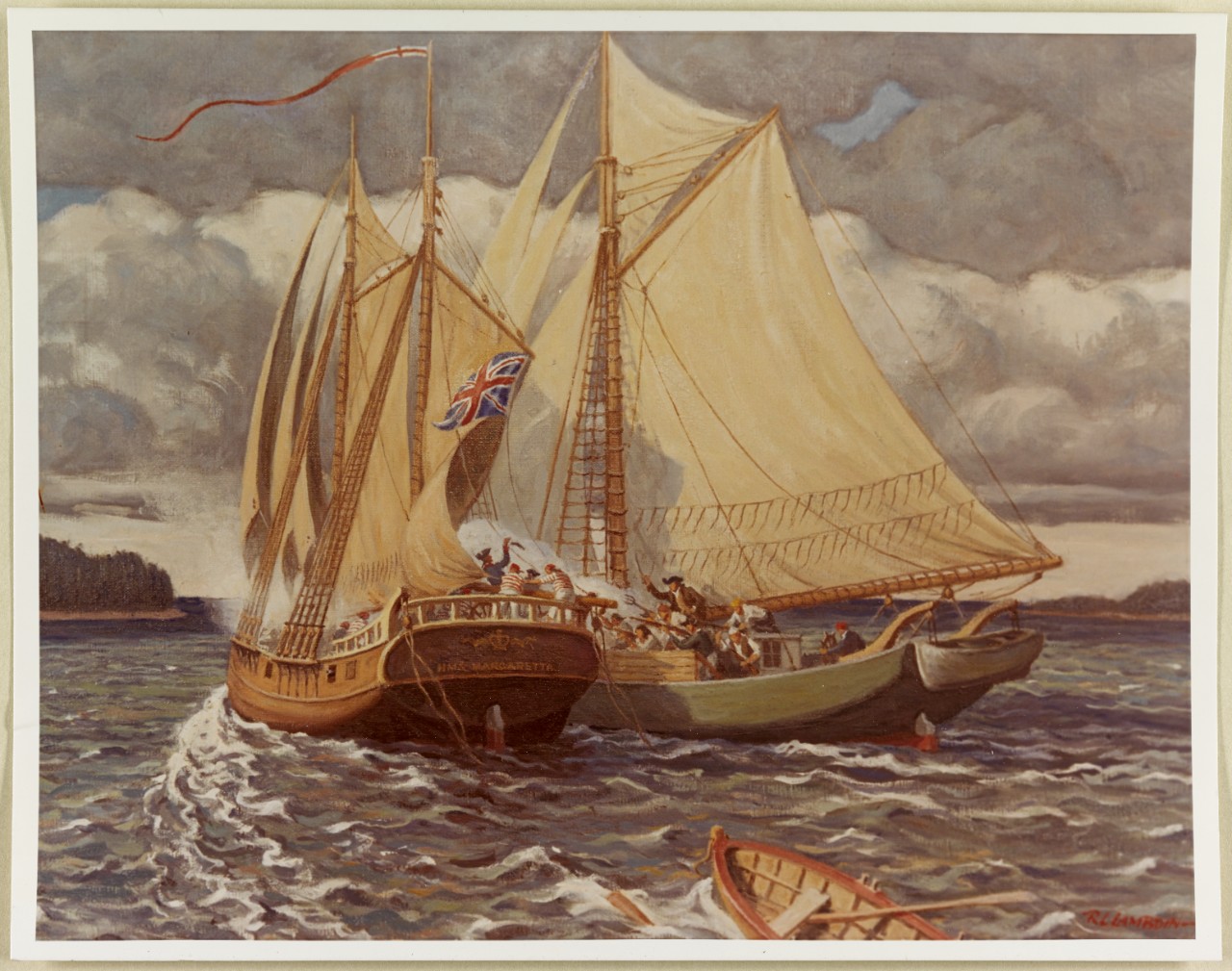
In June 1775 in Machias, Maine (then part of Massachusetts), townspeople refused to provide the British with lumber to build barracks for their troops, resulting in the British bringing in the armed ship HMS Margaretta to retaliate.
The settlers responded by capturing the ship, foiling the British plan.
When word of the revolt reached Boston, private shipping companies began using their ships to disrupt the British supply chain in similar fashion on a wider basis.
This interaction of private interests with military forces acted as the precedent for the formation of the Merchant Marine, an organization of civilian seamen working in support of a combination of private and federally owned cargo vessels transporting goods to and from the U.S.
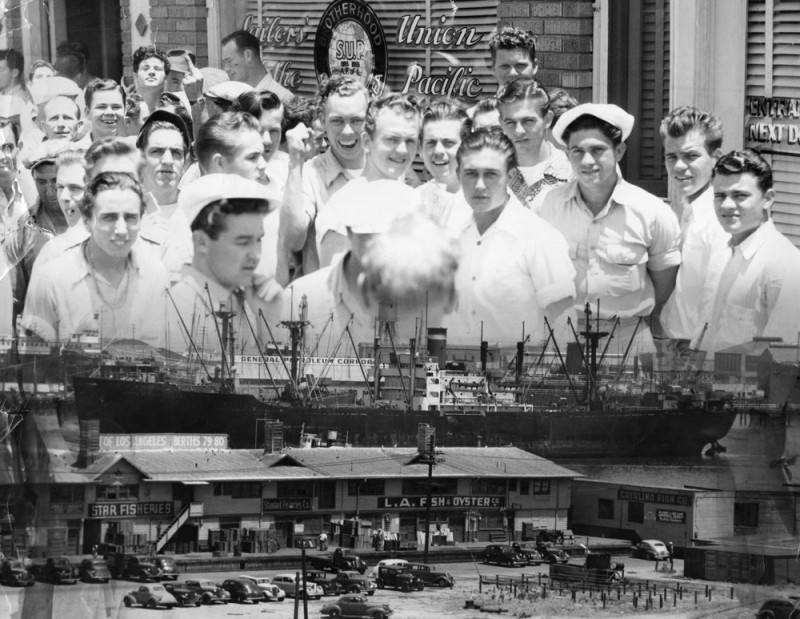
The Merchant Marine operates in both peacetime and wartime, but its services are particularly valuable during times of war. Its activities during subsequent wars from the Civil War onward proved its ultimate worth.
Unfortunately, it took decades for the public/private collaboration to be codified into law. After much urging from military experts, Congress passed the post-World War I Merchant Marine Act of 1920 to formalize the organization. The passage of the Merchant Marine Act of 1936 called for further and more intensive development of the maritime force.
These laws called for the development of Merchant Marine academies during the 1920s and 1930s. Seven such academies were established, including the California Nautical School in Vallejo in 1929. Still in operation, it’s now known as the Cal Poly San Luis Obispo Maritime Academy.
With the advent of World War II, the Port of Los Angeles became a key strategic element in the U.S. war effort. Herculean shipbuilding efforts were undertaken for the U.S. Navy, and merchant seamen were enlisted to provide the labor and means of transport for wartime supplies and personnel to the Pacific theater.
Thousands of troops passed through the Los Angeles Port of Embarkation in Harbor City and nearby Camp Ross in Wilmington on their way to board troop ships, many operated by the Merchant Marine, on their way to and from the war zones.
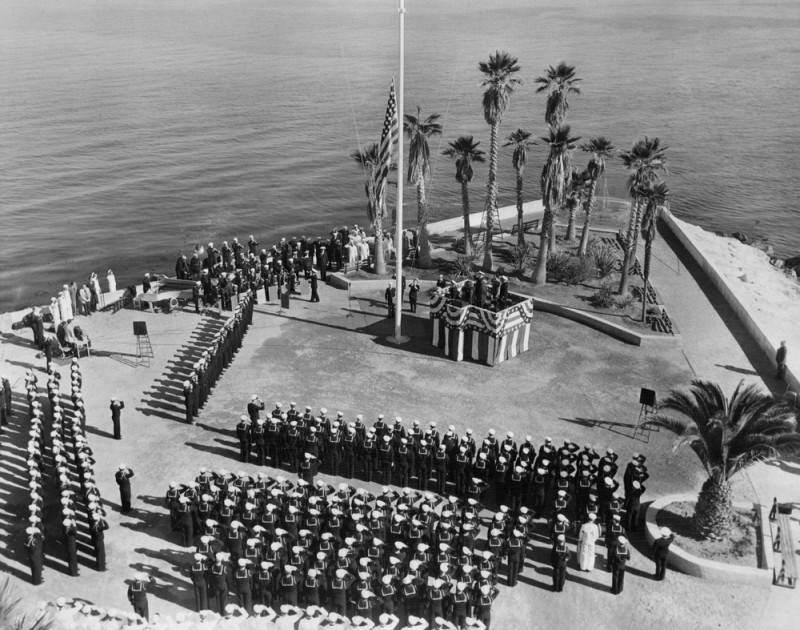
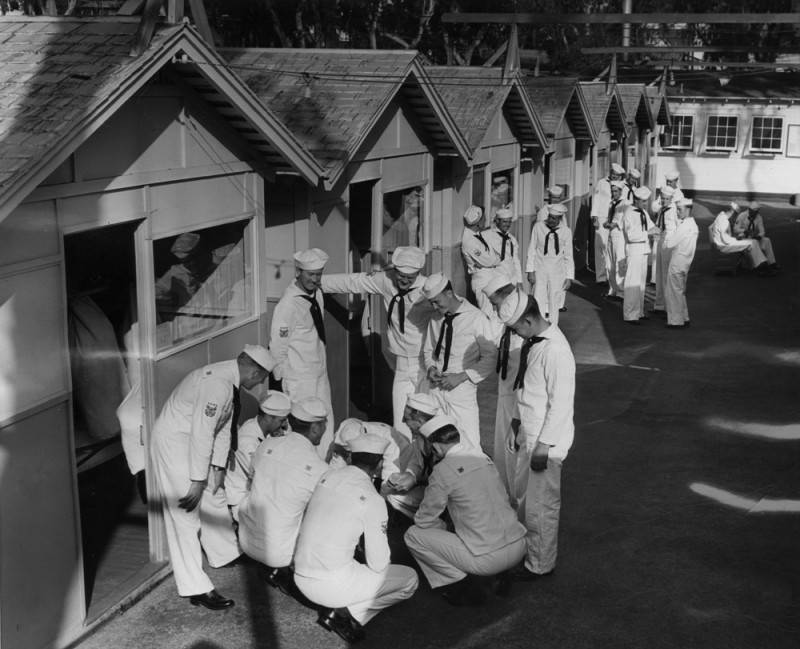
Many of those merchant marines received special training on Catalina Island. Because of its strategic offshore location, Catalina was closed to the public on Dec. 23, 1941, 16 days after the attack on Pearl Harbor.
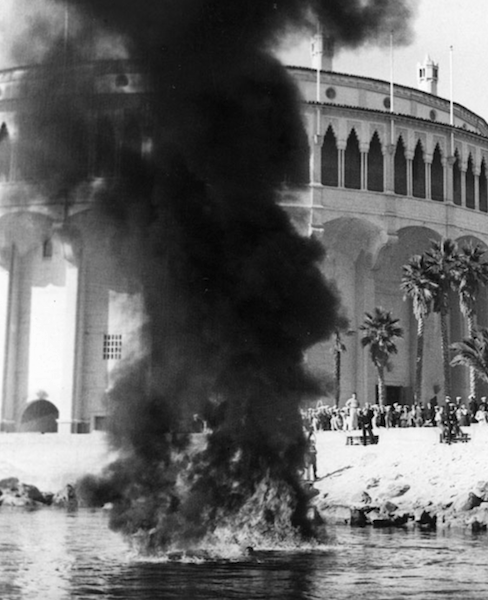
The entire island was then repurposed as a military outpost for various branches of the armed forces. Most of the merchant marine training took place in Avalon, with classes held in the island’s Casino and training exercises held in nearby Avalon Bay.
Nearly a quarter of a million members of the Merchant Marine served during World War II. 9,521 of them lost their lives, the largest per capita death rate of any of the U.S. Armed Forces. Despite their sacrifice, the U.S. government denied them veterans benefits until ordered to do so by a federal court in 1987.
By way of contrast, San Pedro has recognized the contributions of merchant marines in various ways.
The Los Angeles Maritime Museum moved into the former Terminal Island ferry depot building in 1980. It contains exhibits and research materials on the Merchant Marine and its history and activities.
John S. Gibson Park, just across the plaza from the maritime museum, includes among its four memorials the American Merchant Marine Veterans Memorial. (It also houses memorials to the fishing industry, Harry Bridges and the ILWU, and the warship USS Los Angeles.)
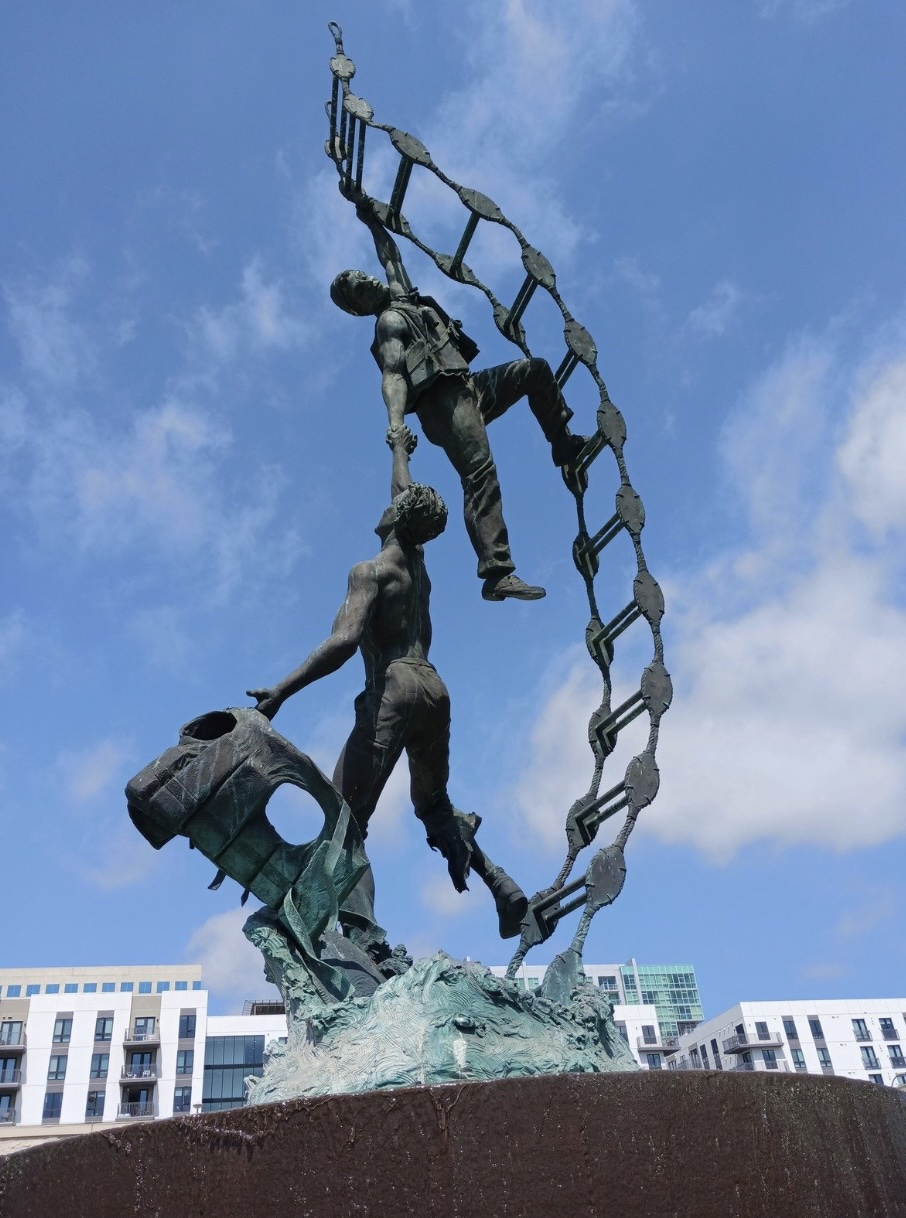
The black marble Merchant Marine memorial was dedicated on May 22, 1989. It includes the names of merchant seamen who lost their lives during wartime, as well as the visually striking sculpture Jacob’s Ladder, which was designed by Jasper D’Ambrosi of Wilmington and completed by his three sons after his death.
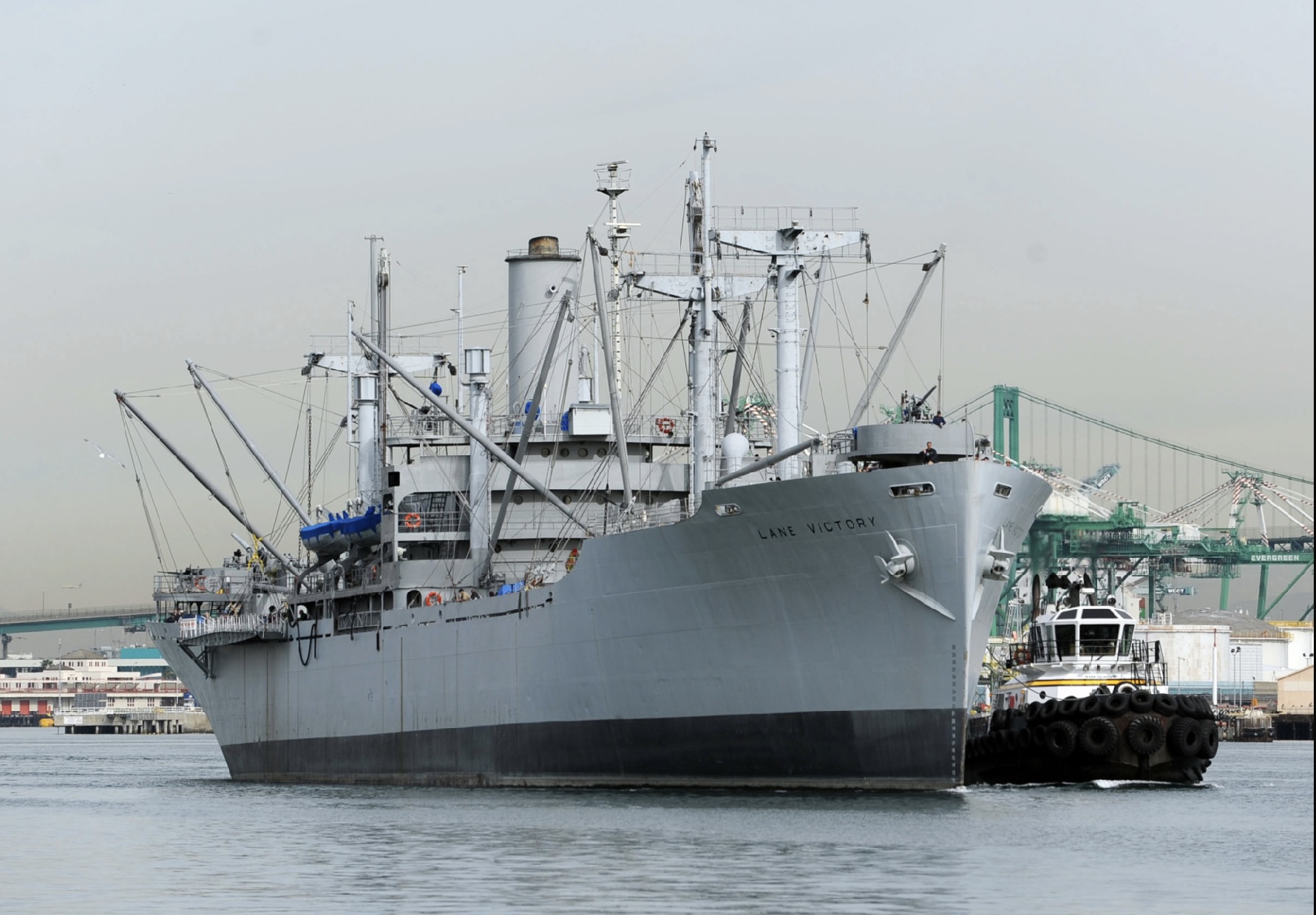
Finally, those interested in a firsthand look at a working Merchant Marine ship will want to visit the Lane Victory. The ship was acquired in 1988 by the group U.S. Merchant Marine Veterans of World War II.
Former merchant seamen and other volunteers spent years restoring the ship and making her seaworthy again. She now serves as a functioning vessel as well as a floating museum dedicated to those who faithfully served in the U.S. Merchant Marine.
Sources:
Daily Breeze archives.
Islapedia website.
Los Angeles Maritime Museum website.
San Pedro News Pilot archives.
Wikipedia.
Courtesy Catalina Island Museum. (Credit: Islapedia website)


