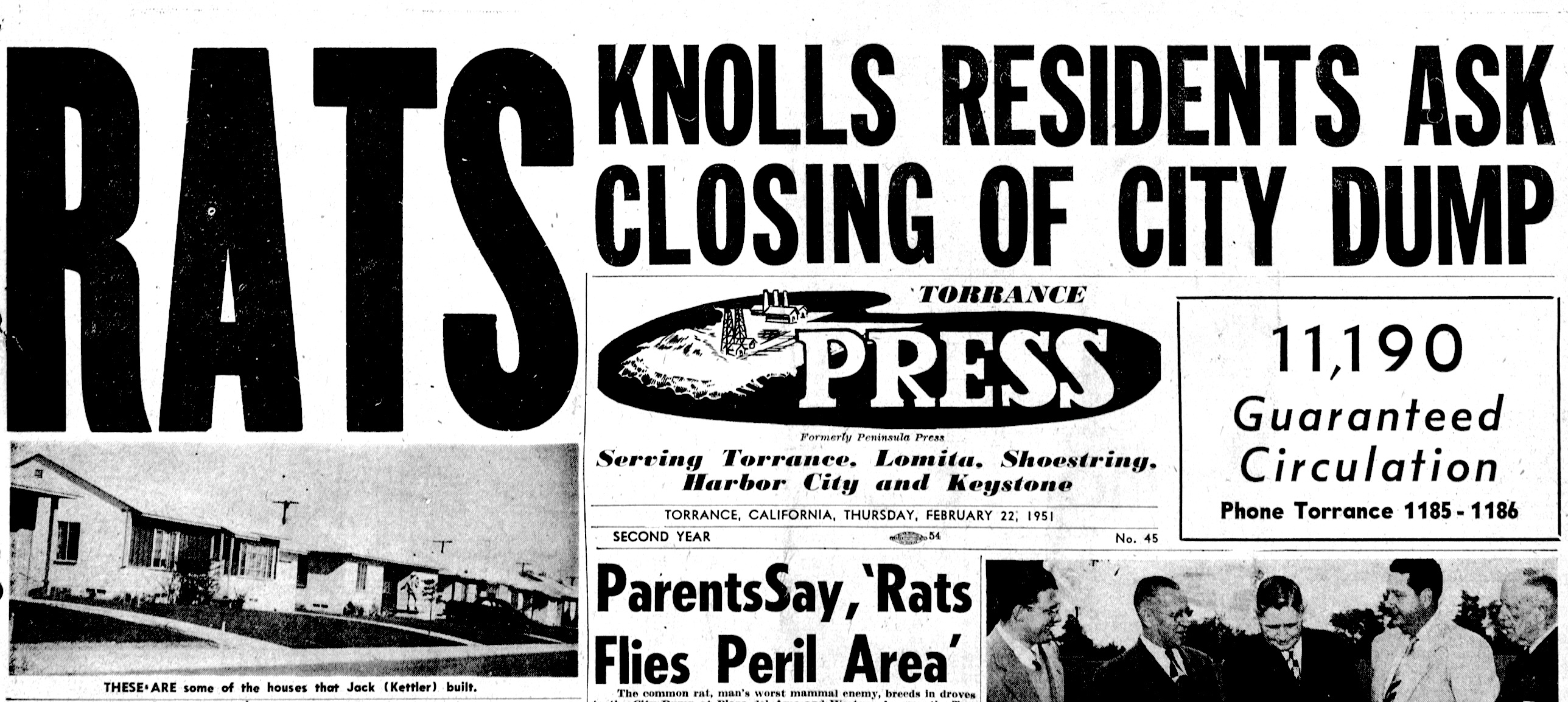
The front-page headline in the Torrance Press screamed it out with one giant word: “RATS.” The newspaper, known for its sensationalism, had been going all in on addressing a variety of concerns expressed by nearby residents over the Torrance City Dump.
The dump, located on a large plot of barren land at the southwest corner of Plaza del Amo and Western Ave. on the city’s eastern border, had been operating since the early 1940s.
Voices only began to be raised in protest against it after the end of World War II, when the suburban housing boom resulted in the proliferation of residential developments in previously uninhabited locations.
In this case, that meant the new housing project built along Border Ave. at the dump’s western edge by landowner/developer Jack Kettler, whose residents soon would discover the unpleasant downside of living near a dump.
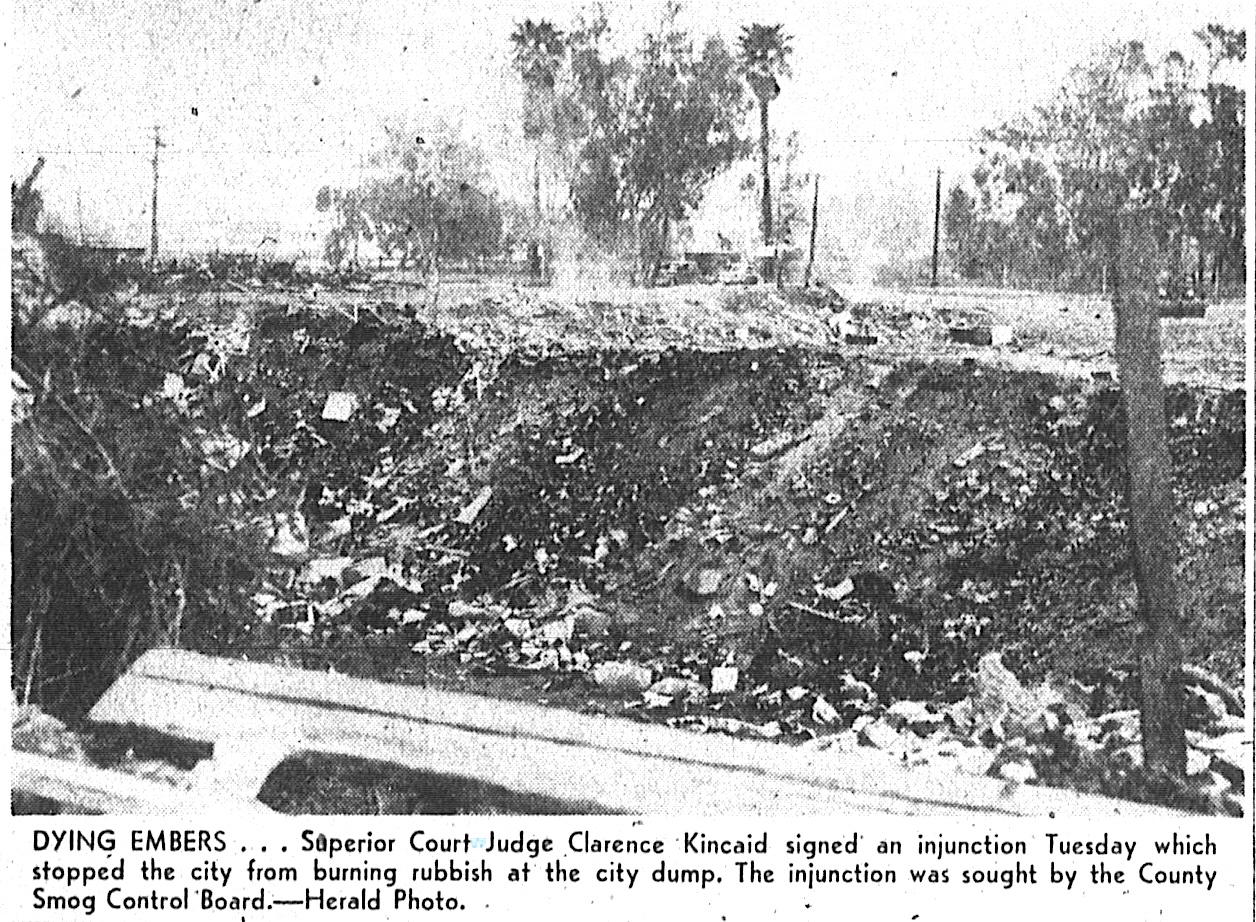
The problem was further exacerbated by an April 1949 anti-pollution ruling from the Los Angeles Superior Court that banned controlled burning of waste material at municipal dumps. Torrance stopped the practice as of July 1, 1949.
The early anti-smog ruling was a much-needed measure – the Los Angeles area would be beset by massive smog in the 1950s –, but, as a result, the city’s dump began to fill up faster and became more expensive to operate. Rubbish that once was burned had to be buried instead.
Also, the greater amounts of material being deposited caused an increasing proliferation of rats, mice, flies and other scavenging critters. When those critters started finding their way to nearby neighborhoods, protests to city hall became more constant and vociferous.
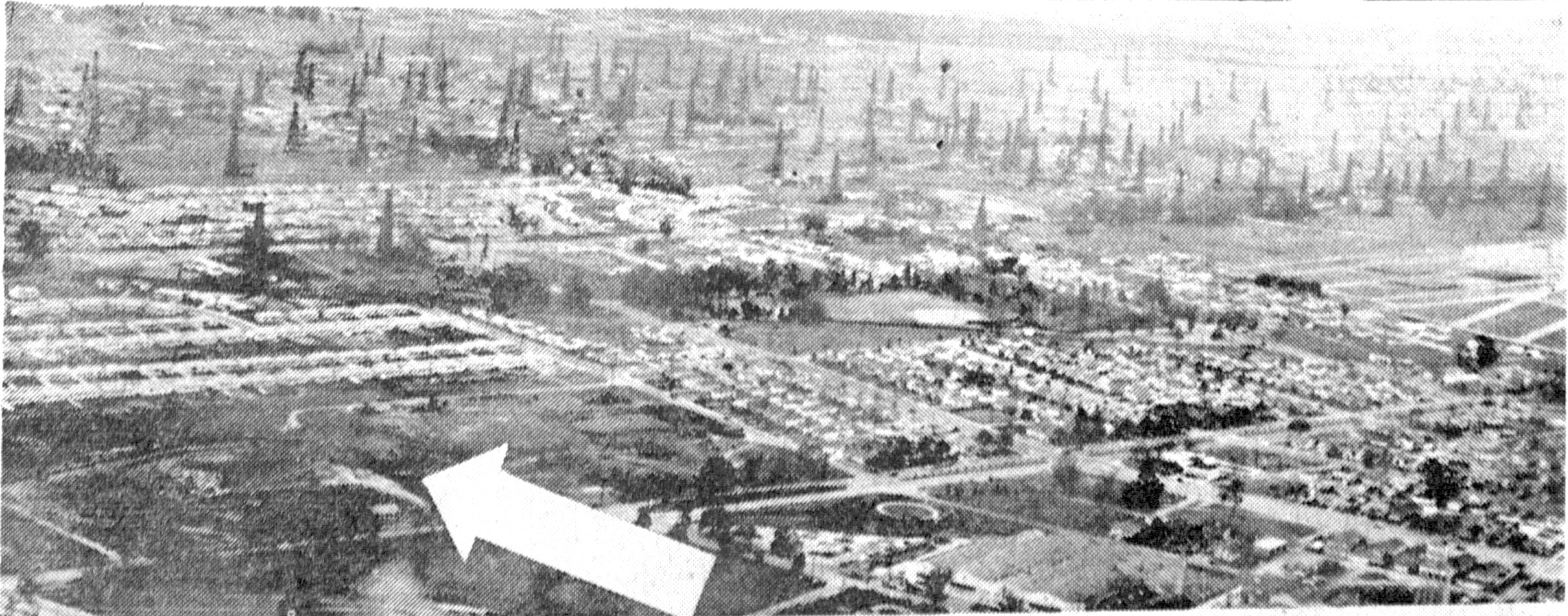
Torrance city councilman Nick Drale heard the protests and was convinced that the dump needed to be closed. Between 1950 and early 1951, he filed a motion to do just that no less than five times. His fellow councilmen were unmoved and failed to act on the motion each time.
Enter The Press and its breathless coverage of the dump story, which began in earnest in early 1951. There may not have been quite the massive invasion of pestilence that some residents claimed, but there’s little doubt that the dump was a danger on many levels to nearby homeowners and their children.
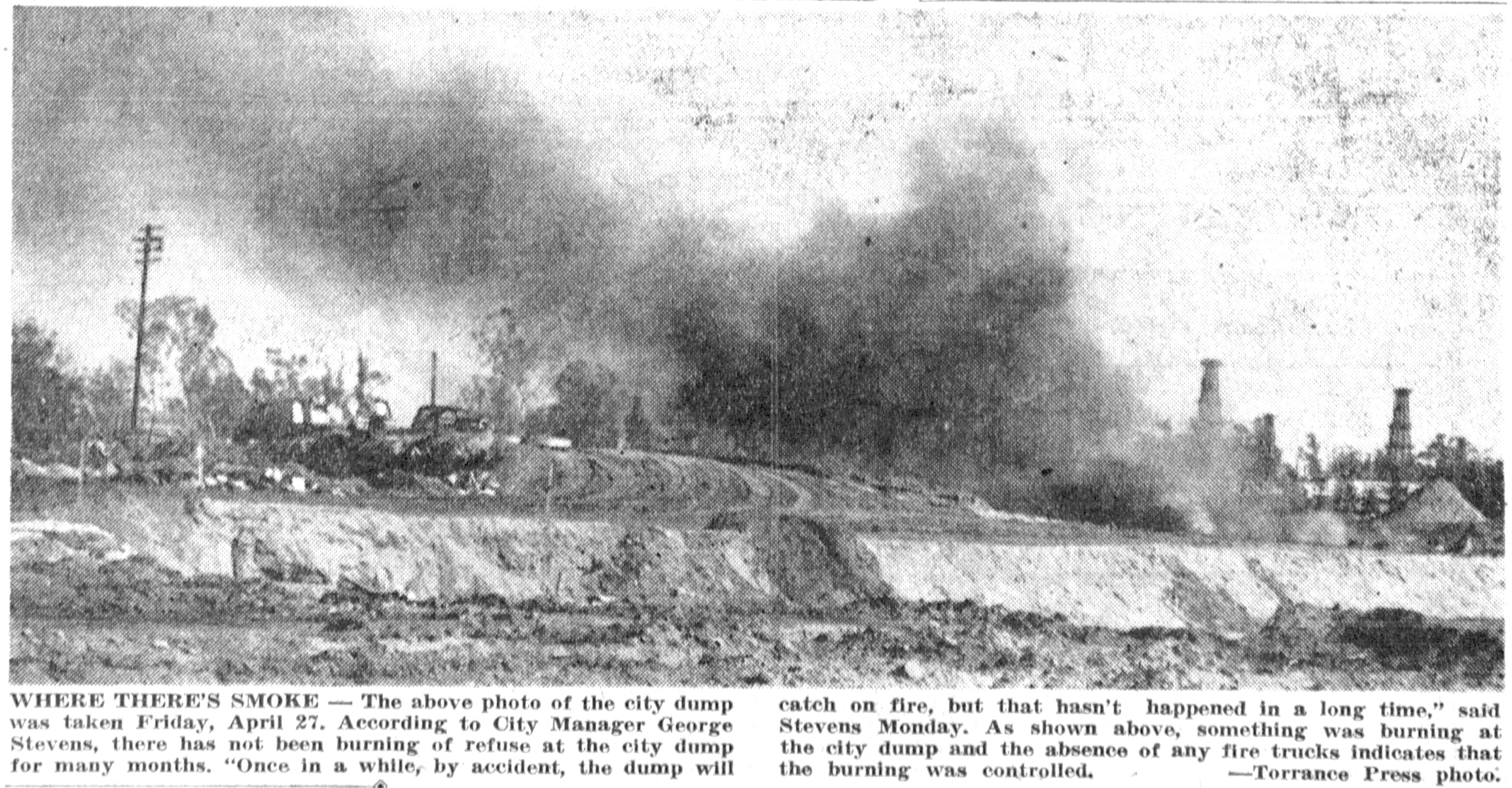
In addition to unwanted insects and rodents, the dump frequently caught on fire. In some cases, city firefighters had to battle the sometimes spontaneously-generated blazes for hours. Some residents in the area made unverified claims that the city still was conducting controlled burns there in violation of the court order.
After a year or so of often rancorous debate, the City Council finally acted, perhaps noticing that Drale recently had won re-election to his seat with the highest vote total in city history. In May 1952, it voted to acquire a new 15-acre dump site on Madrona Ave. just north of Torrance Blvd. for $45,000.
The Plaza del Amo dump site was closed, and the new dump opened for business in August 1952. It would only be used until it filled up, an estimated eight years. The plan, which later came to fruition, was to convert the site into the city maintenance yard that eventually would become part of the city’s civic center complex.
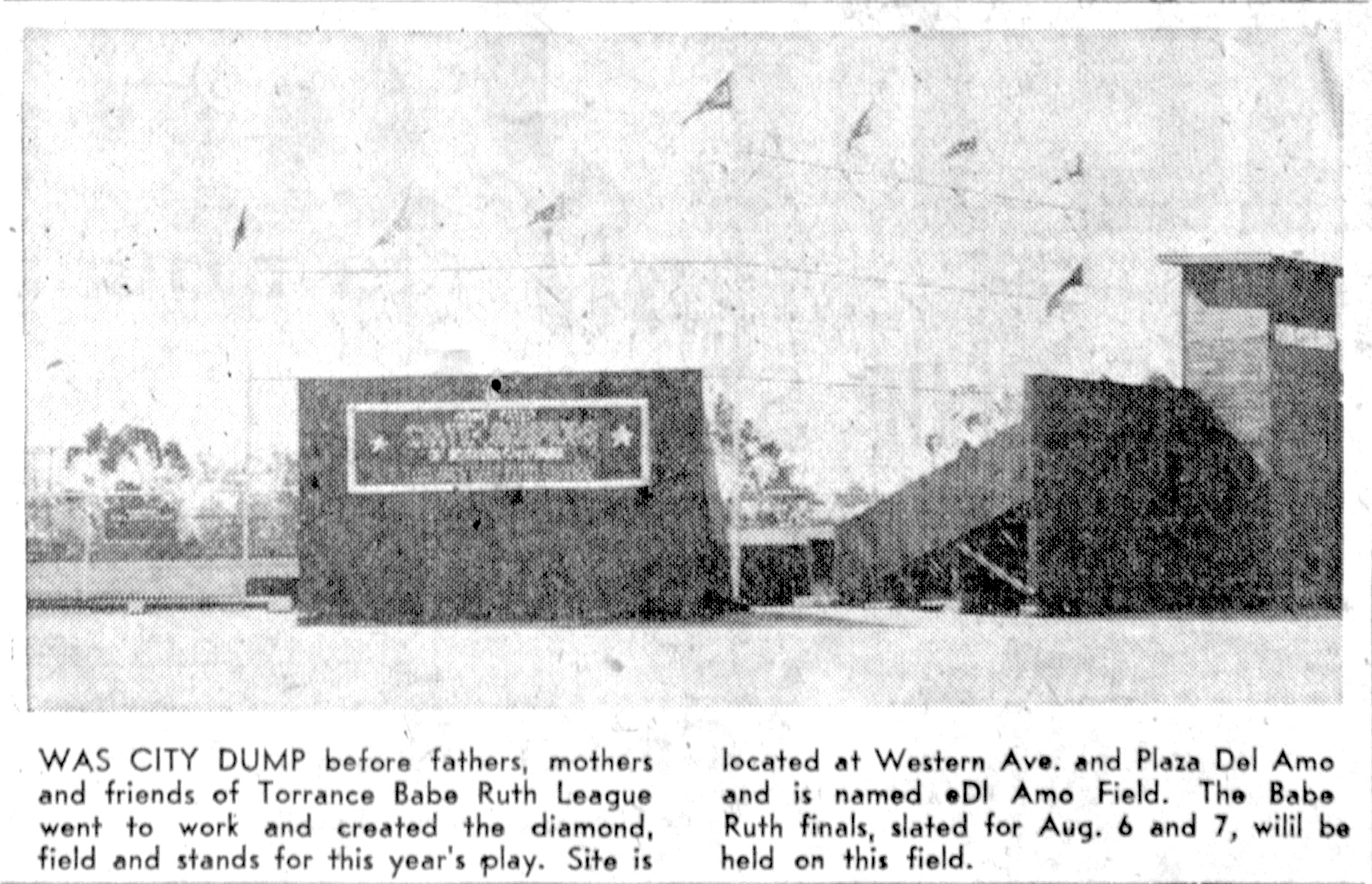
Plans to convert the old Plaza del Amo site into a recreation area were floated at the time of its closure. Discussions over the idea continued for several years, until the city’s Babe Ruth youth baseball league finally was granted use of the land. Its volunteers built Del Amo Field on the site in time for the opening of the 1960 youth baseball season.
Eventually, the unstable land beneath the field began to settle unevenly, and the field became unusable a decade or so later.
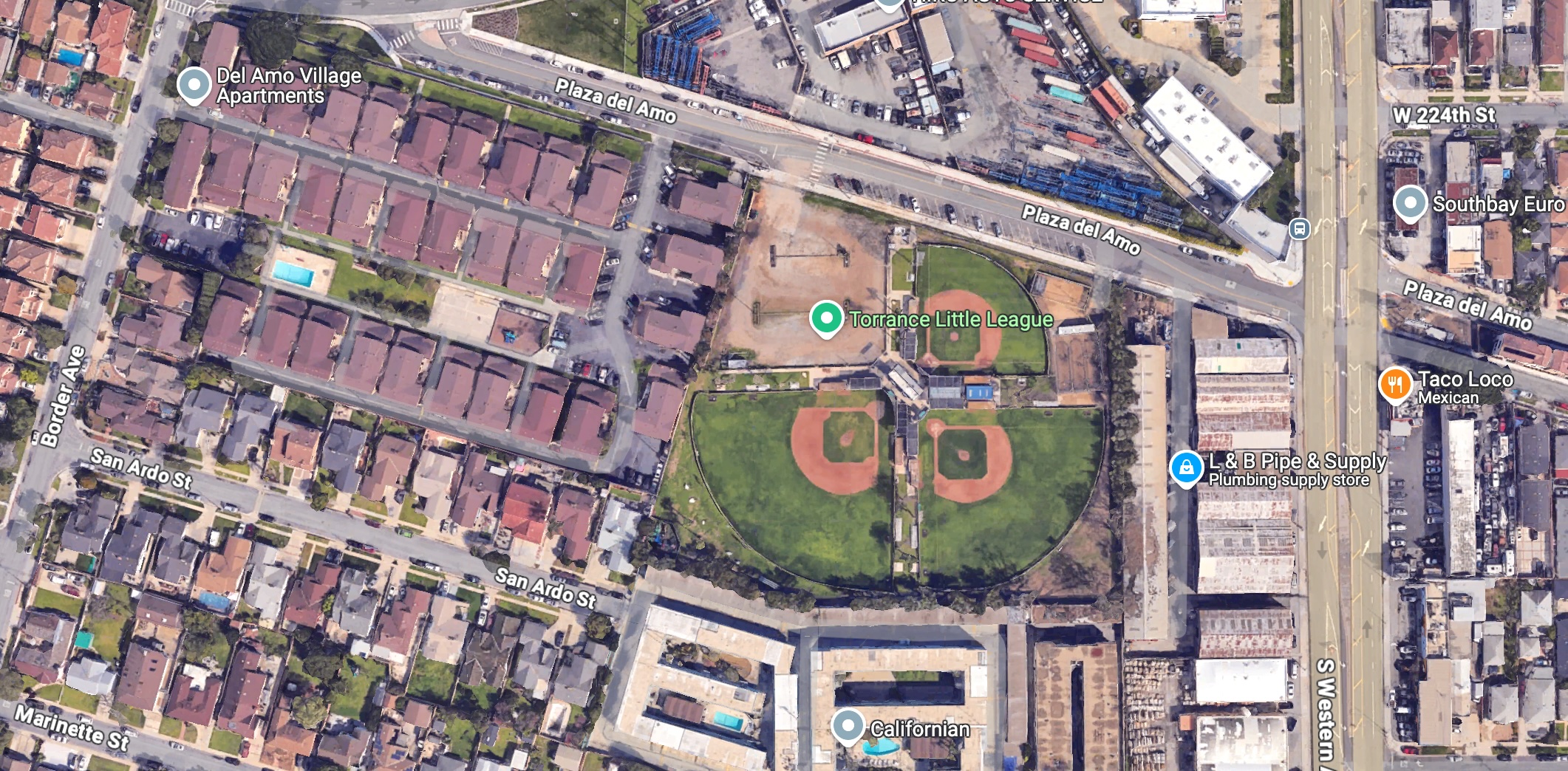
Years after youth baseball had abandoned it, a dedicated group of parents led a movement to repair, refashion and rebuild the facility. On March 15, 1997, the all-new Central Torrance Little League kicked off its first season at the remade facility, and occupies it to this day.
Back across town, the Madrona city dump continued to operate, and gradually fill up, during the 1950s. Its proximity to the city’s sparkling new civic center complex, which opened in 1956, was aesthetically displeasing to some, but it was always just a use-it-til-it-fills-up temporary solution.
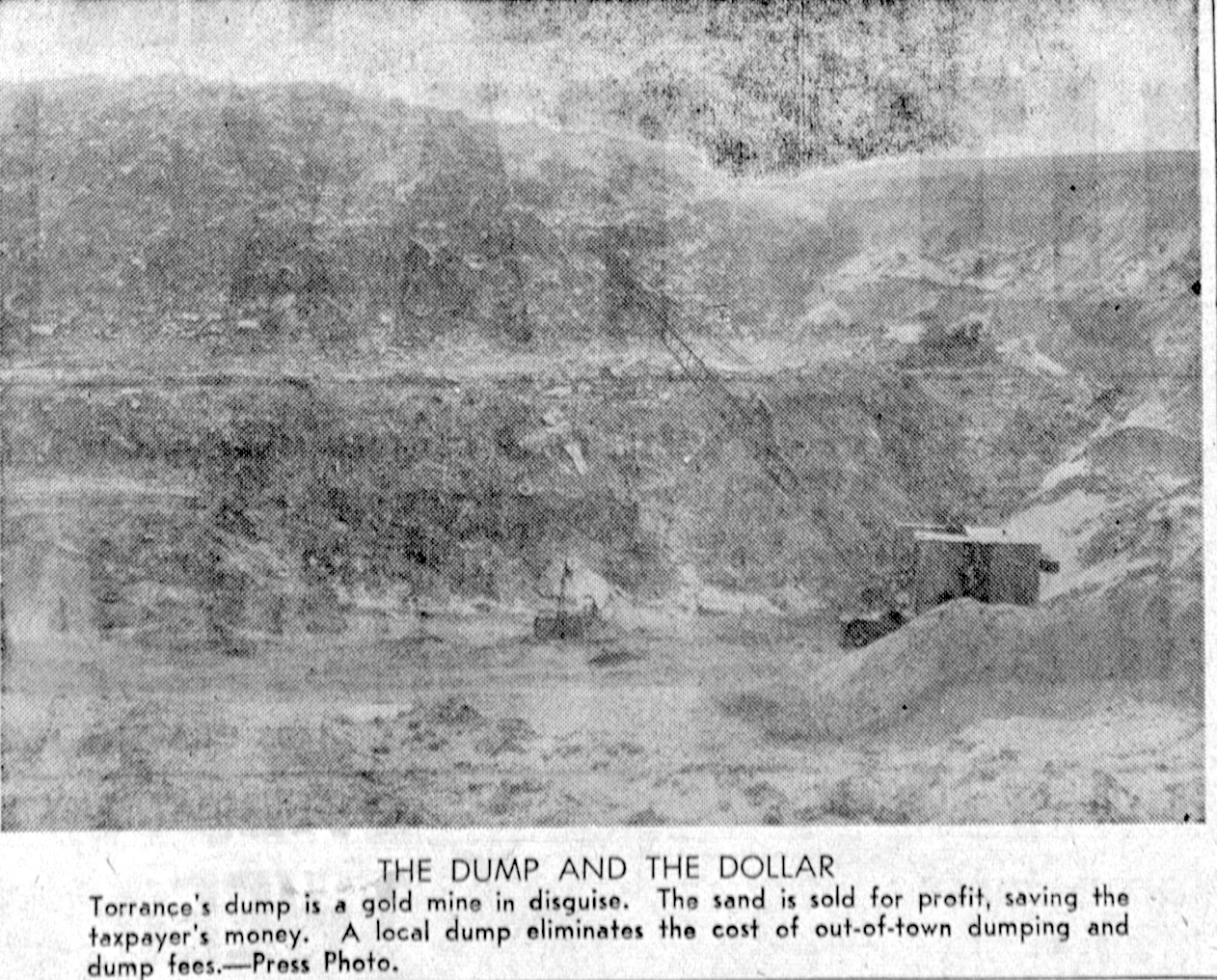
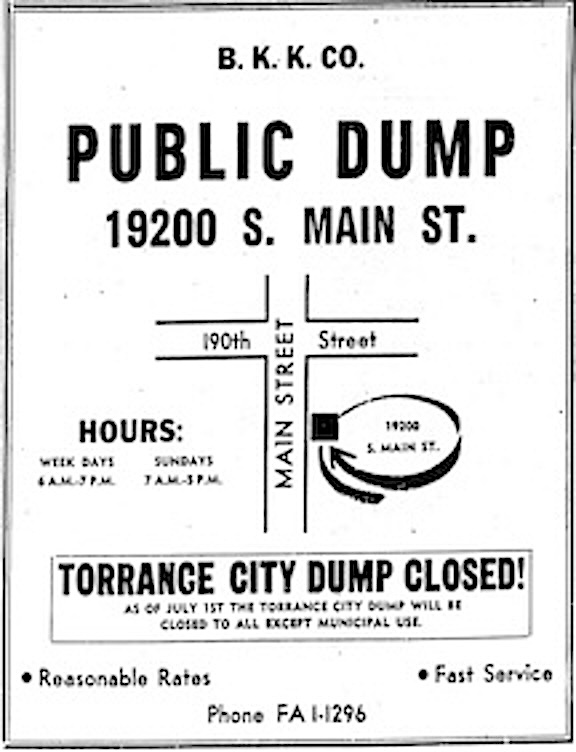
By 1958, that time was coming quickly. On July 1, the Madrona dump was closed to individual citizens. It soon closed down completely, and the Torrance City Yard moved into its new headquarters on the site shortly thereafter.
With its in-city options used up, the city moved toward using larger regional landfills. Some of these included the BKK landfill in Carson (now home of Victoria Golf Course), which operated from 1948-1959, the Cal Compact landfill, also in Carson, which operated from 1959-1965, and the Palos Verdes Landfill in Rancho Palos Verdes, which operated from 1957 until 1980.
The city of Torrance began updating and enlarging its fleet of garbage collection trucks. The increased costs caused the now dump-less city to begin charging residents a $1 monthly fee for the first time in 1959. Up until then, the use of city dumps and the garbage collection service had been free.
The city now has a large recycling program, and continues to transport its non-recyclable trash to a number of regional landfills.
Sources:
City of Torrance website.
Daily Breeze archives.
Torrance Press Herald archives.