
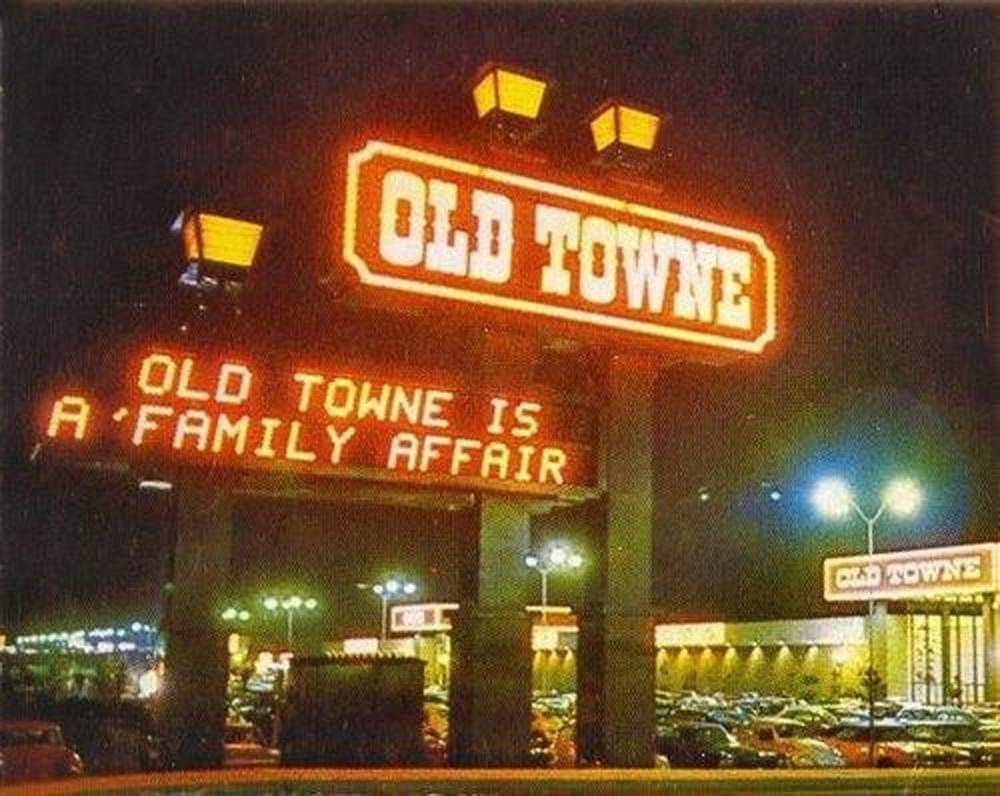
Those who remember the enclosed Old Towne Mall in Torrance often remark on the quaintness of its old-time nostalgia vibe.
The mall was built by developer Robert Brindle through his El Segundo-based Lincoln Realty Old Towne arrangement with Mik Brindle, Clifford Hemmerling and the Southern California Financial Corporation.
Brindle’s firm wasn’t attempting to compete with Torrance’s nearby megamalls like Del Amo Fashion Center and the South Bay Center (now the Galleria). The developer saw the smaller, mostly single-story complex as filling a complementary niche to the larger centers, using entertainment elements in a concept they called “recreational retailing.”
Old Towne’s location on the northwest side of the intersection of Hawthorne and Del Amo boulevards had an adjoining K mart that had opened in 1971 that served as a kind of anchor store. Other than that, most of its tenants were shops operated by small businessmen when it opened in October 1972.
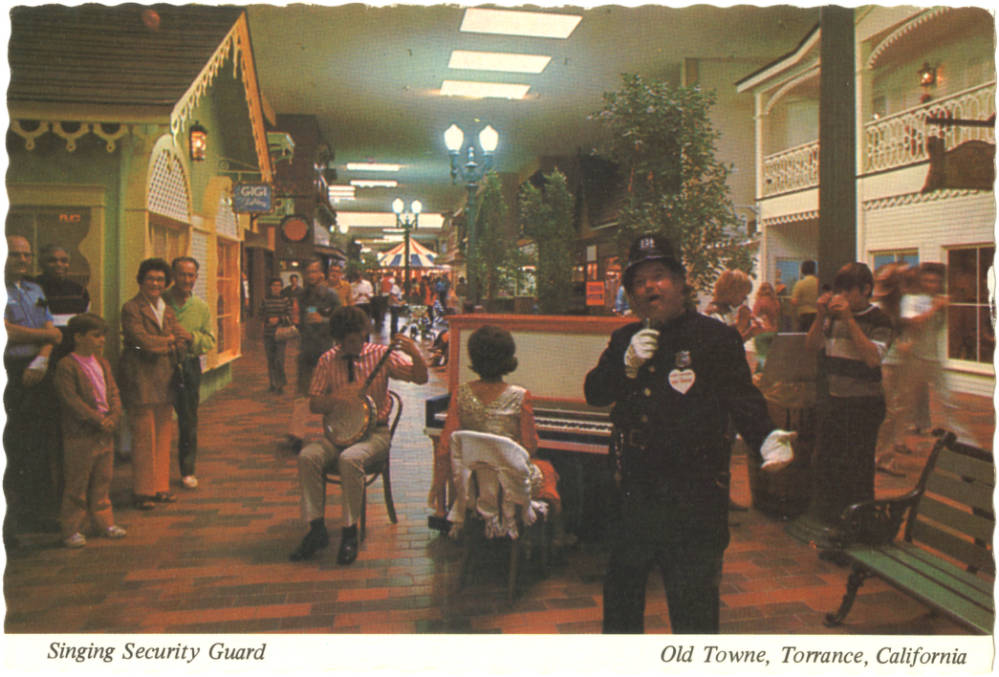
Its unique interior was filled with touches meant to give the mall an old-time 1890s-style nostalgic effect. Period costumes and decor included costumed bands performing at an old-fashioned gazebo, a singing security guard, a refurbished cable car and a fully operational carousel for kids.
Special events included everything from dance marathons to frog jumping contests, bingo games and armwrestling tournaments. Arts festivals and concerts featuring all different types of music were held frequently. The mall even had its own theater space, the Old Towne Mall Little Theater, at the south end of the complex.
It was all very small-scale and intimate. But management had much bigger plans in mind, according to a July 1973 draft environmental impact report submitted to the City of Torrance that reference librarian Mike George at the Katy Geissert Civic Center Library unearthed recently.
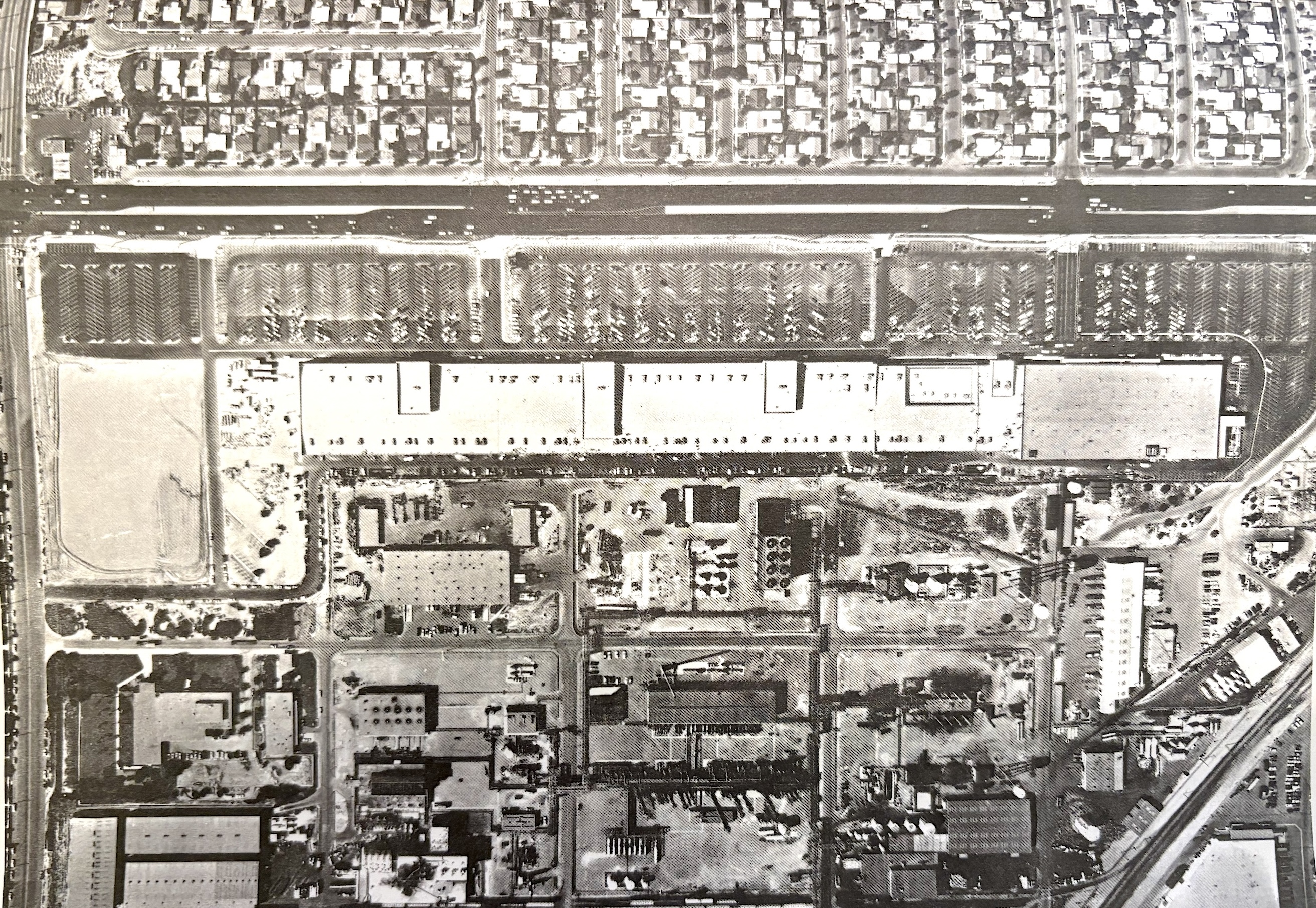
According to the EIR, the Lincoln Realty Old Towne Project proposal called for the addition of a large outdoor amusement park, indoor recreation center, a multistory hotel complex and a parking structure on land adjacent to the mall. The land, extending east of the Old Towne Mall to Mariner Ave., was then occupied by the Union Carbide chemical plant at 19500 Mariner.
The project would be introduced in two phases. Phase I called for the construction of the indoor “Old Towne Fair” building, which would have been 250 feet wide, 500 feet long and 48 feet high, with an interior area of 125,000 square feet.
It would have housed 24 amusement rides, food and souvenir concession stands, a shooting gallery and a 1,524-seat theater. The rides would have included bumper cars, a roller coaster, multiple carousels, and a tilt-a-whirl, among others. A two-level parking structure with 795 spaces also would be built.
Phase II was even more ambitious. It called for the removal and replacement of the neighboring Union Carbide polyethylene plant: “Negotiations are now underway for the purchase of the property by the Lincoln Realty Company,” the report states.
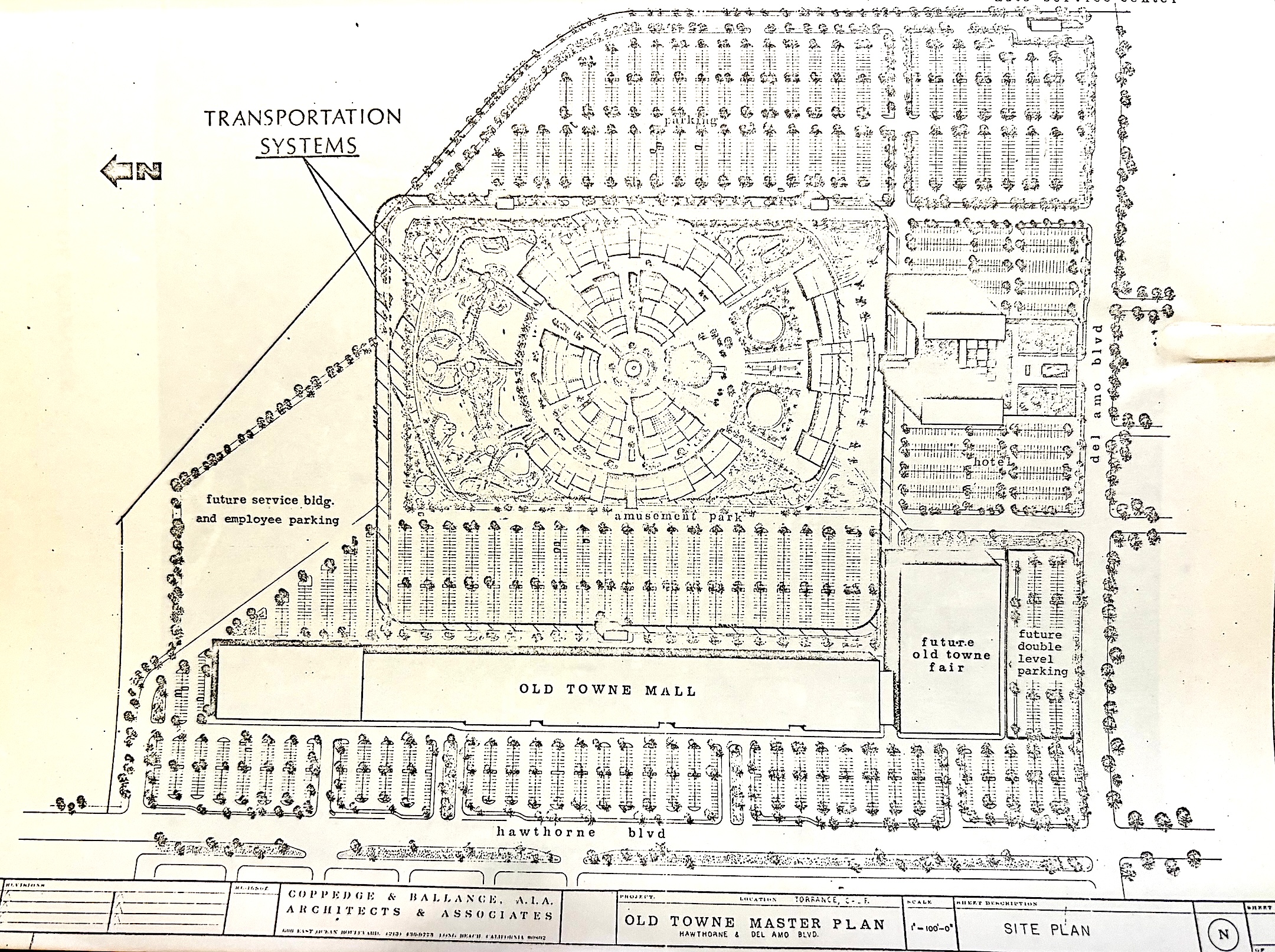
This parcel would contain the 600-room hotel and convention center complex with four restaurants and a swimming pool as well as a large outdoor amusement park with “as yet unspecified outdoor rides and recreational features.”
Total new parking for the whole project amounted to nearly 10,000 spaces. Oh, and a “people mover” transportation system of unspecified design would ferry people around the area, which would likely have been open from 2:00 pm until midnight in the summer and on weekends and holidays.
The rosy EIR saw the only negative effects as being on area traffic, which was already heavy and growing heavier. Positive effects included the addition of hundreds of new jobs, a new source of recreation for local residents and an attractive convention destination for out-of-towners.
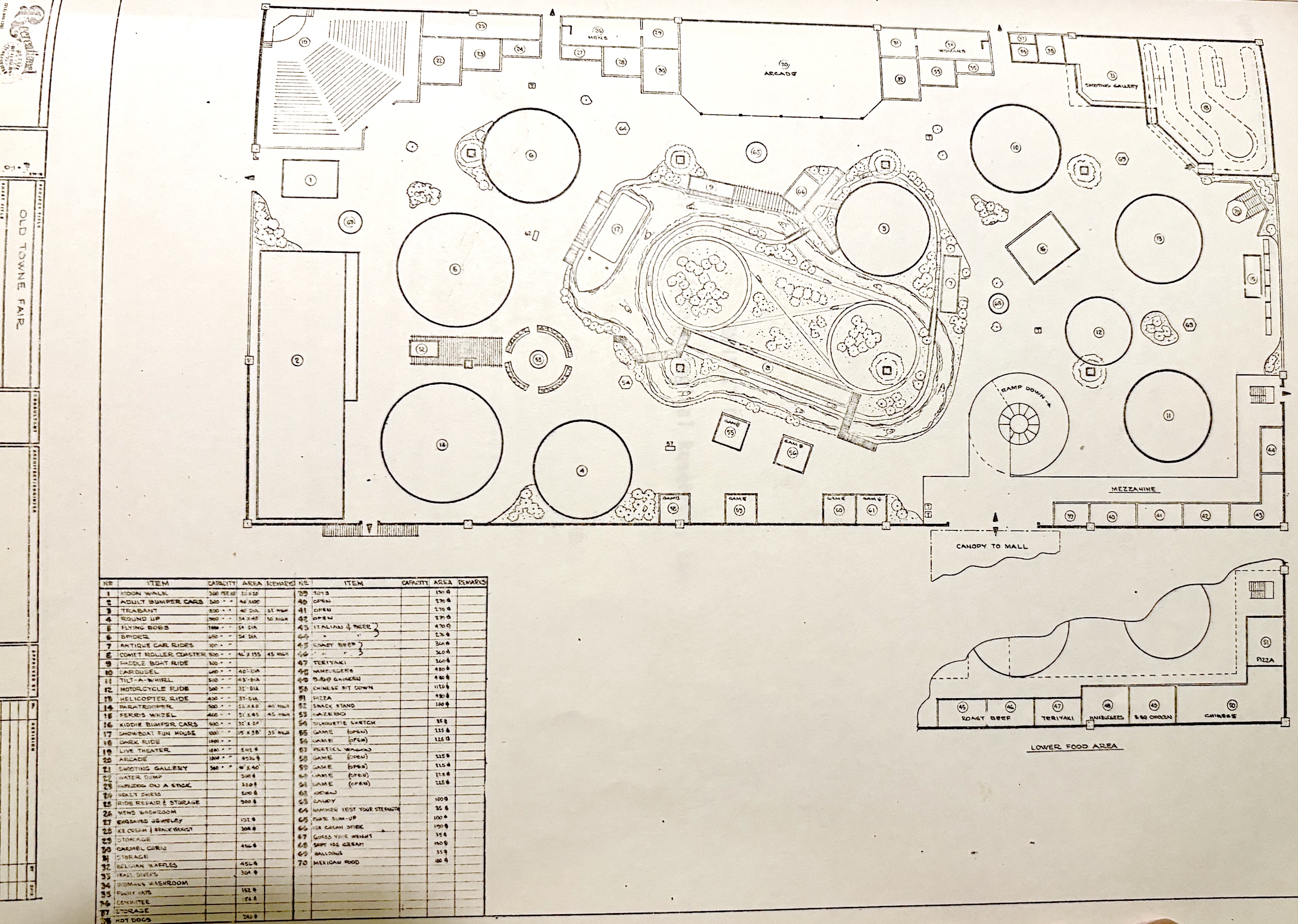
Needless to say, the project never happened, though it was announced in the July 22, 1973 Los Angeles Times as “in its final design stages” and as being expected to be completed by the summer of 1974.
The main stumbling block seems to have been the acquisition of Union Carbide’s plant, which Brindle’s firm, by then renamed Recreational Retail Builders of El Segundo, was unable to pull off.
Instead, the Union Carbide plant continued to operate on the site until its closure in 1981. For the next four years, the company spent millions of dollars cleaning up hazardous waste from the former chemical plant. Construction finally began in late 1985 on the $100 million Torrance Business Park that currently occupies the site.
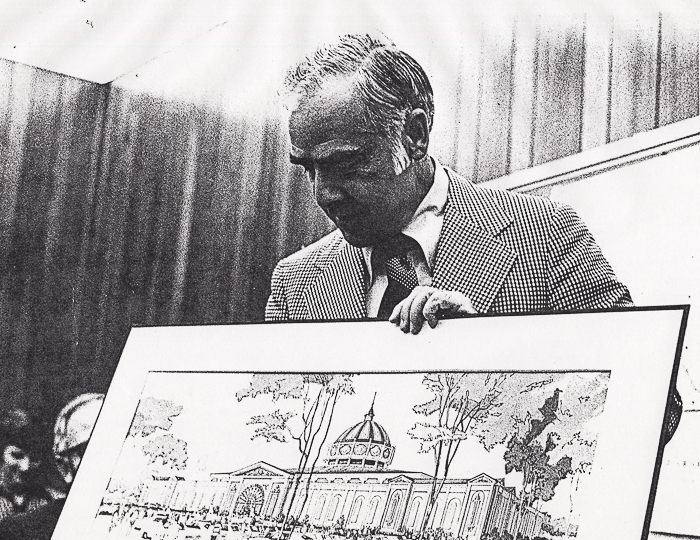
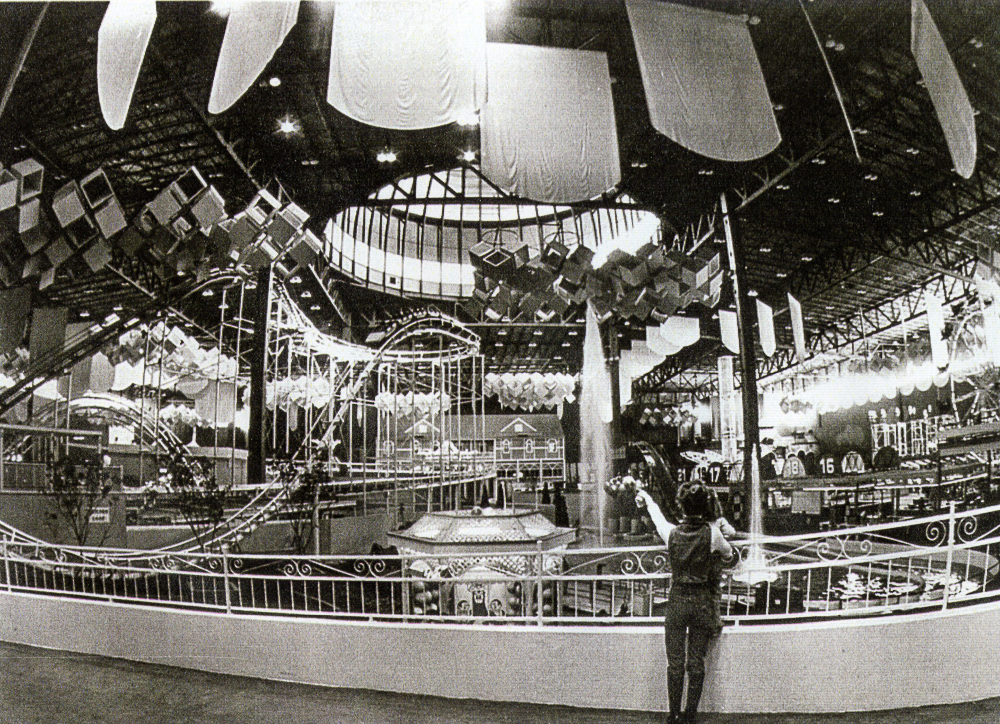
The Recreational Retail Builders firm moved from El Segundo to Bolingbrook, Illinois, near Chicago, in early 1974 and proceeded to build the Old Chicago Mall there. The complex incorporated the same nostalgic shopping mall and amusement park combination as the one proposed for Torrance and opened with much fanfare in June 1975.
Old Chicago Mall ran into financial and operational difficulties soon thereafter, and closed for good in 1980.
As for Old Towne Mall, it struggled financially during the 1980s, changing owners a couple of times. In 1989, the roof was removed and the stores re-oriented to face Hawthorne Blvd. The outdoor shopping center currently operates as the Torrance Promenade.
Note: Special thanks to Katy Geissert Civic Center Library reference librarian Mike George for the story idea and related reference material.
Sources:
Daily Breeze archives.
Draft Environmental Impact Report for the Lincoln Realty Old Towne Project, Torrance, California, prepared by Opinion Research of California, Inc. in conjunction with Socio-Economic Systems, July 1973.
Los Angeles Times archives.
“Old Chicago Shopping Center & Amusement Park, Bolingbrook, Illinois,” Negative G blog.
Wikipedia.

