Infrastructure has become quite the buzzword in Washington, DC in the last few years.
The movement toward a major government initiative to rebuild roads, bridges and other public structures finally resulted in the passage of the $1.2 trillion Infrastructure and Investment Jobs Act, which President Biden signed into law a year ago in November 2021.
Wide-ranging federal projects of this scale haven’t been that common in U.S. history with perhaps only the interstate highway system of the 1950s being the most recent example.
An earlier, more wide-ranging infrastructure effort began during the 1930s under President Franklin D. Roosevelt’s New Deal program with the establishment of the Public Works Administration (PWA) in 1933 and the Works Progress Administration (WPA) in 1935.
The PWA tackled large projects such as bridges, dams, streets and highways.Today we’re concentrating on the smaller-scale, local-level structures that were the WPA’s specialty.
The WPA financed many different types of programs, all with a similar aim: to put people to work during the Depression on projects that would improve their quality of life while attempting to rebuild the nation’s economy. These included programs in the arts as well as building projects, and often combined the two.
The program had its detractors, but also had a major impact in cities and towns large and small throughout the country. Many of the buildings constructed under its auspices still stand in the South Bay and Harbor Area, and the following list covers some of the major ones still in use. The list also includes major artworks commissioned by the Federal Arts Project under the WPA.
Airports:
Hawthorne Municipal Airport (12101 Crenshaw Boulevard), 1939. Originaly known as Jack Northrop Field, its name was changed in 1948 to Hawthorne Municipal Airport.
Schools:
Daniel Freeman Elementary School, (2602 W. 79th St., Inglewood), 1939. Name changed to Warren Lane Elementary School in 2013 when the two schools were combined.
Grandview Elementary School (455 25th St., Manhattan Beach.) Still a functioning elementary school.
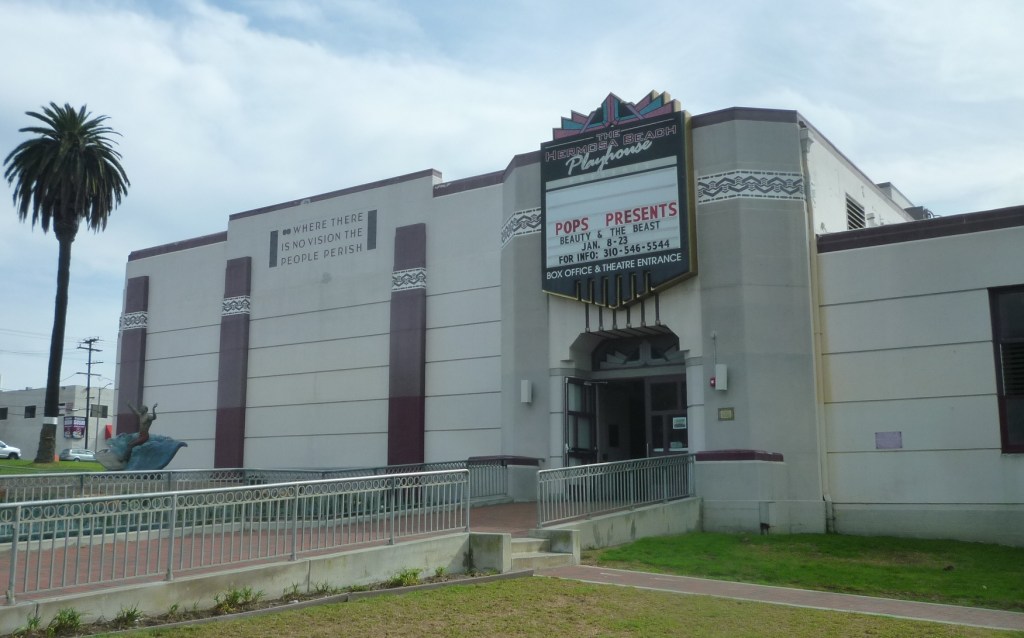
Pier Avenue Elementary (710 Pier Ave., Hermosa Beach). Completely rebuilt by the WPA in 1935-36 to repair earthquake damage, it has served as the Hermosa Beach Community Center since 1978. The horror film “Carrie” famously was filmed there in 1975.
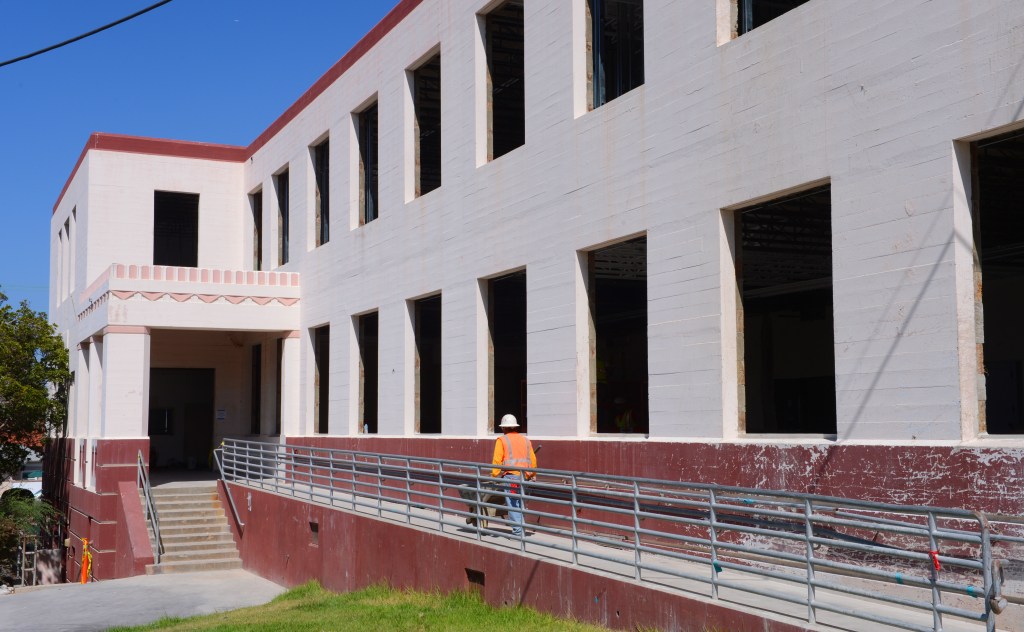
Redondo Union High School Science Building (631 Vincent Park, Redondo Beach), 1939. Still in use with alterations and updates.
Robert E. Peary Middle School (1415 Gardena Blvd., Gardena), which operated as Gardena High School until 1956. Earthquake-damaged buildings repaired and replaced, 1936. Still in use.
Post office artworks
The Gardena Post Office (1103 W. Gardena Blvd.), Inglewood Post Office (300 E. Hillcrest Blvd.) and San Pedro Post Office (839 S. Beacon St.) all contain major artworks installed under the WPA’s Federal Arts Project.
Libraries
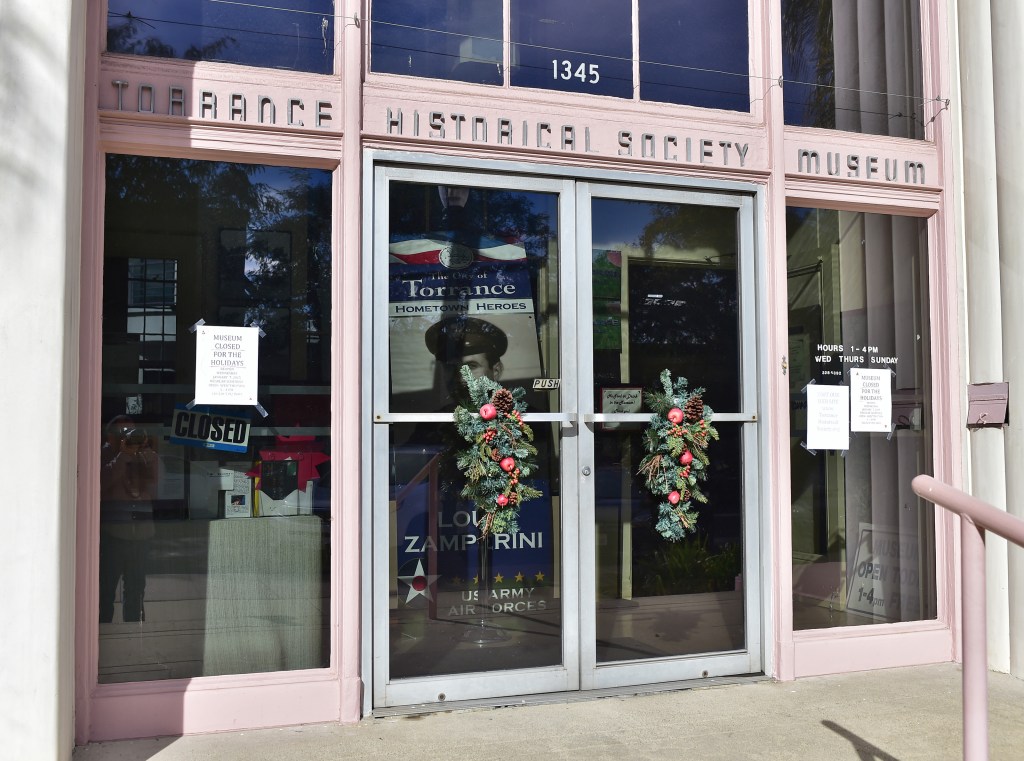
Torrance Public Library (1345 Post Ave.), 1936. The original building now houses the Torrance HIstorical Society.
Parks
Clark Stadium and Clark Building (861 Valley Drive, Hermosa Beach), 1937. Baseball field and community building.
Live Oak Park (1901 N. Valley Drive, Manhattan Beach.) Completed by the WPA in the Late 1930s.
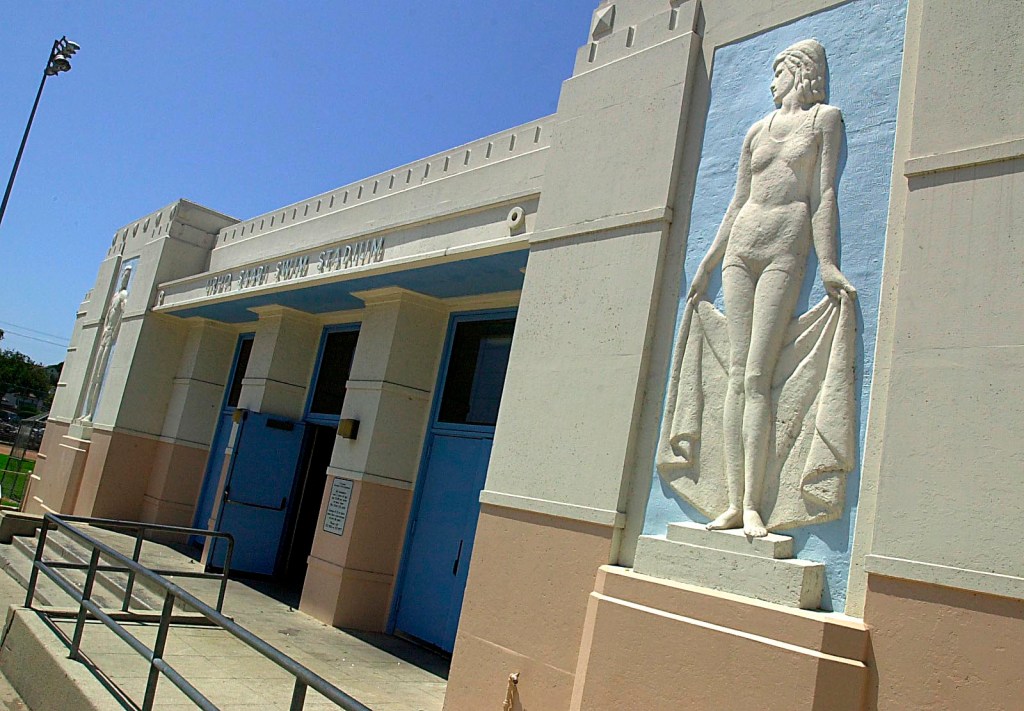
Urho Saari Swim Stadium (291 W. Mariposa Ave., El Segundo), 1940. Still in use.
Veterans Memorial Building, Ed Vincent Park (formerly Centinela Park). 1936-37. The park’s tennis courts also were built by the WPA.
Art works, freestanding
“History of Transportation,” mural by Helen Lundeberg, Grevillea Art Park (101 E. Kelso St., Inglewood), 1940. Moved from Vincent Park in 2007, the mosaic mural is 240 feet long and eight feet high.

Sources:
Daily Breeze archives.
“History of Transportation,” Inglewood, CA Public Art website.
The Living New Deal website.
Los Angeles Times archives.
San Pedro News Pilot archives.
Torrance Press Herald archives.
Wikipedia.