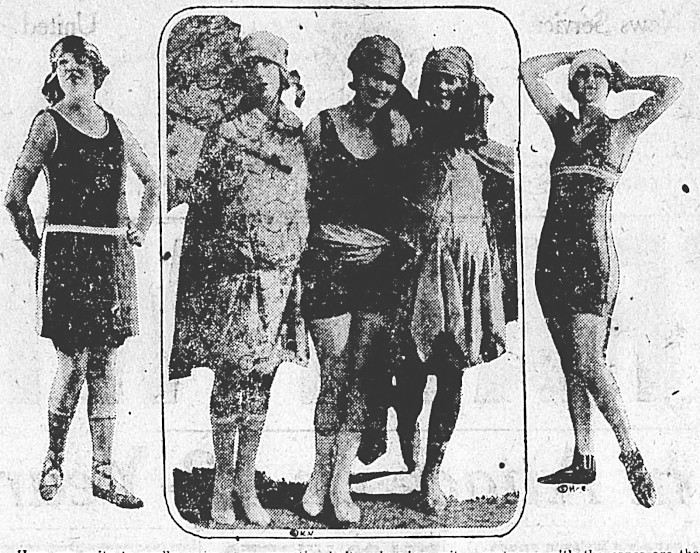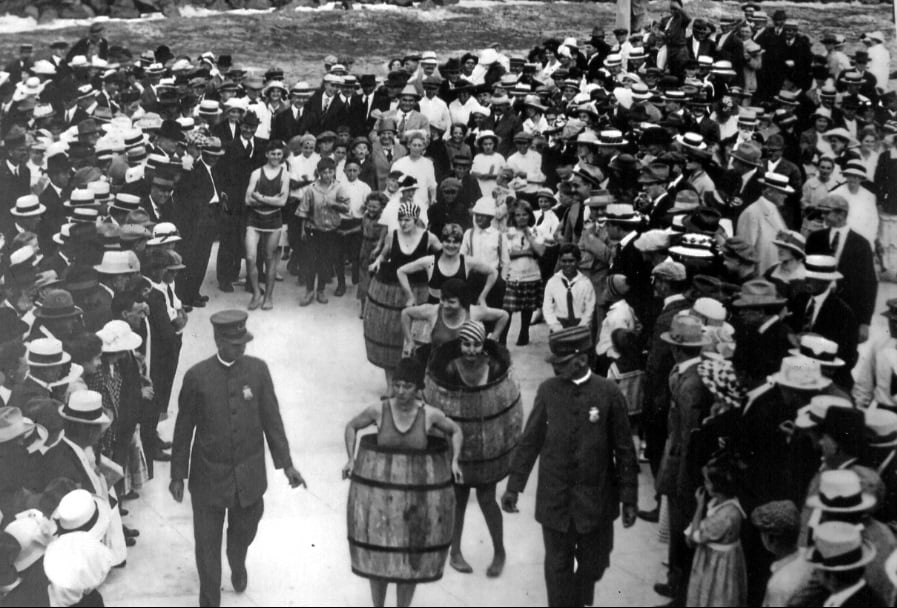
The South Bay and Harbor Area have been blessed with beautiful beaches. But if you’d gone to one wearing even a modest modern-day swimsuit a century or more ago, you’d have been carted off to jail. Male or female.
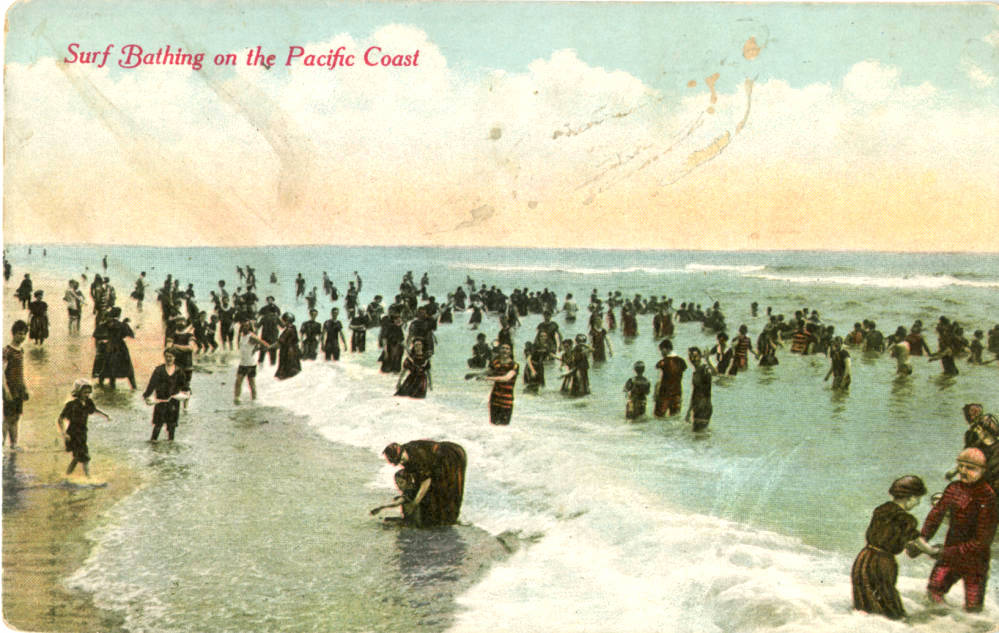
When one sees the bathing suits being worn on beaches in photos from the late 19th and early 20th century, it’s hard to imagine that anyone clad in them actually could swim.
In fact, most beach visitors didn’t do much swimming – it was too dangerous in the full length outfits of the time. A 1920 San Pedro News Pilot editorial advocating for common sense in bathing suit regulation cited the decline in drownings in Atlantic City, New Jersey, following the introduction of less restrictive swimsuits there. They enabled many more bathers to learn how to swim, which cut down on beach fatalities.
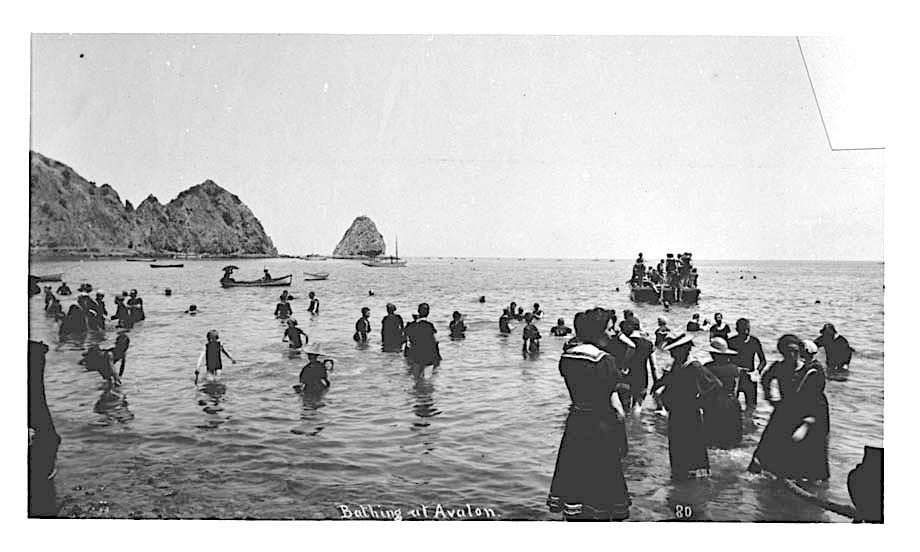
Still, debate raged over immorality and indecency on Southern California beaches during the early 1900s. Bathers of both sexes who went too far in their attire were jailed regularly.
The popular beaches of Venice and Santa Monica seemed particularly prone to violations, probably because they were closer to Los Angeles and more easily accessible by public transportation.
As the South Bay and Harbor Area became opened up to development and tourism, first via the Red Cars and other public rail systems and later by automobile, the area’s beaches began to see larger influxes of visitors.
The debate over dress standards continued to rage during the 1920s, when social strictures grew more lax and bathing suits grew more revealing.
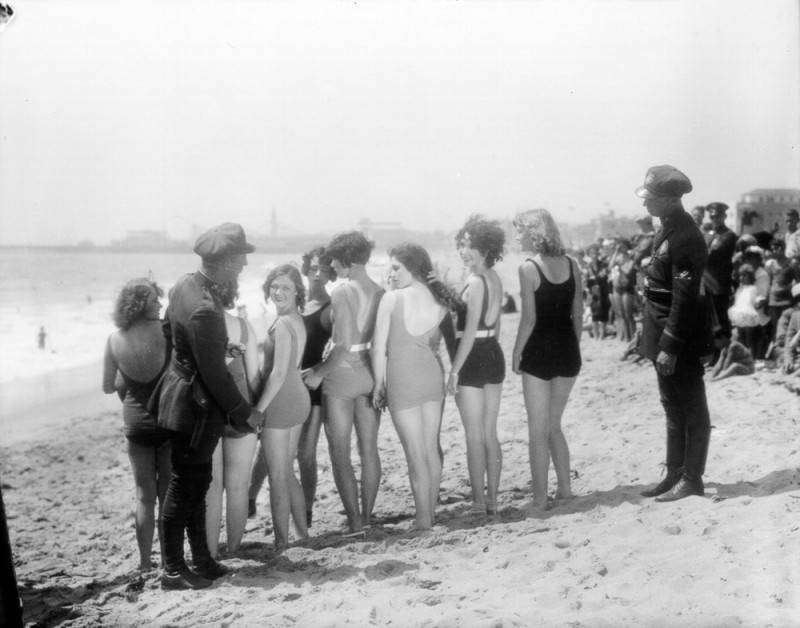
The pages of the News Pilot document several arrests for public indecency. Four males were arrested on Brighton Beach on Terminal Island for swimming sans bathing suits in 1920.
Four years later, two women spent the night at the sergeant’s desk of the San Pedro police station after being arrested for attending a party in which everyone wore only bathing suits. The station had no facilities to house women, so they eventually were moved to bunks at the Wilmington jail.
In 1926, police had to institute regular patrols of Brighton Beach on Terminal Island due to repeated complaints of bathers, mostly males, frolicking in scanty attire there.
A young woman identified as “Miss Mary Wilson” was taken into custody in Hermosa Beach in March 1929 by two police officers for wearing too scanty a suit. After everyone looked her over, including a city councilman who just happened to be in the courthouse where she was taken, she was let off with a warning not to wear her suit again, as it violated the city’s bathing suit regulations.

The trend toward greater skin exposure also accelerated thanks to fashion icon Coco Chanel. As high society types have been known to do, she went on a Mediterranean cruise in 1923 with the Duke of Westminster. When she stepped off the boat upon her return, her richly tanned skin caused a sensation.
She wasn’t the first person ever to get a suntan on a cruise, but her status as the most iconic fashion trendsetter of her generation made the look one that fashion-conscious people wanted to emulate. And they couldn’t do that while clad in the full-body suits of their forebears.
Tanning may have become trendy, but more revealing bathing suits still faced fierce resistance from the moral standard-bearers of the era.
Santa Monica pastor Dr. Albert J. McCartney touched off a firestorm in June 1929 with his sermon entitled “Comes Again This Pageantry of Nakedness.” The Los Angeles Times quoted him as telling churchgoers and invited local leaders this:
“The disease spreading throughout the beaches is that of the feminine mind of both sexes, which wants to attract attention and travel roughshod over all convention.”
Pushback against his comments was strong, but he also had many supporters who leaned on municipal officials for more moral regulation. Local city governments up and down the coast all had different standards with regard to regulating beach dress, as it turned out.
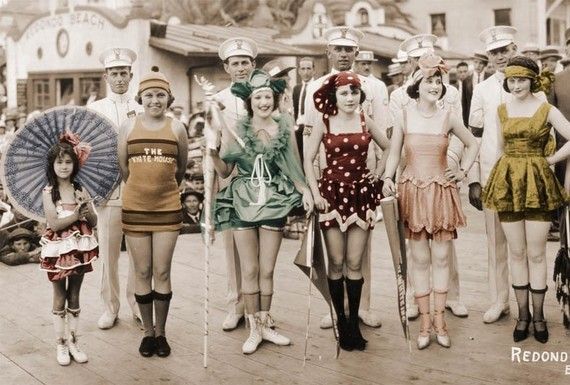
Partially sparked by McCartney’s outrage, the Los Angeles Playground and Recreation Dept. convened a summit conference of local police and city leaders in March 1930. Attendees included officials from a variety of local cities, including Manhattan, Hermosa and Redondo Beach, as well as Santa Monica and San Pedro.
In the end, the committee wisely decided to let each community set its own standards, and “the battle of the bathing suits,” as Redondo Beach Police Chief Pete Peterson described it to the LA Times, had ended.
Peterson went on to say that Redondo had two general rules concerning bathing suits at the time: 1) Men may wear trunks without uppers, and 2) Women may not.
Standards have changed drastically since the 1930s. The first bikinis began appearing after World War II, and tops for men’s suits disappeared.
Fashion designer Rudi Gernreich fomented more controversy in 1964 when he introduced the topless bathing suit for women, which he called the monokini.
Since then, bathing suits have gone through even more changes, from thongs and Speedos to board shorts and tankinis. But I think it’s safe to say that Pastor McCartney wouldn’t have approved of any of them.
Sources:
Daily Breeze archives.
Footnotes on the Sand: An Incomplete Compendium, an Arbitrary Selection of Events, Rumor, Speculation, Some Fact and Some Fiction About Hermosa Beach, by Patricia A. Gazin, self-published, 1991.
“A History of Women’s Swimwear,” by Fiona Ibbetson, Fashion History Timeline website, Sept. 24, 2020.
“If You Like Tanning, It’s All Thanks to Coco Chanel,” by Marlen Komar, it’sROSY blog, July 7, 2020.
Los Angeles Herald archives.
Los Angeles Times archives.
Old Redondo: A Pictorial History of Redondo Beach, California, by Dennis Shanahan, Legends Press, 1982.
San Pedro News Pilot archives.
A Walk Beside the Sea: A History of Manhattan Beach, by Jan Dennis, Janstan Studio, 1987.