It’s difficult to overestimate the degree to which World War II affected every household in the U.S.
The country had lived through one world war already, World War I. American forces saved the day against the Germans and their allies with our late entry into the first “war to end all wars.” But more than 116,000 U.S. soldiers lost their lives during our participation between April 1917 and November 1918, so its impact never should be minimized.
However, the severity of its effects on the home front did differ from World War II due to its shorter duration. By contrast, the U.S. entered World War II two years after it began in Europe, and at the very beginning of the war in the Pacific, thanks to the Pearl Harbor attack which began hostilities with Japan.
It quickly became apparent that our military would be in this one for the long haul, and the government knew it.
The early months of the war confused many on the home front, with conflicting reports and scares becoming a regular part of life. Accurate information was hard to come by, and difficult to disseminate to the public. To combat this, President Franklin Delano Roosevelt created the Office of War Information (OWI) on June 13, 1942.
The agency had many purposes besides the dissemination of information, including keeping morale high, boosting home front contributions to the war effort, maintaining security at defense plants and portraying the American way of life as worth protecting. (The OWI created the still-operating “Voice of America” broadcasting operation as part of that effort in 1942.)
At the time, detractors felt that the OWI would operate merely as a propaganda machine. That was part of its mission, to be sure, but it also was responsible for providing accurate information to the country about the war.
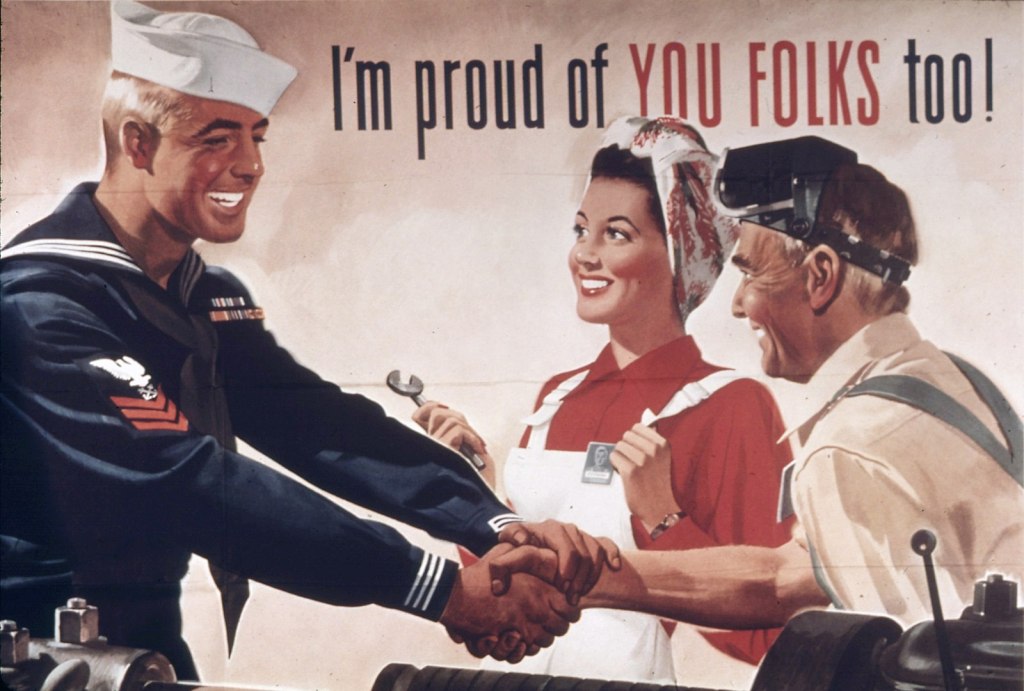
Another part of that mission was providing the domestic media with tools with which to boost morale and security. The South Bay / Harbor Area received a good dose of such messaging, in part because of its plethora of defense plants.
Aircraft manufacturers such as North American Aviation, Douglas, Northrop, Hughes, Doak and many others had plants turning out aircraft and other equipment for the war effort.
The Harbor Area had several major shipbuilders, including Todd-Los Angeles Shipbuilding and the California Shipbuilding Corp.
These plants employed tens of thousands of wartime workers. The ever-present threat of espionage and the need for security and secrecy were paramount. The OWI produced a series of posters stressing the need for defense employees to keep mum. This is perhaps the most famous:
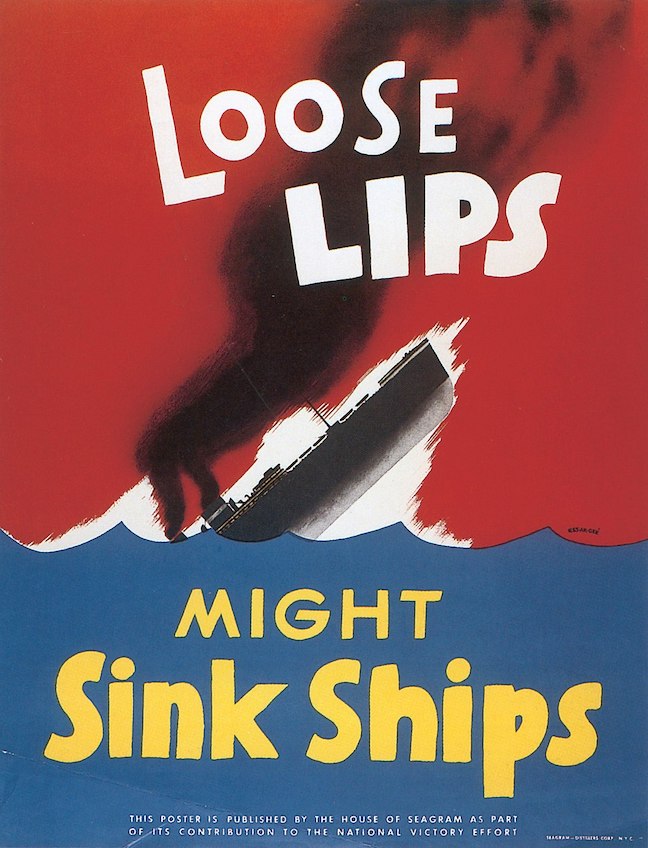
Thousands of troops also were stationed in the Harbor Area at Camp Ross and the Los Angeles Port of Embarkation in Wilmington and at Fort MacArthur in San Pedro, which also housed naval personnel at various installations in San Pedro. The OWI’s message was clear to all: mum’s the word!
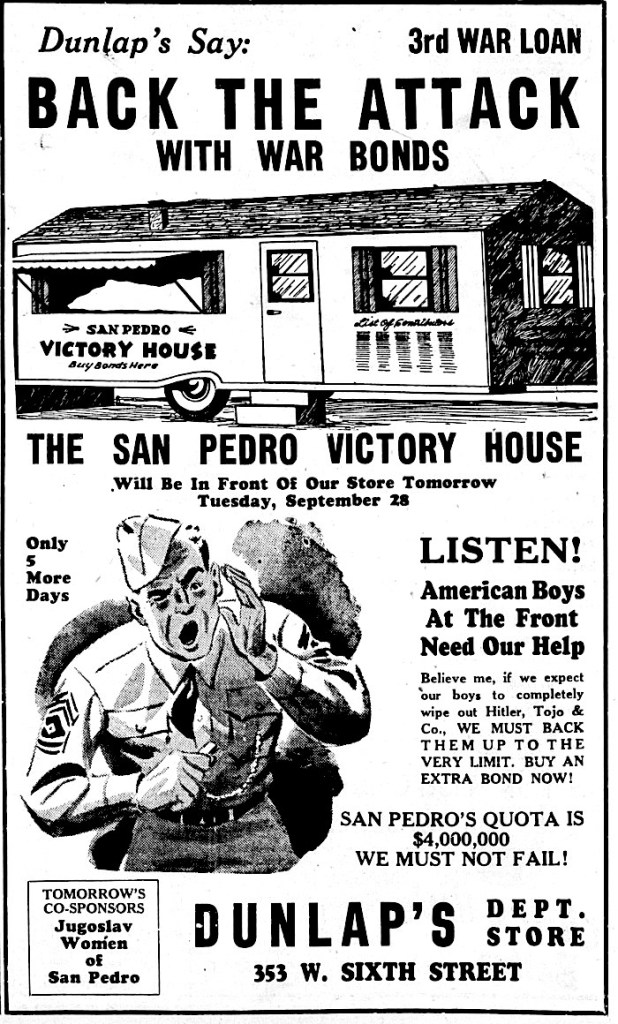
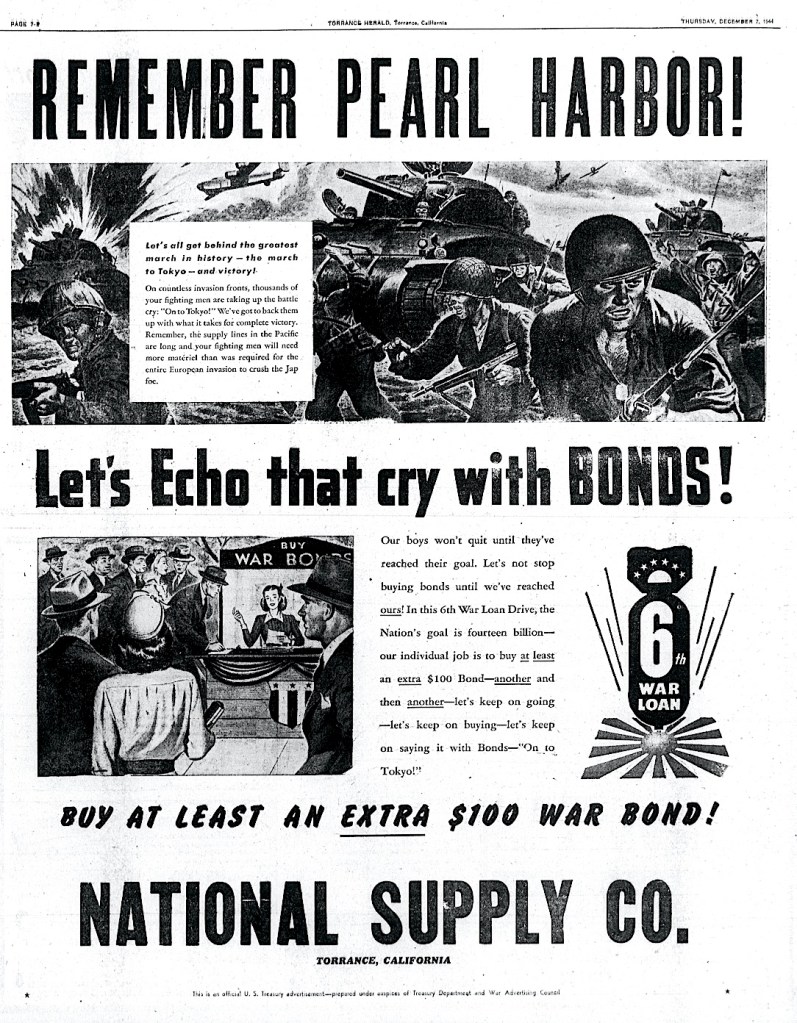
Another major part of the home front messaging effort concerned war bonds. The immense expense of mounting a massive world war on two major fronts called for a large-scale, continuous fundraising drive whose scope reached from Washington, D.C., to the corner drug store.
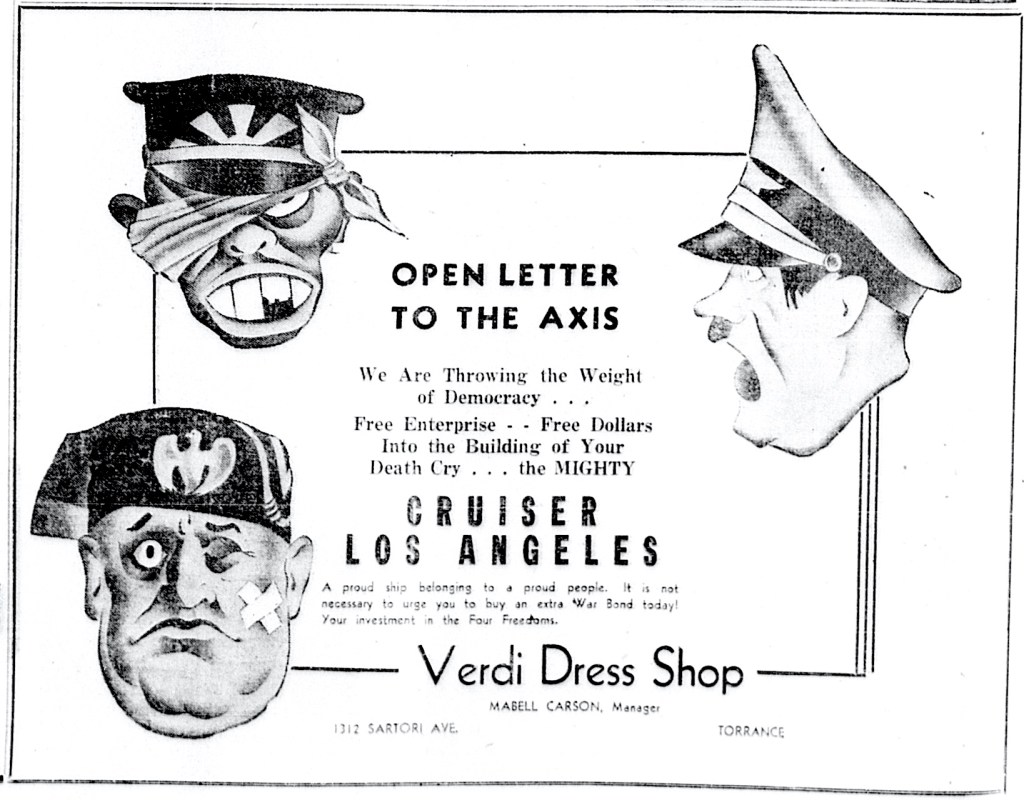
The OWI provided effective template ad copy to newspapers large and small. Local businesses then would add their names to the ads to show solidarity with the war effort. War bonds also were promoted by events including large, often star-studded rallies, but also through smaller neighborhood efforts such as the San Pedro Victory House, a mobile bond-selling vehicle.
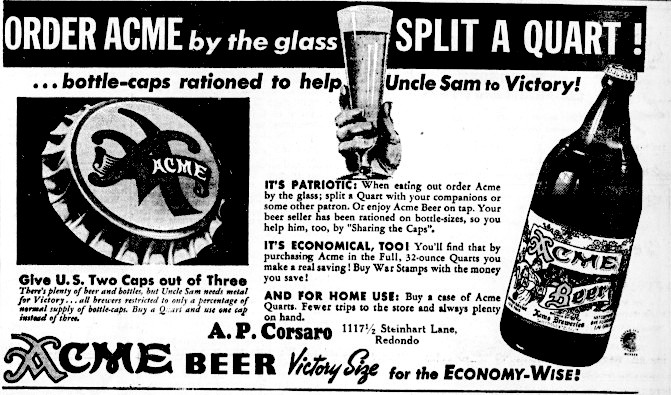
At the most granular level, the government promoted sacrifices that could be made by all citizens for the war effort. Wartime rationing of consumer goods was the most onerous of these. The government restricted the sale of everyday items such as gasoline, rubber tires, fuel oil, firewood, nylon, silk, shoes and a long list of food staples.
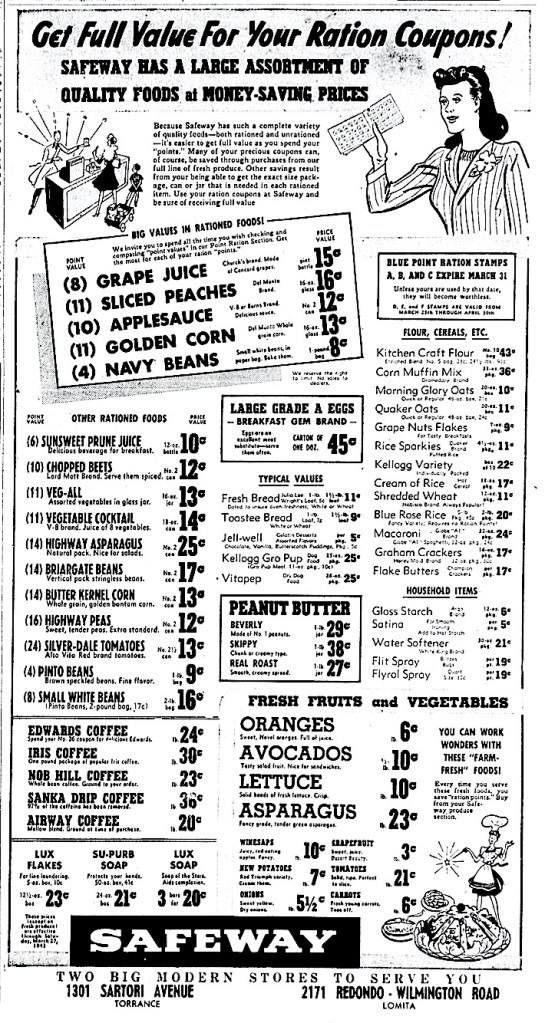
Newspapers of the day were filled with information about the latest ration coupon programs, with promotional ads stressing the importance of local hometown sacrifice for our troops abroad.
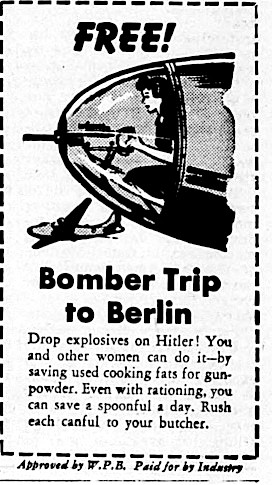
They also promoted individual initiative in the face of rationing by encouraging citizens to grow their own food at home in “victory gardens,” an idea which quickly caught on. Citizens also took part in scrap metal drives and even were urged to save household grease, as it could be used in the making of gunpowder.
While many of these ideas proved materially useful to the war effort, they probably had even more value in helping to boost morale on the homefront during a time of great peril.
In addition to its widespread use of printed promotional material, the OWI also produced radio programs, pro-U.S. propaganda leaflets for use overseas, and a series of films extolling the virtues of the American way of life.
President Harry Truman disbanded the OWI shortly after the war’s end in 1945. Many of its operations were folded into the U.S. State Dept., with some becoming part of the CIA when it was formed in 1947.
Sources:
“AEROSPACE: The industry that built the South Bay,” By Easy Reader Staff, Easy Reader, Oct. 17, 2013.
“Everything You Know About How World War I Ended Is Wrong,” by Geoffrey Wawro, Time magazine website, Sept. 26, 2018.
Palos Verdes Peninsula News archives.
San Pedro News Pilot archives
Torrance Press Herald archives.
Wikipedia.