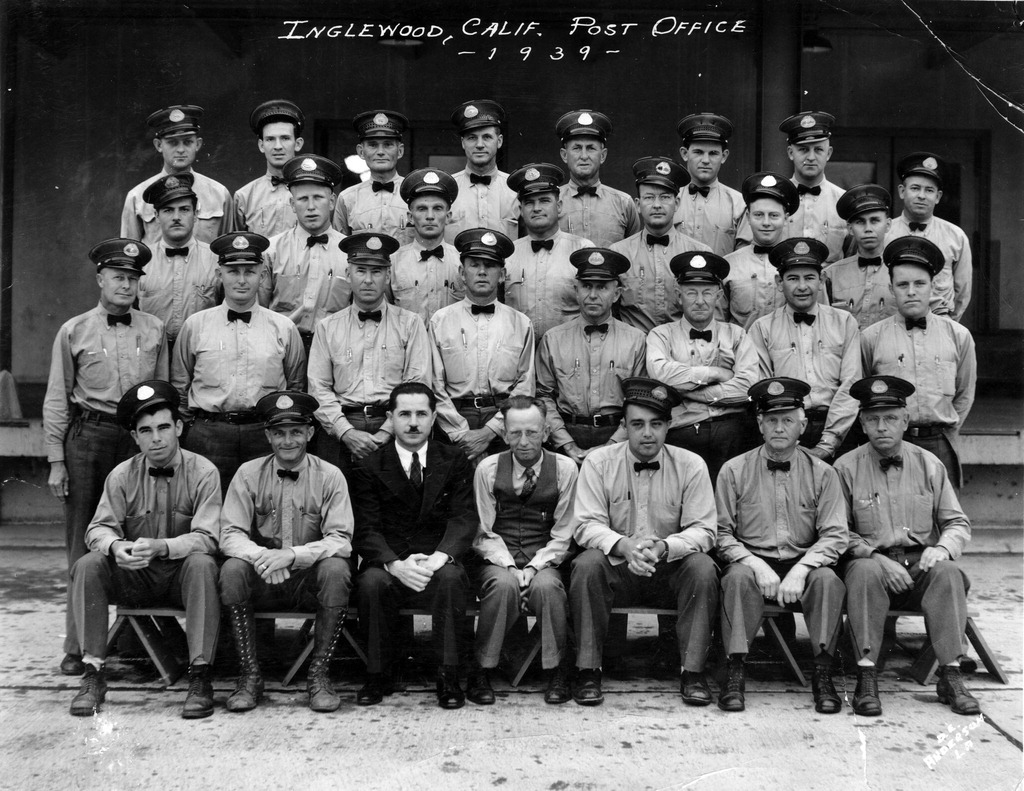
One of the first entities created in the 1880s settlement that would become known as Inglewood was its post office.
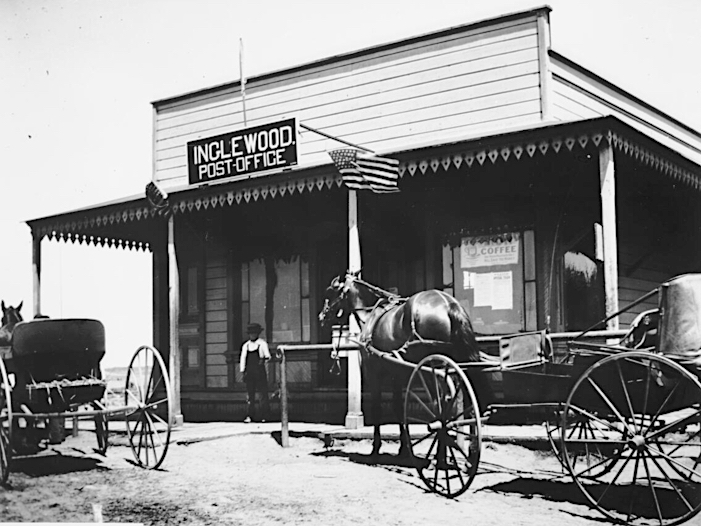
The “Centinela Post Office,” as its first sign read, operated out of the general store in which it had been established. President Grover Cleveland appointed store owner George Robbins as the settlement’s first postmaster in 1884.
Though local land baron Daniel Freeman would have preferred that the new town be called “Centinela,” Inglewood became its name upon its official founding in 1888. The post office sign was changed to reflect the new name.
Inglewood officially incorporated in 1908. As the city grew, so did its need for a much larger post office. The old one suffered damage in the 1920 earthquake that shook the city.
So, with much fanfare, a brand new post office held its grand opening on Oct. 30, 1926. As that was Halloween eve, the gala opening doubled as a community Halloween celebration, its guests encouraged to arrive in costume.
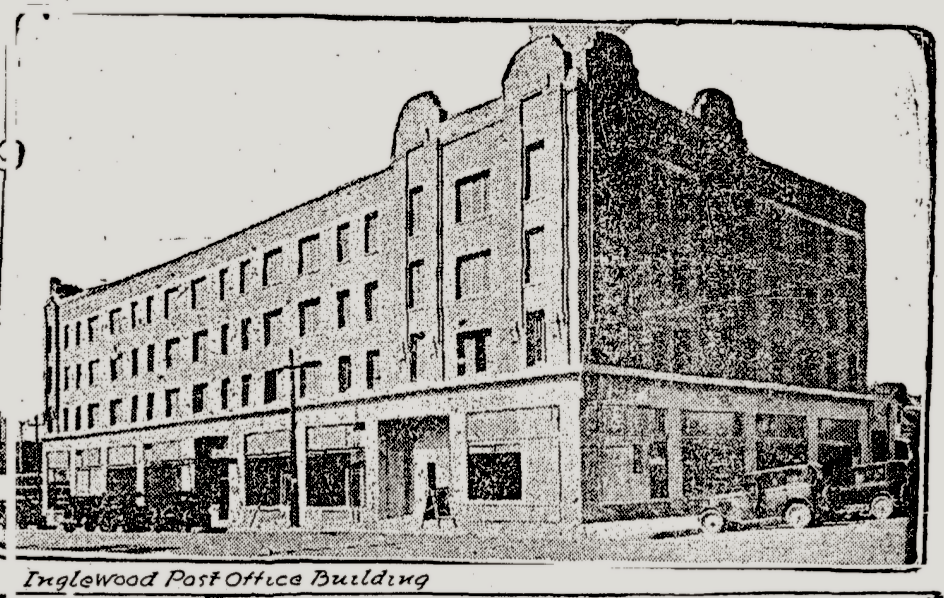
The imposing four-story building at the northwest corner of Queen and Locust streets cost $325,000 to build. It had 5,000 square feet of floor space and was considered to be “the most elaborate of any outside the largest cities of the State,” according to the Los Angeles Times.
Problems with the new building apparently arose over the next six years, as the U.S. Treasury Dept. announced in December 1932 that it had acquired land for a new post office at Hillcrest Blvd. and Kelso St. for $26,000.
One of the 1926 building’s problems became obvious following the Long Beach earthquake of 1933. The powerful temblor registered 6.4 on the Richter scale, severely damaging the Inglewood post office building.
Thinking on their collective feet, Its employees set up an impromptu outdoor postal facility the day after the quake in order to continue to conduct business.
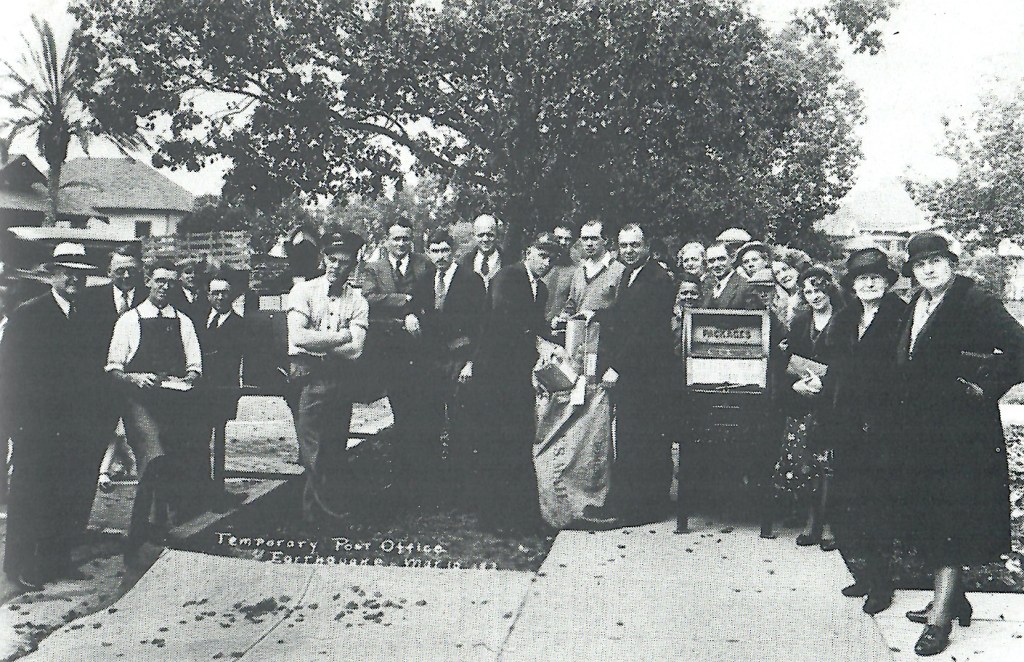
One of the most important side effects of the 1933 quake was the California Legislature’s near-immediate passage of the Field Act, which mandated earthquake safety standards for schools and other public buildings in the state.
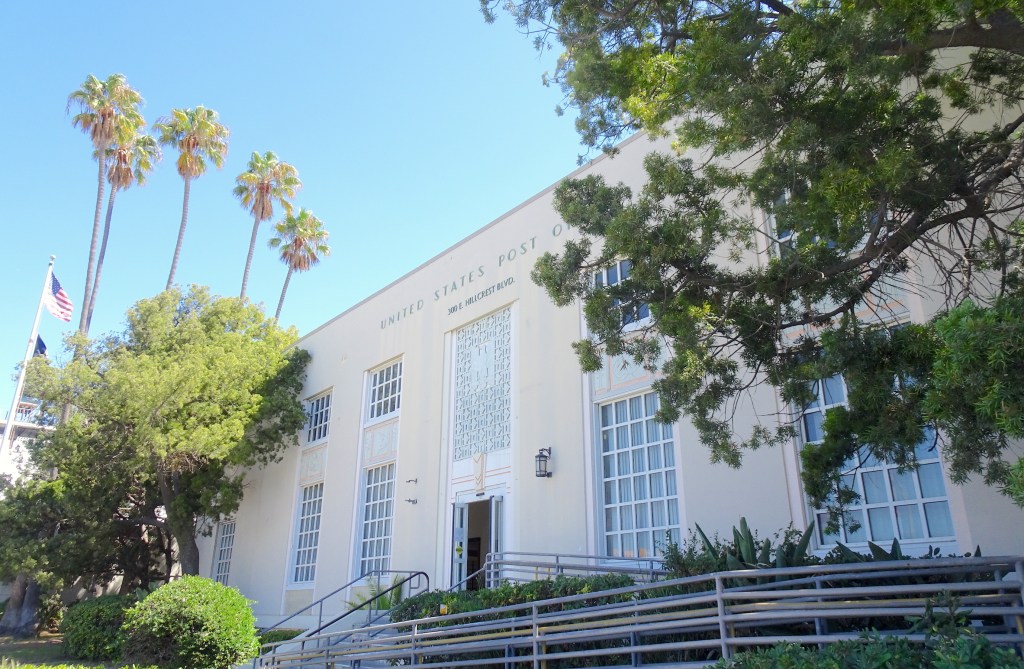
The $210,000 federal government project going up at 300 E. Hillcrest Blvd. adhered to those standards. The groundbreaking ceremony at the Streamline Moderne structure took place in April 1935, with several past postmasters – including George Robbins – present to hear Mayor Raymond Darby’s speech commemorating the event. The new post office building was completed later that year.
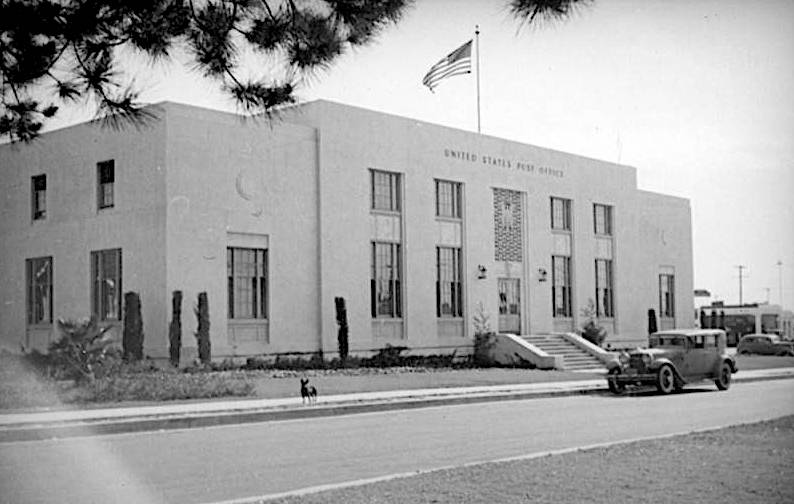
Management and construction of the project fell to the New Deal federal Works Progress Administration (WPA). In addition to the building itself, the WPA also funded two pieces of public art for the project. The Treasury Section of Painting and Fine Arts, founded in 1934, was put in charge of soliciting local artists for its indoor and outdoor works.
Hugo Ballin, a noted muralist of the era, had submitted drawings for proposed artworks at the Washington, D.C. post office. A couple of them showed riotous scenes of drunkenness and brawling during the California Gold Rush era, and the Treasury selected those two for the Inglewood post office, much to Ballin’s surprise. He turned down the offer, explaining that he had submitted them as a joke.
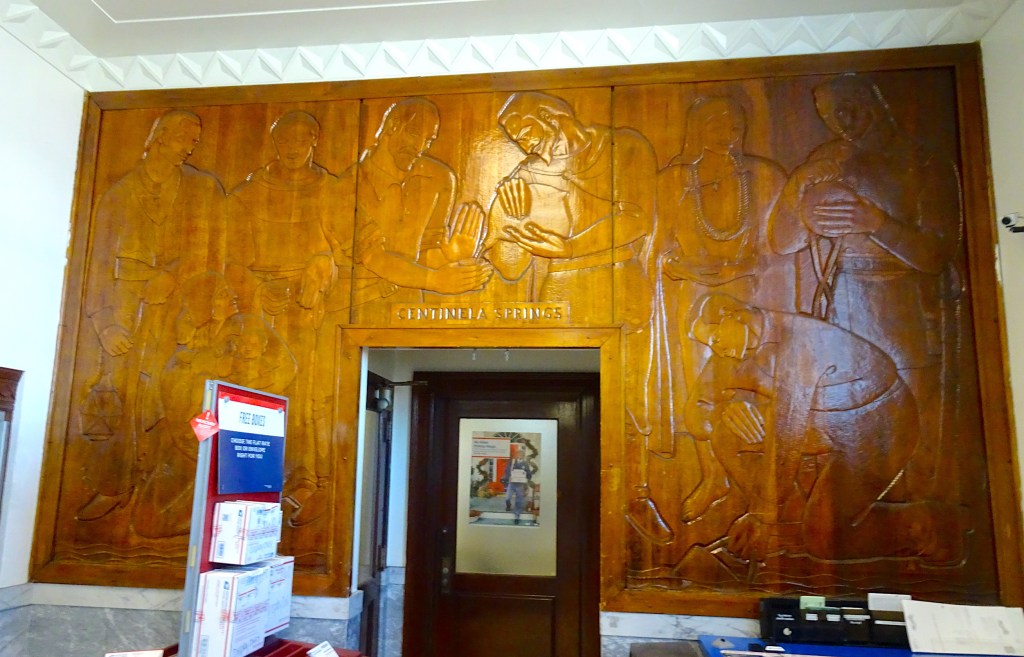
A more respectable entry for the interior mural by Archibald Garner then was chosen. The result, a wooden bas relief mural entitled “Centinela Springs,” depicted early California residents obtaining water from the nearby local spring.
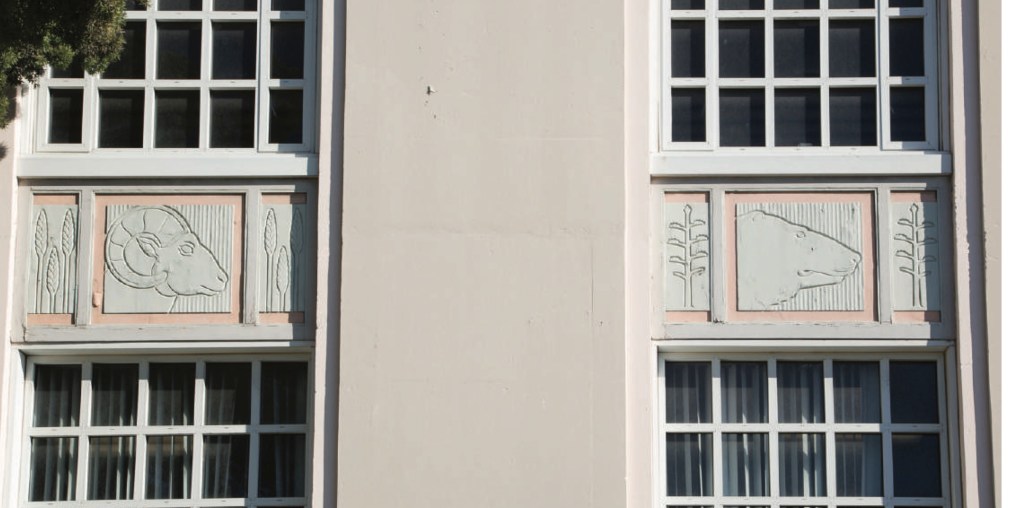
Artists Gordon Newell and Sherry Peticolas crafted the four plaster animal images from California wildlife – a buffalo, bear, ram and lion – on the building’s front exterior. Both the interior and exterior sculptures were completed in 1937.
And that’s the central Inglewood Post Office that exists today, with only minor modifications.
A third sculpture was added in front of the post office building in 1940. This one honored a local dog, Penelope, aka Rex. “Rex” followed mailman Lorenz Prader on his route every day for more than 13 years, dining on treats given by local residents along the way, and walking an estimated 60,000 miles in the process.
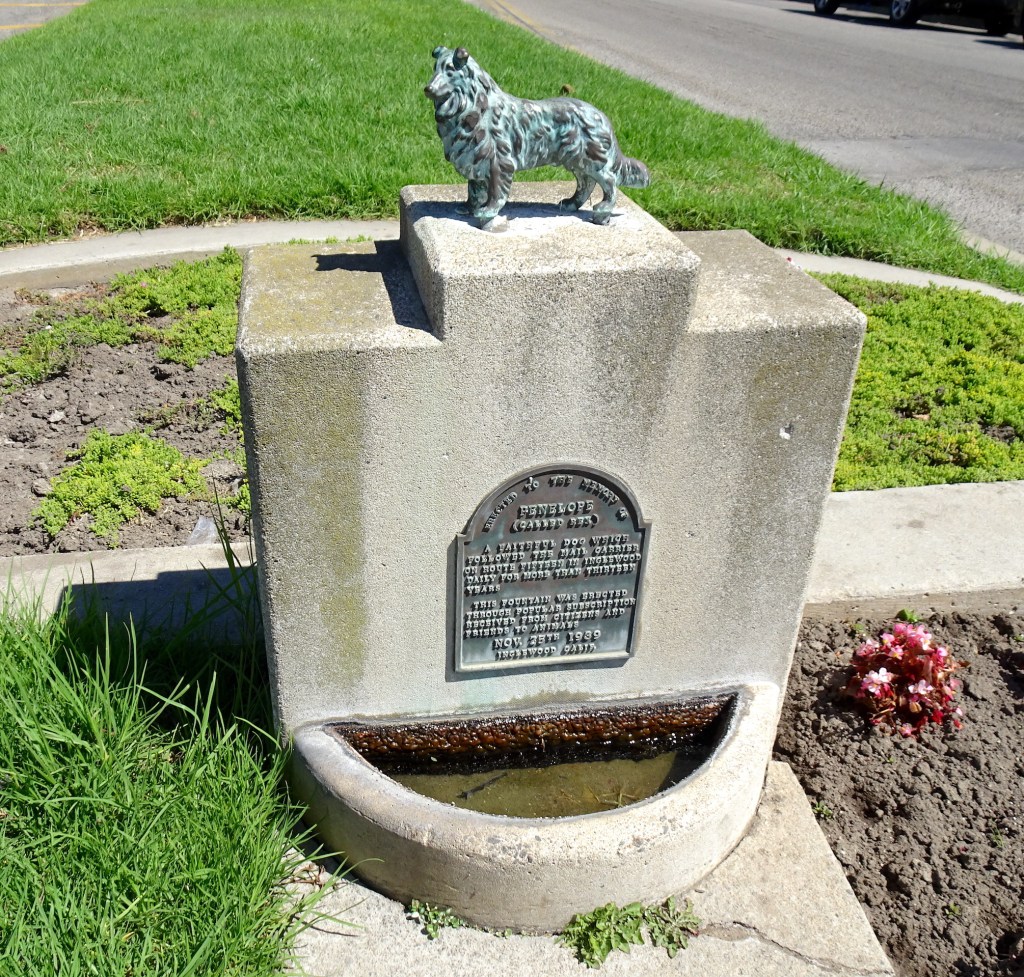
He died in 1939 after being hit by a car. Uniformed members of Prader’s VFW unit dipped their flags in tribute to Rex at the 1940 dedication ceremony. The bronze statue and granite pet fountain erected in his honor still stand.
For decades, the Inglewood Post Office also featured a stamp collector’s room inside the building, dedicated to serving the needs of serious philatelists as well as casual collectors. Budget cuts caused its closure in the early 2000s.
But at least its constructors got the building right in 1935. Much like the similar-in-design San Pedro Post Office, completed a year later in 1936, it endures as a window back to a bygone time while continuing to perform its functions in the modern era.
Sources:
“The Centinela Springs / Lion Buffalo Ram + Bear / Monument to Penelope (Rex),” City of Inglewood Public Art Education Project website.
Daily Breeze archives.
The History of Inglewood, by Gladys Waddingham, Historical Society of Centinela Valley, 1994.
Los Angeles Times archives.
“Tile Mosaics at the Los Angeles Design Center,” by Vicky Kall, History, Los Angeles County blog, April 14, 2014.
“Post Office — Inglewood CA,” The Living New Deal website.