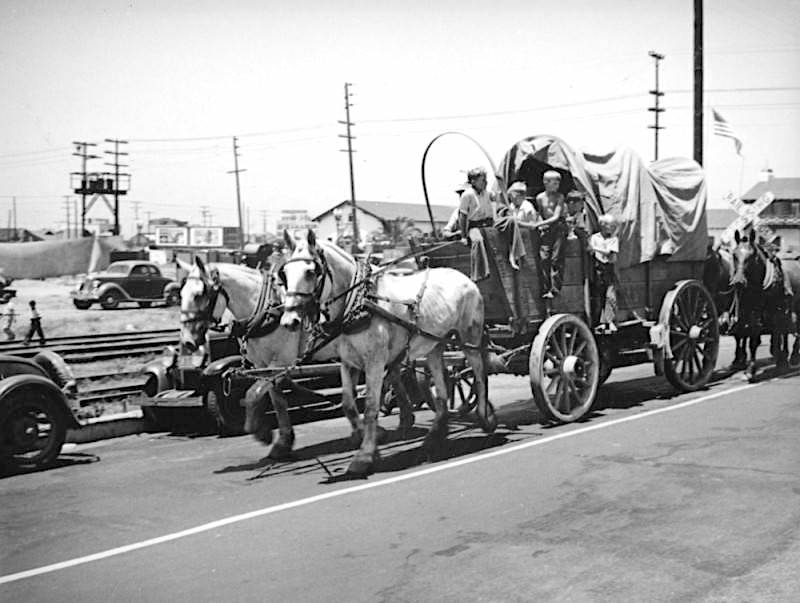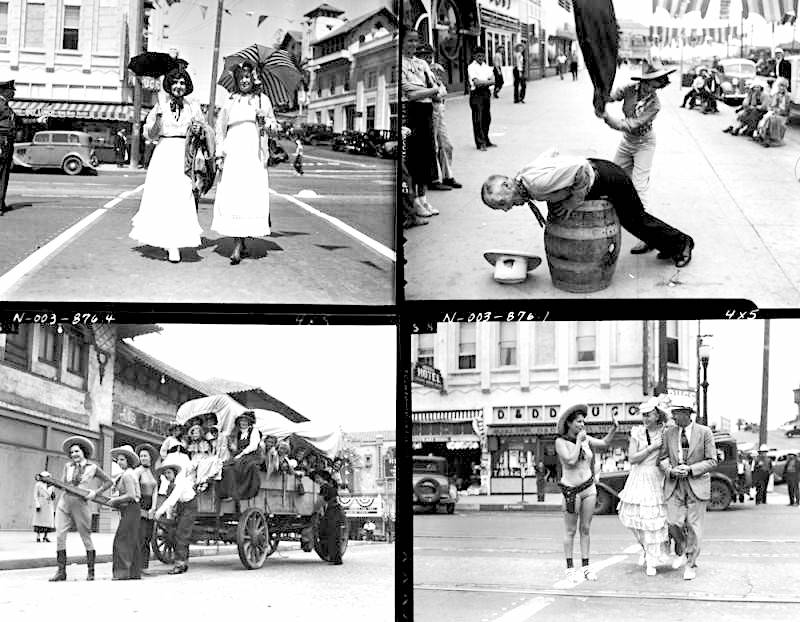
Citywide festivals such as Pasadena’s Tournament of Roses, Santa Monica’s Pioneer Days and dozens of smaller city-sponsored annual events served as both tourist attractions and civic promotional opportunities during the first half of the 20th Century.
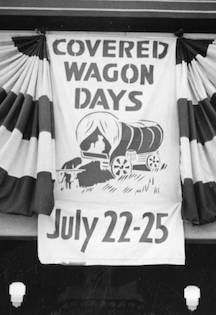
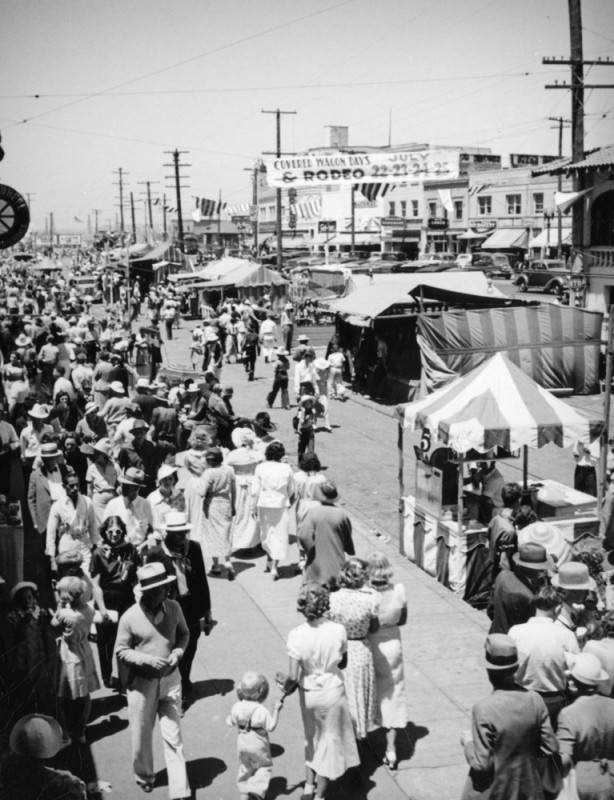
In 1934, Redondo Beach decided to throw its cowboy hat in the ring by staging its first annual Covered Wagon Days Fiesta. The Wild West-themed event ran for four days, from Thursday, June 21 through Sunday, June 24.
Many of the scheduled events were held in and around Redondo’s seaside amusements area, much of which vanished with the King Harbor redevelopment of the 1960s.
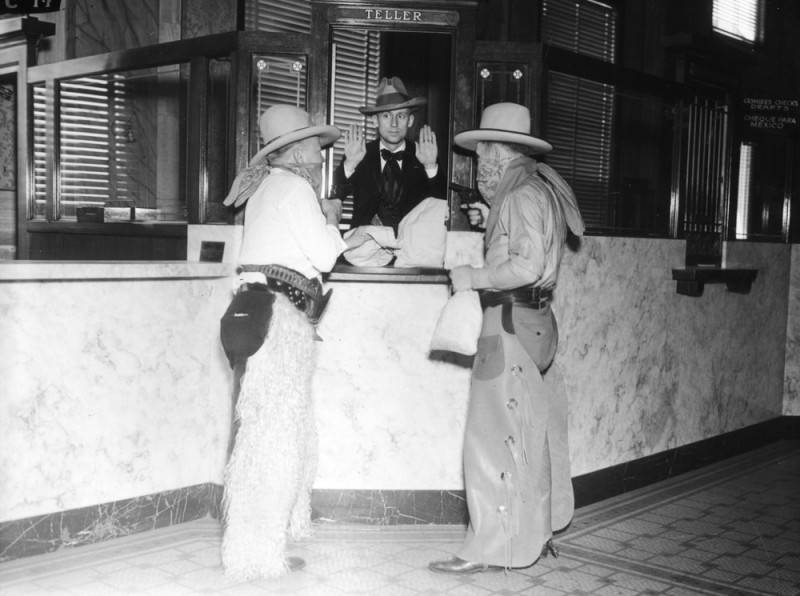
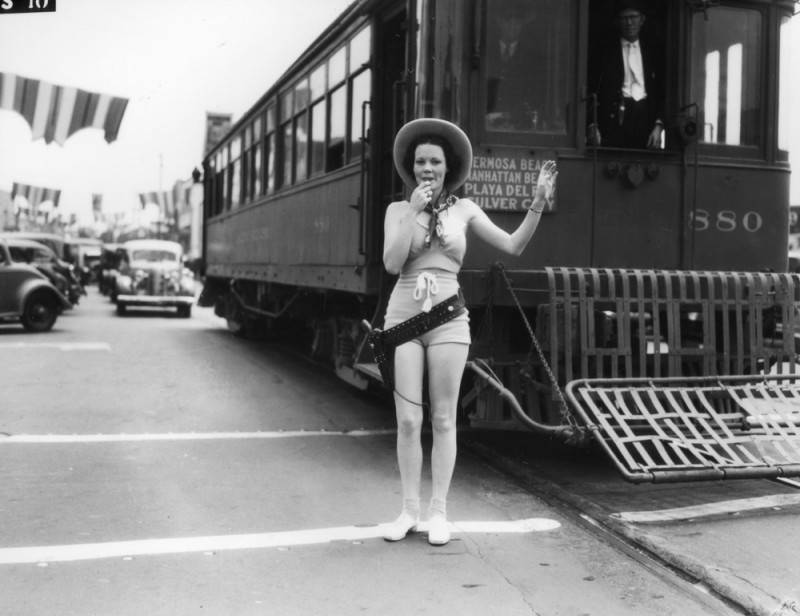
These included a daily rodeo, a parade, daily carnivals, shooting exhibitions, staged hold-ups and mock hangings of “horse thieves” in the streets and at various businesses, various vaudeville performances and elaborate costume balls at the Elks Club and the seaside Mandarin Ballroom on the weekend.
The initial parade lineup, which featured multiple covered wagons with vintage detailing in addition to bands, floats and equestrian groups, stretched for almost two miles. Musical entertainment included performances by Jimmy and His Saddle Pals and the Montana Cowgirls. Los Angeles County Sheriff Eugene Biscailuz was the guest of honor for the festival.
The highly successful event drew thousands, and returned in 1935. Among the stunts held that year was an overland journey by a group of Redondo Beach businessmen dressed in Western finery to the city of Glendale.
The attempt to draw attention to the Redondo festival ended up in Pasadena when its participants overshot their destination, much to the confusion of Chamber of Commerce officials in Glendale who were awaiting the sojourners after being warned of their arrival.
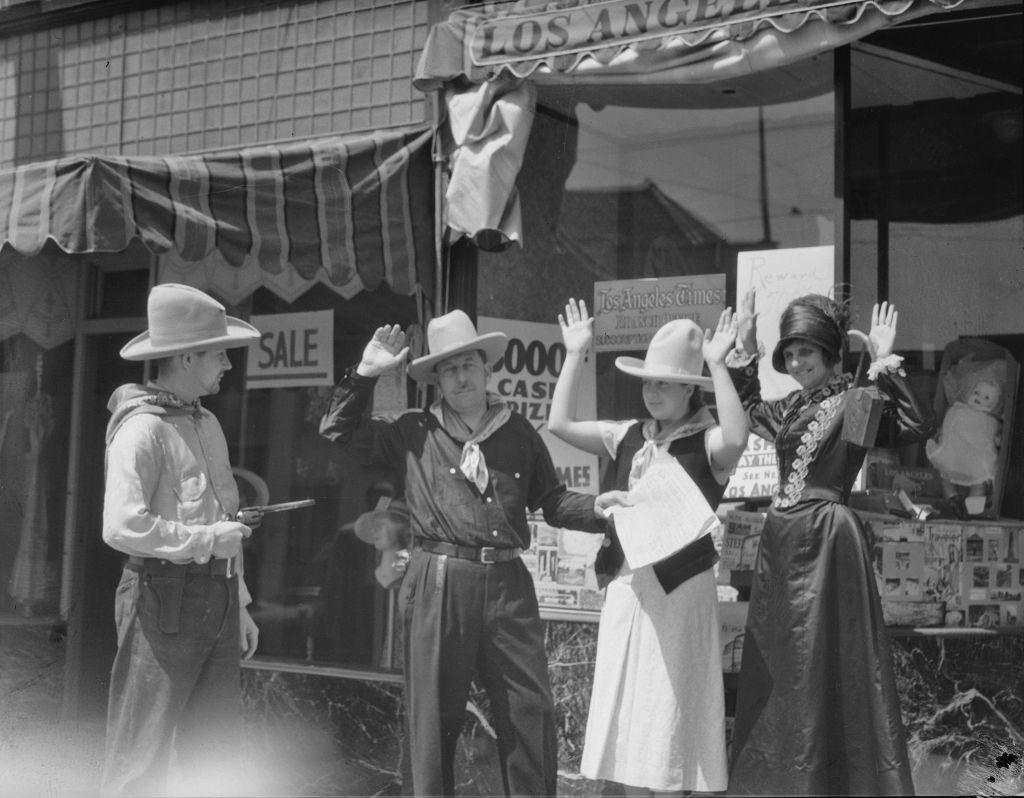
After that fiasco, they were given maps to help guide them during their next day’s journey to South Bay and Orange County cities. Despite the mix-up, the 1935 fiesta proved even more successful overall than the inaugural event.
In 1936, a couple of dunking events made news during the fiesta. First, Mayor Colfax Bell was subjected to immersion for his failure to grow facial hair a week before the festivities even began.
Then, a man identified as Ralph Blanck ended up going to jail during the fiesta. “I’d like to see any twenty-five men throw me in there,” he boasted while watching others get dunked. The men manning the water trough took him up on it and unceremoniously dunked him. He came out of the water unimpressed, still mouthing off to those in charge.
At that point, he was thrown into jail for being drunk and disorderly. He was freed the next day after pleading guilty in court and apologizing to the judge.
More than 200 entrants took part in the rodeos that year, which were held near Beryl St. and Hermosa Ave. Actor and activist Leo Carrillo served as grand marshal for the parade on the fiesta’s final day.
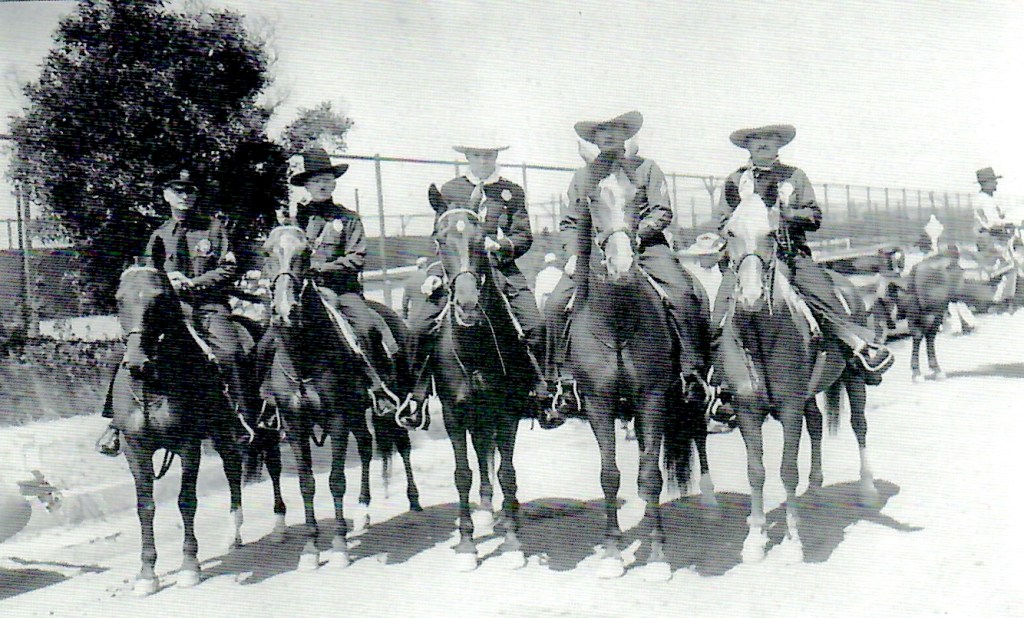
The Empty Saddle Club equestrian association on the Palos Verdes Peninsula stepped up to sponsor the Covered Wagon Days Fiesta in 1937, after its initial sponsor, the South Bay Businessman’s Club, came up short with the necessary funds that year.
Mayor Bell’s dunking was repeated, this time staged for maximum publicity, with the Los Angeles Times running a large photo of the event.
The city of Torrance, probably impressed by the success of the annual Redondo Beach event, began its own community-wide event in 1938. Called the Factory Frolic, it celebrated the city’s army of industrial workers with parades, balls and other events, and was held annually for the next decade.
Redondo’s Covered Wagon Days returned for what appears to have been its final roundup in 1938. News sources from the era give no explanation as to the reasons for its failure to return after that, but they probably centered on the financial burdens of the event, which had two different sponsors in just four years.
Perhaps coincidentally, San Bernardino started its own Covered Wagon Days event in November 1938.
Daily Breeze readers still held fond recollections of the annual fiesta during the 1990s. Hazel Evans Luke shared the following recollections in a 1995 letter to the Daily Breeze:
“The Empty Saddle Club was prominent in the parade and rodeo, resplendent in their gold and black satin shirts, on beautiful horses.
My brother, George Evans, was a club member and a participant in the rodeo, riding bulls and broncs and getting knocked out by a bull. He was back riding them again the next day.
Victor McLaglens’ Motorcycle Drill Team also was in the parade and put on a terrific trick-riding show at the rodeo. This took place where the Triangle Shopping Center later stood. Grandstands and animal chutes were set up all around, forming an arena.
A good spot from which to watch the parade was in front of the El Ja Arms Hotel, down Diamond Street from the Redondo Trading Post.”
Sources:
Daily Breeze archives.
Los Angeles Times archives.
Old Redondo: A Pictorial History of Redondo Beach, California, by Dennis Shanahan, Legends Press, 1982.
Redondo Reflex archives.
Torrance Herald archives.