
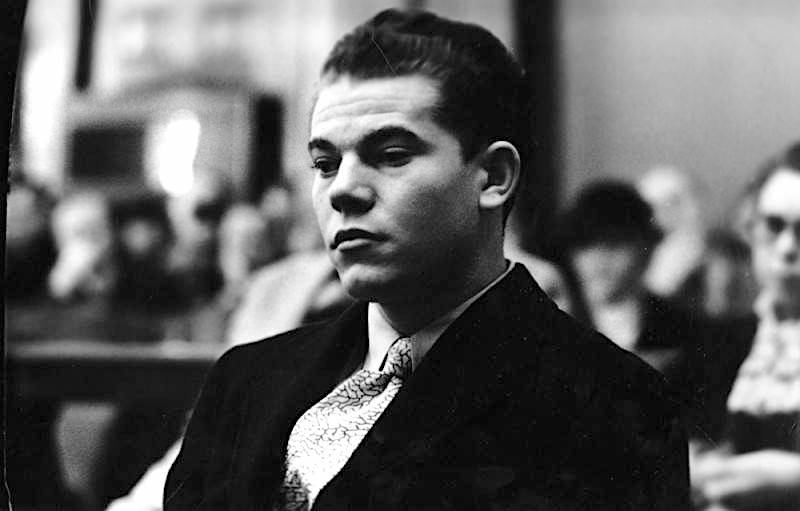
(Credit: Los Angeles Public Library Photo Collection)
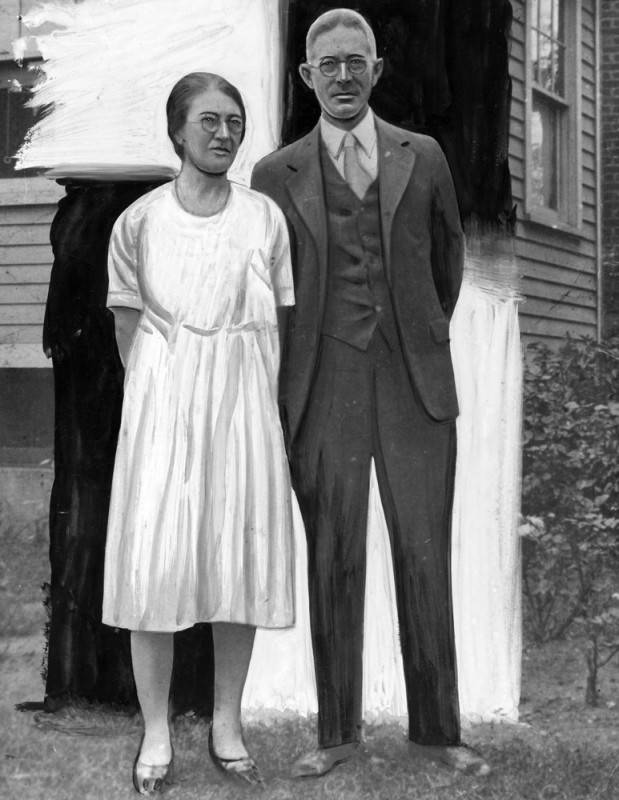
19-year-old Thomas Leroy Drake Jr. had lived with his great-uncle and great-aunt, Henry Steinheuer, 60, and his wife, Nellie, 50, in Long Beach since 1930. In 1935, the couple moved to a modest house on West 43rd St. in Los Angeles, in the Leimert Park Area.
Drake attended Long Beach City College for two years, where he was described as a brilliant and inventive science student who planned to attend Cal Tech. The religious young man also was president of the Christian Endeavor Society at the Long Beach church that he attended.
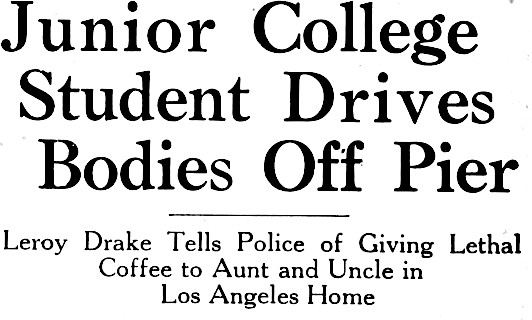
His studies centered on astronomy and engineering. While at LBCC, he constructed two telescopes declared by scientists to be remarkable Instruments, and had a patent pending on an Improved diesel engine carburetor, according to the San Pedro News Pilot.
But Drake also had a dark side. On Aug. 23, 1935, he stole a car in Long Beach and drove it to two different stores, where he forged checks on Henry Steinheuer’s bank account. He was arrested and charged with auto theft. (The forgery charges were dropped when Nellie Steinheuer paid restitution for the bad checks.)
News of their great-nephew’s crimes horrified the Steinheuers so greatly that, three days later, Henry Steinheuer filed a codicil to the couple’s will disinheriting Drake, who had been named beneficiary in the original 1930 document. Drake knew about the will, but not about the later codicil disinheriting him.
Drake planned his next far more serious crime carefully. He obtained a poison, cyanide potassium, along with several nonlethal chemicals from a plating works company, telling the clerk that he needed them for a copper plating job. He slipped the poison into Henry and Nellie’s regular cups of evening coffee on the night of Sept. 19 at their 43rd St. house. That night, they washed down pieces of cake with their lethal beverages. Nellie died first, then Henry.
Drake disposed of the coffee cups and spoon in a neighbor’s trash can before leaving the house in the couple’s car. He decided to drive to the Long Beach residence of his fiancee, Veula Hayden. The couple then went to the movies, where they saw the romantic drama “The Dark Angel,” starring Frederic March and Merle Oberon.
After the movie, Drake took Hayden for a drive along the Wilmington waterfront area. She later testified that she realized he was scouting out potential places to dispose of the bodies. He then took her back home, and drove back to 43rd St.
He loaded the Steinheuers’ bodies in the car, and drove back down to Wilmington. His first thought was to use the Catalina Terminal on Water St., then at Berths 184 and 185, but there were too many people there for him to do so without being spotted. Instead, he drove around a bit, stopping at the Grace Line terminal at Berth 146 along the West Basin.
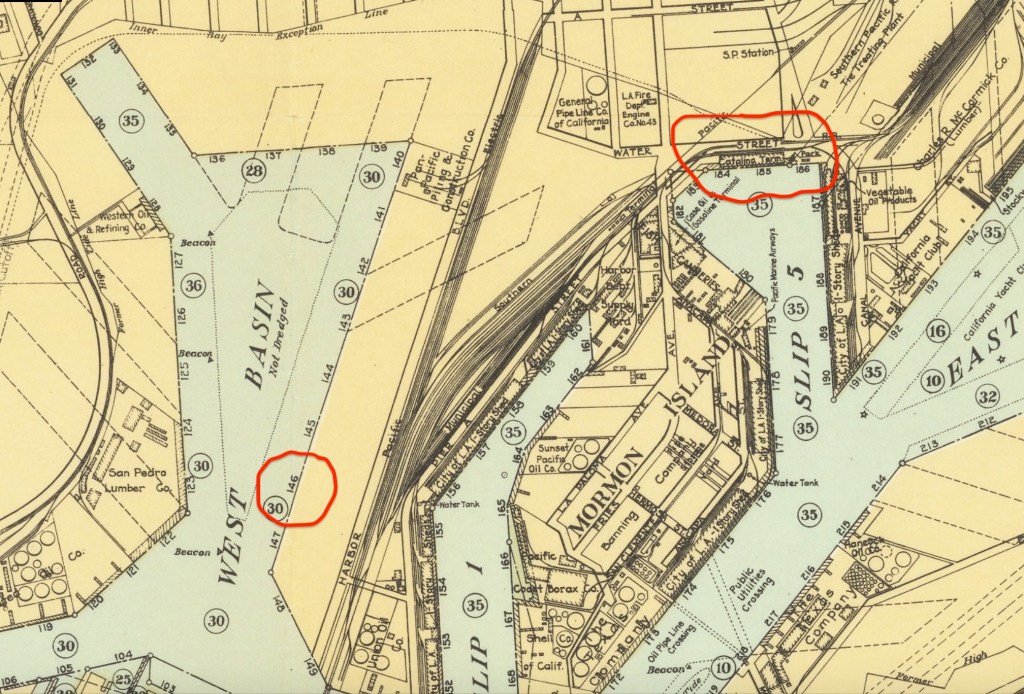
There, he started the car, put it in gear, closing the door as he hopped out, and watched it plunge off the dock into 35 feet of water. By the time he boarded the Pacific Electric streetcar for home, it was 3 a.m. the next morning.
When Long Beach radio store owner Louis J. Britain hadn’t heard from his clerk, Henry Steinheuer, for several days, he notified the police, who discovered that Nellie also was missing. Their suspicions concerning Leroy Drake were aroused when he told different and conflicting stories about the pair’s disappearance.
He eventually confessed to the killings, telling detectives that he had done it essentially for their own good, to save them from the humiliation that his August arrest had brought them.
He later led them to the Grace Line pier in Wilmington, where the car had sunk into the muddy bottom offshore. L.A. County Fireboat #2 docked offshore, and divers searched for several hours before locating the car. The bodies were brought up first, then the car was hoisted up from the harbor.
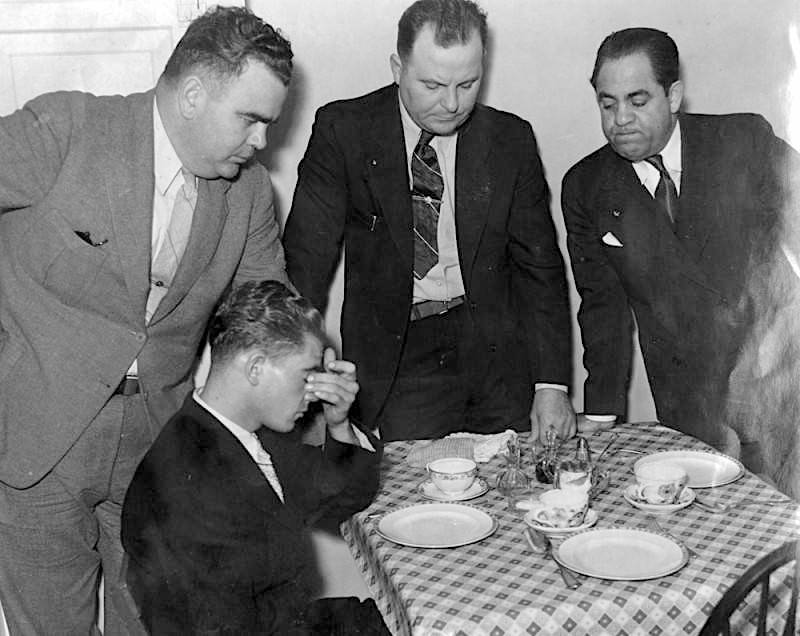
The Los Angeles Times recounted how police took him the next day to the 43rd St. house to re-enact the scene of the crime. “I thought God wanted me to do it,” he told them, showing them how he added the poison to the coffee percolator. At one point, he picked up his violin and played it for them.
On Sept. 27, the county grand jury indicted Drake on two counts of first-degree murder, and the district attorney announced that he would seek the death penalty. Drake first tried to plead not guilty by reason of insanity. Drake’s father, Leroy Sr., came in from New Jersey to present evidence of mental instability in the family tree, but Judge Joseph Vickers remained unswayed, denying the motion.
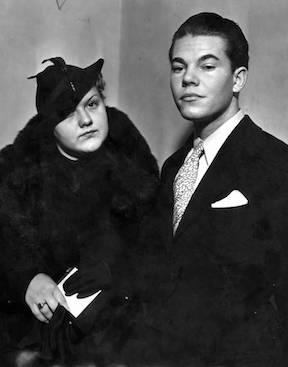
The court heard testimony from Drake’s girlfriend Hayden, who testified that he gave no indication anything was amiss during their movie date on the night of the murder. Steinheuer’s employer Britain told the court that Drake had told him that Mrs. Steinheuer had killed her husband first, then herself, out of shame over Drake’s arrest and that he had disposed of the bodies to avoid publicly shaming them.
Drake’s story changed several times during the trial, but he always maintained he’d killed the Steinheuers out of love and not greed. Other observers believed that Drake was only after the older couple’s modest inheritance, noting that he’d attempted to gain control of the family bank account following the murders.
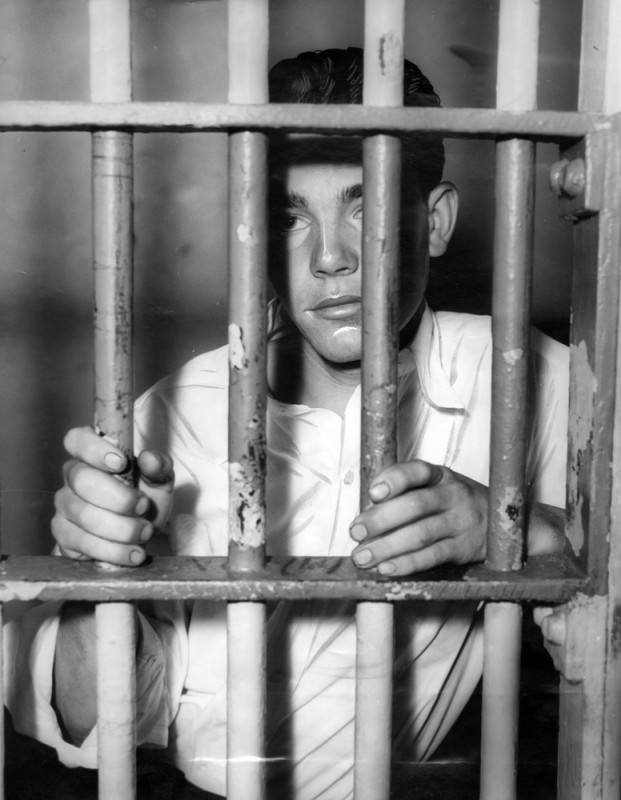
Drake surprised the courtroom when he abruptly changed his plea to guilty on Dec. 12, 1935, as part of an apparent last-ditch ploy to avoid the death penalty. It was successful. Five days later, Judge Vickers sentenced him to life in prison in San Quentin.
Vickers apparently spared him the death sentence because of “the court’s reasonable doubt as to whether the youth was sincere in the reasons he gave after he had pleaded guilty to both murders.” Perhaps he felt Drake was sincere when he said during testimony, “I loved them too much to let them suffer.”
Sources:
Calisphere.org.
Findagrave.com
Los Angeles Times archives.
San Pedro News Pilot archives.

