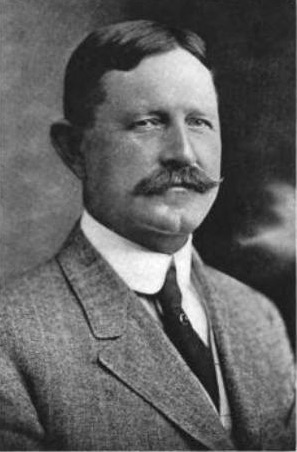
William Kerckhoff lived for most of his life in the Adams district of Los Angeles, but the lumber and shipping operations he established in San Pedro during the 1880s became an important factor in the Harbor Area’s growth. Kerckhoff’s greatest fame, though, came from his later pioneering involvement in the electric and gas utilities industry.
Kerckhoff was born in Terre Haute, Indiana, on March 30, 1856. His parents, George and Philipine, had emigrated from Germany in 1848 and settled in Indiana. At least, until George visited California on a camping trip in 1875. Impressed with the state’s possibilities, he had his son William scout out suitable places to live, and they settled on Los Angeles in 1878.
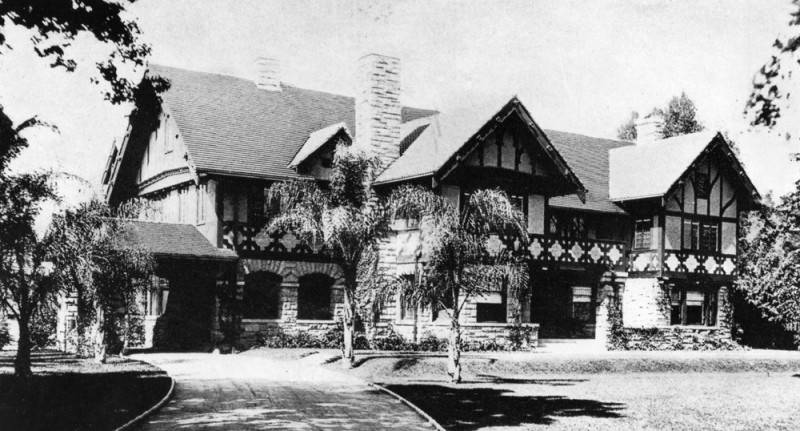
William then returned to Indiana, where he met and married his wife, Louise Eshman, in 1883. They returned to California, and settled at a house at Sixth and Main streets in Los Angeles before eventually moving to a mansion at 734 W. Adams Blvd.
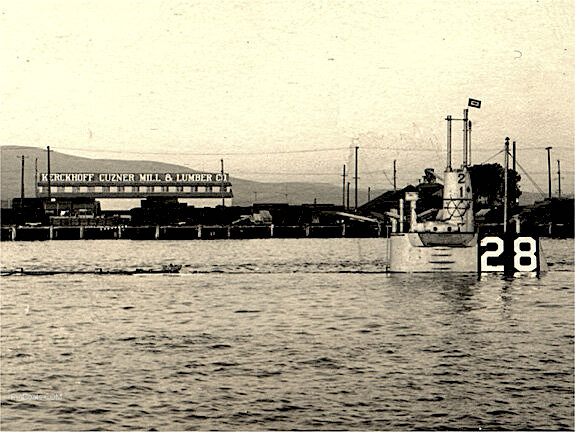
Casting about for business opportunities, Kerckhoff heard about the J.G. Jackson lumber company in San Pedro. Jackson was looking for partners, and Kerckhoff and his associate James Cuzner bought in, forming Jackson, Kerckhoff and Cuzner. The new investors soon bought out Jackson and established the Kerckhoff-Cuzner Lumber and Mill Company.
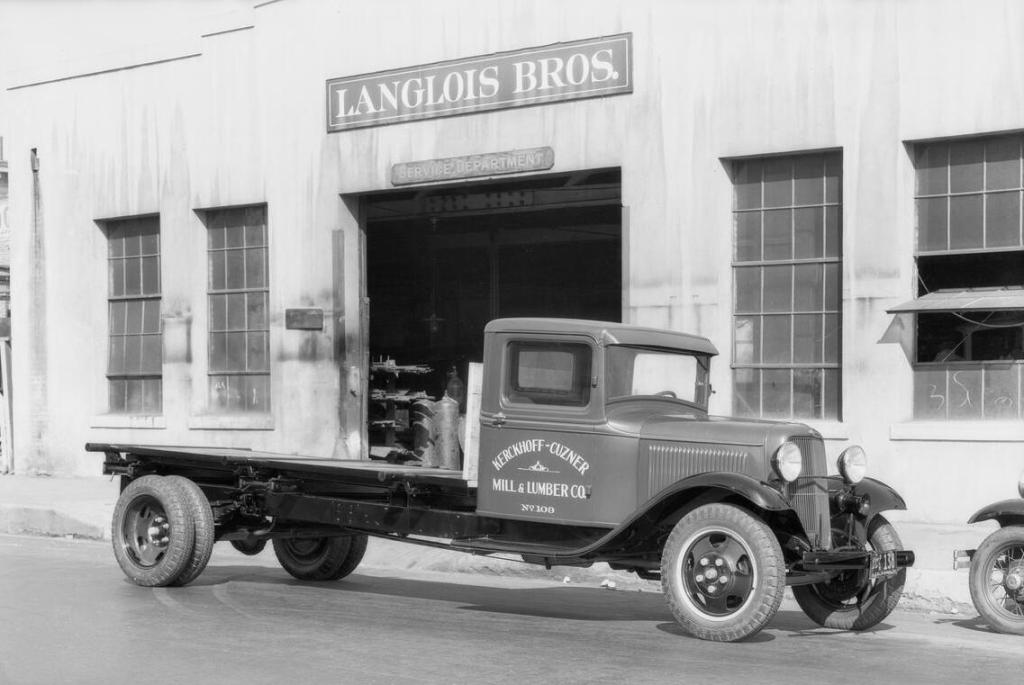
Their timing was impeccable, as lumber had become a crucial ingredient in the building of Los Angeles and its suburbs. The company’s business headquarters was in downtown Los Angeles — a six-story building near Main and Sixth streets was built in 1907 — but the heart of its business was in its San Pedro lumber operation.
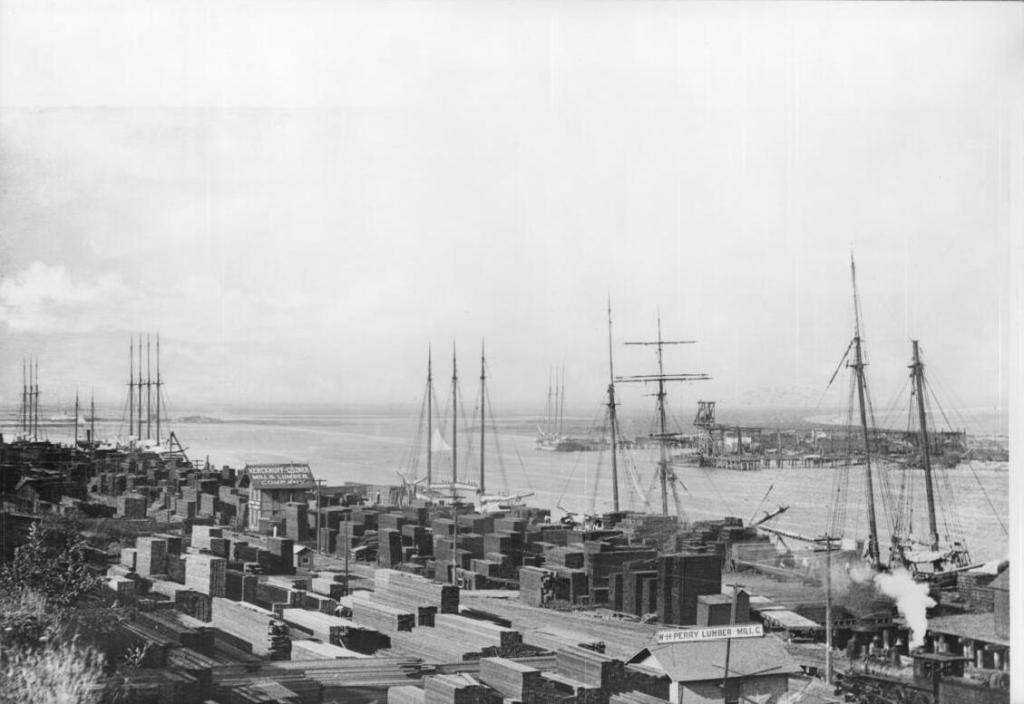
In addition to its mill, Kerckhoff-Cuzner built its own wharf dedicated to the shipping of lumber products. It obtained its raw materials by shipping them to San Pedro from its timber and mill holdings in the Umpqua River region of Oregon. It eventually would operate a small fleet of steamships, including the Pasadena, the first steamship in the U.S. to use oil for fuel.
The company’s operations were centered on Boschke’s Island (also known as Smith’s Island) in the San Pedro harbor on swampy land Kerckhoff-Cuzner had acquired in 1894. Eventually, the company would establish outlets throughout the Los Angeles area.
As business boomed, Kerckhoff began diversifying his interests. He was the first president of the Bank of San Pedro, which was founded in 1888. He also became involved with the utilities industry through the formation of the Azusa Ice and Cold Storage Co., which he formed in 1891. It provided ice to cool shipments of oranges via railroad to the rest of the country, and was powered by water-produced electricity.
Sensing the potential of hydroelectric power, Kerckhoff formed the San Gabriel Power Co., building a plant on the San Gabriel River in 1897 that brought the city of Los Angeles its first currents of hydroelectric power.
This led to a series of larger hydroelectric power projects involving dams in the San Joaquin Valley. Kerckhoff eventually became president of the Pacific Light and Power Corp., which would acquire City Gas Co. of Los Angeles. It would later be renamed the Southern California Gas Co. in 1910, with Kerckhoff at the helm.
During his career, Kerckhoff held the presidency not only of the still-thriving Kerckhoff-Cuzner lumber firm and Southern California Gas, but also San Joaquin Light and Power, Fresno Farms and the South Coast Land Co.
Kerckhoff had partnered with landowner George Peck to acquire large chunks of land in San Pedro. Kerckhoff and Peck sold a 100-acre parcel to the U.S. government in 1910 for $249,000 for the building of Fort MacArthur in 1910. The Army base opened in 1914.
He was troubled by a bad heart in his later years, and began divesting many of his holdings in 1927. He died at home on Feb. 22, 1929, ten days after a heart attack left him unable to recover. In 1930, his estate was valued at $17.3 million.
In 1928, the Kerckhoffs had endowed the William G. Kerckhoff Laboratories of the Biological Sciences at California Institute of Technology (Caltech) in Pasadena. In addition, Caltech put his name on its Kerckhoff Marine Laboratory in Corona del Mar.
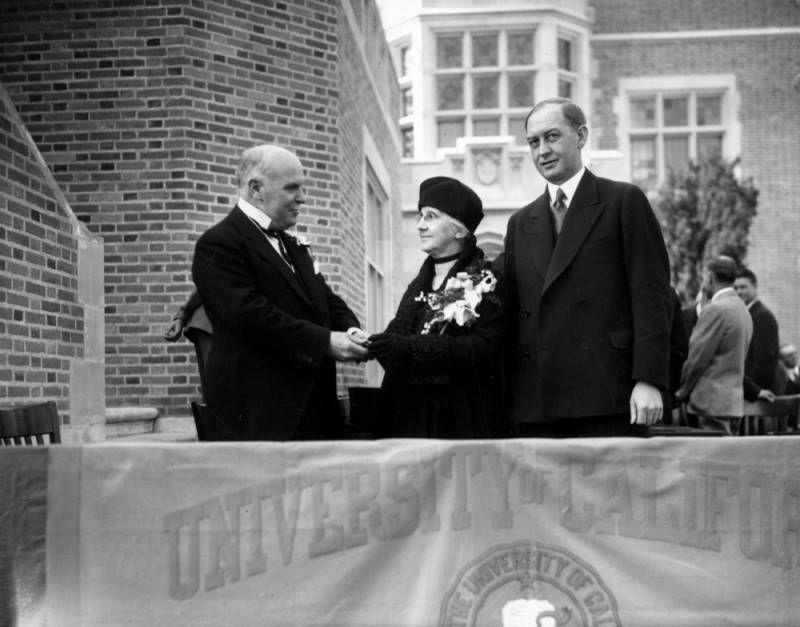
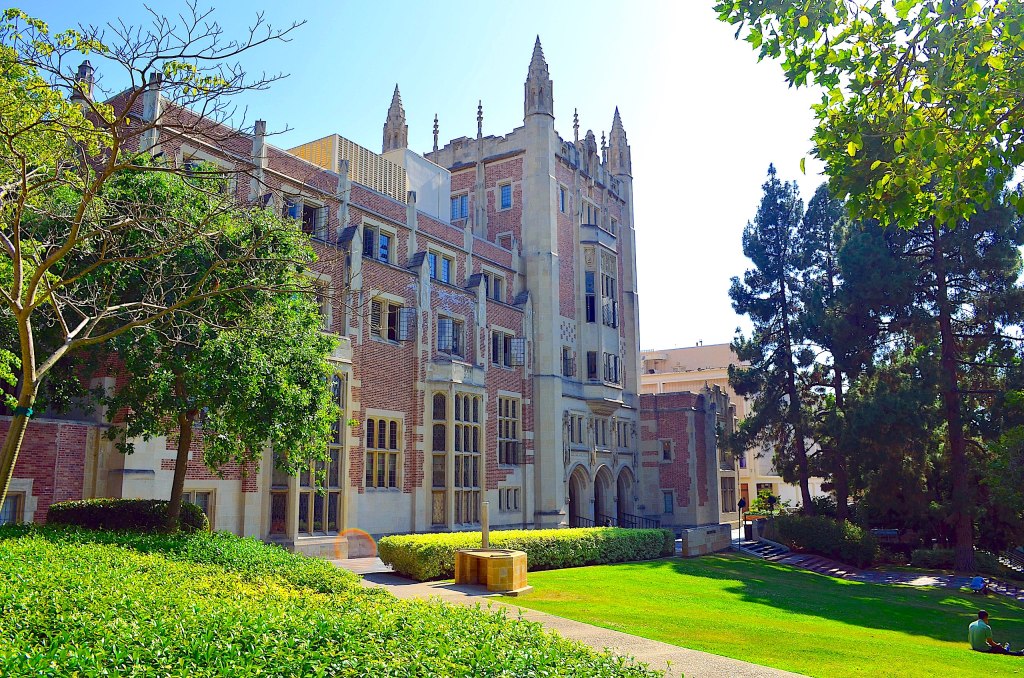
Before his death, Kerckhoff directed his wife to donate the funds to the University of California for the construction of UCLA’s first student union building. Kerckhoff Hall, which still stands in the heart of the campus, was dedicated in January 1930, with Louise in attendance.
In her will, Louise also bequeathed the family’s Adams Blvd. mansion to USC, where it now serves as part of the Annenberg School of Journalism. She died on July 18, 1946.
The Kerckhoffs also underwrote the Max Planck Institute for Heart and Lung Research – W.G. Kerckhoff Institute and the Kerckhoff-Klinik hospital, both in Bad Nauheim, Germany.
Closer to his lumber industry roots, San Pedro’s Kerckhoff Ave. still exists today, three blocks east of Gaffey St., between 26th and 36th streets.
Sources:
“Historical Perspective: The Amazing Life of William G. Kerckhoff,” by Mike McCormick, Terre Haute Tribune-Star, Aug. 30, 2015.
“Kerckhoff, William George and Louise Eshman, House, South Los Angeles, Los Angeles, CA,” Pacific Coast Architecture Database (PCAD).San Pedro News Pilot archives.
Los Angeles Herald archives.
Los Angeles Times archives.
“Southern California,” The Timberman, June 1914, Page 53.
“William G. Kerckhoff,” Portraits and Biographies of the Progressive Men of the West, Press Reference Series, Page 348, 1915.
Wikipedia.