
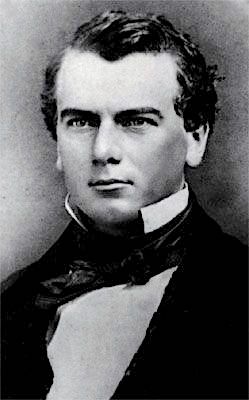
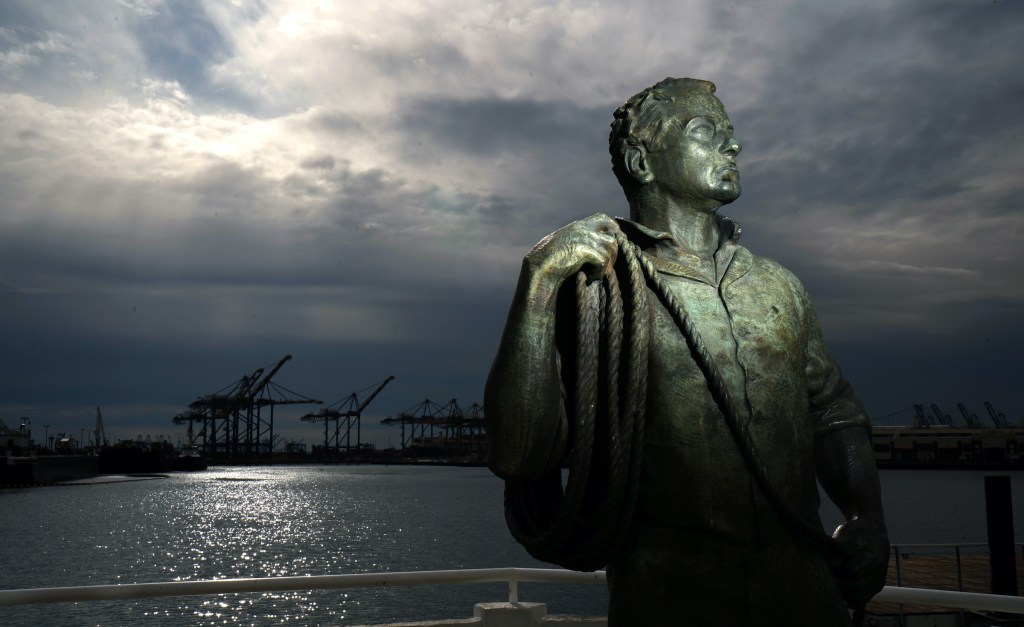
Shipping and mercantile magnate Phineas Banning became a larger-than-life figure after coming to California in 1851.
He founded Wilmington, naming the community after his Delaware home town. He brought the first railroad line to the Harbor Area and played a key role in the early development of Los Angeles Harbor as a seaport. He built the landmark Banning House in Wilmington, which stands as a monument to him.
On the other hand, Banning was not above doling out vigilante justice when he felt the situation called for it.
In his defense, Los Angeles in the mid-19th century has been described by many historians as among the most lawless cities in American history. There was no centralized police force and only a rudimentary justice system in the years following California’s advancement to statehood in 1850.
Public opinion rather than established legal procedures often dictated whether suspected criminals lived or died. Unfortunately, vigilantism, mob justice and lynchings were not uncommon occurrences.
Banning lived in the Harbor Area, but conducted most of his business up in Los Angeles. He grew increasingly concerned with the out-of-control mayhem in the burgeoning city, especialy after the particularly violent summer of 1853. Feeling that the somewhat feeble local law enforcement needed backup, he played an important role in the formation of the city’s first volunteer police force.
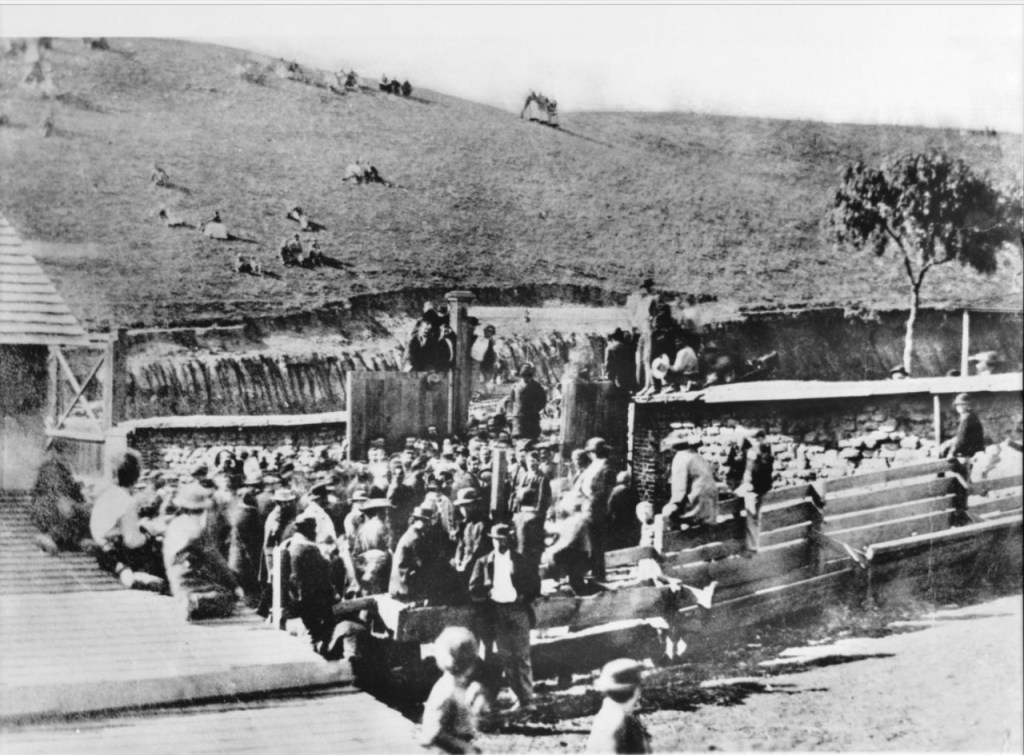
He became an organizer and charter member of the Los Angeles Rangers, a mounted posse of about 100 mostly Anglo citizens meant to supplement the city’s fledgling law enforcement infrastructure. He also was one of the new force’s main financial backers.
While the organization may have had an effect in suppressing some of the more brazen crimes being committed in the city, its methods did consist mostly of hunting down suspected criminals and hanging them without a formal trial.
During its two-year tenure, the group executed in the neighborhood of 22 accused felons, and launched a prolonged vigilante movement in Los Angeles, according to historian Tom Sitton in his book, Grand Ventures: The Banning Family and the Shaping of Southern California (Huntington Library, 2010).
Following the Rangers’ demise, Banning helped organize the City Guard in 1855, whose goals were similar to those of the Rangers. In 1857, he helped form another group, the Los Angeles Union Guards, whose job was to respond to the perceived threat from Mormon settlers following the violent “Mountain Massacre” by Brigham Young’s followers, during which 120 emigrants were slain.
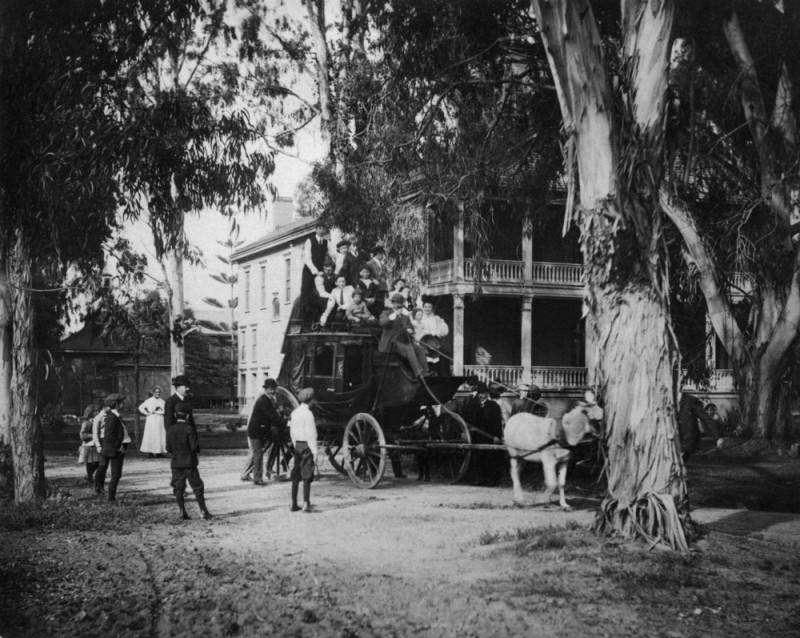
Los Angeles authorities feared violence from the nearby Mormon settlement in San Bernardino and wanted to be prepared in case of attack. The federal government intervened in Utah, however, and Young recalled the “California Saints” unit back home to that state, ending the threat.
The Union Guards dissolved, and Banning’s activities with militia groups subsided.
But he would resume such activities in a less official capacity in 1863. An explosion aboard Banning’s ship the Ada Hancock on April 27 of that year killed 31 people, including family members such as his brother-in-law William Sanford, friends and employees.
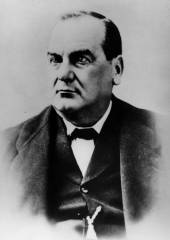
A few months later, a young drifter named Charles Wilkins killed rancher John Sanford, another one of his wife’s brothers, during a failed robbery attempt on a remote stretch of road in Fort Tejon near the Grapevine on Dec. 6.
Wilkins was arrested and indicted for the crime, which he freely admitted committing. As he was being brought back to jail following the indictment at the Los Angeles courthouse, he was surrounded by a vengeful mob, an omen of things to come.
The next day at his trial, Wilkins pled guilty. As he was being led back to jail, Banning, leading a group of his own men, stormed the courtroom and seized Wilkins. Seeking revenge for the crime, Banning led the men back to the corral he owned nearby at Aliso and Spring streets, where he and his cohorts promptly hanged him.
Neither Banning nor any of his men faced any repercussions over the Dec. 17 lynching. In fact, the county Board of Supervisors later gave him a $200 reward for it.
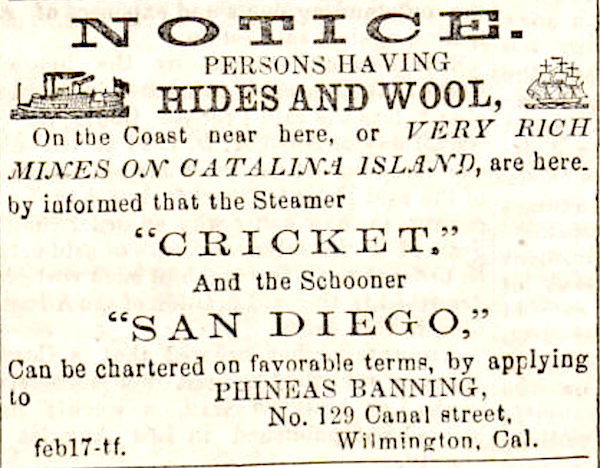
One additional incident of “frontier justice” may or may not have involved Banning directly. It began a month earlier, in November 1863, when Manuel Cerradel was convicted of shooting and wounding a deputy who had been sent to arrest him for his involvement in the recent murder of rancher John Rains.
On Dec. 10, 1863, a week before the Wilkins lynching, Cerradel was being transported to San Quentin to serve his five-year prison sentence. He was taken aboard Banning’s boat, the Cricket, a steamer which ferried passengers through the shallower Wilmington port waters to larger ships offshore in the days before the harbor was dredged and enlarged.
A group of vigilantes boarded the boat, overpowered the sheriff guarding the prisoner, and hung Cerradel from the Cricket’s main mast.
By all accounts, Banning’s direct involvement in vigilante justice seems to have ended with the 1863 incidents. He spent the last two decades before his death in 1885 enlarging his businesses and dabbling in politics.
Sources:
“Cricket,” Islapedia web site.
Daily Breeze files.
Eternity Street: Violence and Justice in Frontier Los Angeles, by John Mack Faragher, W.W. Norton and Co., 2016.
Grand Ventures: The Banning Family and the Shaping of Southern California, by Tom Sitton, Huntington Library, 2010.
Los Angeles Herald files.
Los Angeles Star files.
Los Angeles Times files.
“Lynching in the West: Los Angeles Downtown Walking Tour,” Ken Gonzales-Day blog.
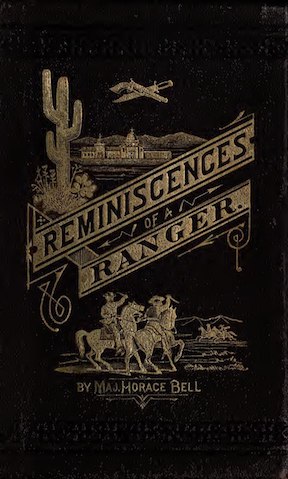
Reminiscences of a Ranger: Early Times in Southern California, by Horace Bell, Yarnell, Caystile & Mathes, Printers, 1881.

