How two men and a giant Wurlitzer organ transformed El Segundo’s State Theatre in 1968

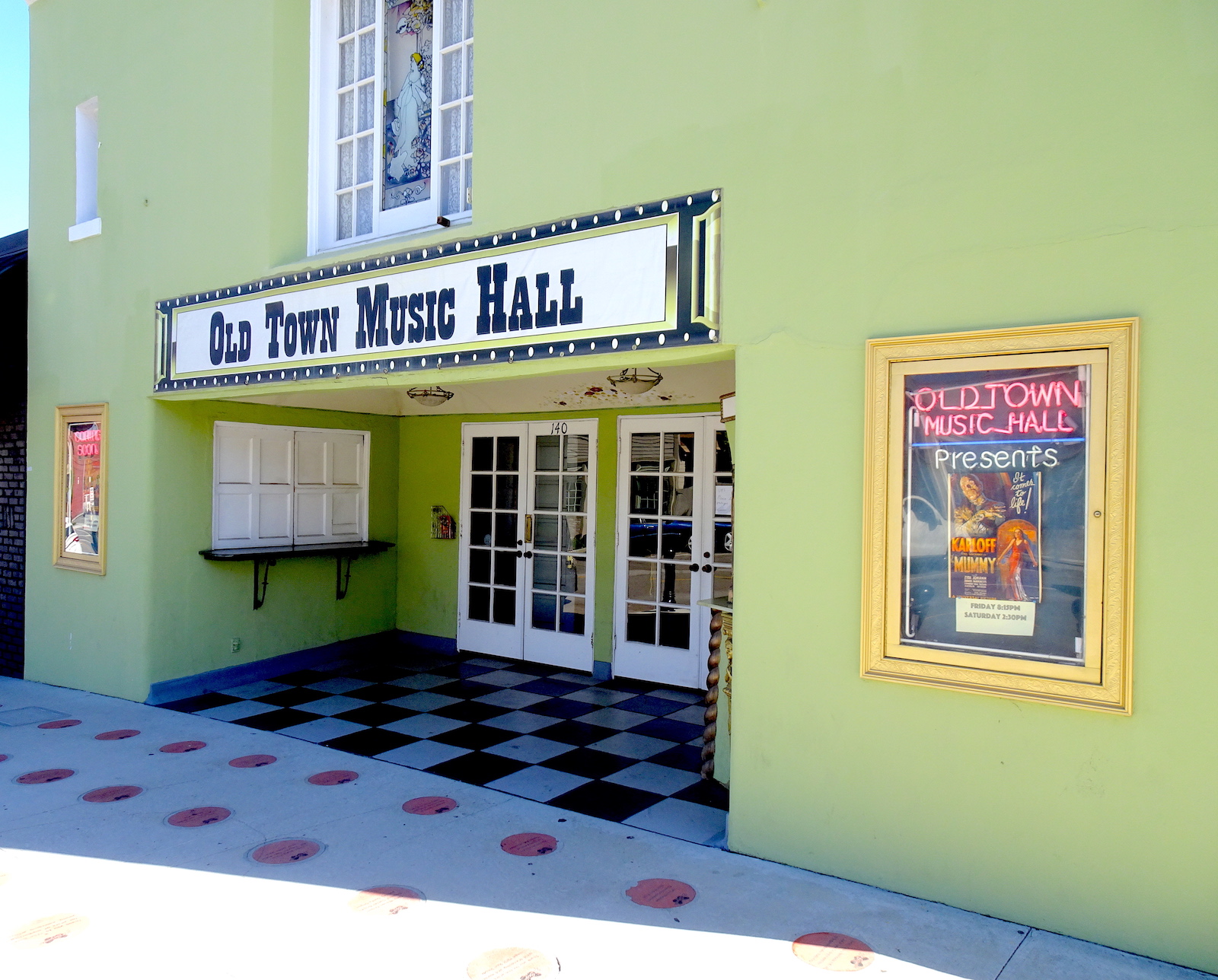
The Old Town Music Hall in El Segundo. Posters advertise upcoming screenings of “The Invisible Man,” left, and “The Mummy.” (October 2019 photo by Sam Gnerre)

El Segundo residents started agitating for a new theater when its original theater closed down after being condemned for unsafe conditions in 1919.

E.L. McMurray took up the challenge, opening up a theater in June 1921 at 140 Richmond St. near downtown. Architect Edward L. Mayberry designed the remodel of the rectangular brick building.
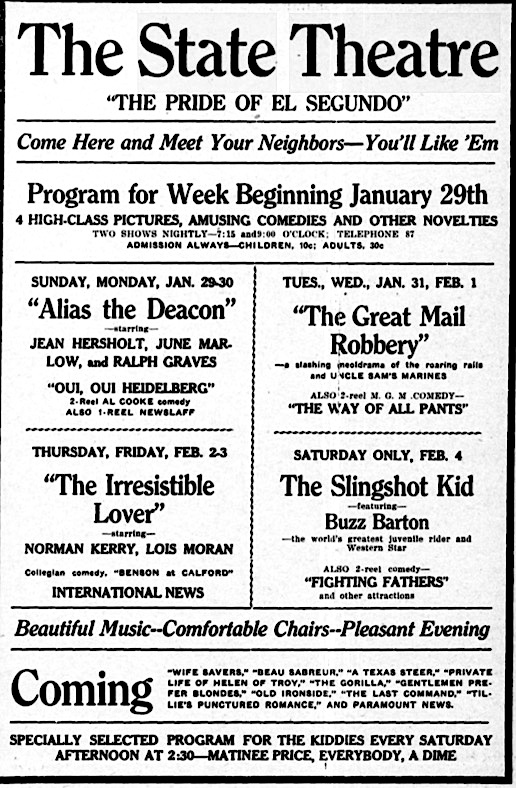
Ad from the El Segundo Herald, Dec. 14, 1928, Page 5.

The theater see-sawed between two names during its early years. It was known as the El Segundo Theatre when it first opened, but had become the State Theatre by 1925

The State struggled during the depression under a succession of owners. It eventually closed in the mid-1930s, then reopened in 1944 as the El Segundo Theatre. 
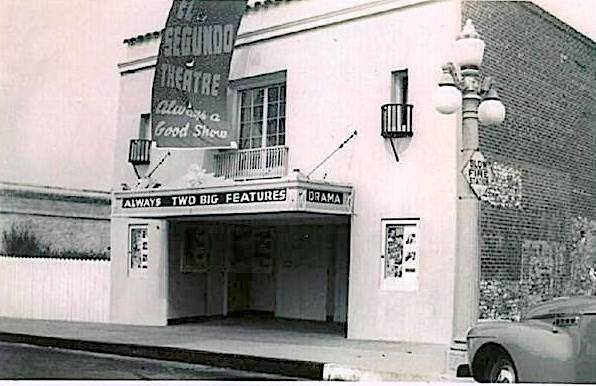
The theater was known as the El Segundo Theatre when this 1944 photo was taken. A poster for “The Racket Man” is on display. (Credit: Old Town Music Hall, enhanced by Thomas Bunce)

It was renamed the State Theatre again in 1951, and was operating under that name when musicians Bill Field and Bill Coffman took over its operation and renamed it the Old Town Music Hall.

The two men had been dreaming of a place that could showcase the magnificent Wurlitzer organ that they’d purchased on June 12, 1958, after taking out a $2,000 loan from their credit union.

The instrument originally had been installed in the Fox West Coast Theater in Long Beach in 1927. It was huge. Coffman had to enlist dockworker friends he’d made while playing piano in a bar in San Pedro in order to take possession of the organ.

The project took a week. The men moved it to a warehouse in Wilmington, where Coffman and Field spent a year lovingly restoring it to its original glory, hunting down obsolete parts wherever they could find them.
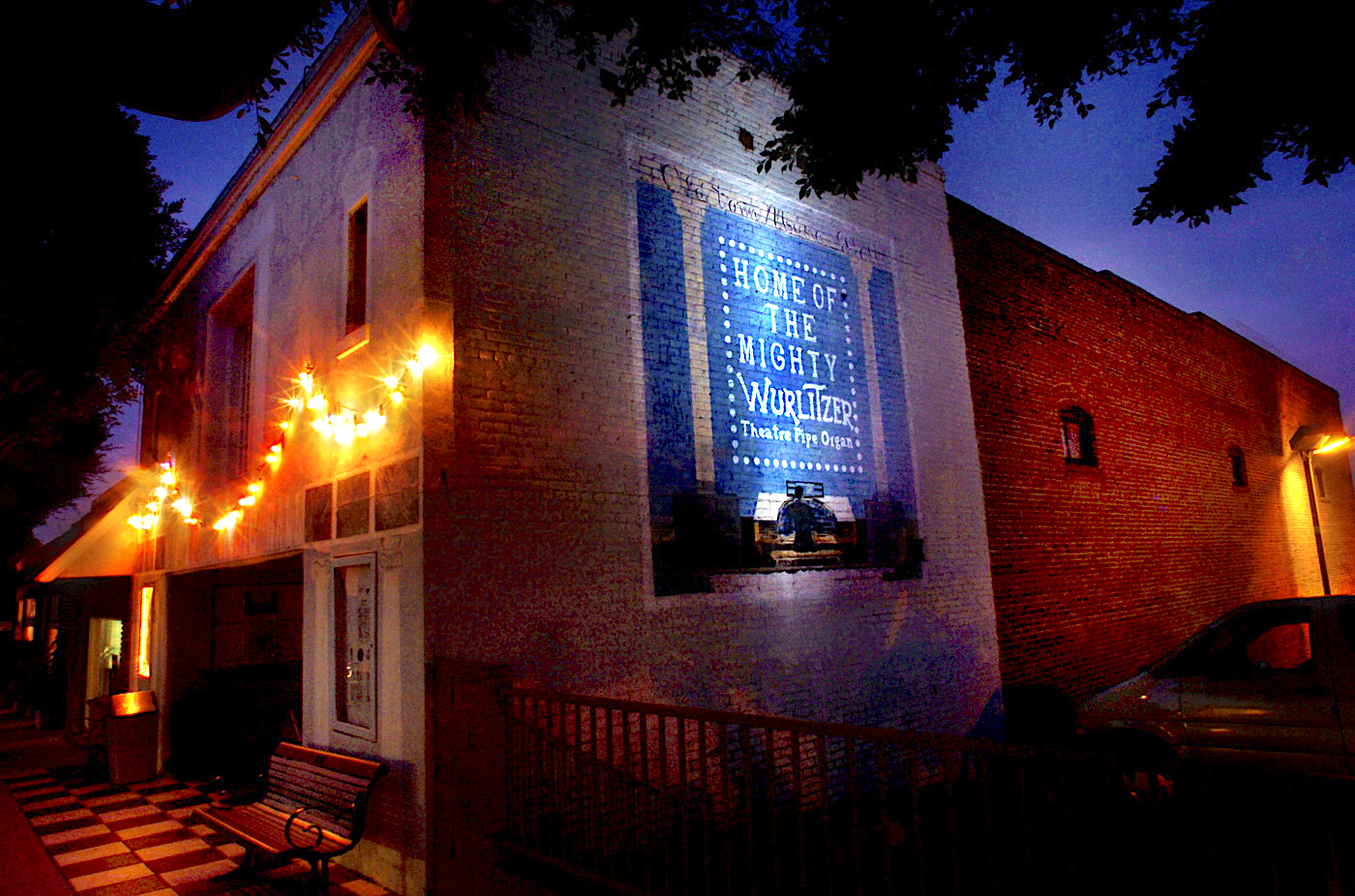
Sign advertising “The Home of the Mighty Wurlitzer” is illuminated in this 2006 nighttime view. (Daily Breeze staff file photo)

They found a temporary home for it in downtown Los Angeles, where their dream of an old-fashioned theater showing shorts and silent films and featuring a brief organ concert and an audience singalong first began.

Such theaters had been dying out long before the men acquired the Wurlitzer, and their fondness for old-time theater programs inspired them to revive it.

The pair found a more permanent home for their operation when they spotted a Daily Breeze rental ad for a theater building in El Segundo. The State became the Old Town Music Hall in 1968, and the two men began presenting vintage silent films scored with live musical accompaniment on the Wurlitzer, on which both were proficient.

They soon discovered they weren’t the only ones who were nostalgic for the early days of movie theaters, which often offered vaudeville acts, singers, musical concerts, plays and a variety of other types of live entertainment in addition to screening films.

The 188-seat theater’s success came from Coffman and Field’s ability to transform the small theater into a pop cultural wayback machine that offered a unique glimpse of the past. Each program would start with a brief organ instrumental followed by an audience sing-a-long tune, before the films were shown, scored by live organ music.
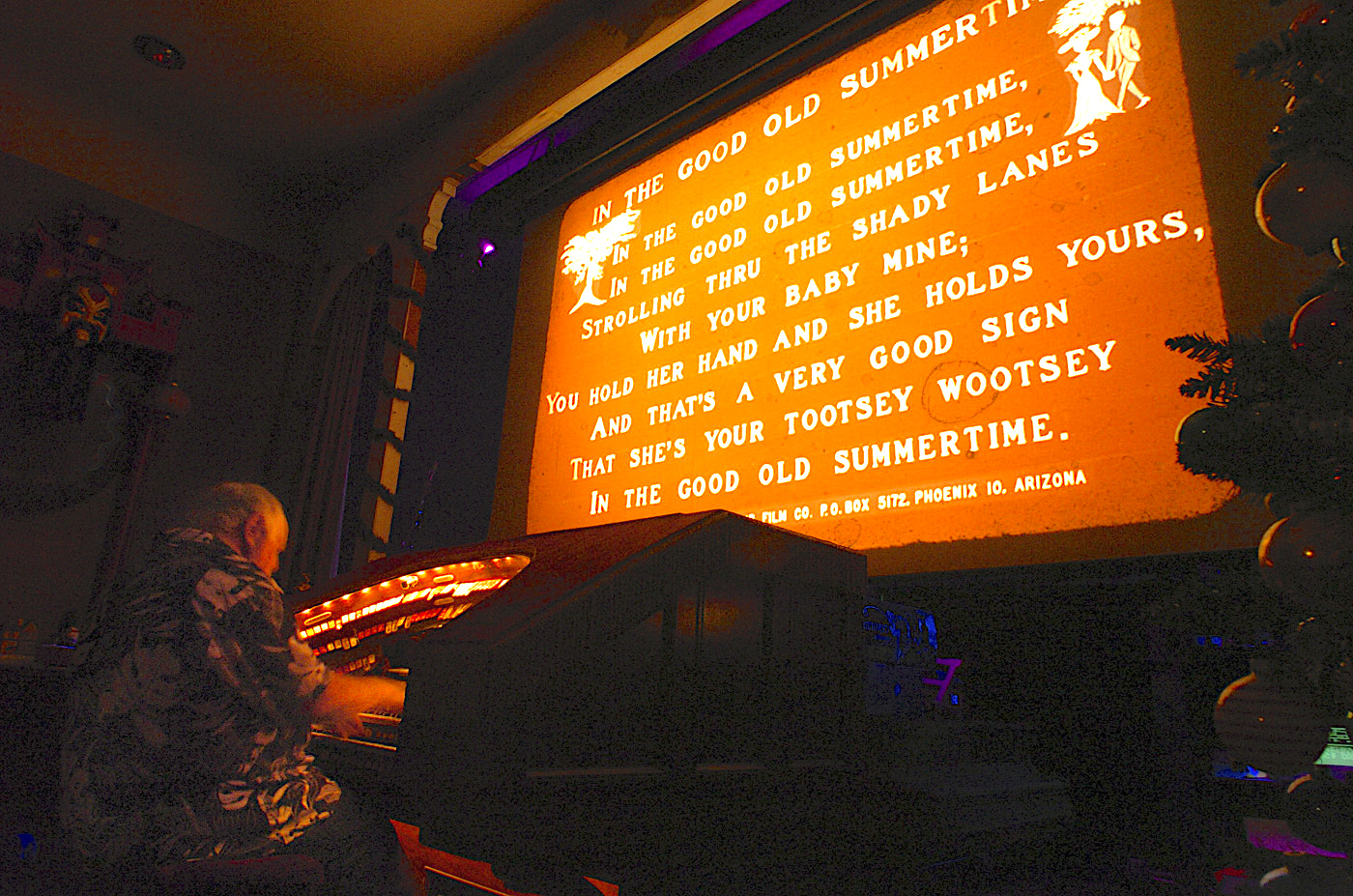
Bill Field, owner of the Old Town Music Hall in El Segundo, plays a tune on the “Mighty Wurlitzer” organ during a singalong in the theater in 2006. (Daily Breeze staff file photo)

It became known for presenting silent films, though it began screening more talkies in later years. Its most popular films include the first-ever Best Picture Oscar winner, “Wings” (1927), and “Phantom of the Opera” (1925), starring Lon Chaney, a Halloween favorite at the Old Town.

In the 1960s and 1970s, guest musicians would occasionally tackle the job of playing the Wurlitzer, including Eubie Blake, Joe “Fingers” Carr and even Korla Pandit, the enigmatic organist who never spoke during his popular KTLA 1950s television show..

On Dec. 7, 2001, Coffman died in his sleep of cardiac and pulmonary complications. He was 75. More than 400 people attended an eight-hour tribute to the beloved music lover and theater co-owner in January 2002 that was organized by co-owner Field.
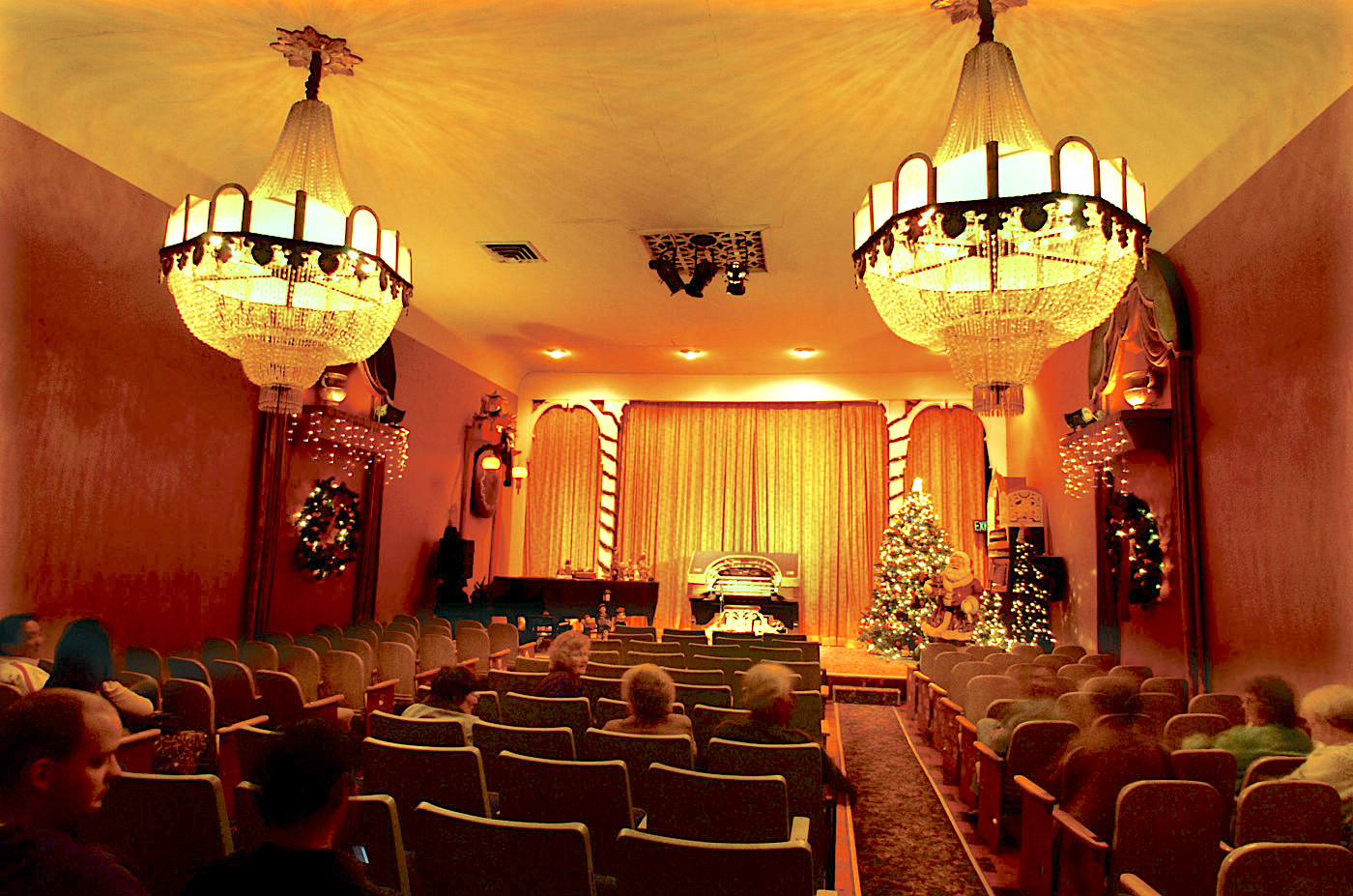
Ornate fixtures and the “Mighty Wurlitzer” organ are on display in this 2006 photo of the Old Town Music Hall’s interior. (Daily Breeze staff file photo)

Earlier in 2001, the rent on the theater building had gone from $900 to $2,500 a month, and its managers began looking at other options when they couldn’t afford to buy the building from its owners.

They looked at but turned down the then-empty “Torrance Aurora” theater on Cravens Ave., formerly the Stadium and the Pussycat, because it was in poor condition. They also explored moving to the Avenue Theater in Downey, though the prospect of moving the gigantic “Mighty Wurlitzer” anywhere was daunting, to say the least.

Fortunately, donors and volunteers stepped up to help the theater, which has been running as a non-profit organization since 1990, and it was able to survive.

It continues to offer its re-creation of a typical night out at the movies during the 1920s every weekend, with Bill Field still manning the Wurlitzer. He has no plans to retire. As he told the Los Angeles Times in 1983, “It’s not really work.”

Sources:

Beach Reporter files.

Daily Breeze files.

El Segundo Herald files.

“History of Old Town Music Hall,” Old Town Music Hall website.

Los Angeles Times files.

“Old Town Music Hall,” Cinema Treasures website.

“Old Town Music Hall,” Los Angeles Conservancy website.
Torrance Elementary is the city’s oldest school still in operation

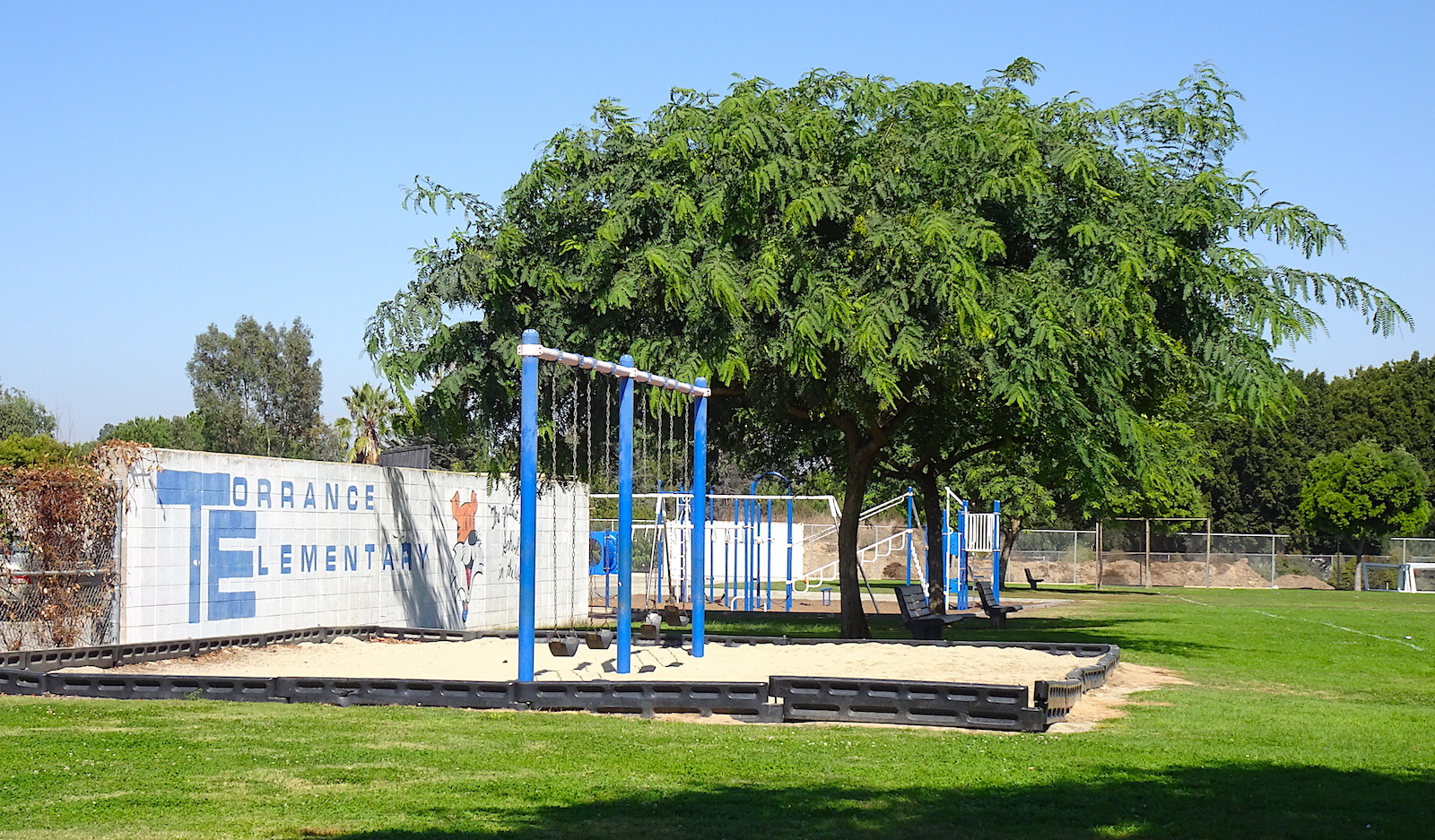
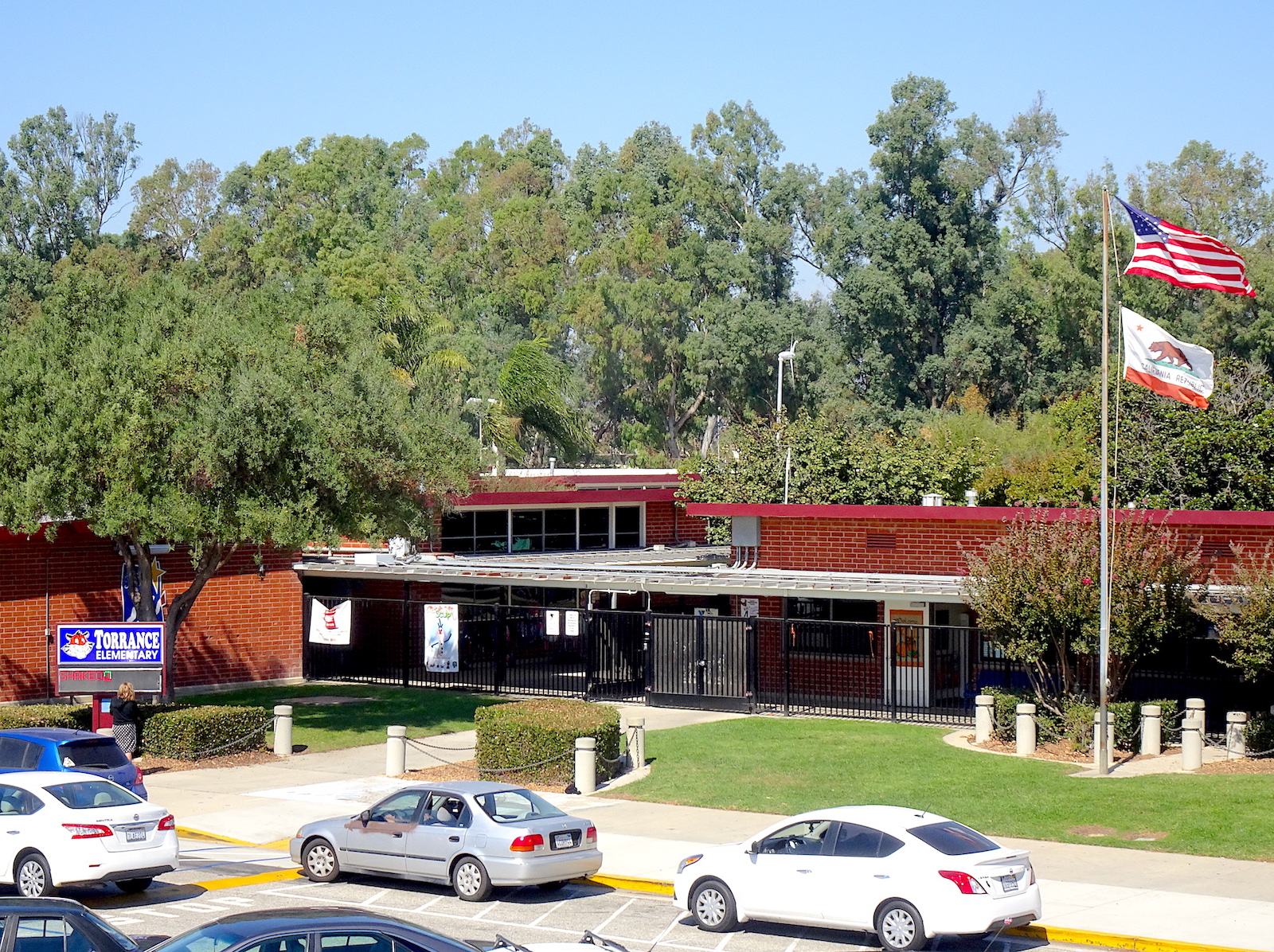
Torrance Elementary School has operated at 2125 Lincoln Ave. since 1963. (October 2019 photo by Sam Gnerre)

Torrance Elementary School went by simply “Torrance School” when it opened in a small, two-room building at 1824 Cabrillo Ave. near downtown in September 1913. It  was the first school built after the founding of the city of Torrance in 1912.

There had been schools operating in the area before then. Rancher Orin Weston started his small Weston Ranch School in 1890 on Lomita Blvd. (then known as Weston St.) just west of Crenshaw. As far as can be determined, it never had much more than 25 students and closed in 1915.

Perry Elementary at 17831 Prairie Ave. opened in 1905, operating as an independent school. It became part of the Torrance Unified School District when that entity was founded in 1947. TUSD closed Perry in 1981.

The grassy field near this play area at the school often is used for AYSO and other amateur soccer games. (October 2019 photo by Sam Gnerre)

After its founding, the newly formed city needed to establish its own school, and quickly. Torrance School’s first class in the wood frame structure on Cabrillo consisted of 66 students, ranging from kindergarten through eighth grade.

Torrance wouldn’t incorporate until 1921, so the school came under the supervision of the Los Angeles City School District, which became LAUSD in 1961.

Torrance’s next need: a high school. When Torrance High School opened four years later in 1917, its splendid building also housed the elementary school, which needed new quarters after quickly outgrowing its tiny first home. The K-8 school became known as Torrance Elementary, to differentiate it from the high school.

Torrance High grew quickly, though, and plans had to be made to give Torrance Elementary (known colloquially as “Torrance El”) its own home. 

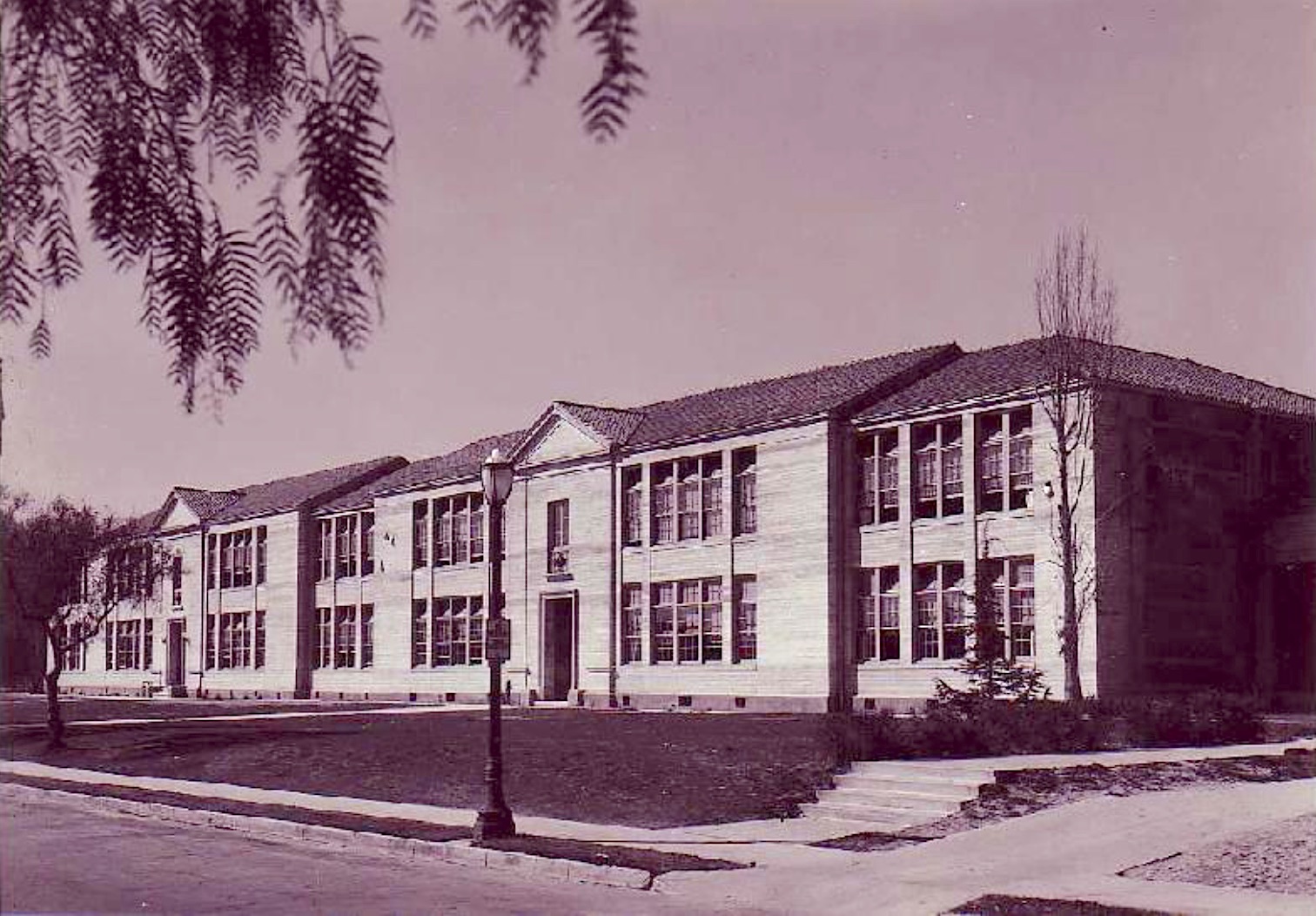
Torrance Elementary School operated at this building near Torrance High from 1923-1963. The building is now the Torrance High Annex. (Credit: National Archives)

Fortunately, there was room on the property for a new building on 3.6 acres just south of the high school, at 2001 Martina Ave. The not-quite-finished school had grown to 335 students when it opened in 1923.

By 1931, it had 953 students, and some had to be moved to the school’s Fern Avenue Annex. A year later, Fern Avenue Elementary was established.

The 1933 Long Beach earthquake caused some structural damage at Torrance El, enough to require the L.A. school district to spend $63,000 for reconstruction, rehabilitation and strengthening of the structure in 1935.

The school remained at the Martina Ave. site for four decades. But, with the rising postwar baby boom population in the 1950s, space at the high schools started to become scarce, and Torrance High looked to expand using the Torrance El building.

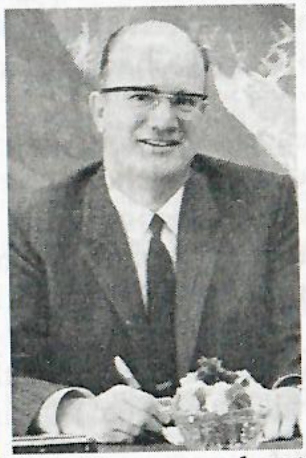
J.H. Hull

TUSD began casting about for a new site for the school. Fortunately, 26-acre chunk of land became available courtesy of the U.S. Navy. The military had declared the Naval Supply Depot Annex property as surplus, and TUSD Superintendent J.H. Hull worked with the government to get a piece of the land.

He succeeded in a major way. The government decided to give the Naval Annex surplus property, valued at $500,000, to TUSD without charge on Feb. 1, 1961, stipulating that it be used for schools. It was the culmination of a long campaign by Hull and the community advocating for the new school site.

The northern chunk of the parcel was given over for the brand new home of Torrance Elementary School. The firm of Donley-Bundy and Associated designed the 30,000-square-foot complex. The Anaheim contracting firm Diely Corp. built the $670,000 school.

The southern portion of the free land became Torrance High School’s Zamperini Field football stadium, which was completed in 1962 at a cost of $300,000. 

Over the years, the city would carve Shery High, Wilson Park and the Southern California Regional Occupational Center (SCROC)  from other parcels of the Naval Annex land.

The old Torrance Elementary School building became part of the Torrance High campus, its classrooms repurposed for high schoolers. The building became known as the Torrance High Annex, or the Annex Building, and is connected to the rest of campus by a curved, covered walkway.

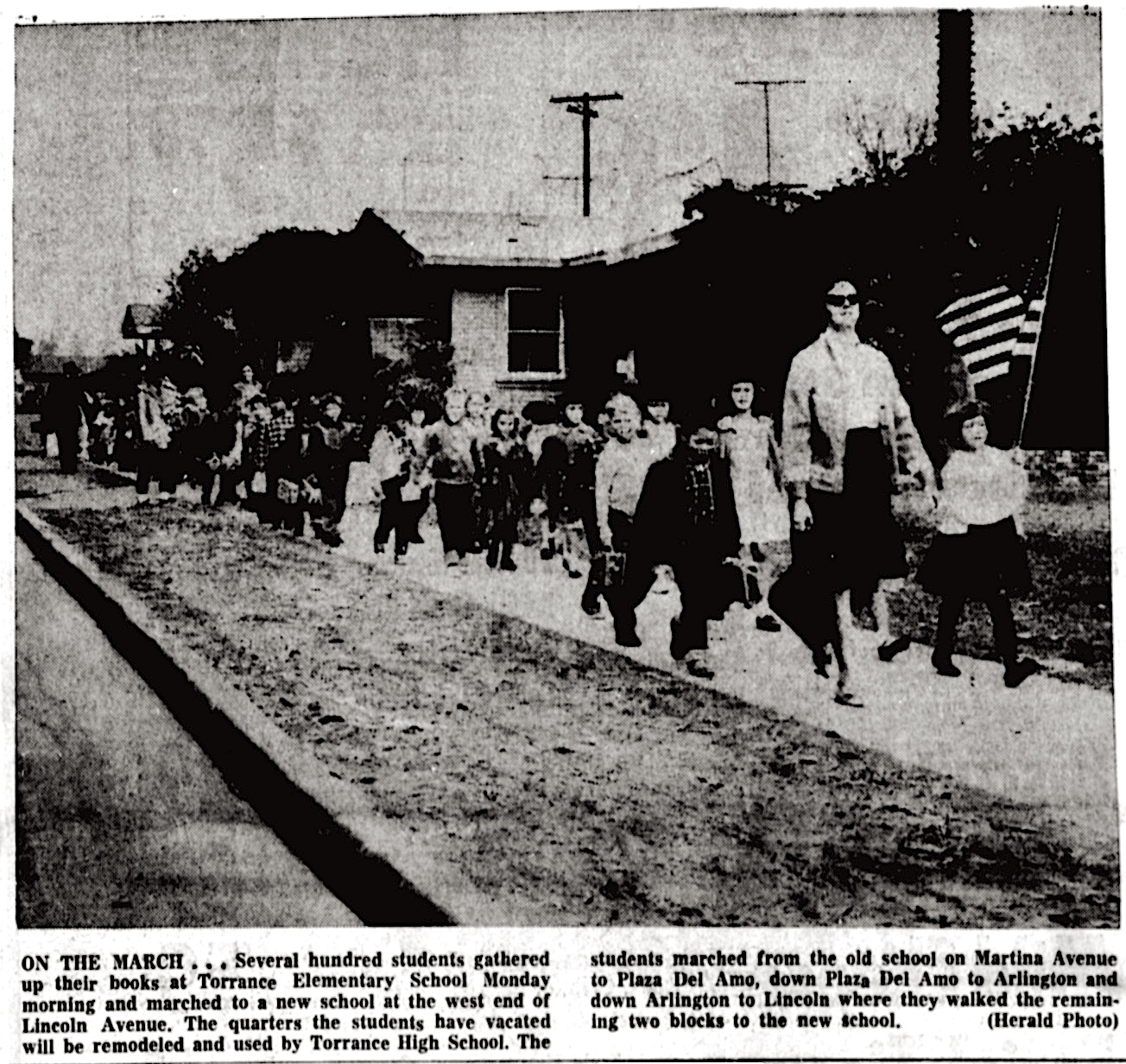
Students and teachers march from their old school to their new school on Lincoln Ave. in January 1963. Torrance Press-Herald, Jan. 31, 1963, Page 1. (Credit: Torrance Historical Newspaper and Directories Archive database, Torrance Public Library)

The brand new Torrance Elementary School at 2125 Lincoln Ave. opened to students in early 1963. Its official dedication was held that March, with a proud Hull in attendance. Hull Middle School in Torrance was named for the former superintendent when it opened in 1970, the year he died.

The school celebrated its 100th anniversary in 2013. It has been remodeled several times, notably in 1991 and 1997.

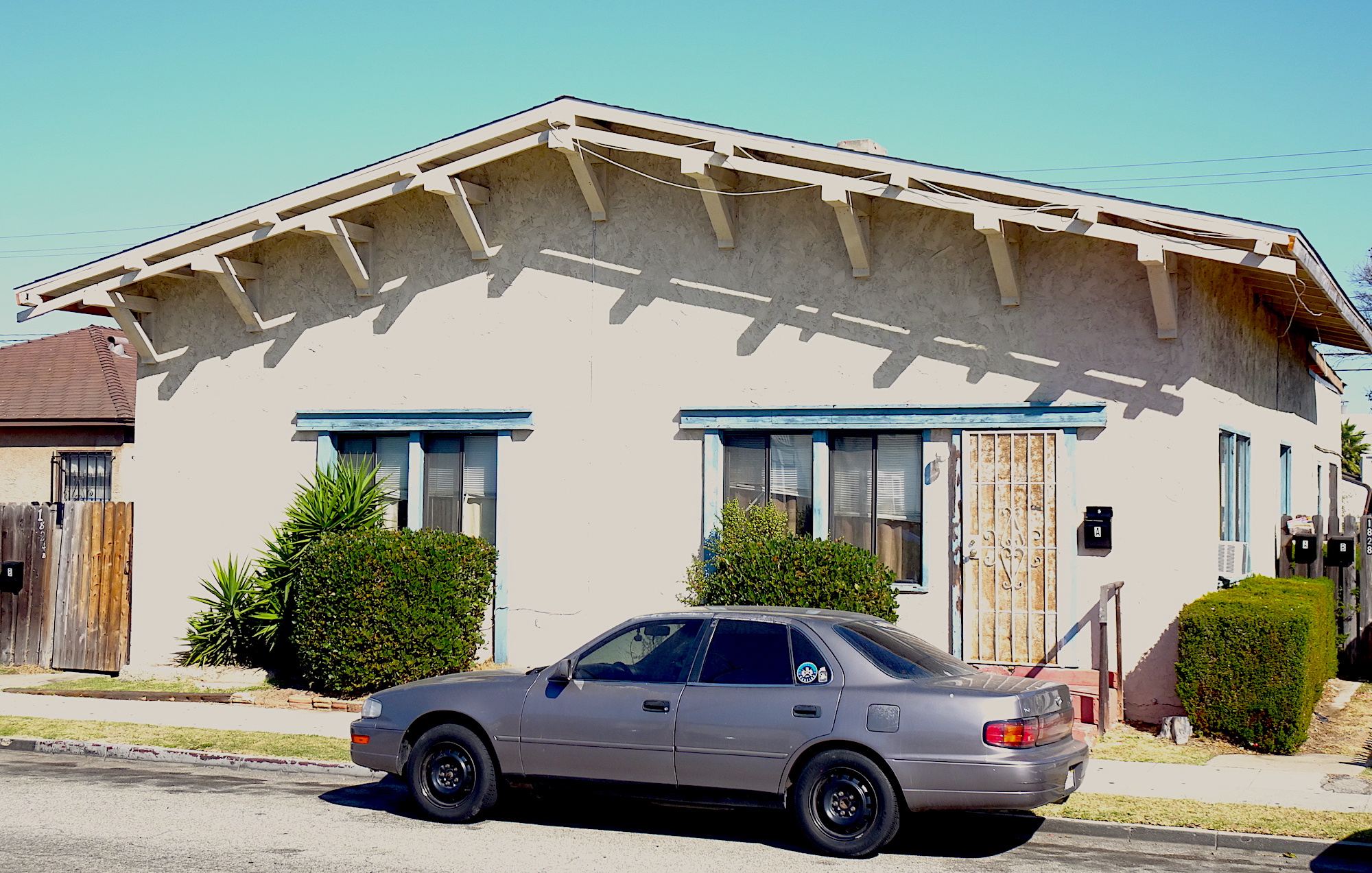
By the way, the two-room building on Cabrillo Ave. that housed the original school still stands, and, in revamped form, now serves as a private residence.

The original Torrance Elementary School building at 1824 Cabrillo Ave. is now a private residence. (October 2019 photo by Sam Gnerre)

Sources:

Daily Breeze files.

The History of Torrance Schools, 1890-2000, by Thomas Rische, TUSD History Project, 2002.

Los Angeles Times files.

Torrance Press-Herald files.

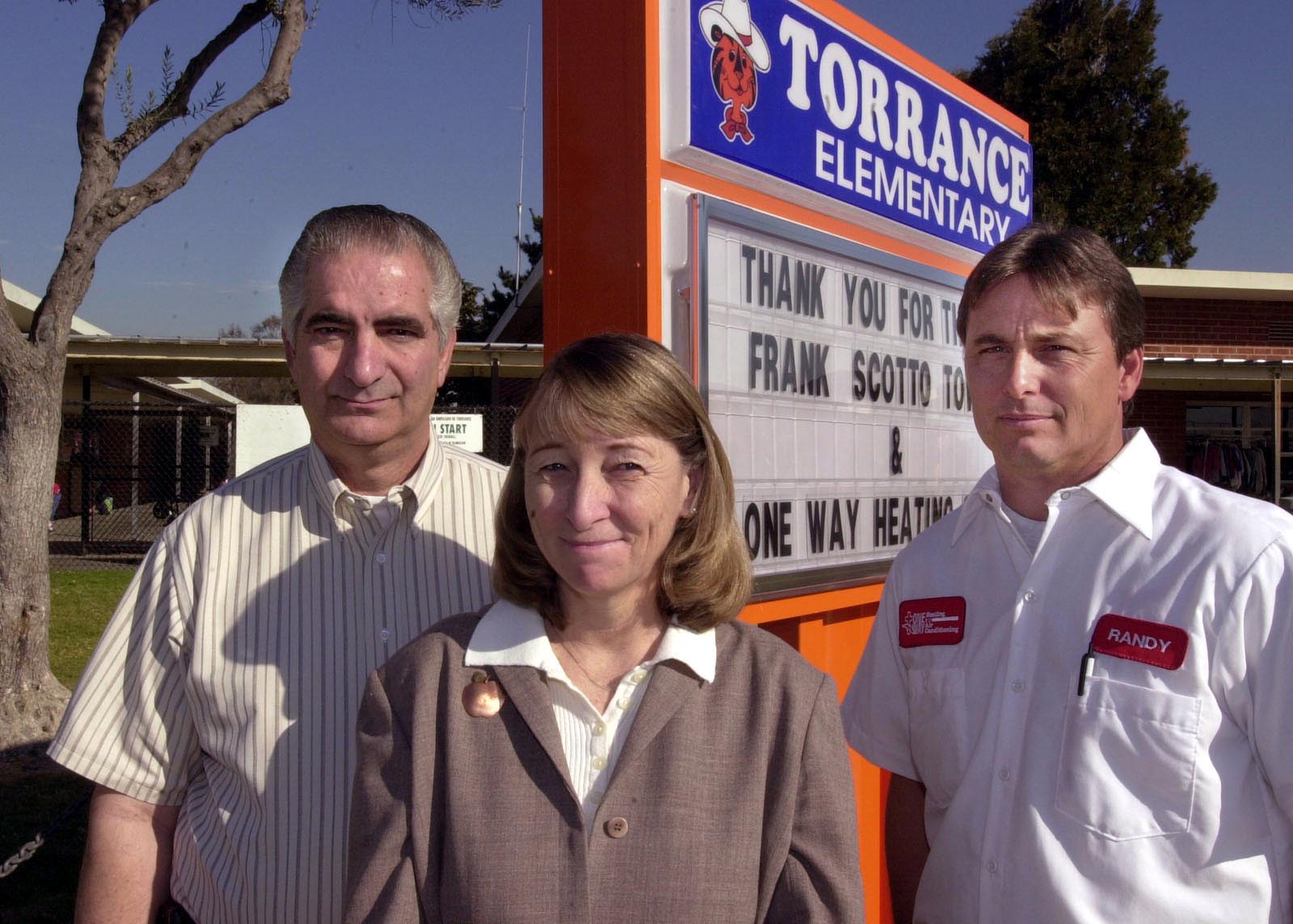
Frank and Cindy Scotto, left and center, and Randy Langsdale donated money to purchase this marquee for Torrance Elementary School. January 2000 photo. (Daily Breeze staff file photo)

Rudecinda Florencia Sepulveda de Dodson played a major role in San Pedro’s development

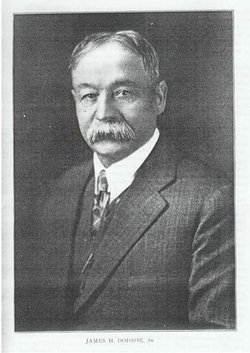
James H. Dodson. Undated photo.

I began this post expecting to write mostly about James Hillsey Dodson, an influential early resident of San Pedro. Born in Los Angeles on Feb. 28, 1861, he led by all accounts an exemplary life, but the story I ended up wanting to tell was that of his extraordinary wife.

Dodson was working for the San Pedro butchery firm Vickery and Hinds when he met  Rudecinda Florencia Sepulveda, the daughter of Spanish land grant baron Jose Diego Sepulveda. They were married in 1881, and settled in a house at Seventh and Beacon streets built as a wedding present for them by Rudecinda’s parents.

James Dodson would go on to a distinguished civic career, serving as mayor of San Pedro twice, as well as its postmaster, and the president of the Chamber of Commerce. He also eventually became owner of the butcher business. He was most definitely a key mover and shaker in the early days of the harbor town.

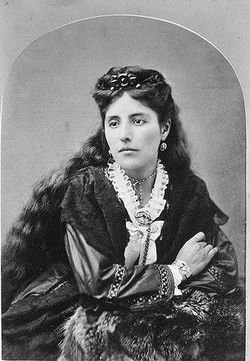
Rudecinda Florencia Sepulveda de Dodson. Undated photo.

But his wife led an even more fascinating and accomplished life. Known after her marriage as Rudecinda Florencia Sepulveda de Dodson, she was born on Oct. 27, 1858, at the family house near the present-day intersection of Channel and Gaffey streets, then part of the Rancho San Pedro land grant.

By all accounts, she was a devout Roman Catholic, dignified and reserved, with a courtly but not haughty manner. In her quiet way, she always kept an eye out for opportunities to grow and improve the area in which she and her family lived.

She was active in various religious and charitable organizations, and in the benevolent programs of her home parish, Mary Star of the Sea Catholic Church.

Rudecinda also had a hand in the development of several San Pedro civic and community organizations. She was a lifelong member of the Native Daughters of the Golden West — one  lcoal chapter was named the Rudecinda Parlor in her honor.

She donated a portion of land from her vast inherited holdings for the construction of the first San Pedro Women’s Club building at 11th and Gaffey streets in 1905. She was also a lifetime member of the Women’s Club.

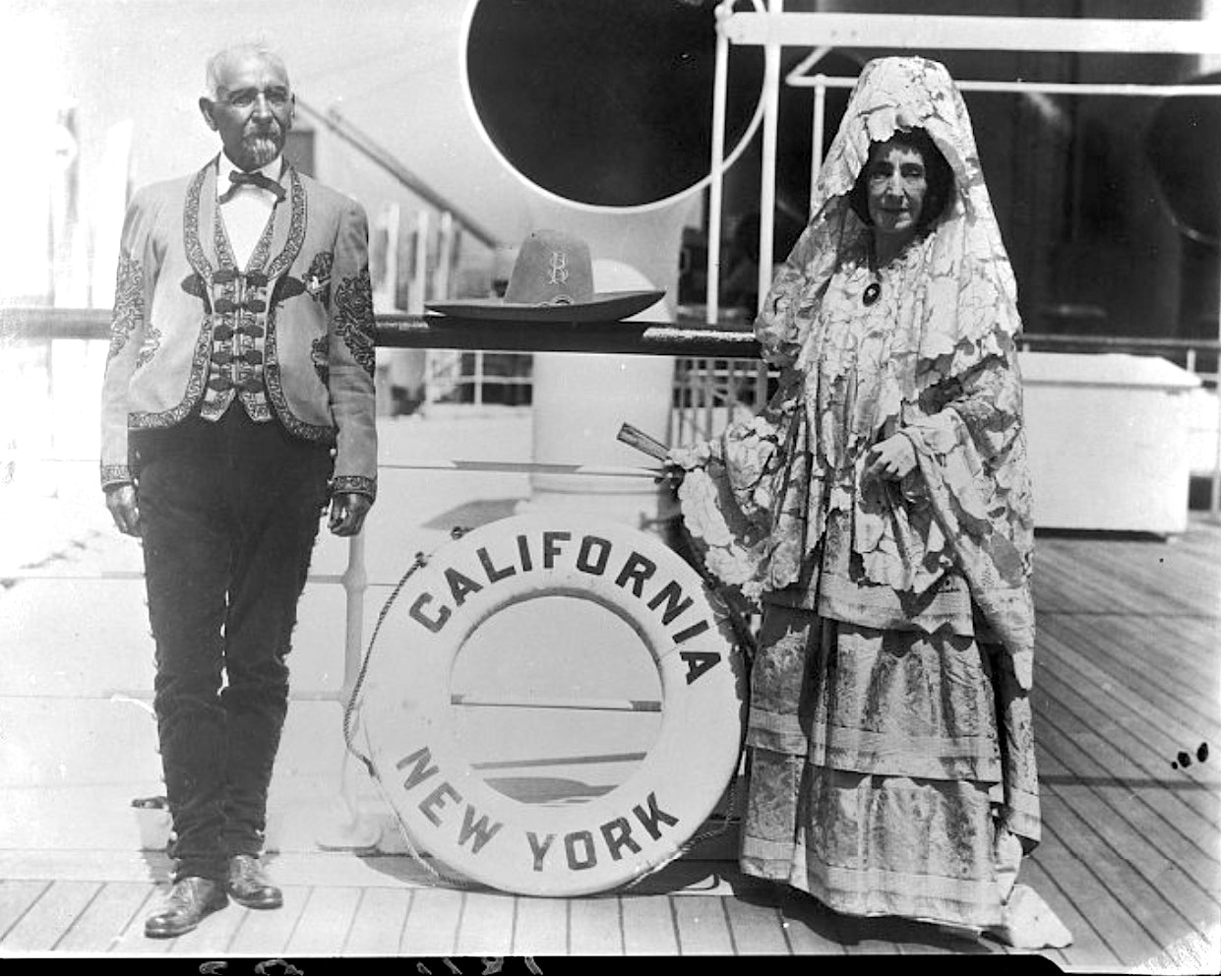
Roman Sepulveda and his sister, Rudecinda Sepulveda Dodson, wearing ornate traditional clothing, on deck of the intercoastal liner Cailfornia, pose with life preserver between them. 1929 photo. (Credit: UCLA Library Special Collections)

She also gave parcels of land for Mary Star’s church school, the Salvation Army, the American Legion, and the San Pedro Elks club, and deeded many more sites to the city for its official use, including the Plaza Park area where the original city hall was built.

In addition to land, she donated money frequently to the local Community Chest, the YMCA and many other organizations.

In her own reserved way, she also espoused what would come to be called feminist causes, supporting temeprance and women’s suffrage as an active member of the Women’s Christian Temperance Union (WCTU),  establishing a bank account in her own name, driving her own car and keeping financial records for her family’s businesses. 

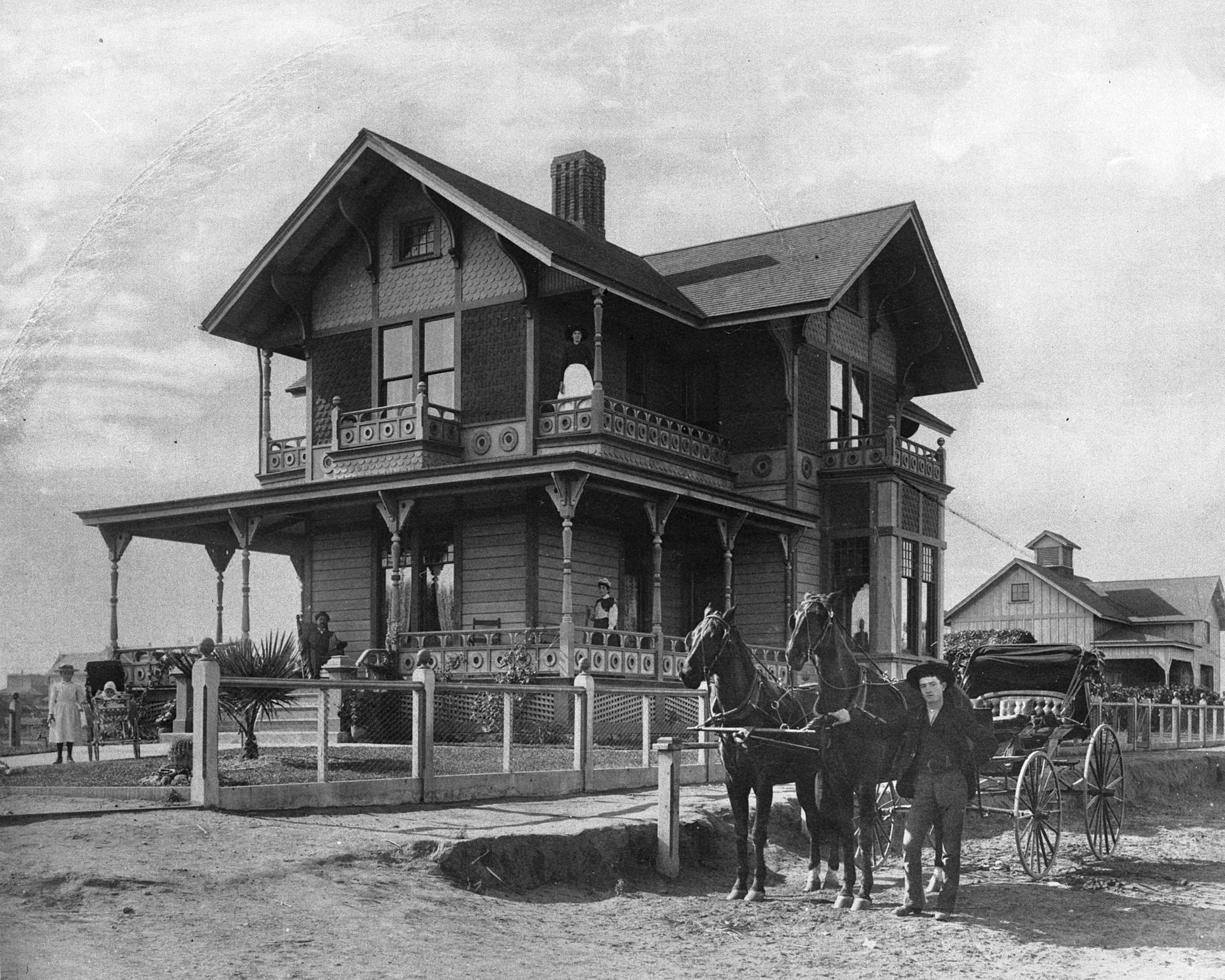
The Dodson House at its original location in San Pedro in 1895. (Daily Breeze file photo)

She engaged in all these activities while raising a family of three children, sons James Jr. and Carlos, and daughter Florence.

Remarkably, the original family house has been preserved, though it also has been moved twice. The first move came when the family agreed to the construction of a theater complex on the property in 1922, the Dodson Theatre (later the Fox Cabrillo). The house was transported to 1549 S. Meyler St. to make way for it.

It was at the Meyler St. location where Rudecinda died peacefully, surrounded by members of her family, on Sept. 11, 1930. She was 71.

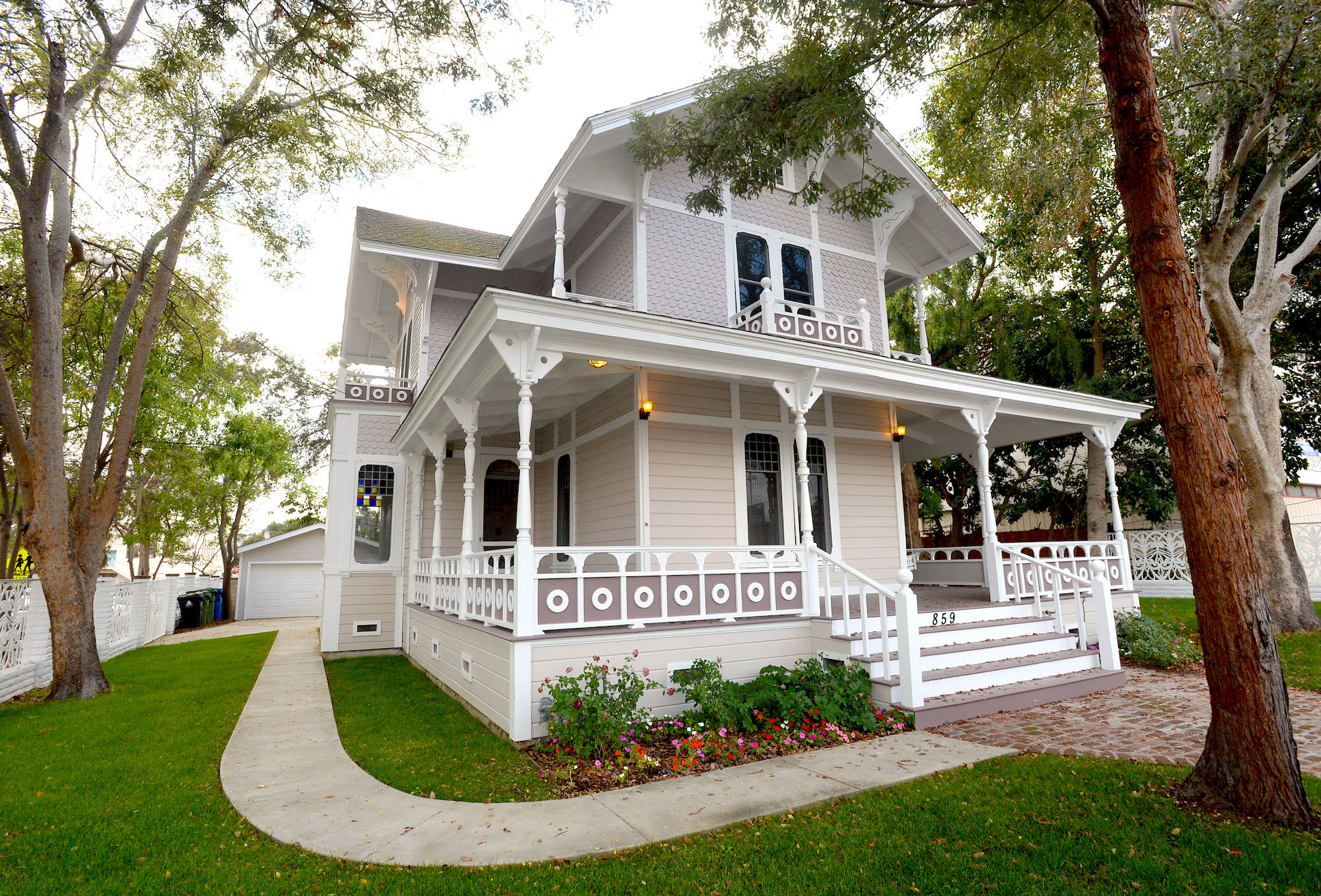
When that site was needed for the rebuilding of San Pedro High School following the 1933 Long Beach earthquake, the family sold its 18 acres there for the new construction, and the house was moved to its present location at 859 W. 13th St.

The Dodson House on 13th Street in San Pedro in 2013. The home has been at this location since 1933. (Daily Breeze file photo)

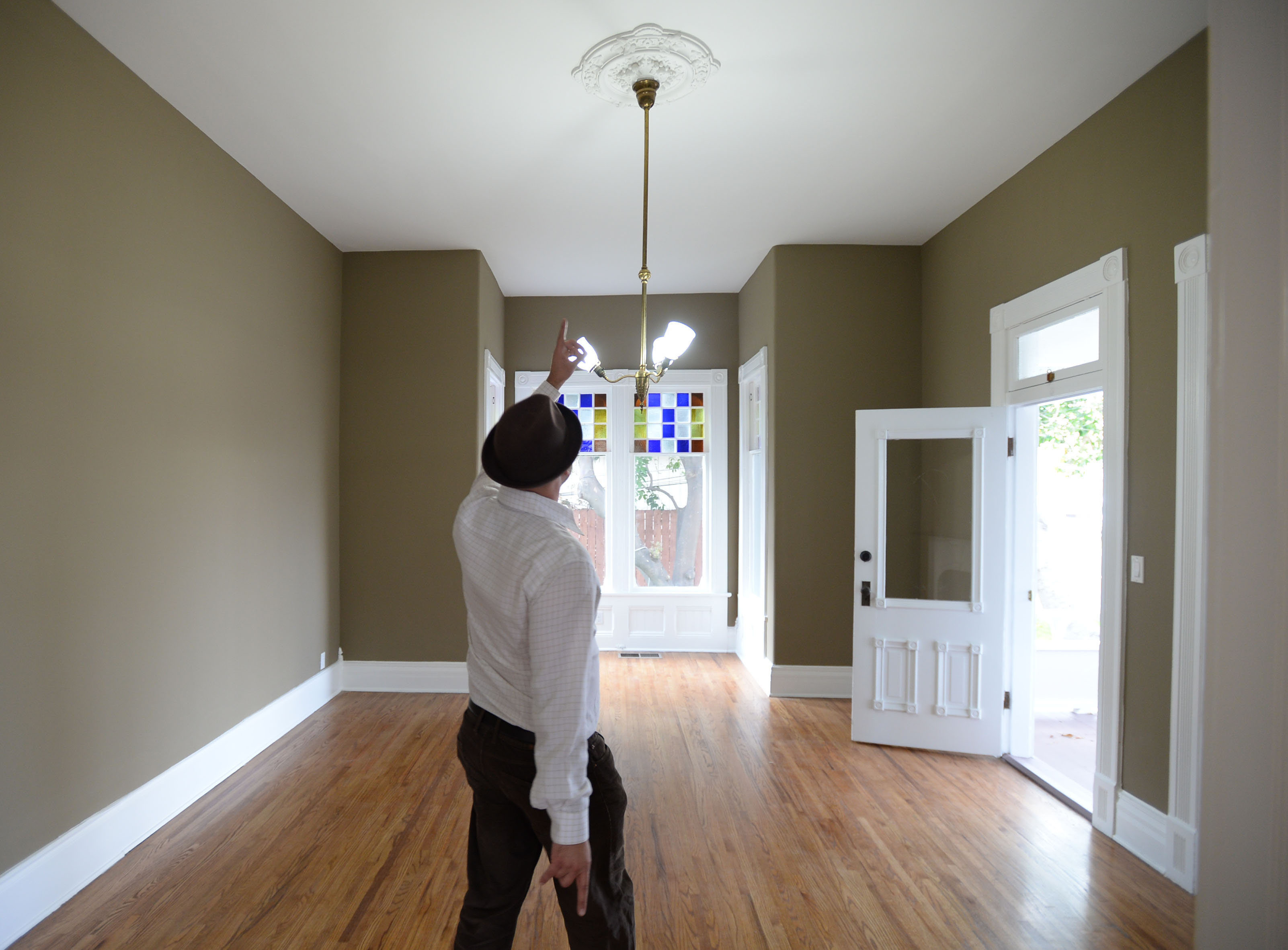
On Sept. 17, 1976, the Dodson house became #147 on the list of Los Angeles Historical-Cultural Monuments. It was put on the real estate market in 2013 and currently is a private residence not open to the public.

Rudecinda’s son, James Jr., a California Highway Patrol inspector, died tragically in 1937 at the age of 47 in a Wilmington traffic accident. Her husband, James H. Dodson Sr., died in Los Angeles at 78 on Sept. 2, 1939, having moved from San Pedro following Rudecinda’s death.

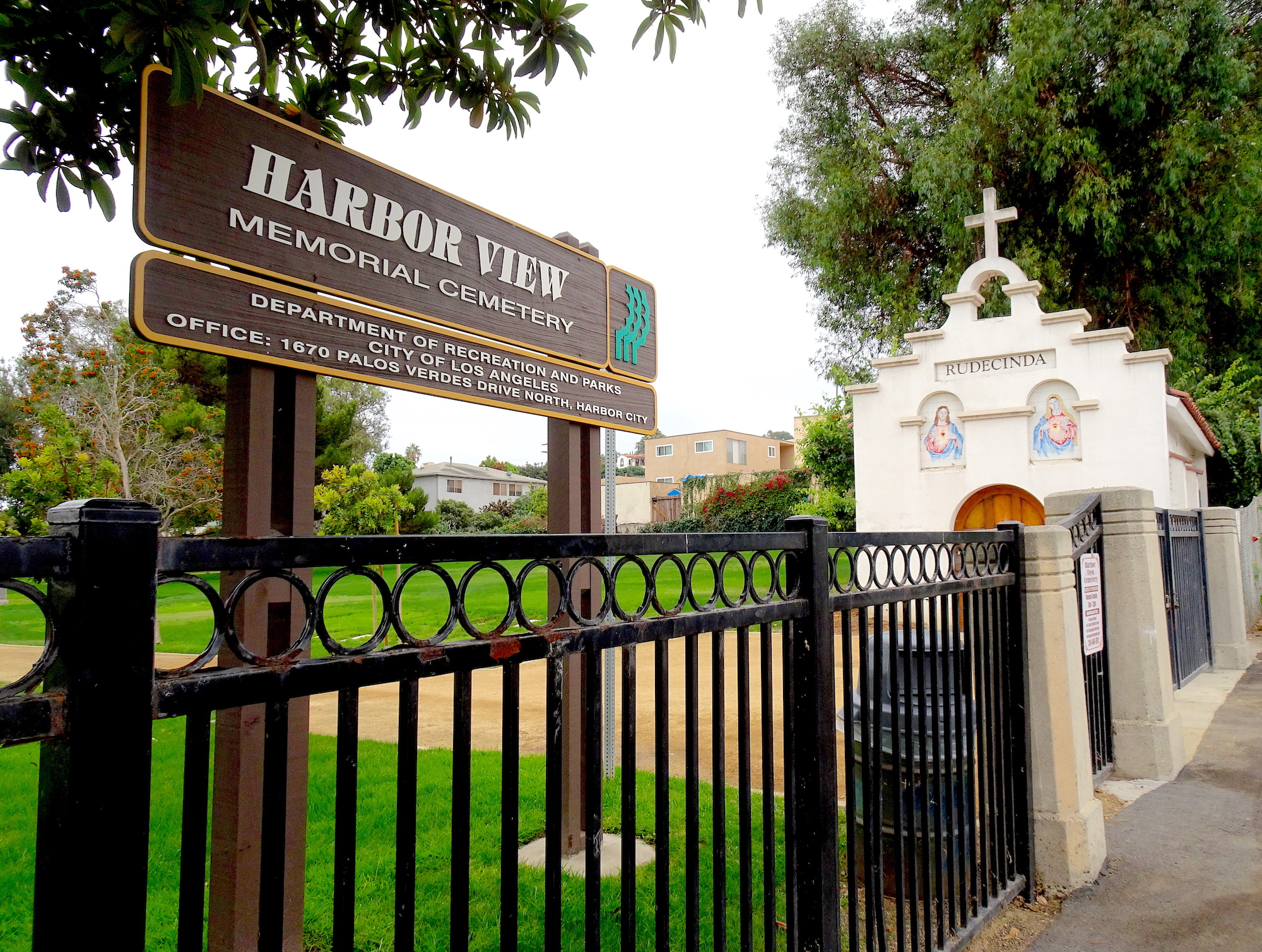
The Dodson family mausoleum, right, identified beneath the cross as “Rudecinda,” is located just inside the entrance to the Harbor View Memorial Park cemetery in San Pedro. (Oct. 2019 photo by Sam Gnerre)

Rudecinda, James Sr., James Jr. all are buried in a special mausoleum at Harbor View Memorial Park cemetery at the southern end of Grand Ave. in San Pedro.

The family’s generosity and civic spirit was recognized when developers renamed Dodson Ave. in western San Pedro after them.

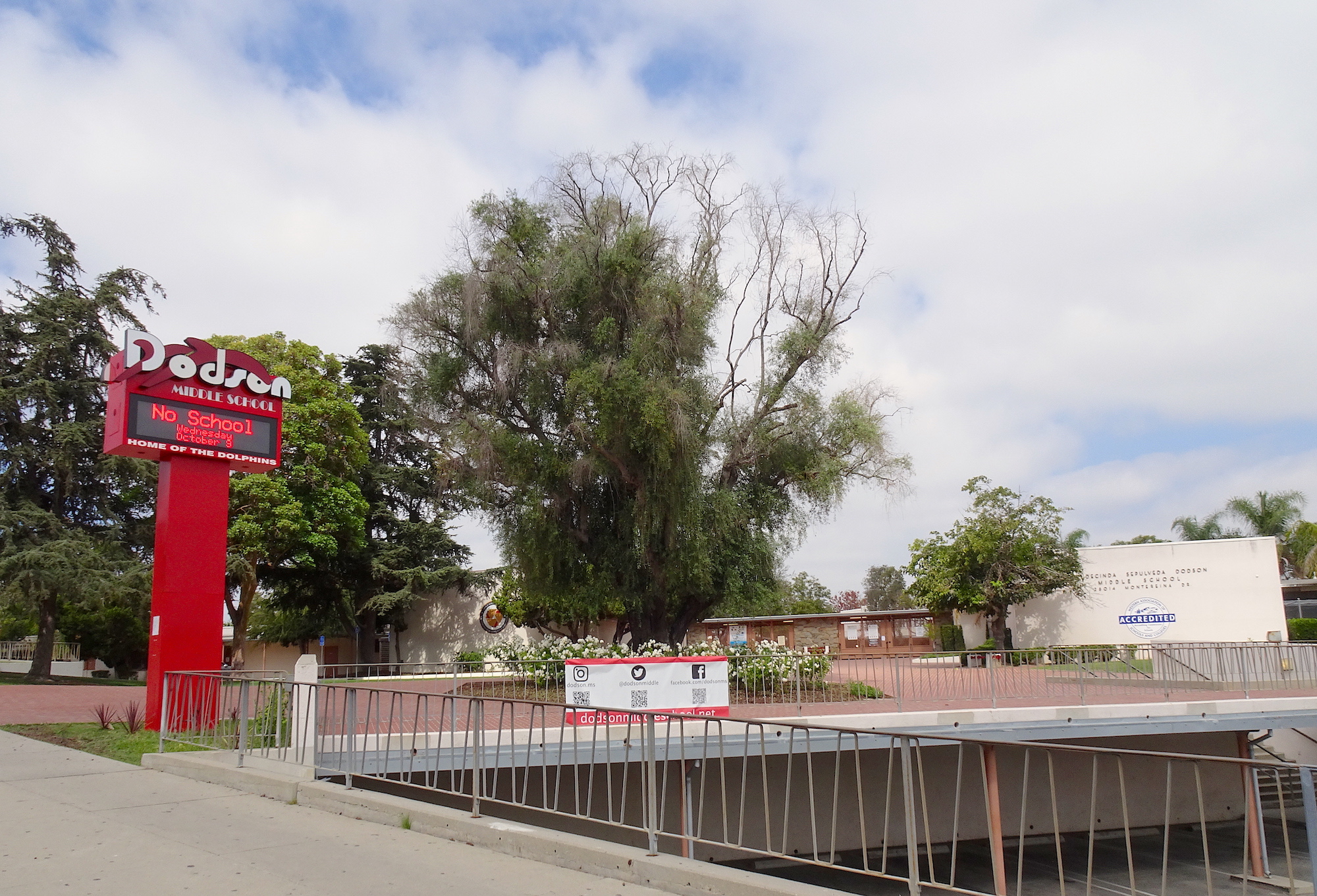
In 1958, the Los Angeles Unified School District honored Rudecinda specifically by naming the new middle school it was building near Avenue Aprenda west of Western Ave. as the  Rudecinda Sepulveda Dodson Junior High School (later changed to “middle school”). 

The school, at 28014 S. Montereina Dr., welcomed its first students in September 1960. The Dodson family donated many of Rudecinda’s artifacts, including dresses and shawls, for display at the school.

It became part of Rancho Palos Verdes when that city incorporated in 1973, but still falls under the administration of LAUSD.

Rudecinda Sepulveda Dodson Middle School in Rancho Palos Verdes. (October 2019 photo by Sam Gnerre)

Sources:

Daily Breeze files.

FindAGrave website.
Harbor Heritage: Tales of the Harbor Area of Los Angeles, California, by Oliver Vickery, Authors Book Company, 1979.

Los Angeles Herald files.

Los Angeles Times files.

The Rancho San Pedro: The Story of a Famous Rancho in Los Angeles County and of its owners, The Dominguez Family, by Robert Cameron Gillingham, 1961.

San Pedro News Pilot files.

“Sepulveda, Diego, Adobe, San Pedro, Los Angeles, CA (1853),” Pacific Coast Architecture Database (PCAD).

Andrew Raitt of Verono Investments points out the antique chandelier and plaster work in the dining room during a tour of the historical Dodson House in San Pedro in December 2013. (Daily Breeze file photo)


The La Venta Inn has been a Palos Verdes Estates landmark for nearly 100 years

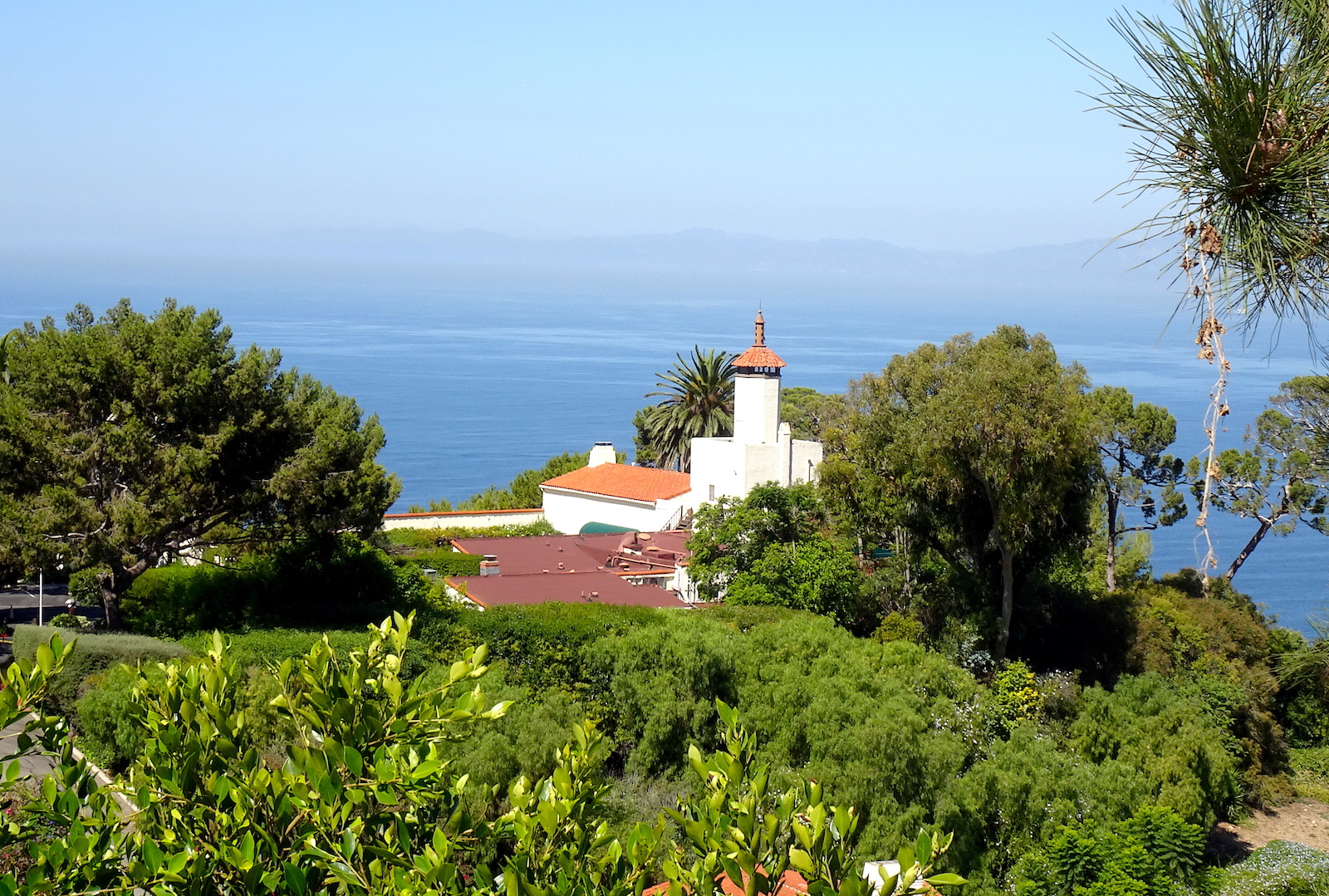
The La Venta Inn in Palos Verdes Estates, with Santa Monica Bay in the background. (October 2019 photo by Sam Gnerre)

Magazine publisher E.G. Lewis bought three acres of land on a barren hilltop on the undeveloped Palos Verdes Peninsula in 1921. He intended to build a landmark structure at 796 Via Del Monte that would set the tone for the new development he was planning. He bought the land for the development, 16,000 acres, from banker and land owner Frank Vanderlip in 1922.

In the summer of 1923, the iconic La Venta Inn, the first permanent building of the new project, was completed and opened, living up to what Lewis had envisioned.

Architect brothers Pierpont and Walter Swindell Davis designed the Spanish-style building, with renowned landscape architects the Olmstead brothers laying out  its grounds. 

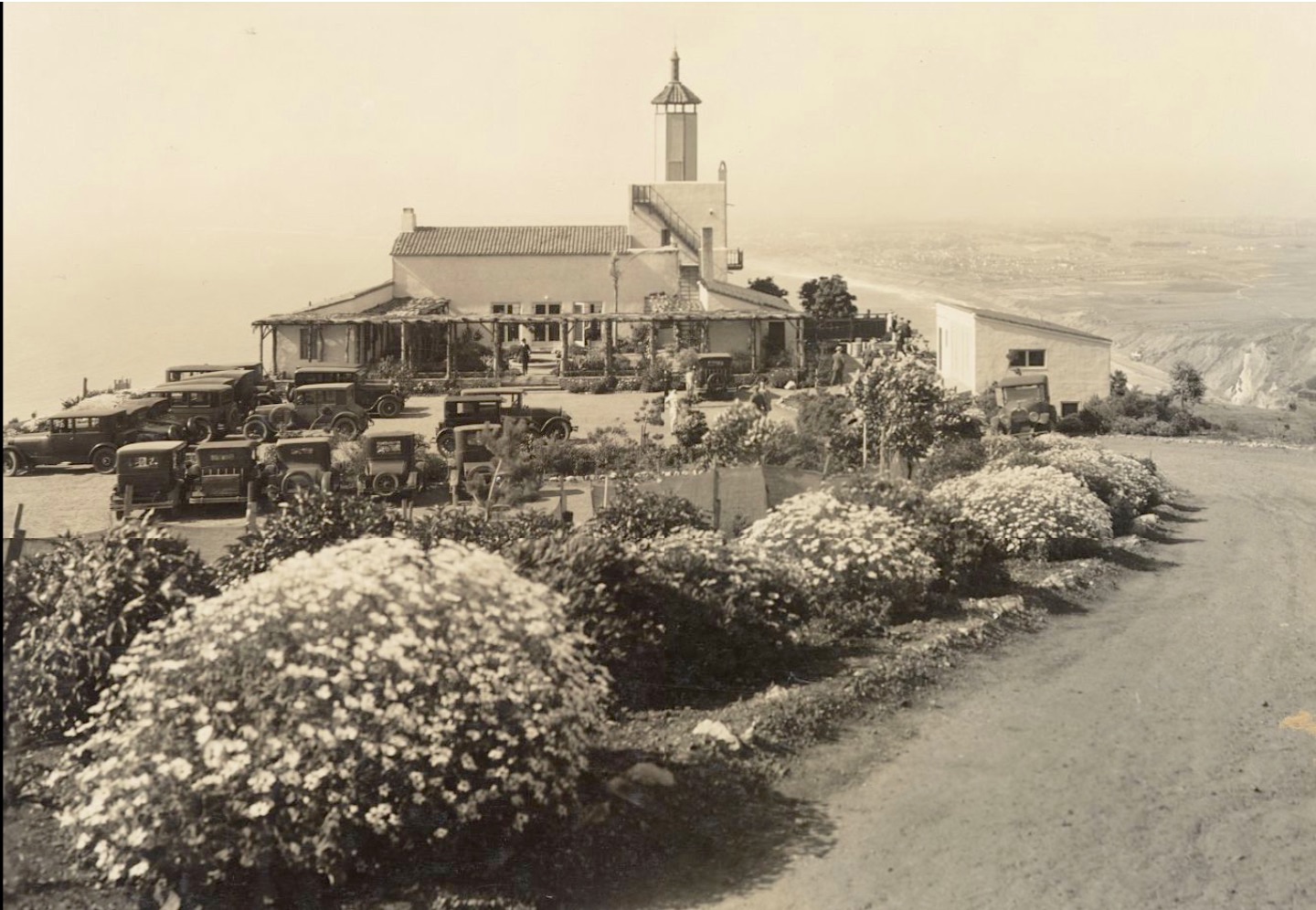
The view looking north at La Venta Inn. The garage, pergola-covered courtyard, and tower are visible, with coastline of Redondo Beach in background at right in this 1920s photo. Vintage autos ar parked in the lot, with the landscaped driveway visible in foreground at right. (Credit: Palos Verdes Public Library Digital Archives)

It originally was used as a place for real estate sales people and visiting land buyers to stay. Hopefully, the potential purchasers would be wooed by the beauty of the inn and its natural surroundings and be motivated to buy in to the development. 

E.G. Lewis

Its earlier name, “Clubhouse 764” was discarded in favor of La Venta, which literally means “the sale” in Spanish, though it also is a common name for roadside inns in Spain. 

Meanwhile, the plans set forth by Lewis under the name the Palos Verdes Project sparked controversy when his financing scheme began to collapse, and he withdrew from the project in early 1923. He declared bankruptcy the following year. 

Frank Vanderlip returned from back east to regain control of the development, reorganizing it as The Palos Verdes Project. The Project consisted of  bankers, real estate men and developers who met feverishly at the Hotel Redondo to hatch their new plan, which they launched successfully in 1924. 

The Inn itself was an immediate success. It could only accommodate a few overnight guests at a time, but it became very well known as an elegant dining experience. It was a popular stop from visitors throughout the Los Angeles area, especially more well-heeled ones.

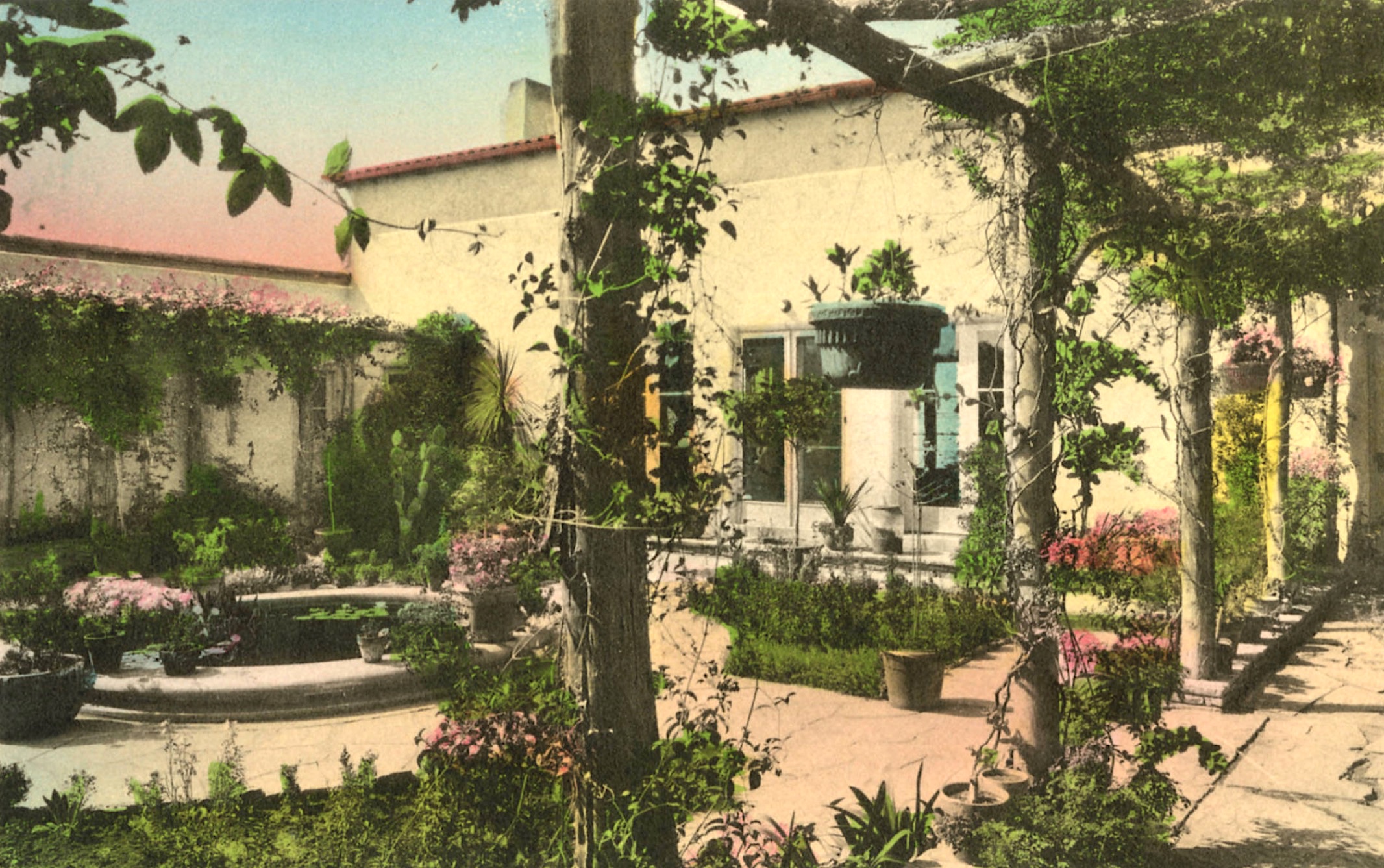
Postcard shows the Inn’s courtyard. Circa 1936.

One of its most enduring businesses — staging weddings — began with the first nuptials held there in early May 1924. The Inn quickly turned into a desirable location for couples to tie the knot, and remains so to this day.

An additional dining room was built in 1925, allowing the Inn to double its capacity for dinner guests. The Inn’s first owner, Jay Lawyer, a key Palos Verdes Project member,  and the restaurant’s first manager, Reba Willis, built its reputation, and soon visitors were arriving from foreign countries to see the picturesque, well-located structure.

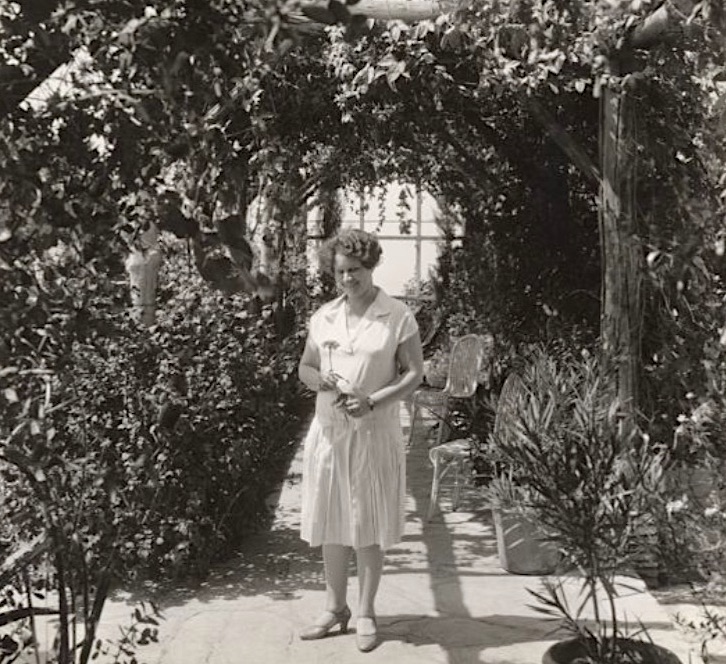
Manager Reba Willis stands in the courtyard of La Venta Inn. Willis managed the Inn from 1924-1941. Photo dated Nov. 26, 1926. (Credit: Palos Verdes Public Library Digital Archives)

Social events naturally gravitated toward La Venta Inn, at that time one of the only sites on the Hill capable of hosting them. In addition to weddings, a variety of dances, parties, galas and other upper-crust events were held there.

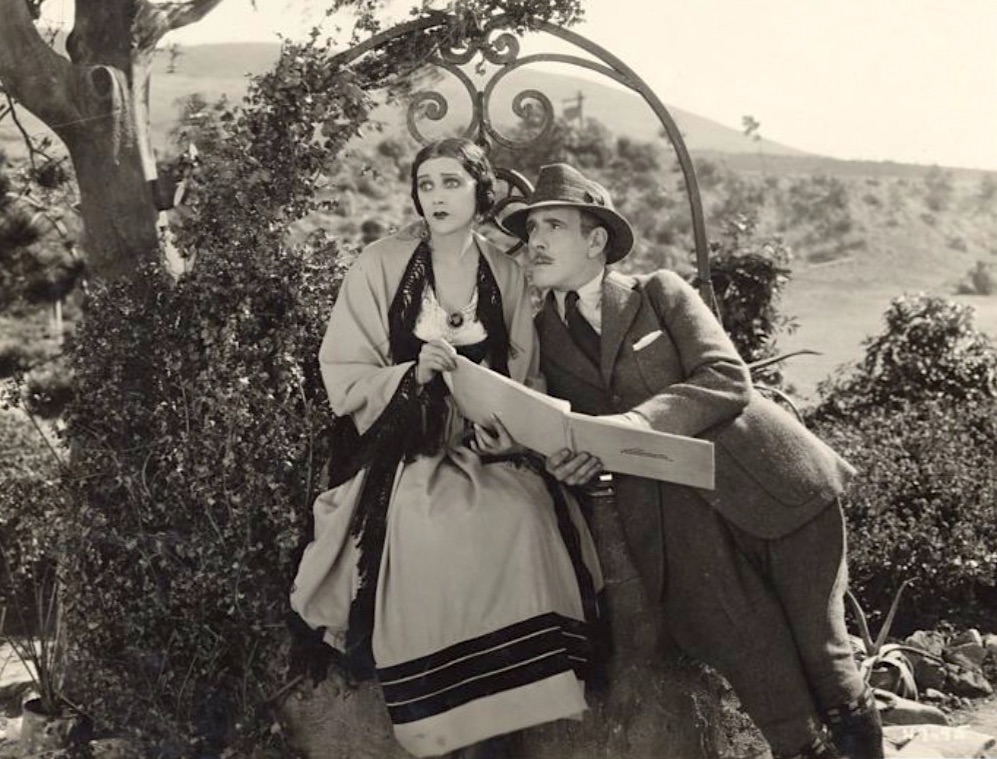
Hollywood also took notice. Filmmakers used the location for the first time for the silent film, The Girl From Montmartre, starring Lewis Stone and Barbara La Marr. Based on the novel Spanish Sunlight by Anthony Pryde, It was filmed at the Inn in 1925 and released in early 1926.

Publicity still from the silent film The Girl From Montmartre, filmed at the Inn in 1925. From left, the film’s stars Barbara La Marr and Lewis Stone. (Credit: Palos Verdes Public Library Digital Archives)

High-profile evangelist Aimee Semple McPherson, who would later become known for bilking devout churchgoers out of their savings, spent several days keeping a low profile at the Inn during 1926.

During the 1920s and 1930s, a long list of celebrities and movie stars frequented the Inn, considered to be a high-class hideaway for the rich and famous. Visitors included aviator Charles Lindbergh, violinist Jascha Heifetz, and movie stars Greta Garbo, Tyrone Power, Cary Grant, Gloria Swanson, Myrna Loy, Errol Flynn, Betty Grable, Margaret Sullavan, Charlie Chaplin, Janet Gaynor and Bob Hope.

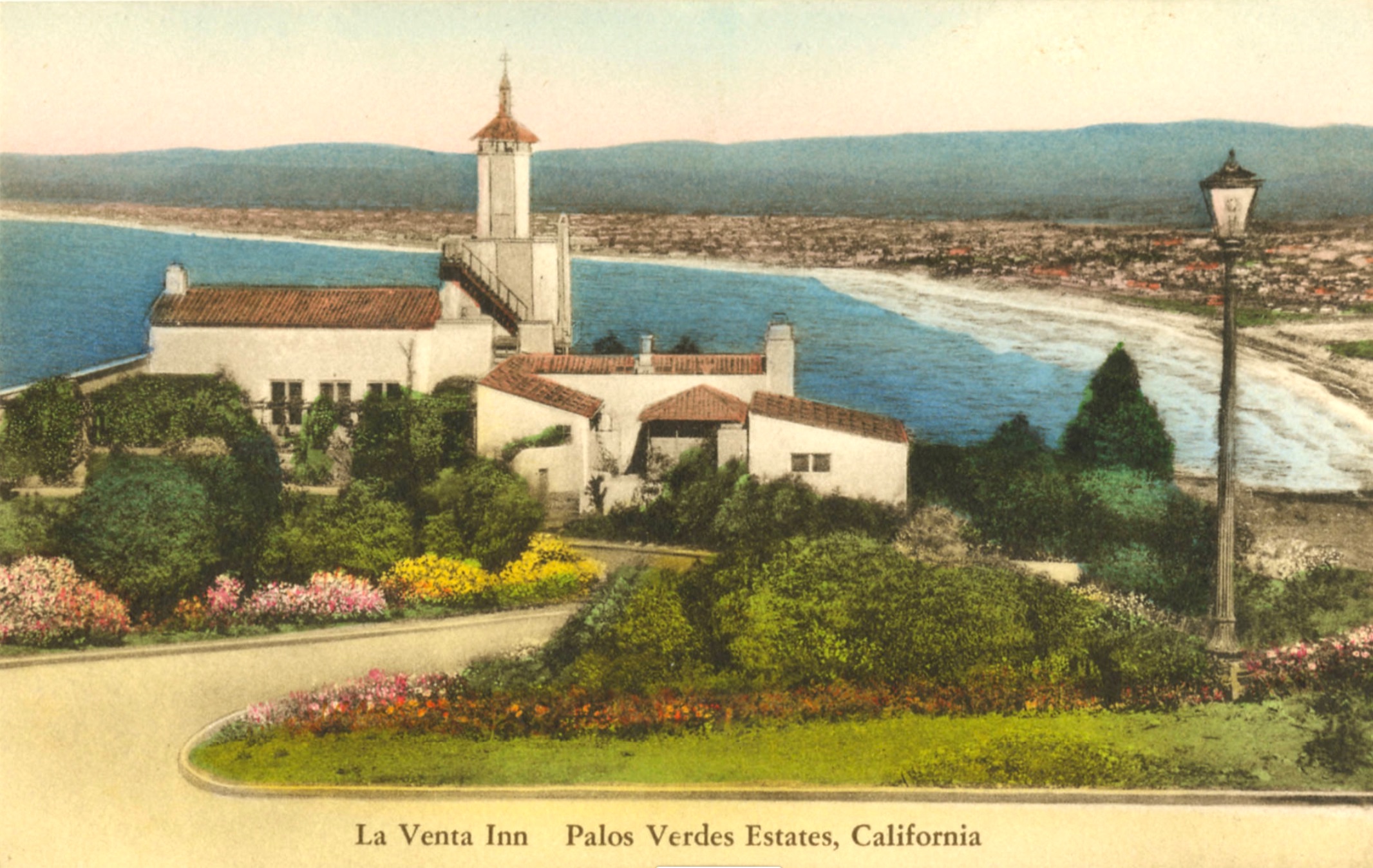
Postcard of the Inn, circa 1936.

The Inn became part of Palos Verdes Estates when that city voted to incorporate in 1939.

Jay Lawyer sold the property in 1941 to Broadway actor Frank Conroy after the Depression muted the Peninsula real estate boom he’d anticipated. World War II hurt business due to gas rationing restrictions, and Conroy eventually closed the Inn to the public.

The Inn’s location was used for military defense purposes after the war’s onset. On Christmas Day, 1941, eighteen days after the Dec. 7  Pearl Harbor attack, a lookout stationed in its tower reported seeing a periscope offshore.

A Japanese submarine had torpedoed the lumber-carrying freighter Absaroka the night before. The artillery battery at Fort MacArthur opened fire just as some residents were sitting down to Christmas dinner, leading them to think they were under attack.

No trace of the Japanese sub was found. The periscope apparently was a black chimney  that had blown off a ship during a recent storm.

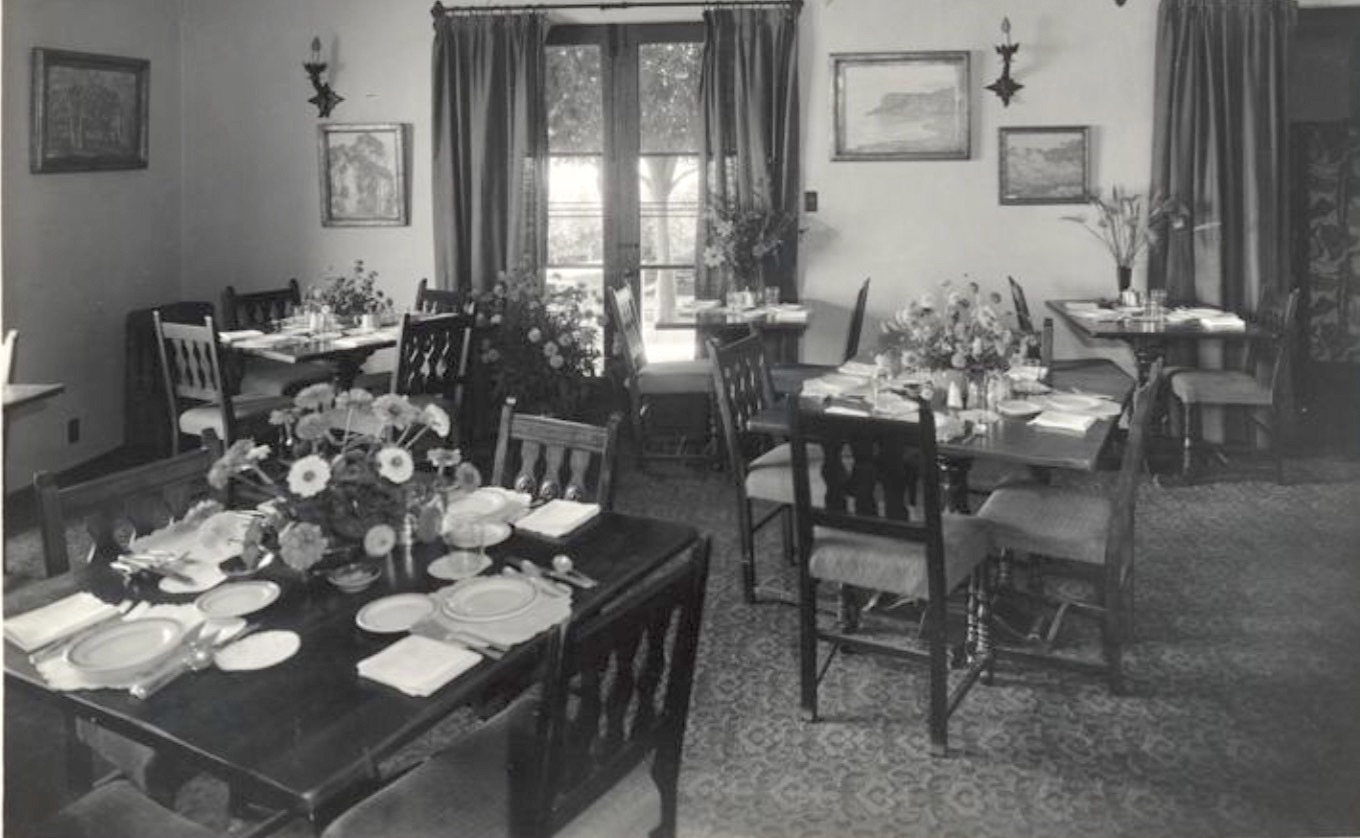
Interior view of the dining room at La Venta Inn. Undated, probably 1920s. (Credit: Palos Verdes Public Library Digital Archives)

Conroy sold the Inn to Stanley and Margaret Schnetzler in 1945, and the Schnetzlers used it as their private residence for several years. Mrs. Schnetzler became known for giving potential customers unaware of the Inn’s closure a cup of tea while she gently explained that the business was closed.

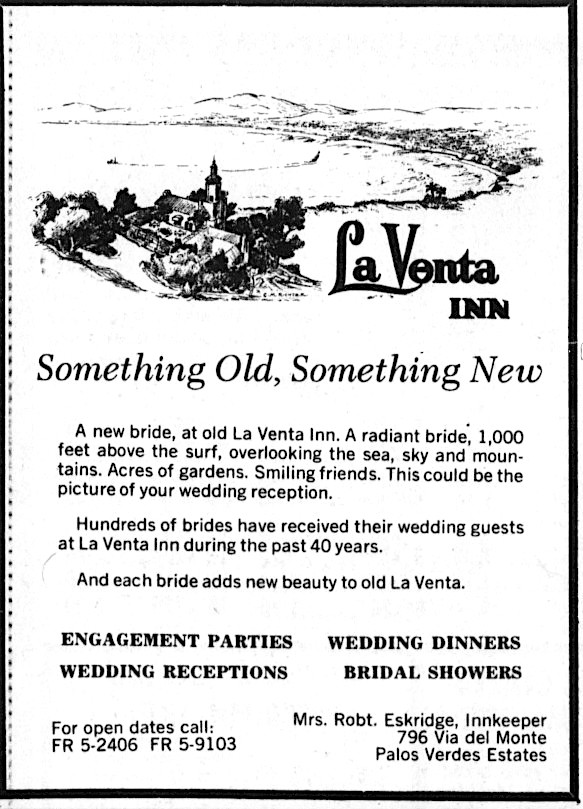
The Schnetzlers reopened the Inn in 1954, with Margaret taking over operations when  Stanley died in 1955. In 1966, the Schentzlers leased the operation of the property to William Eskridge and his family, who ran it for 26 years. 

In 1990, the La Venta Inn was designated a California Historic Resource by the state Office of Historic Preservation.

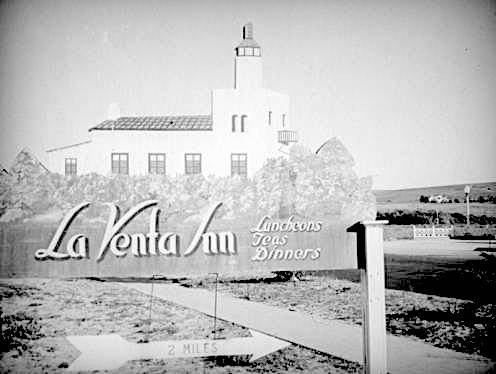
A roadside sign announcing the dining available at La Venta Inn features a die cut architectural rendering of the inn and its lush grounds. (Credit: Palos Verdes Public Library Digital Archives)

In 1992, the surviving Schnetzler family members opted to award the lease for La Venta to the Hermosa Beach-based New York Food Co., which continues to manage the facilities and events there.

The company took some heat in 1994 when nearby residents complained vociferously about the noisiness of weekend weddings at the Inn. Management made some changes to control the noise, and the storm subsided.

Weddings and special events continue to keep La Venta Inn thriving as it nears its 100th anniversary in 2023..

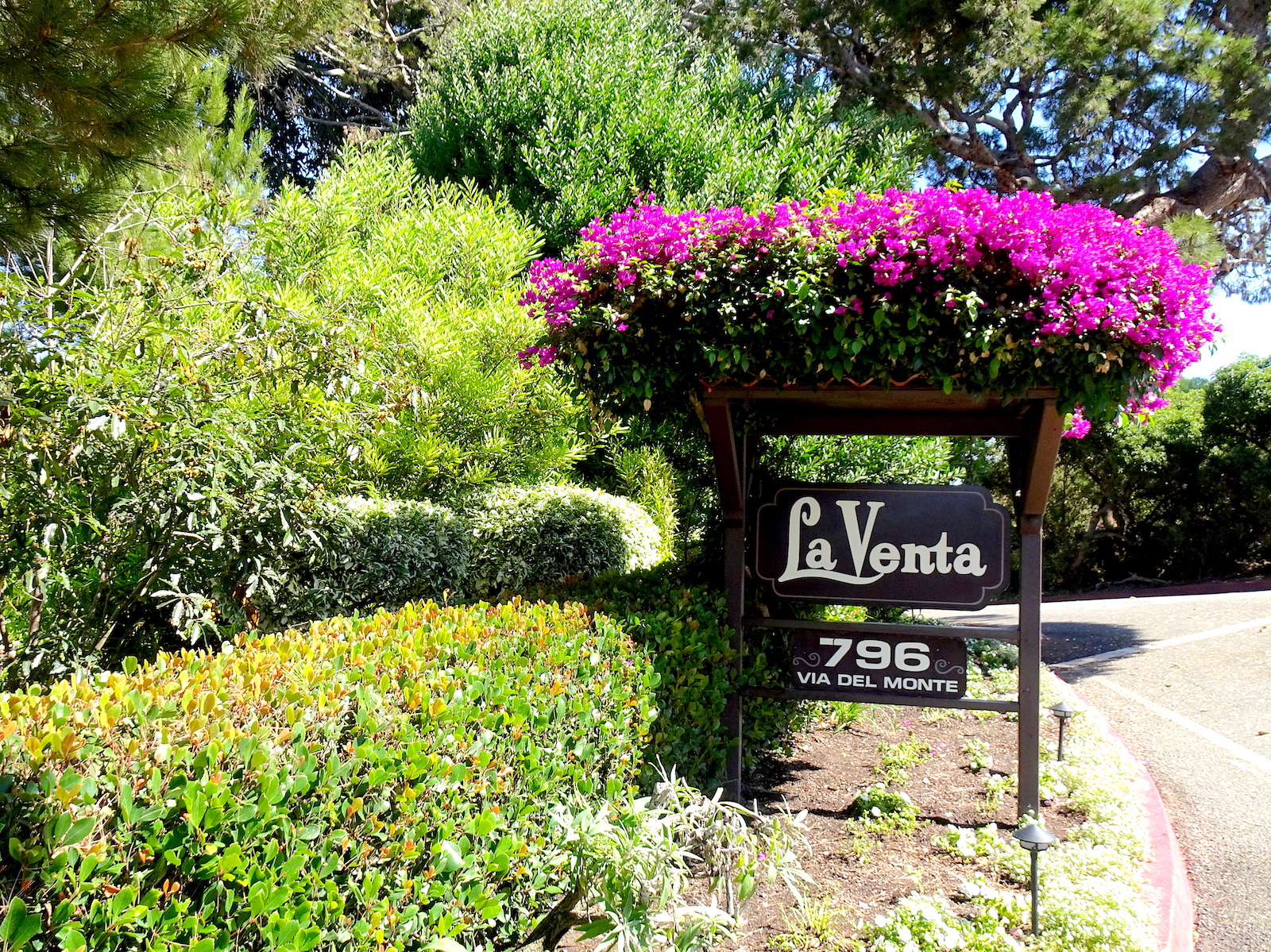
The subtle sign on Via Del Monte at the entrance to the La Venta Inn. (October 2019 photo by Sam Gnerre)

Sources:

Daily Breeze files.

“The History of La Venta,” La Venta Inn website.
Hollywood Riviera Tribune files.

Los Angeles Times files.

Palos Verdes Peninsula files.

The Palos Verdes Story, by Delane Morgan, Review Books, 1982.

Hollywood Riviera Tribune ad, March 1, 1967, Page 7.

Wilmington Hall wartime housing project became a happening place to live

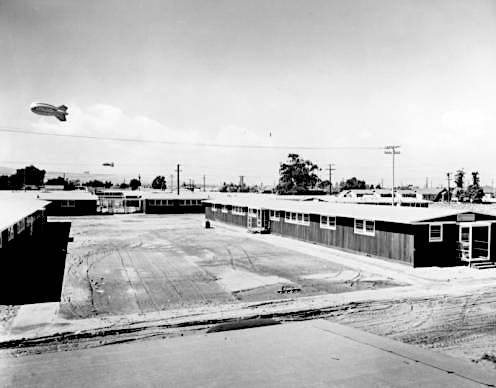
Panoramic view of the Wilmington Hall housing development for war workers in Wilmington. Note the barrage balloons which offered protection from enemy dive bombers. Undated photo circa 1942-45.  (Credit: Los Angeles Public Library Photo Collection)

Before the U.S. officially entered World War II, its federal government already was preparing for the possibility.

In March 1941, the War Department had taken over the Panama Pacific Terminal on Terminal Island to use for military purposes.

After Pearl Harbor, it commandeered land for a military hospital in Harbor City, and a good-sized chunk for a military base, Camp Ross, that would serve as a collection and departure point for soldiers heading overseas. After the war, the hospital became Harbor General and the base became Los Angeles Harbor College.

In early 1942, the U.S. government also realized the need for temporary housing for large numbers of  servicemen with families, defense workers and others involved with our massive military effort. The newly formed Federal Public Housing Agency (FPHA) announced the construction of several projects in the Los Angeles area.

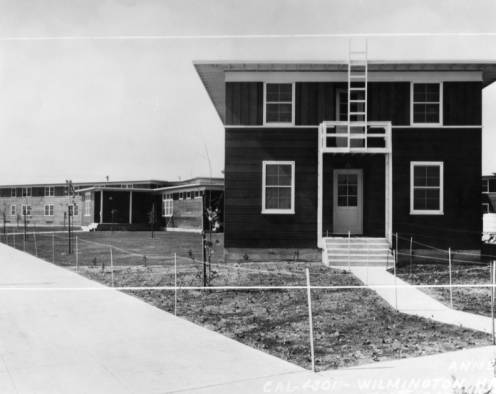
Typical housing buildings at the Wilmington Hall housing development for war workers in Wilmington. Undated photo circa 1942-45. (Credit: Los Angeles Public Library Photo Collection)

Construction on one of them, the Wilmington Hall Dormitories, began in May 1942. (The complex’s name later was shortened to “Wilmington Hall,” with some headline writers chopping it even further to simply, “Wilhall.”)

Wilmington Hall was located on 39 acres appropriated by the FPHA, roughly between C and F streets, and Island and Bay View avenues on the east and west. Original plans called for 70 buildings with at least 3,000 rooms to be built at a cost of $726,000.

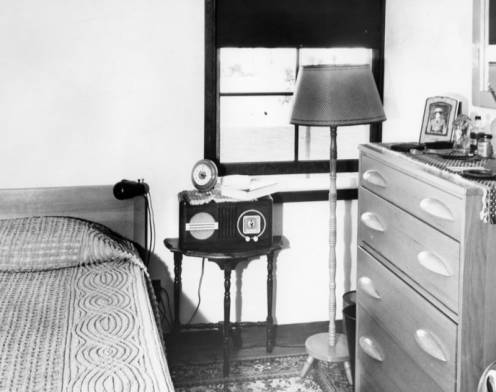
A dormitory room at Wilmington Hall. Undated photo circa 1942-45.  (Credit: Los Angeles Public Library Photo Collection)

Achitects Lewis E. Wilson and Armand Monaco and landscaper Fred Barlow, Jr. were hired to design the massive project, which started calling itself “the largest hotel in the world.” Zoss Construction Co. of Los Angeles became the Hall’s primary contractor.

Construction of such projects during wartime became a top priority, and Wilmington Hall announced that its first 500 rooms were ready for occupancy on Sept. 1, 1942.

Dedication for the entire project was held on Nov. 15, 1942. Two other projects still being built also were dedicated: Channel Heights just north of Peck Park and Banning HOmes on N. Gaffey St. in San Pedro. (Both were torn down after the war ended.)

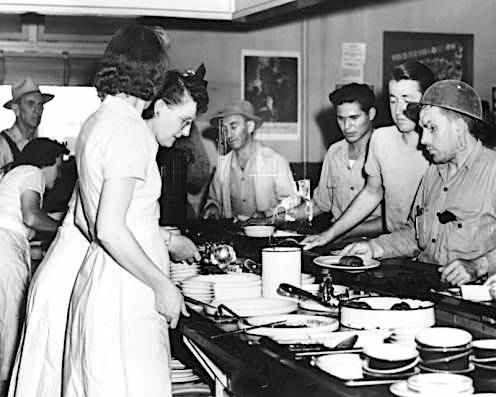
The cafeteria at Wilmington Hall. Undated photo circa 1942-45. (Credit: Los Angeles Public Library Photo Collection)

Country entertainer Stuart Hamblen and folksy actor Cliff Arquette (creator of the Charley Weaver character later seen on “Hollywood Squares”) performed before an estimated 1,000 people at the dedication.

The planners of Wilmington Hall put a lot of thought into what life would be like for those who lived there. They invested heavily in recreation facilities, including a 2,000-seat multi-use auditorium capable of hosting dances, radio broadcasts, lectures and special programs, first-run screenings of theatrical films, and live performances by entertainers.

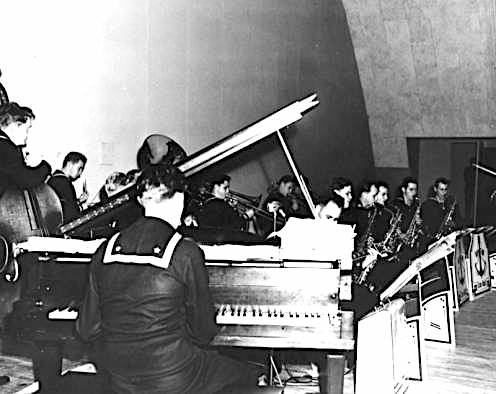
A sailors’ band performs in the auditorium at the Wilmington Hall housing project for war workers. Undated photo circa 1942-45. (Credit: Los Angeles Public Library Photo Collection)

The auditorium also served as a gymnasium, with basketball courts and the capability for volleyball and badminton, as well as a full complement of exercise equipment.

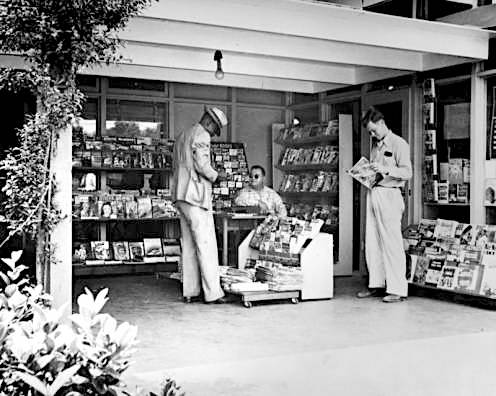
There were adjacent classrooms, as well as a library and reading lounge with fireplace, a large cafeteria, soda fountain, newsstand and barber shop. Outdoor facilities included six softball diamonds that could also accommodate soccer and lacrosse, along with horseshoes and shuffleboard courts.

Wilmington Hall also had its own newsstand. Undated photo circa 1942-45. (Credit: Los Angeles Public Library Photo Collection)

The original rental rates were set at $5.50 per week for singles and $8.00 per week for doubles. The rent also included 24-hour-a-day on-site health care. 

Wilmington Hall quickly filled up, including several units earmarked for single women workers, and its members availed themselves of the recreational opportunities. Softball and basketball leagues thrived, with fierce competition arising with teams from neighboring military outposts.

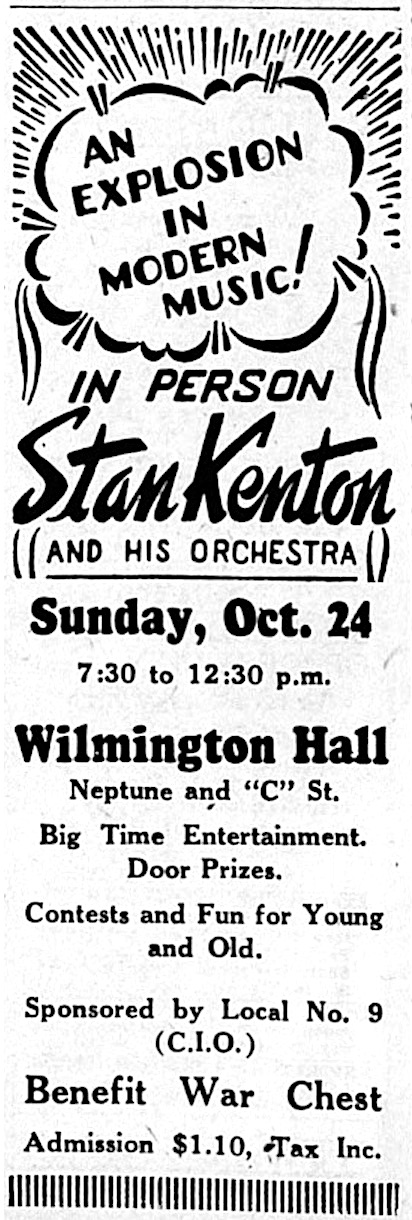
San Pedro News Pilot, Oct. 23, 1943, Page 6.

Friday night dances at the auditorium, which opened with a New Year’s Eve dance in 1942, also became hugely popular. The venue attracted a long list of swing and dance bands for the lively festivities, including those led by Xavier Cugat, Stan Kenton, Jack Teagarden, Bob Crosby and Alvino Rey, among many others.

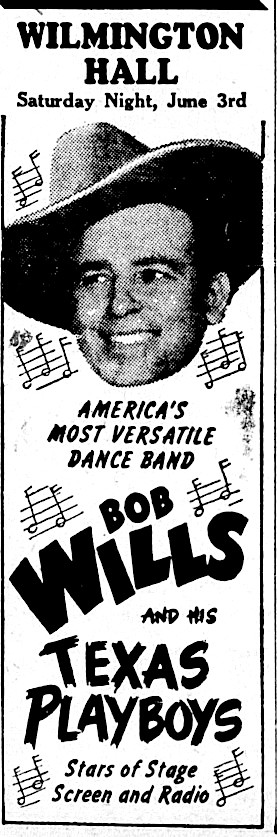
San Pedro News Pilot, June 2, 1944, Page 2.

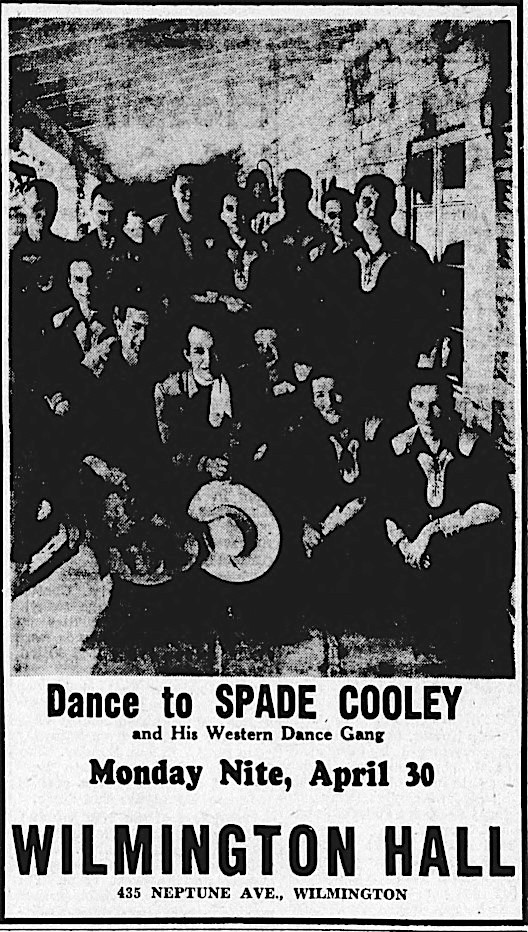
Western barn dance promoter Foreman Phillips also booked some of the top Western swing acts of the day. Among those who played the hot new style at  Wilmington Hall were Western swing legend Bob Wills and his Texas Playboys, Spade Cooley and his orchestra and Tex Ritter, as well as local favorite Texas Jim Lewis and his Lone Star Cowboys.

Perhaps the most eye-catching performance at Wilmington Hall was the April 19, 1945, war bond rally sponsored by the ILWU. Over $11,000 worth of bonds were sold during an evening which included, in addition to movie star Cesar Romero, the legendary singer Billie Holliday.

Temporary wartime housing sites such as Wilmington Hall were designed with an eye toward converting them to permanent housing after the war ended.

In late 1945 and early 1946, there was much discussion about how to proceed in adapting Wilmington Hall for civilian use. With the return home of U.S. military forces, the need for housing was acute.

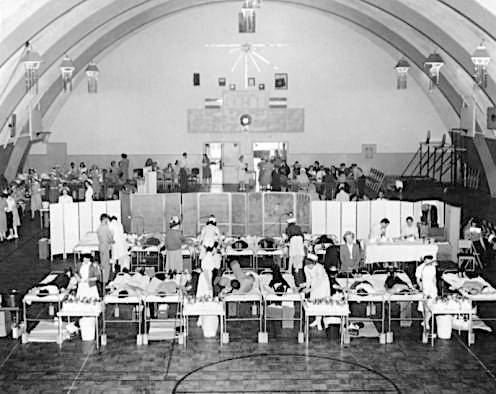
Blood donors in the auditorium at the Wilmington Hall wartime housing project for defense workers in Wilmington. Undated photo circa 1942-45. (Credit: Los Angeles Public Library Photo Collection)

But the plan to convert the housing units into permanent residences began to lose steam when funding was delayed in August 1946.

The buildings were razed not long afterwards. In December 1949, the lands taken by the government in the Wilmington Hall area were returned to the city of Los Angeles for civilian use. 

All the buildings were gone, except for one. The city had extracted a promise from the FPHA during the war that the auditorium would be preserved and allowed to be used as a recreational center. The feds kept their word.

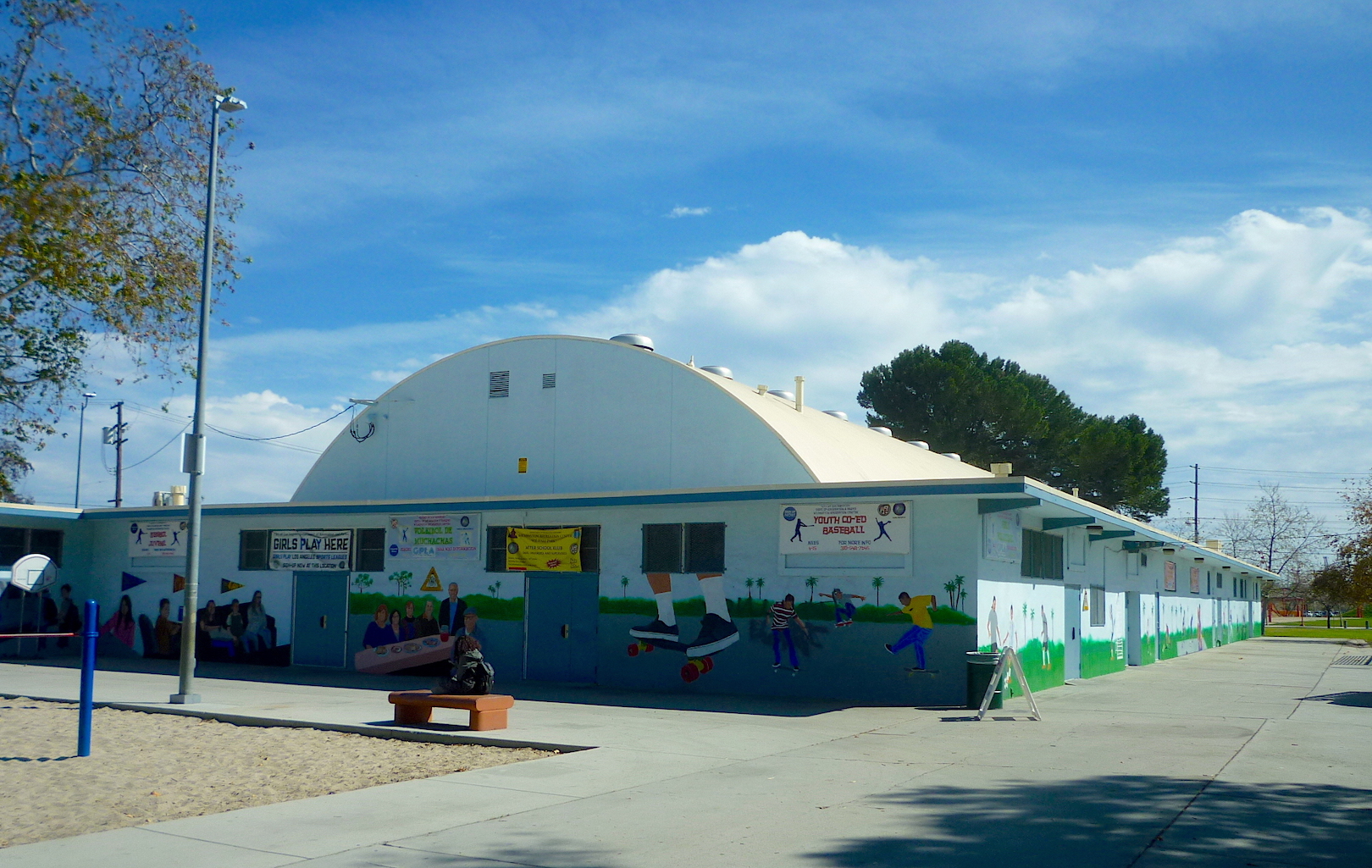
Shortly after the land was returned, the Wilmington Recreation Center opened. Also known as Will Hall Park, it remains one of the most popular community recreational facilities in the area. The Rec Center auditorium, the large quonset-hut style structure which once hosted big band and Western swing concerts, remains its hub to this day.

The Wilmington Recreation Center building served as the Wilmington Hall auditorium during World War II. (March 2018 photo by Sam Gnerre)

Sources:

“Banning Homes,” 1947 Project: The original Los Angeles time travel log, Jan. 16, 2006.

“Garden Apartments of Los Angeles: Historic Context Statement,” by Architectural Resources Group, Los Angeles Conservancy,  October 2012.

Los Angeles Times archives.

San Pedro News Pilot archives.

San Pedro News Pilot, April 30, 1945, Page 2.

San Pedro’s Toberman Community Center has helped the needy for more than a century

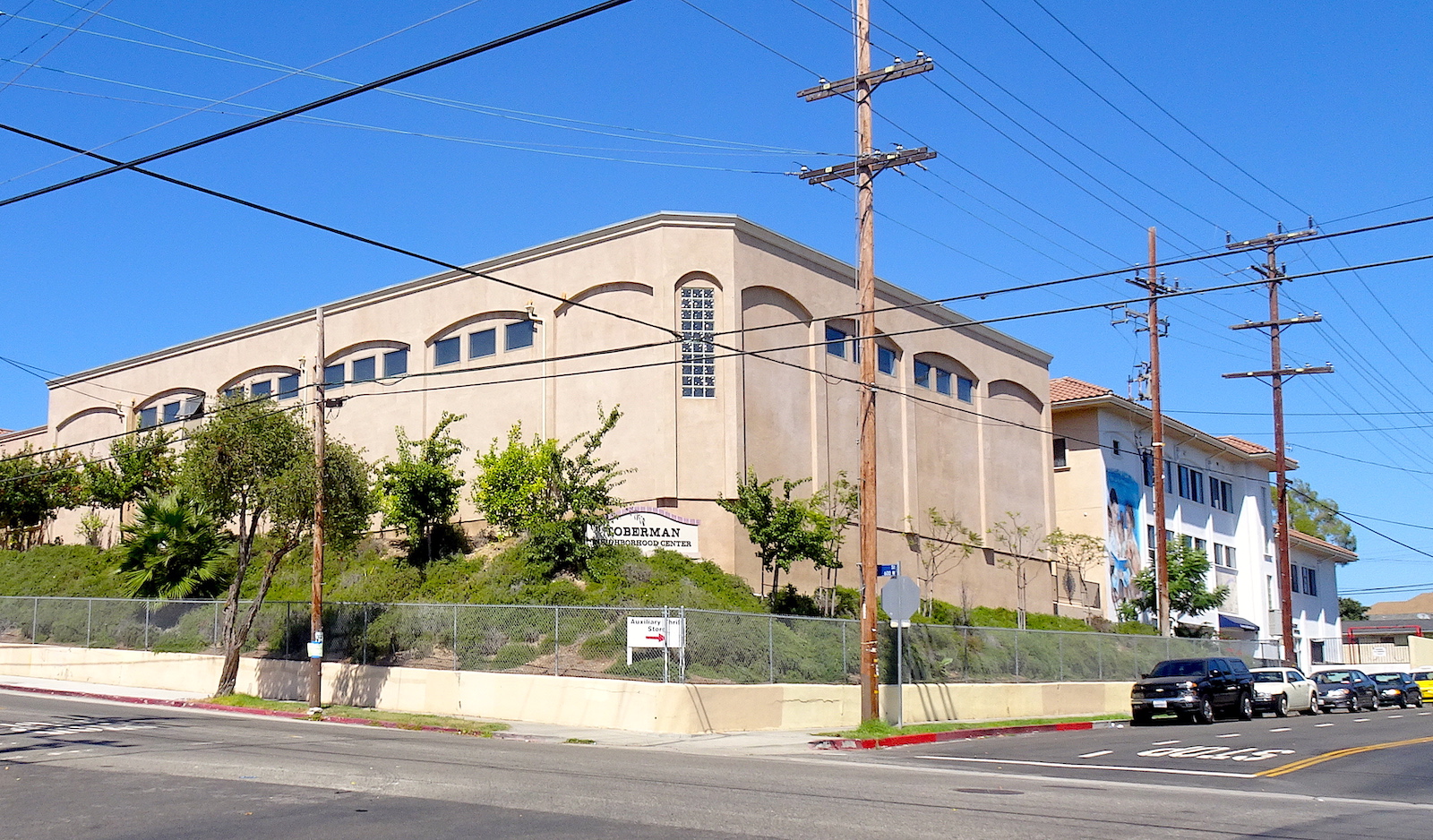
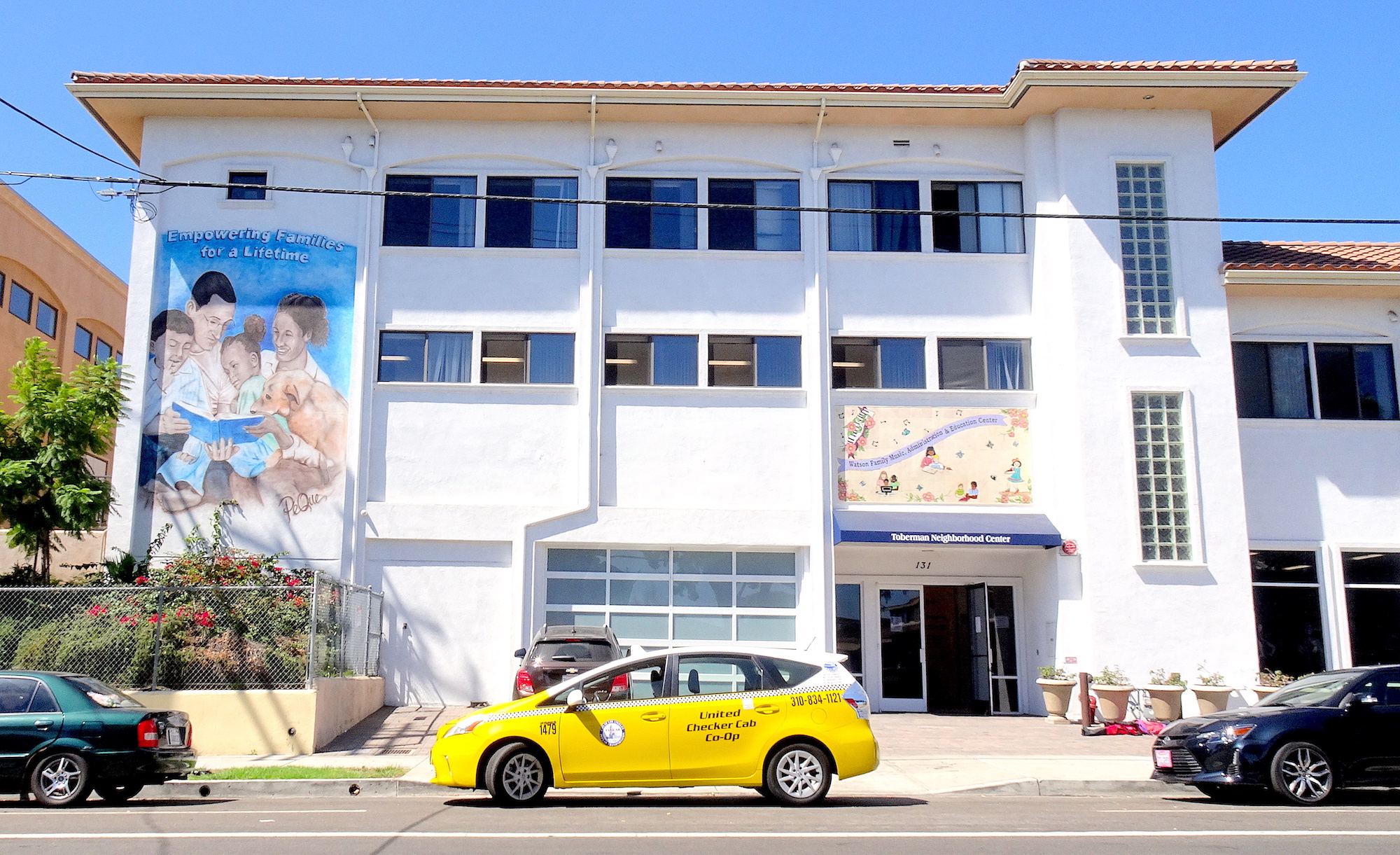
The Toberman Neighborhood Center main building at 131 N. Grand in San Pedro. The motto on the mural at left reads, “Empowering Families for a Lifetime.” (Sept. 2019 photo by Sam Gnerre)

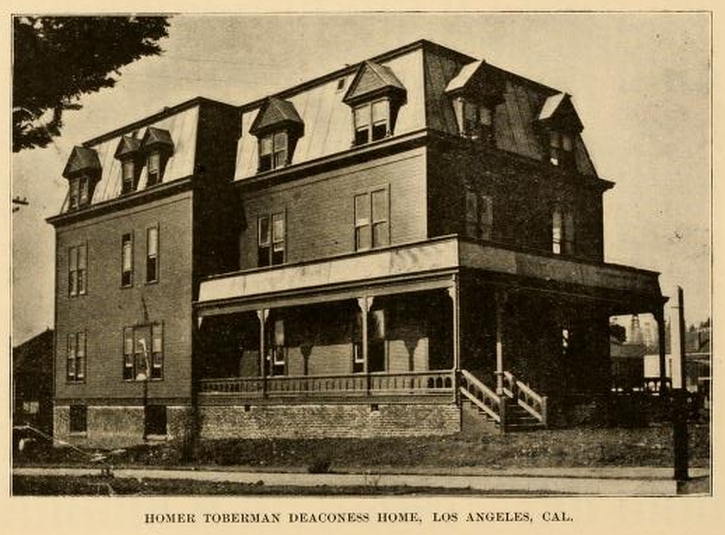
James R. Toberman founded the Homer Toberman Deaconness Home and Hospital at Sunset Boulevard and Custer Ave. in Los Angeles in 1903. (A deaconness is a female Protestant church deacon.)

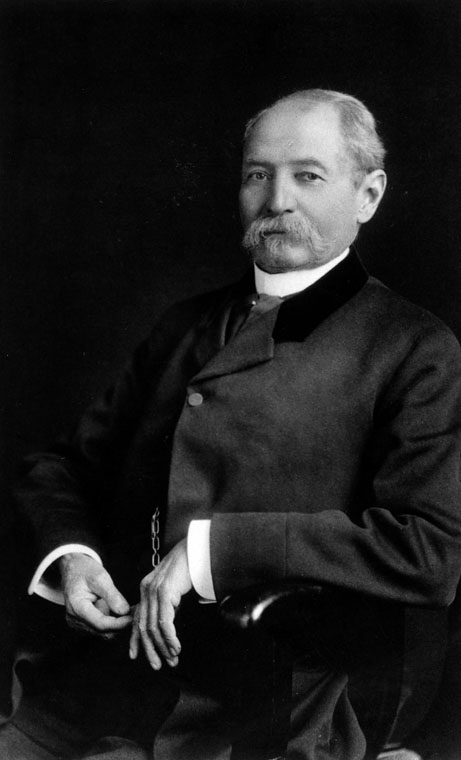
James R. Toberman

Born in 1836, Toberman had come to Los Angeles from Virginia in 1864 when President Lincoln  appointed him a government revenue assessor for the area. He would go on to win six one-year terms as mayor of Los Angeles (1872-74 and 1878-82). He died in 1911.

During his tenure, he oversaw many developments in the city, including the founding of the Chamber of Commerce and the Los Angeles Herald newspaper. Streets began to be paved, new electric lights and telephone lines were installed and the city’s first water and sewer systems were designed.

Toberman and his wife, Emma, named the center in memory of their son, Homer, who died from the flu at age 28 in 1901. The center’s original services included housing for working women, a dental clinic and various services assisting newly arrived immigrants and transients..

Operated by the Women’s Division of Christian Service of the Board of Missions of the Methodist Church, the center moved to 115 N. Grand Ave. in San Pedro in 1937. (Its current address is 131 N. Grand.) A committee of San Pedro citizens lobbied for the move to a site in the community’s Barton Hill area.

The original Homer Toberman Deaconness Home and Hospital on Sunset Blvd. in Los Angeles. Undated photo circa early 1900s. (Credit: Skyscraper.com website)

Buildings on adjoining land were added in 1942 and 1945 to keep up with the demand for services. At the time, an estimated 800 people daily availed themselves of the center, which was renamed the Homer Toberman Settlement House.

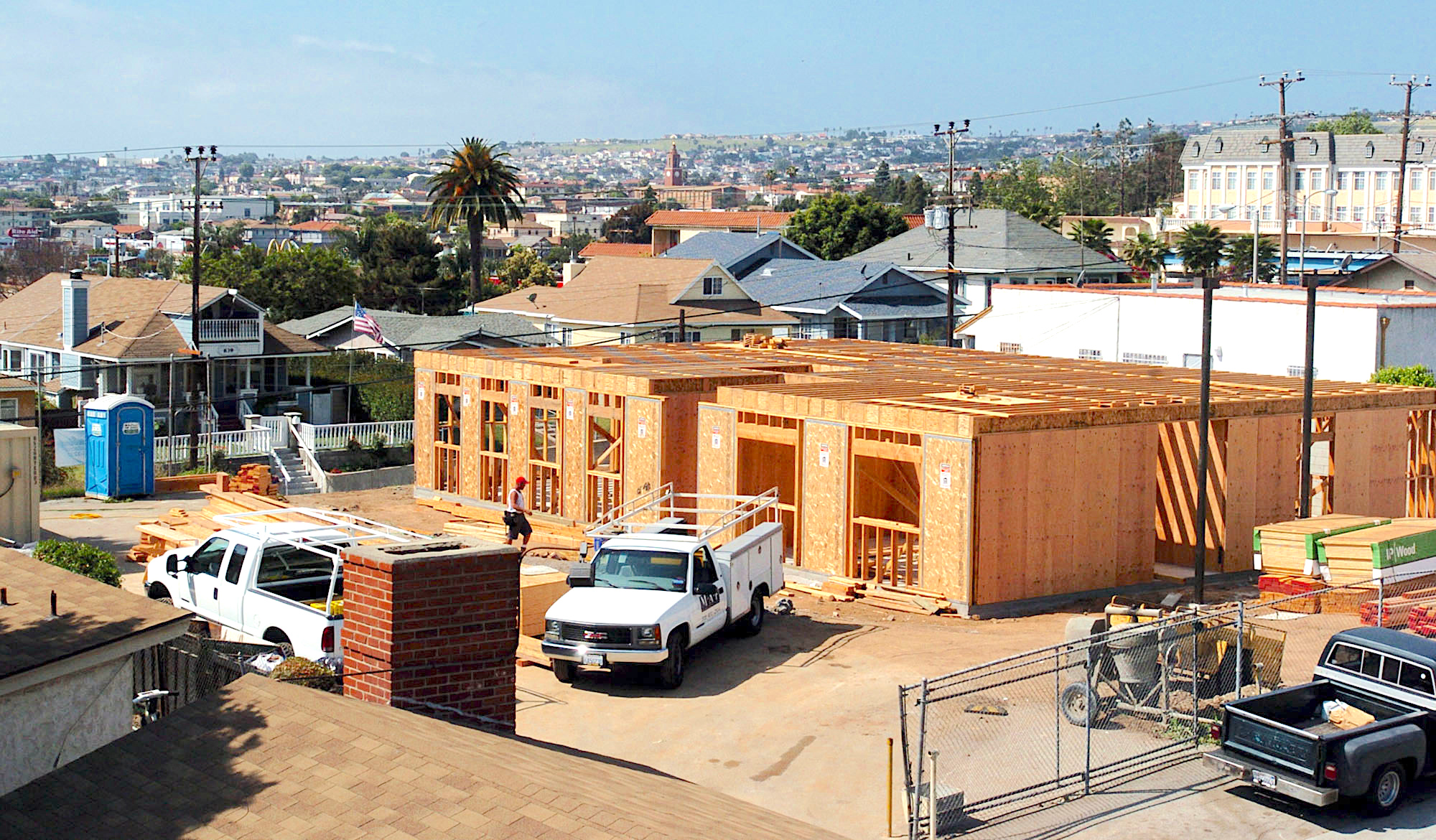
Construction on the expansion project at Toberman Neighborhood Center is in full swing on April 14, 2004. (Daily Breeze staff file photo)

Most of the original wood-frame buildings were replaced by new structures in a major $100,000 renovation in 1952 that included a new gymnasium. The revamped Toberman facility was dedicated on Sept. 28, 1952; it would celebrate its 50th anniversary a year later in November 1953.

Over the years, Toberman Settlement House would broaden its mission to include providing food and clothing for the needy, information on finding jobs, classrooms for language and vocational education and Head Start programs, and a wide range of additional child, young adult and family services.

Though it continues to be partially funded by the Methodist Church, its services offered to anyone in need, regardless of religious or social standing. The center conducts gang outreach programs, offers teenage pregnancy assistance and child care services and a variety of services to the homeless.

It also spawned a housing advocacy organization. The Barton Hill Neighborhood Association grew out of a group that met at Toberman, and has worked on a variety of fair housing and rent issues in the area.

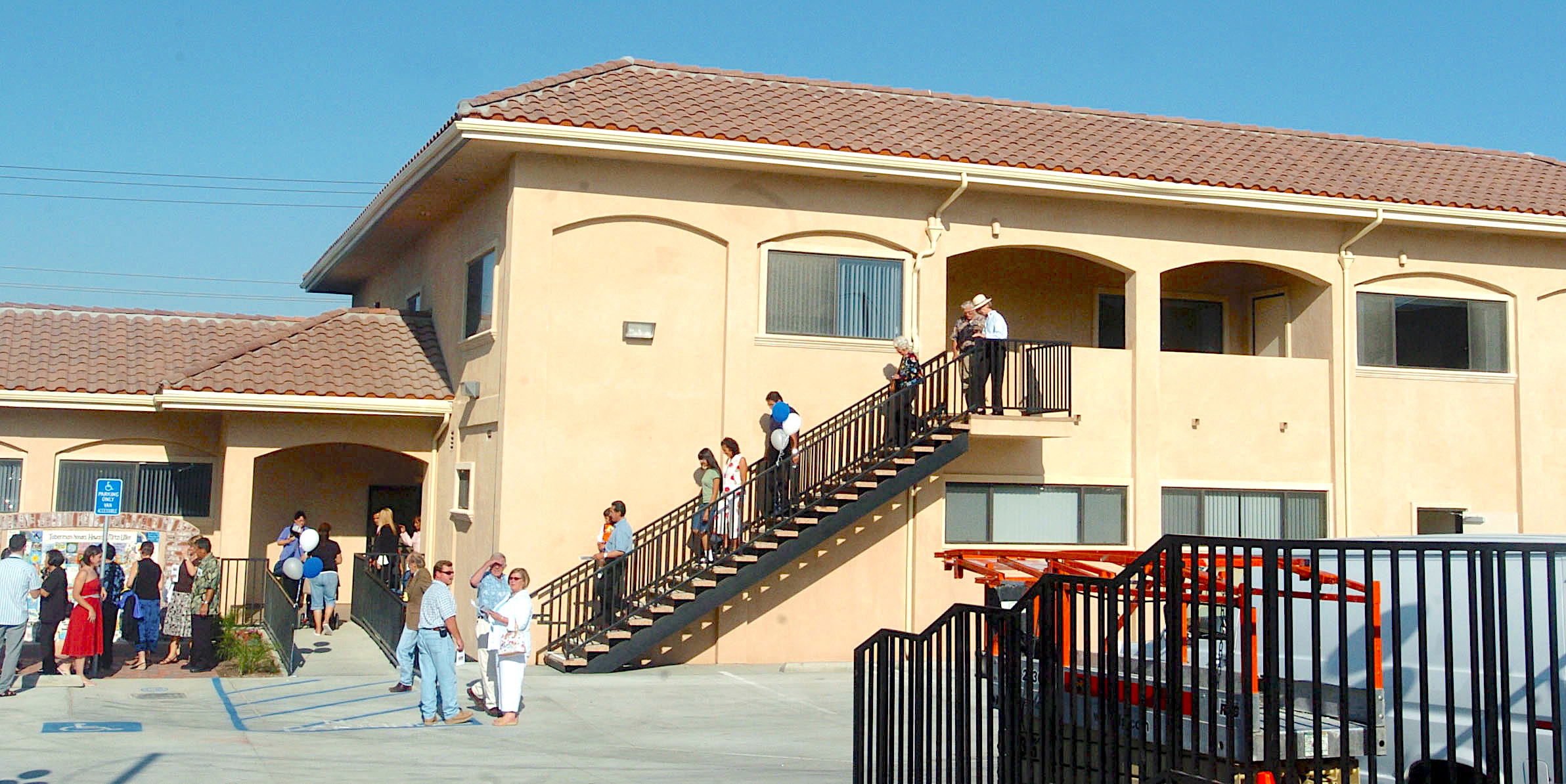
Members of the community tour the Toberman Neighborhood Center as it unveils its newest facility at the San Pedro property on June 28, 2007. (Daily Breeze staff file photo)

The Toberman Neighborhood Center took more giant strides after celebrating its 100th anniversary in 2003. In November of that year, it announced plans to tear down most of its facilities and build a new $6 million community center.

In 2006, the United Way of Greater Los Angeles gave Toberman Settlement House its Nonprofit of the Year award. Toberman by then had become  Los Angeles’ oldest continuously operating charitable organization.

The new buildings opening on June 28, 2007. A name change came along with them; the Toberman Settlement House became the Toberman Neighborhood Center, now a 36,000-square-foot facility.

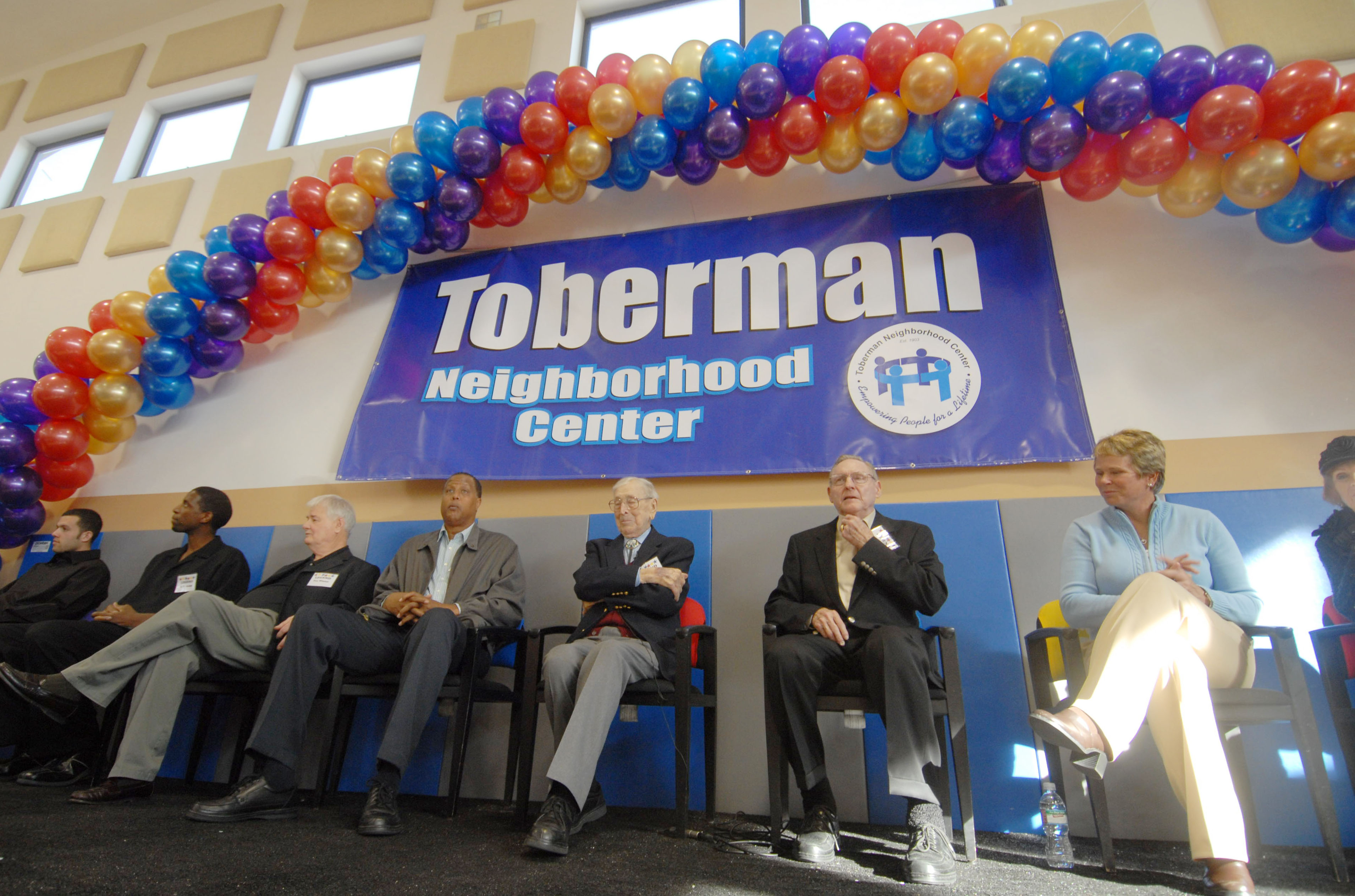
The organization has become known for its annual gala dinner held annually each January. Recent editions have had sports themes. A basketball themed dinner in 2008 included legendary UCLA Coach John Wooden, women’s basketball star Ann Meyers Drysdale, and Lakers Bill Sharman, Tex Winter, Jamaal Wilkes, A.C. Green, Keith Erickson, Luke Walton, Derek Fisher and Jordan Farmar.

Basketball greats at the Toberman Neighborhhod Center’s 2008 fundraiser included, from left, Jordan Farmar, A.C. Green, Tex Winter, Jamaal Wilkes, John Wooden, Bill Sharman and Ann Meyers Drysdale. (Daily Breeze staff file photo)

2009’s dinner featured a baseball theme, and included Tommy Lasorda, Vin Scully, Don Newcombe and Sparky Anderson.

Events such as these, along with support from the Methodist Church and various other charitable grants and funding sources, allow Toberman Neighborhood Center to continue helping the community cope with some of life’s most serious problems, including drug and alcohol abuse, AIDS, gang warfare, homelessness, poverty and child abuse.

Among its many other programs, Toberman annually fulfills thousands of requests for social services to low-income individuals and families in the South Bay-Harbor area.

The Toberman Neighborhood Center auditorium/gymnasium building at the corner of 1st St. and Grand Ave. in San Pedro. (Sept. 2019 photo by Sam Gnerre)

Sources:

Daily Breeze files.

Find A Grave website.
Los Angeles Herald files.

Los Angeles Times files.

“Noirish Los Angeles,” SkyscraperPage Forum website.
Wikipedia. 

FDR forced to send in military during 1941 North American Aviation strike

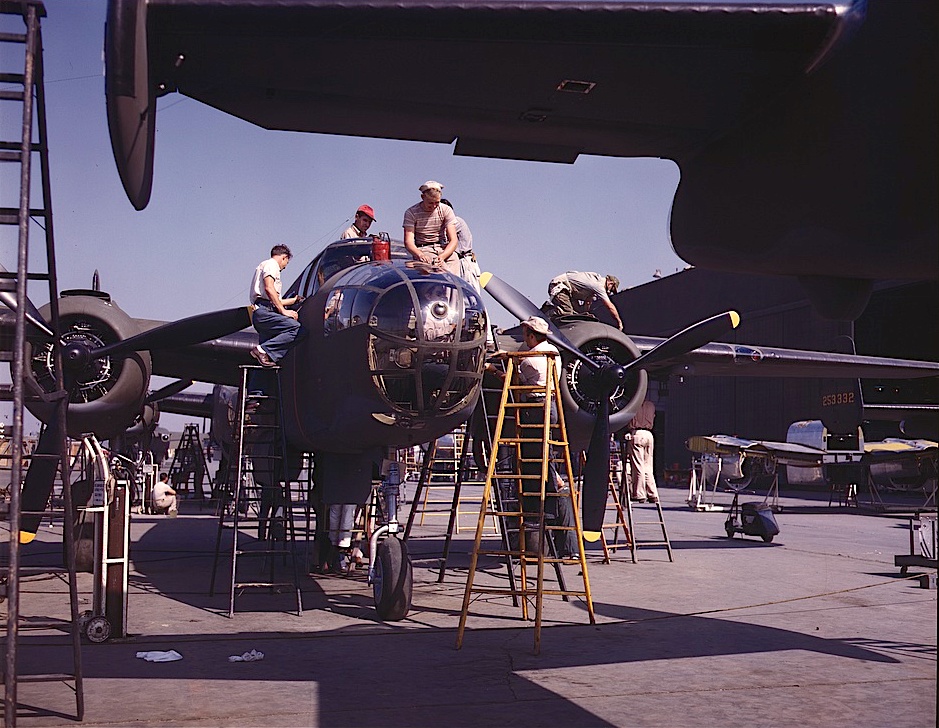
Employees on the outdoor assembly line at North American’s Los Angeles plant put the finishing touches on another B-25 bomber in October 1942. Photo by Alfred T. Palmer. (Credit: Library of Congress, Prints and Photographs Division)

In a post from 2011, I wrote about North American Aviation, the defense company headquartered just southeast of LAX in Los Angeles (then known as Los Angeles Municipal Airport) from 1936 to 1967. In the story, I briefly mentioned the June 1941 strike at the plant, but it’s worth a closer look.

Just six months before Pearl Harbor brought the U.S. into World War II, North American’s crucial aviation defense production, in the process of ramping up even before America entered the war, came to a standstill that brought about national repercussions.

The strike was fomented by organizers of the Congress of Industrial Organizations (CIO), a national labor coalition founded by John L. Lewis of the United Mine Workers in 1935. The CIO recently had split off from the American Federation of Labor (AFL) over a disagreement in union tactics. (After years of bitterness between them, the organizations would merge to form the AFL/CIO in 1955.)

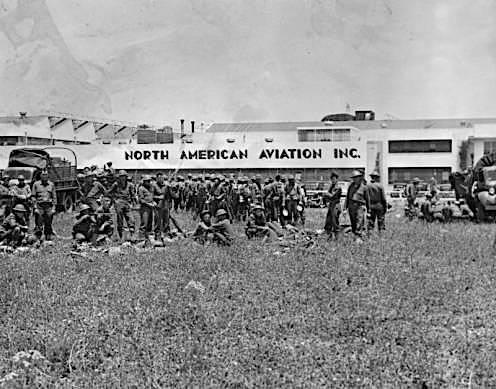
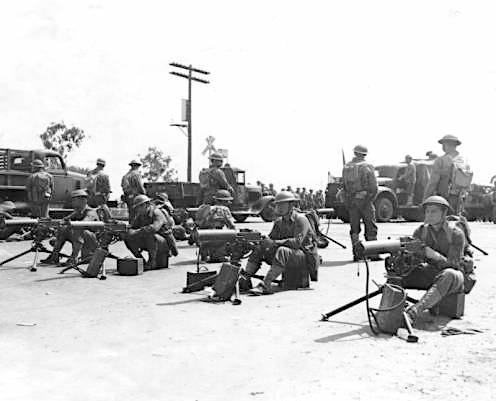
Some of the more than 3,000 troops at the strikebound North American Aviation plant are shown at their camp on the grounds, lining up for chow. The Army set up machine gun posts and used armored cars to clear the way for returning workers. June 10, 1941 photo. (Credit: Los Angeles Public Library Photo Collection, Los Angeles Herald Examiner archive)

But in the late 1930s, the CIO favored a decidedly more activist stance than the AFL. One of its agitators, William Busick, convinced workers at the Northrop aviation plant just across Imperial Highway. from North American, to go on strike for better wages on Feb. 23, 1937.

The strike was settled a week later, but Busick and his cohorts continued to work hard to recruit employees at North American and other defense plants to join the CIO.

Another aircraft industry strike on Nov. 15, 1940, this one at the Vultee Aircraft plant in Downey, also was settled within a few days, but tensions ran high. After the settlement, Texas Congressman Martin Dies accused four labor officials involved in the strike of being Communist subversives who were attempting to sabotage the American defense industry.

A couple days after that, the CIO announced that it would begin a campaign targeting North American after company officials disputed whether the union had enough members to act as the sole collective bargaining agent for the plant’s workers.

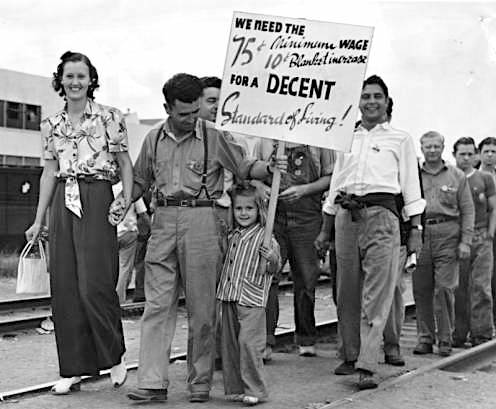
Johnny Hall, an aircraft worker at the North American aviation plant in Los Angeles, brought his family to join the picket line outside the plant. At left is Mrs. Hall. With them is their 5-year-old daughter, Jackie, holding a placard which bears the strikers’ demand of 75 cents an hour in their wage fight. Photo dated June 9, 1941. (Credit: Los Angeles Public Library Photo Collection, Los Angeles Herald Examiner archive)

The union wanted a minimum wage increase from 50 cents to 75 cents an hour, and an across-the-board 10-cents-per-hour raise for all employees. Negotiations had begun on April 16, 1941, after the National Labor Relations Board ruled in favor of the CIO as bargaining agent.

Talks stalled by late May, with increasing strike threats coming from the union. It held a strike vote on May 23. With little more than half the plant’s 11,000 workers voting, the results were overwhelmingly in favor of striking; only 210 votes were cast against it.

The strike was delayed while the matter went to mediation. The plant was closed for a three-day holiday over the Memorial Day weekend in an attempt to cool tensions, but the union planned to strike on Tuesday, June 3.

On June 1, workers voted to delay the strike again. But this time, they set a firm deadline for two days later, and the strike was on when a settlement wasn’t reached in time. Thousands of workers walked off their jobs shortly after midnight on Thursday, June 5, 1941, leaving only a skeleton crew behind.

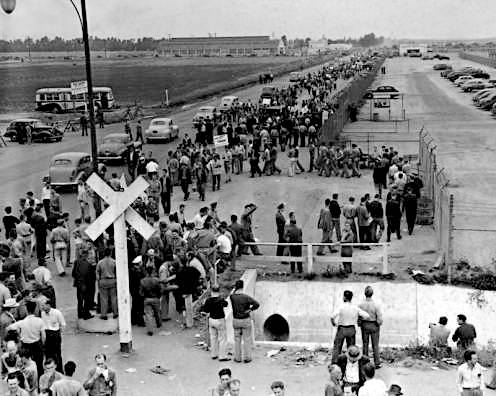
Pickets are shown parading in a circle at the main gate of the strikebound North American Aviation plant on June 5, 1941. (Credit: Los Angeles Public Library Photo Collection, Los Angeles Herald Examiner archive)

The effect of the work stoppage on the defenses of a country already engaged in war production for its allies was profound, and President Franklin Delano Roosevelt reacted swiftly. On Friday, June 6, he signalled his plans for the government to seize the factory and force production to resume.

Picket lines were set up in the area, and skirmishes regularly broke out when workers attempted to cross them. Unrest was growing. FDR set 7 a.m., Monday, June 9, as the deadline for seizing the factory, and began martialing U.S. Army troops for the effort.

500 Army troops from Fort MacArthur’s Third Coast Artillery battalion in San Pedro were sent to the strike area, and more troops gathered in Ventura and at March Field in Riverside. Eventually, about 3,500 troops took part in the operation.

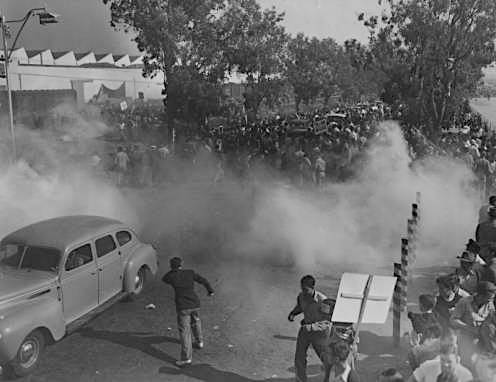
On that Monday morning, violence broke out when police attempted to escort workers into the plant across a crowd of strikers. 20 people were arrested in the scuffles.

With tear gas bombs exploding, the United States Army moves in, taking over the strike-bound North American aviation plant. Troops cleared away picket lines. Photo dated June 9, 1941. (Credit: Los Angeles Public Library Photo Collection, Los Angeles Herald Examiner archive)

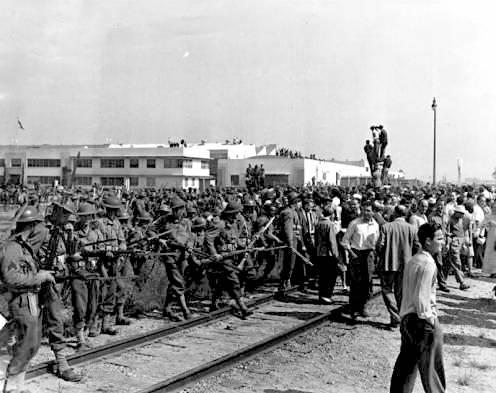
The arrival of Army troops had been causing tension, but when the June 9 deadline arrived, they quickly took control of the situation, marching through strikers to secure the plant and allowing workers to return to work. 

The show of force convinced many of the strikers to go back to work, and increasing numbers of them did so over the next few days. Authorities banned picket lines near the plant, enforced by Army patrols. The strike was broken.

Their guns bristling with fixed bayonets, troops are shown forcing the picket line to retreat as the Army took over the strikebound North American aircraft plant to permit men to return to work. The United States Army took over the factory on orders of President Roosevelt, who said defense plane production must go on. June 9, 1941 photo. (Credit: Los Angeles Public Library Photo Collection, Los Angeles Herald Examiner archive)

By June 12, plant officials were reporting that production had returned to normal, though Army troops would remain at North American for about another two weeks. They left shortly after workers approved a new contract on July 1, 1941, which gave them the raises they had demanded.

Fallout from the strike included an effort to purge the CIO of suspected Communist infiltrators, the changing of the draft status of 111 recalcitrant workers from 2-A to 1-A, making them immediately available for the draft, and the enactment of a federal law expressly granting the President the right to use Army troops to seize defense plants in similar situations in the future.

Another strike hit North American on Oct, 23, 1953. It lasted much longer and involved more employees, 33,000, but was nowhere near as raucous as the 1941 labor action. It was settled on Dec. 15, 1953. 

Because it came during peacetime, it did not involve the deployment of troops  to seize the plant. President Dwight D. Eisenhower was involved in the labor mediation process, but did not take sides in the actual dispute.

Stern-visaged troops are shown manning machine guns at the strikebound North American Aviation plant. Photo dated June 9, 1941.  (Credit: Los Angeles Public Library Photo Collection, Los Angeles Herald Examiner archive)

Sources:

Los Angeles Times stories.

“North American Aviation Strike,” The Daily Mirror (Los Angeles Times blog), June 7, 2011.

“The North American Aviation Strike,” ww2.aircraft.net website.
“World War II Print Ads — North American Aviation,” Warbirds Information Exchange website.
Wikipedia.

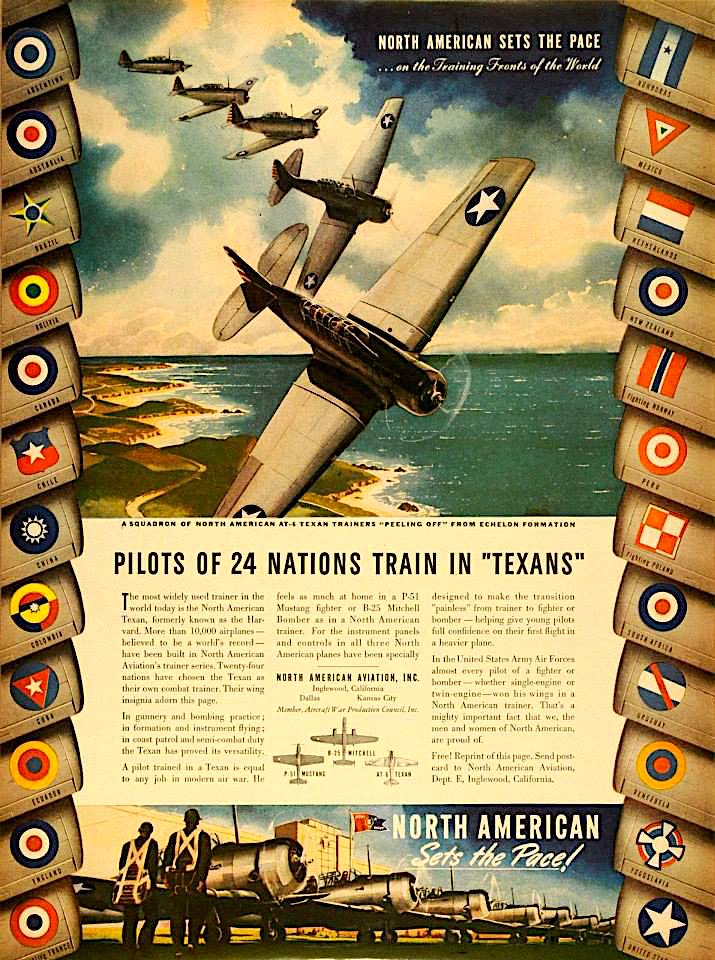
Undated North American Aviation ad touts its AT-6 training plane. (Credit: Warbirds Information Exchange website.)
El Segundo turned its big dreams for Recreation Park into reality

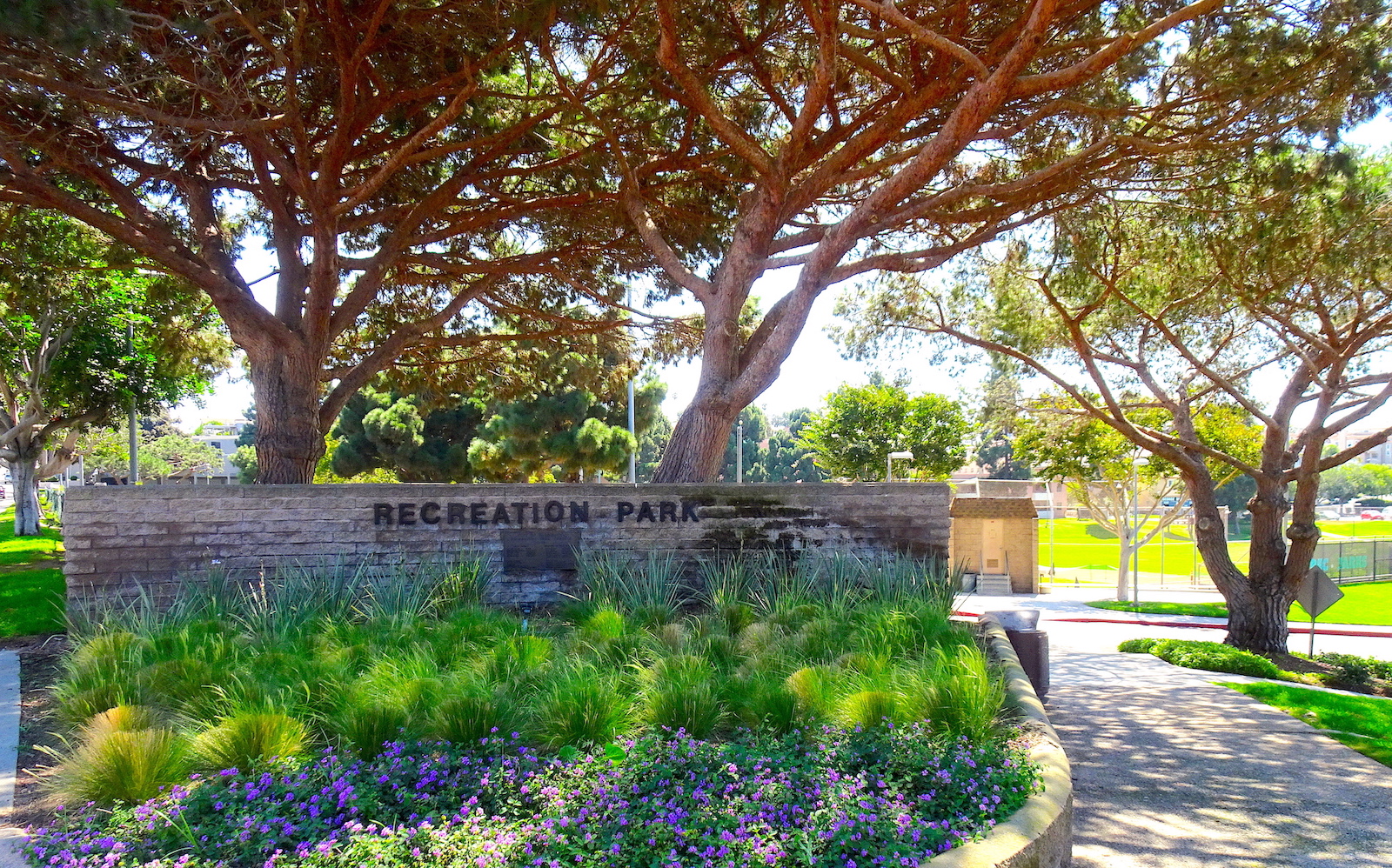
Recreation Park in El Segundo first opened in 1958. Over the years, the park has been renovated and updated many times. (Sept. 2019 photo by Sam Gnerre)
El Segundo’s decision to build a large central park in the city during the 1950s came from necessity. The postwar aerospace industry was ramping up in the area, and the sleepy little town’s population was growing rapidly. Recreational facilities needed to be improved and enlarged, and the city’s planners proved up to the task.

The city paid $200,000 for 12 acres of land running along Pine Avenue and Eucalyptus Drive in 1954, a good-sized plot for a park. But the city needed every bit of it.

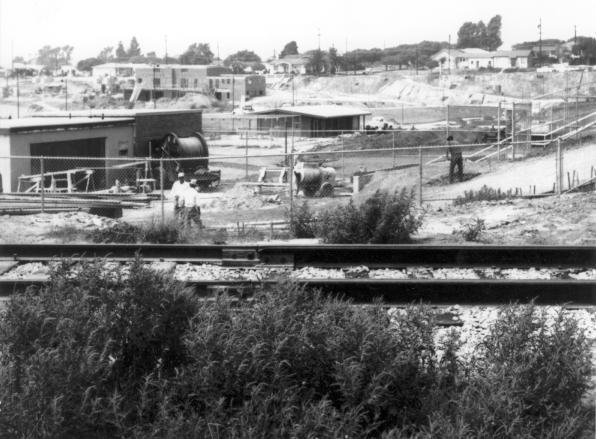
Looking northwest, construction of the George E. Gordon Clubhouse at Recreation Park is seen in the background amid overall park construction. The Pacific Electric Railway tracks are in the foreground.  photo. Undated 1950s photo circa 1956-57. (Credit: Friends of the El Segundo Public Library)

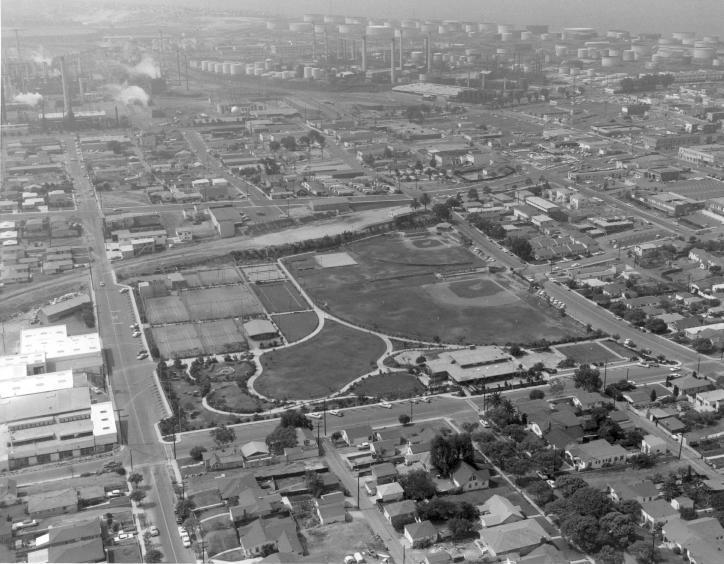
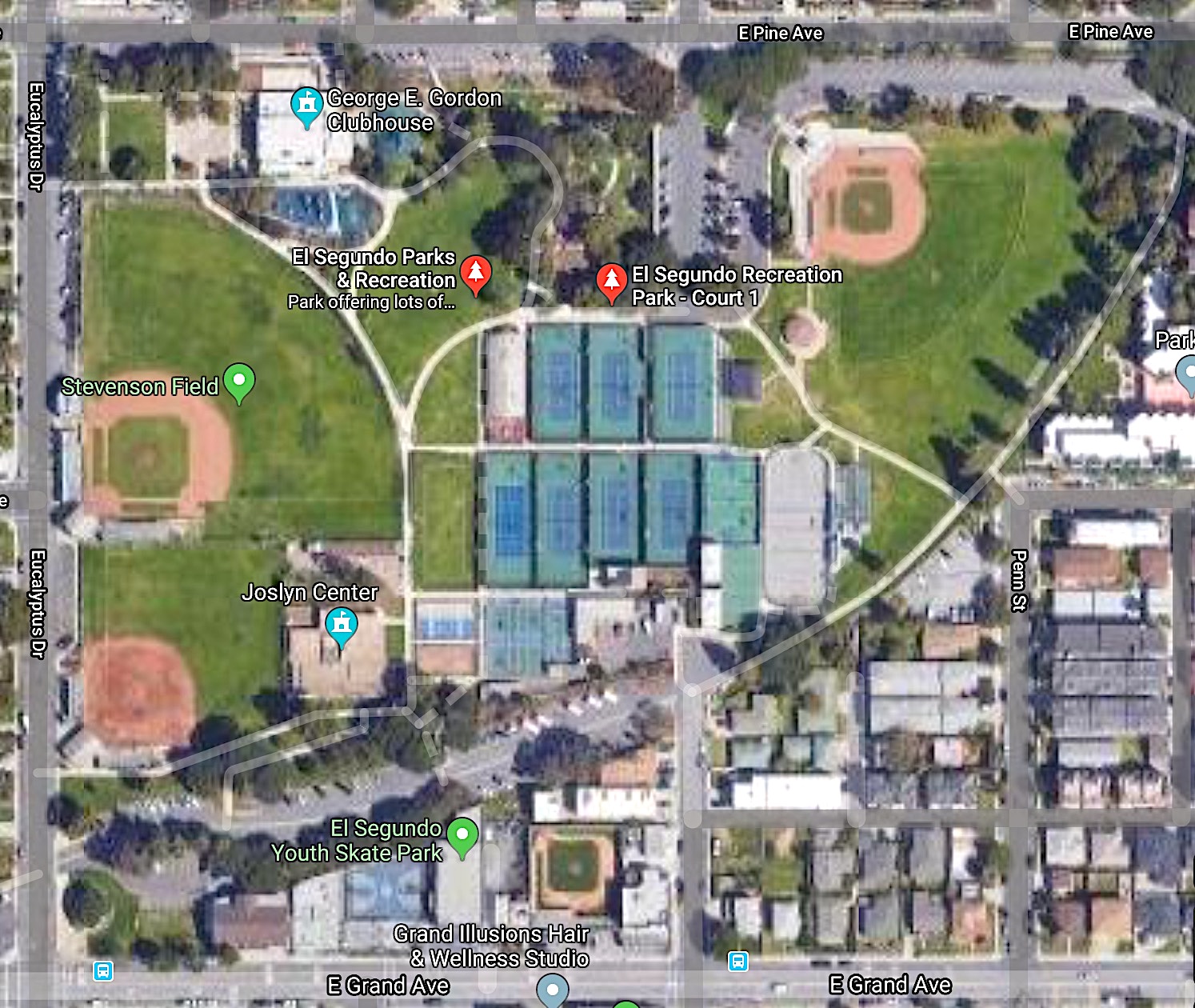
Here’s what they planned for the new Recreation Park: a full-size baseball field for use by the El Segundo High team, another field for Little League and other youth leagues, a softball field, a two-story community clubhouse building, tennis and basketball courts, lawn bowling, concession stands and an outdoor stage area for music, dance and theater, in addition to room for picnicking and barbecues.

The city hired the Los Angeles architectural firm, William Woollett & Associates, to plan the community building as well as the rest of the park.

Planners expected the cost to range from $500,000 – $600,000 initially. But when the first bid, an incomplete one not including electrical work, came in 1955 at $536,000, they realized that costs would be more than anticipated.

Aerial view of Recreation Park looking south toward the Standard Oil/Chevron Refinery. Undated early 1960s photo shows a different park configuration, including the Little League field, top middle, in the area where the current softball field now stands.. (Credit: Friends of the El Segundo Public Library)

The Woollett plans actually called for a bit more land than the original 12 acres. A small triangular parcel had to be purchased from Pacific Electric for $125,000 in late 1955 in order to ensure that the high school baseball centerfield fence would be more than 300 feet from home plate, instead of an undersized 250.

The city, which started its own parks and recreation department in 1956 partially so it would be able to devote full attention to such details, officially broke ground on the new park that same year. 

The city council gave its approval to the $850,000 final plan for Recreation Park in September 1957. Adjusted for inflation, that $850,000 would be equivalent to between $7-8 million in 2019 dollars, according to various inflation calculators.

Construction began shortly afterward, with the goal of having the baseball fields open in time for the 1958 season. The fields did indeed open in March 1958, and the park as a whole was completed and opened later that summer.

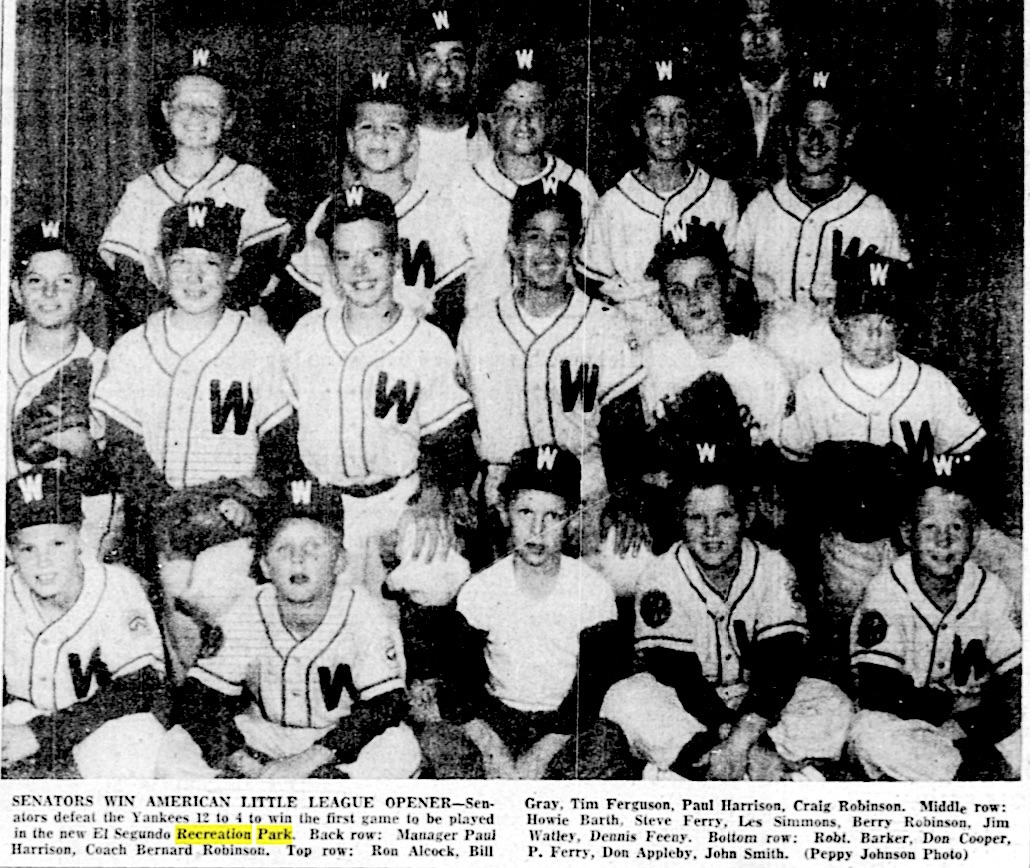
Team photo of the El Segundo Little League Senators, who won the first game played at the new Little League field at Recreation Park. El Segundo Herald, May 8, 1958, Page 1.

The first little league game was played on May 7, 1958, and the El Segundo High Eagles also were able to play their home games at Recreation Park that season.

Founded in 1954, the El Segundo Little League would funnel several players to the major leagues. Kansas City Royals Hall of Famer George Brett and his brothers, Ken (Kemer), John and Bobby played in the Little League, and went on to play for legendary Coach John Stevenson at El Segundo High. All-Star Baltimore Orioles pitcher Scott McGregor and former Los Angeles Laker Keith Erickson also came up through the Little League and played for Stevenson.

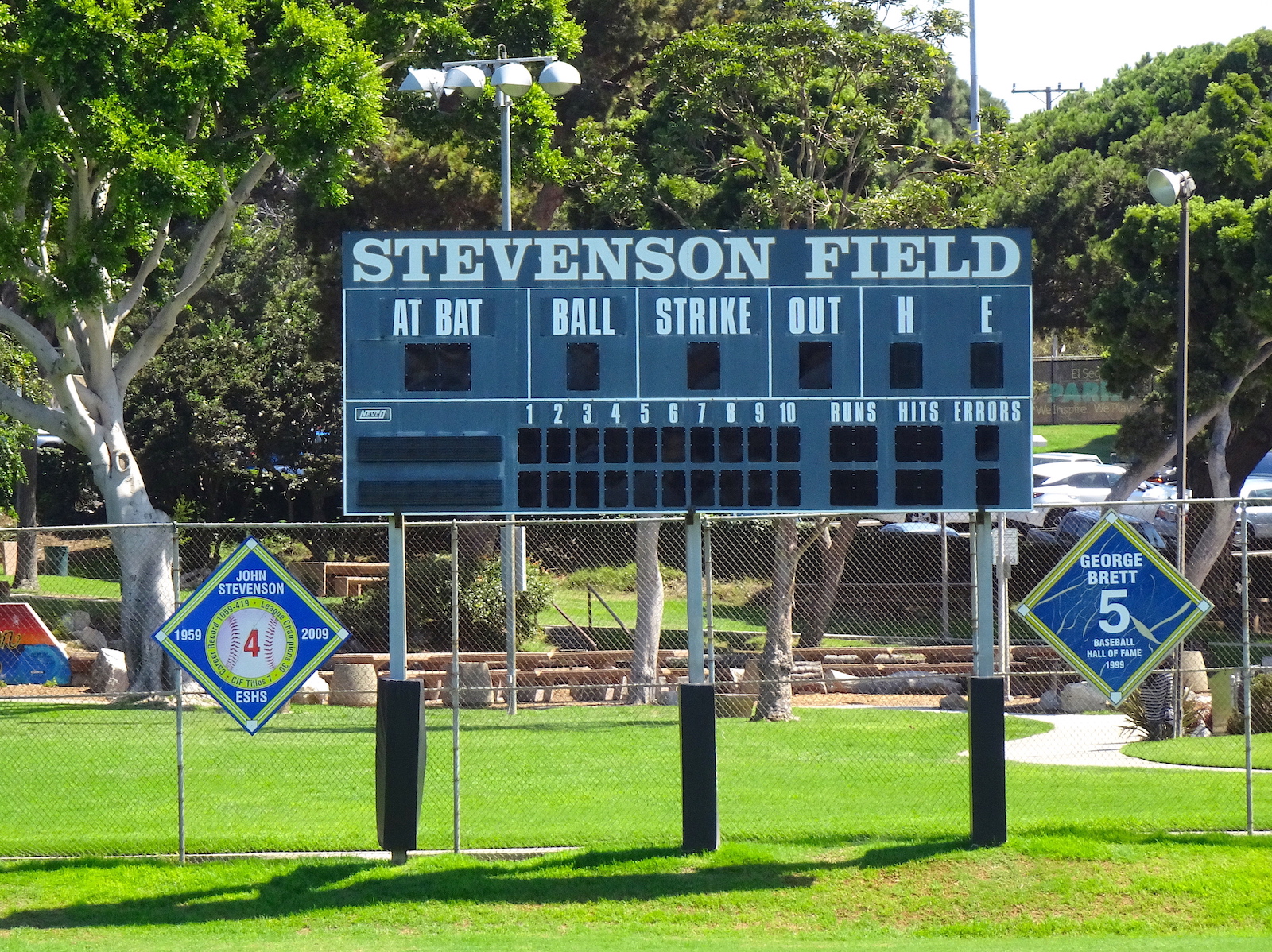
El Segundo coaching legend John Stevenson had the Recreation Park high school baseball field named after him in 1992. (Sept. 2019 photo by Sam Gnerre)

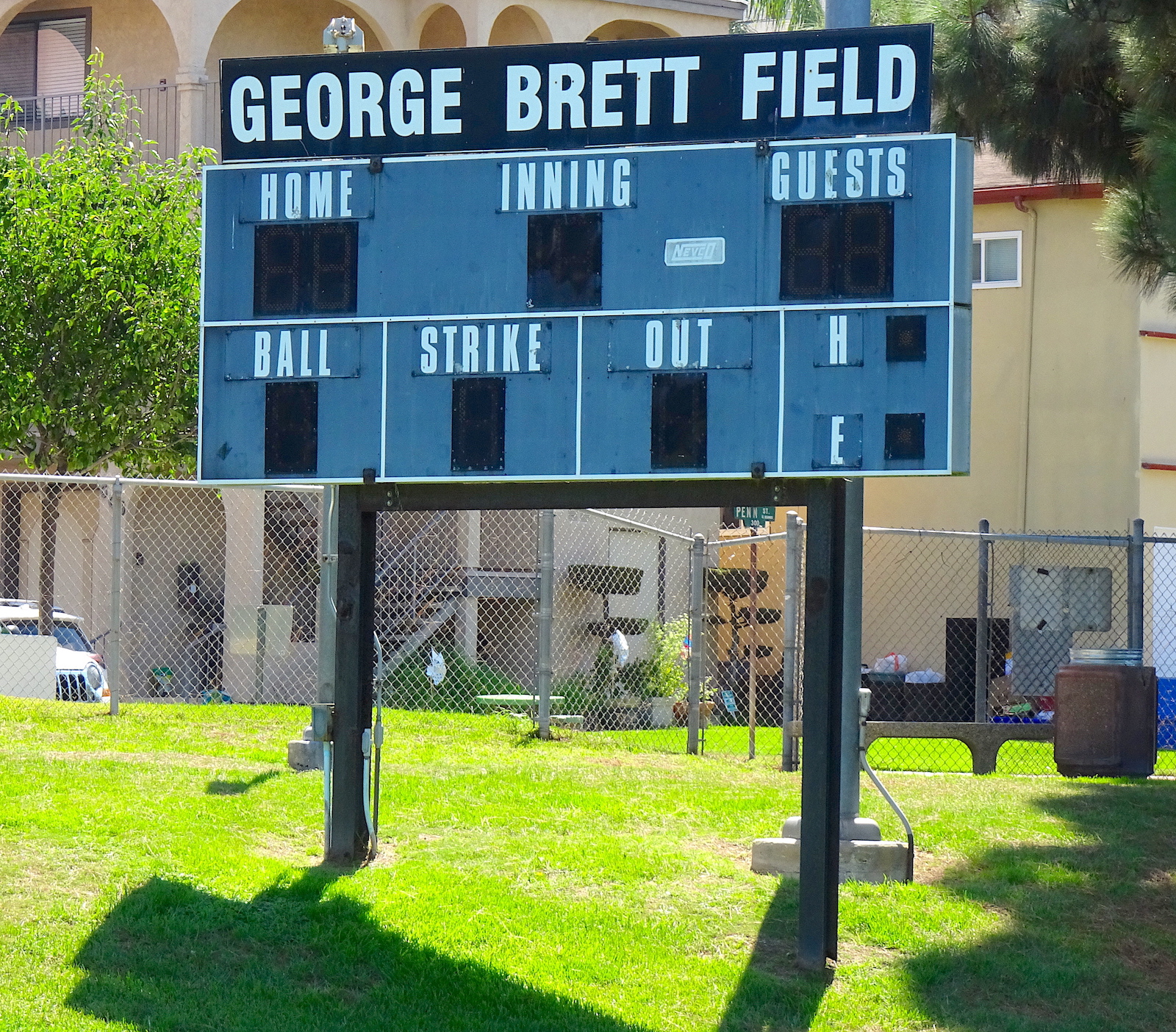
Brett and his coach, Stevenson, who helmed the baseball team at El Segundo for 50 years until his death in 2010, both had the honor of having Recreation Park sports fields named for them. The high school field became (John) Stevenson Field in 1992, while the Little League field at Recreation Park was renamed George Brett Field in 1999.

Recreation Park’s Little League field was renamed to honor George Brett in 1999. (Sept. 2019 photo by Sam Gnerre)

The Recreation Park clubhouse also was renamed the George E. Gordon Clubhouse in 1984 in honor of the former El Segundo city councilman. In 2002, the city drew criticism when it announced plans to raze the aging original structure and build a new one that included a gymnasium.

Costs to do that turned out to be prohibitive, so the building was updated and revamped for $150,000 instead. After closing for a year of renovations, it reopened in April 2005 and remains one of the park’s busiest facilities to this day.

Over the years, the city has continued to improve and add to Recreation Park. The Joslyn Center for adult and senior citizen activities, opened there in 1966, and has become a popular gathering place for seniors. 

Aerial photo shows various Recreation Park facilities, including its softball field, lower left, and George Brett Field Little League diamond, upper right. (Credit: Google Earth)

The park now also has volleyball courts, a paddle tennis court and a roller hockey rink. In 2001, the city approved construction of a $150,000 skatepark at the El Segundo Teen Center just south of the park, after voting against building the skatepark in Recreation Park itself.

As a result of the original plan and the park’s updating, Recreation Park continues to thrive as the city’s busiest and most diverse recreational resource, mostly thanks to those visionaries who swallowed hard before laying out a small fortune for its original construction in the 1950s.

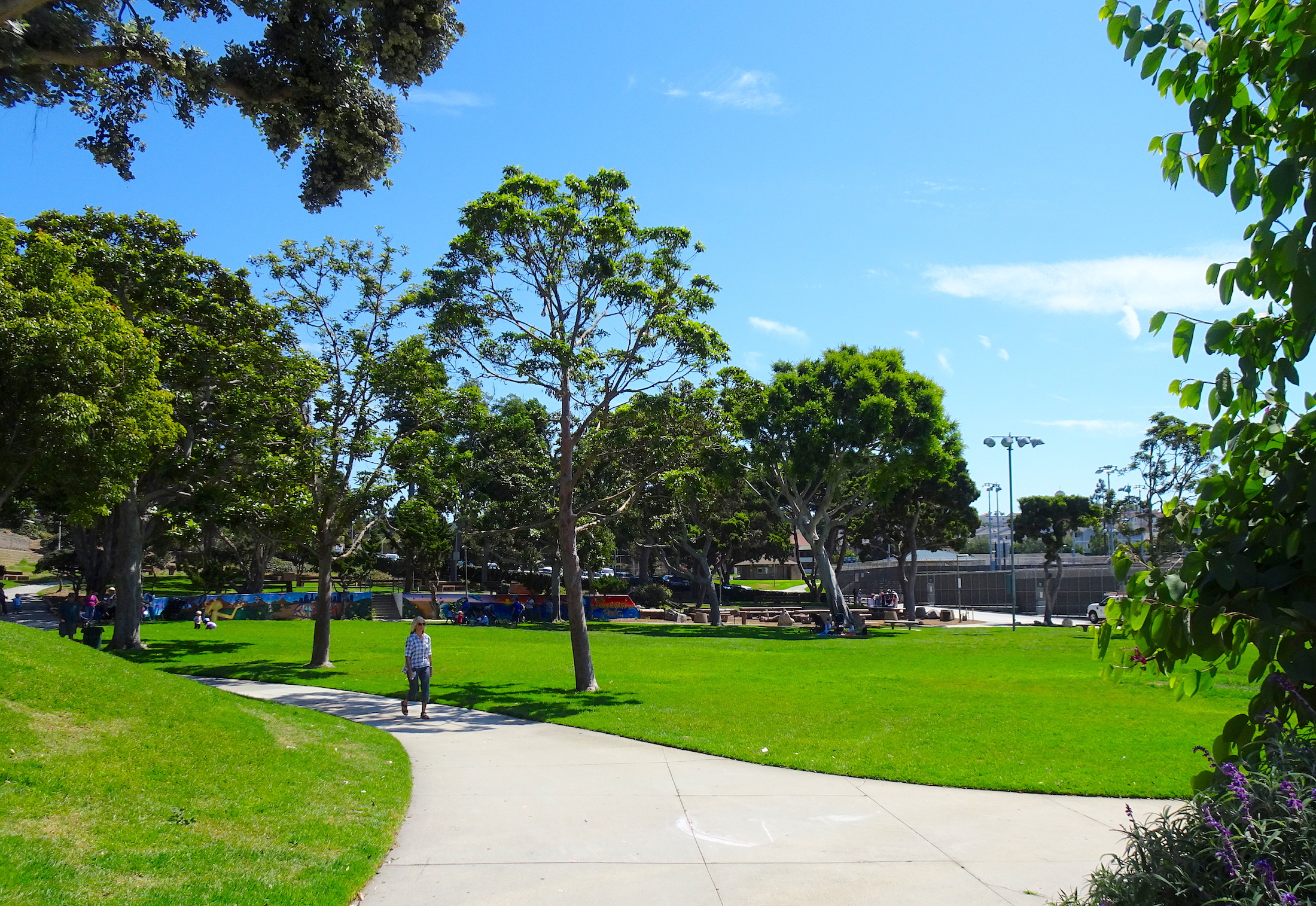
Picnic area at Recreation Park in El Segundo. (Sept. 2019 photo by Sam Gnerre)

Sources:

Daily Breeze files.

El Segundo Herald files.

El Segundo: Seventy-Five Years: A Pictorial History of El Segundo, California, by Eileen Curry Hunter, H2 Limited Publishers, 1991.

“George Brett,” by Russell Bergtold, Society of American Baseball Resarch (SABR) website, July 15, 2019.

Los Angeles Times files.

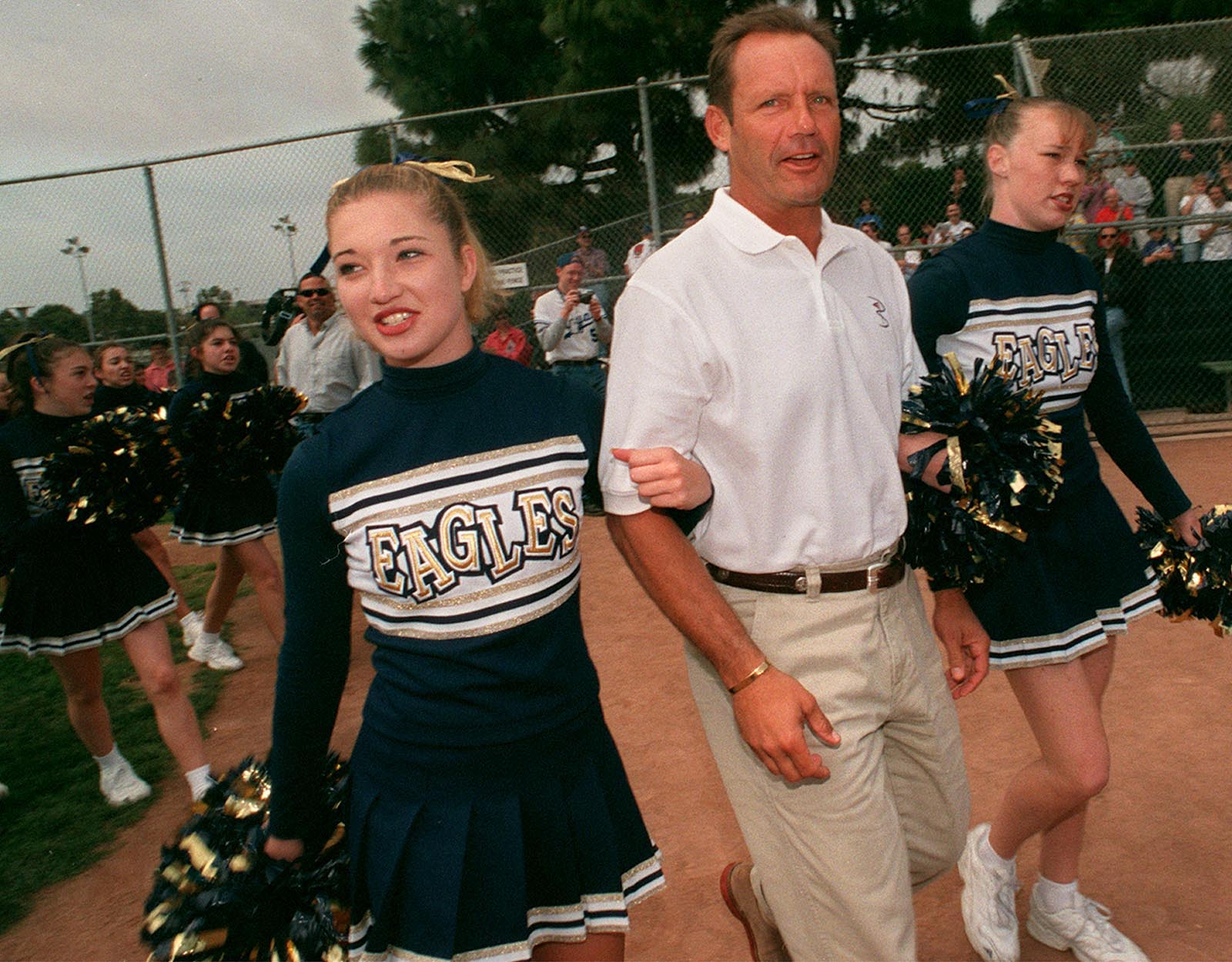
Former Kansas City Royal George Brett is escorted to the El Segundo little league field named in his honor by El Segundo High School cheerleaders Kim Bunce, 15, left, and Cristina Wood, 17. April 24, 1999. (Daily Breeze staff file photo)

San Pedro hosted the Navy’s first submarine base on the Pacific Coast

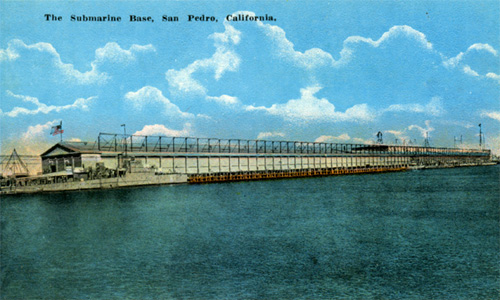
Undated postcard shows the San Pedro Submarine Base along the East Channel, circa 1917-1923.

Submarine technology already had been developing for decades by the time the U.S. Navy commissioned its first modern-era sub, the USS Holland, in 1900.

The ironclad warships Monitor and Merrimack staged the famous 1862 Battle of Hampton Roads in Virginia during the Civil War. The Confederates repurposed the Merrimack after plucking it from a Union scrap heap and rechristened her the Virginia for the battle. But these ironclad warships were more precursors than fully functioning submarines.

The refinement of the modern submarine reached its first apex with the arrival of World War I and the German U-boats. Two days after war was declared in 1914, Germany sent ten of its 29 U-boats into the North Sea to do battle with British warships in the first-ever wartime submarine patrol operation.

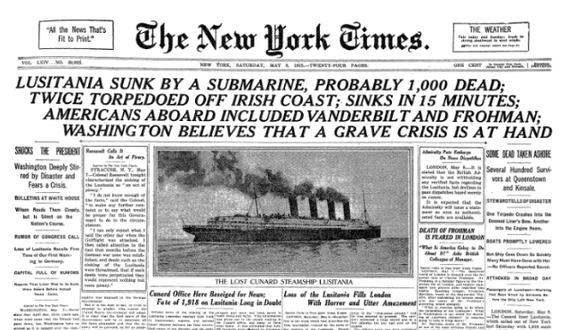
New York Times front page, May 8, 1915, reports the sinking of the Lusitania. (Credit: New York Times)

During the course of the war, U-boat stealth attacks destroyed more than 5,000 Allied ships and destroyed much of Britain’s merchant marine fleet.

They also famously sank the RMS Lusitania on May 7, 1915. The deaths of 1,198 of its passengers, 128 of them Americans, shifted American public opinion toward joining the global war effort, which the U.S. did two years later.

By the time the U.S. entered WWI on April 6, 1917, the value of submarines in naval warfare had been firmly established, and the U.S. Navy was working overtime to produce them. 

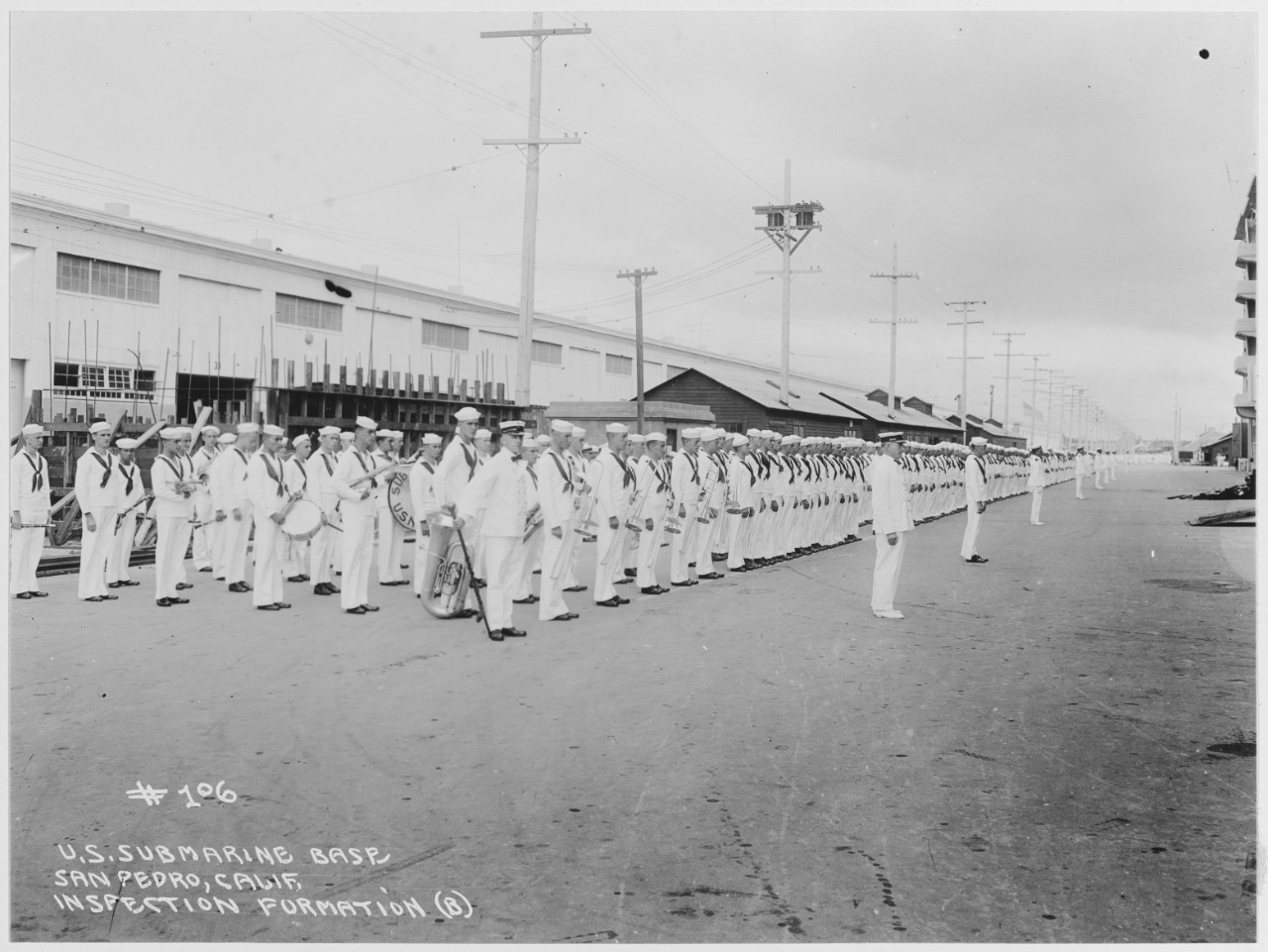
Military personnel in inspection formation at the San Pedro Submarine Base. Undated photo circa 1917-1923. (Credit: Naval History and Heritage Command website, U.S. Navy)

The Navy realized that in a global war, both of America’s coasts needed to be protected, and set about finding a suitable location for a West Coast submarine base.

With its large naval presence, San Diego was considered, but naval experts deemed its waters too shallow and unprotected to house the subs.

On Feb. 13, 1917, the San Pedro Daily News (later to become the San Pedro News Pilot) announced that, despite early reports to the contrary, the Navy had decided on the harbor at San Pedro as the location of the first submarine base on the Pacific coast, and had allocated $500,000 for the project.

San Pedro’s harbor had deep, kelp-free waters, reliably good weather and calmer ocean conditions. Harbor officials offered the Navy free use of land along the East Channel, just south and east of Warehouse No. 1, which had opened for business in 1917 after two years of construction.

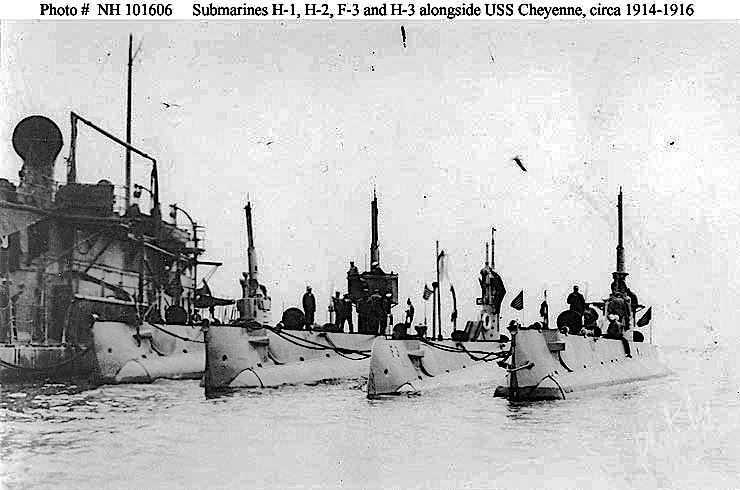
Submarines near the tender ship Cheyenne. Undated photo circa 1914-1916. (Credit: Wikimapia)

The submarine tenders Cheyenne and Alert, depot ships that provided food and supplies to submarines, already had been using the area as an unofficial base since 1914, and submarines had used the area informally as early as 1913.

By mid-June 1917, work on the San Pedro Submarine Base along the wharf was underway, and the base’s operations became operational that fall under its commander, Captain C.F. Preston. He was followed by Commander H.C. Poundstone, who served through 1918. The base would have several more commanders over the next four years.

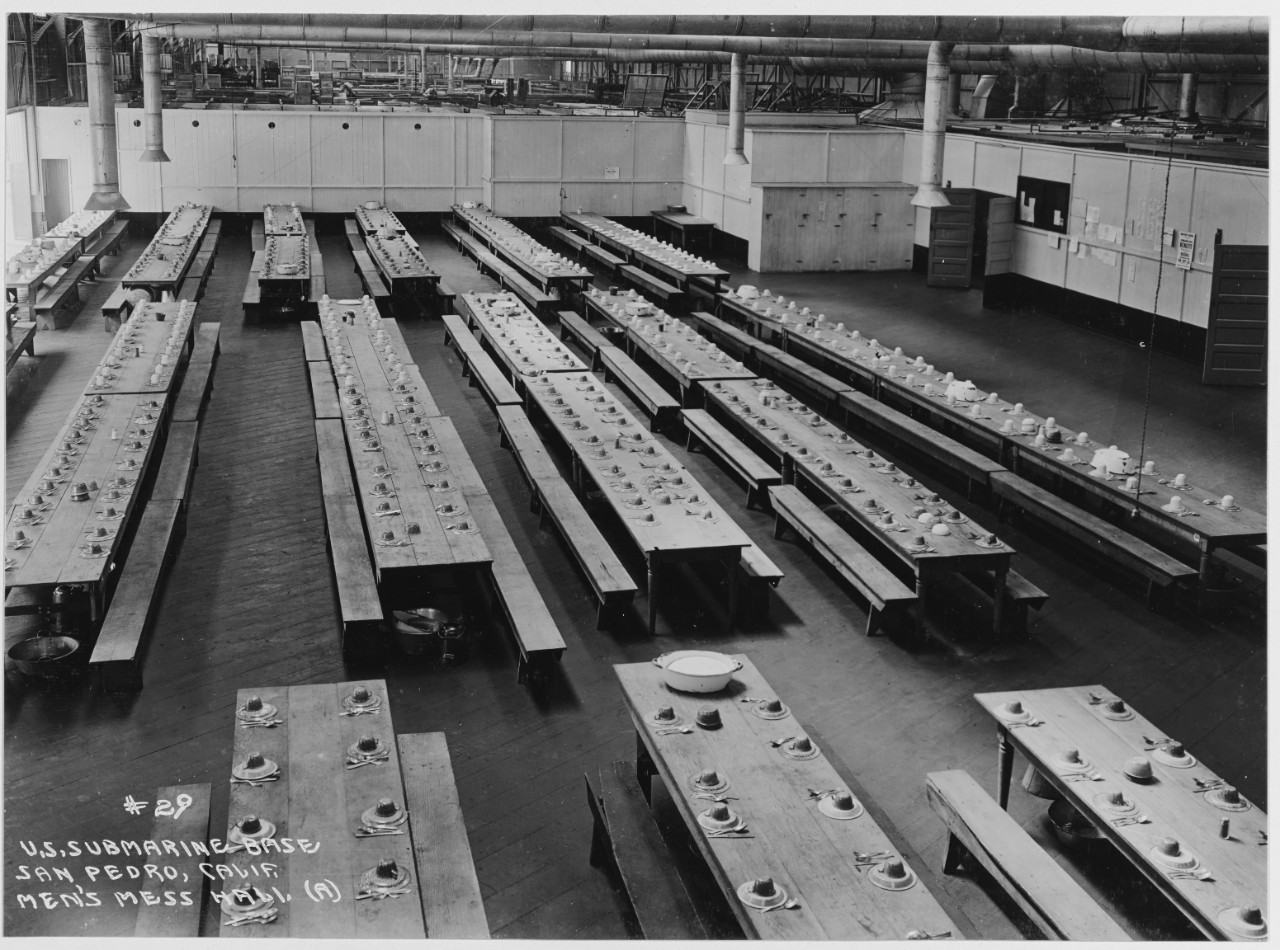
The men’s mess hall at the San Pedro Submarine Base. Undated photo circa 1917-1923. (Credit: Naval History and Heritage Command website, U.S. Navy)

About a dozen submarines were based at the San Pedro facility during 1917 and 1918. At its peak, the Submarine Base was staffed by about 1,400 people.

Its officers frequented social gatherings of the day, while its sports teams excelled in football and baseball during an era when such semipro, company and military squads were closely followed.

On March 21, 1918, the submarine base’s baseball team, which did include future major leaguers Lefty O’Doul, Bob Meusel and a couple of other players then in the Navy, surprisingly defeated the Chicago National League team, 10-6, in an exhibition game. The headline in the San Pedro Daily Pilot? “Subs beat Cubs.”

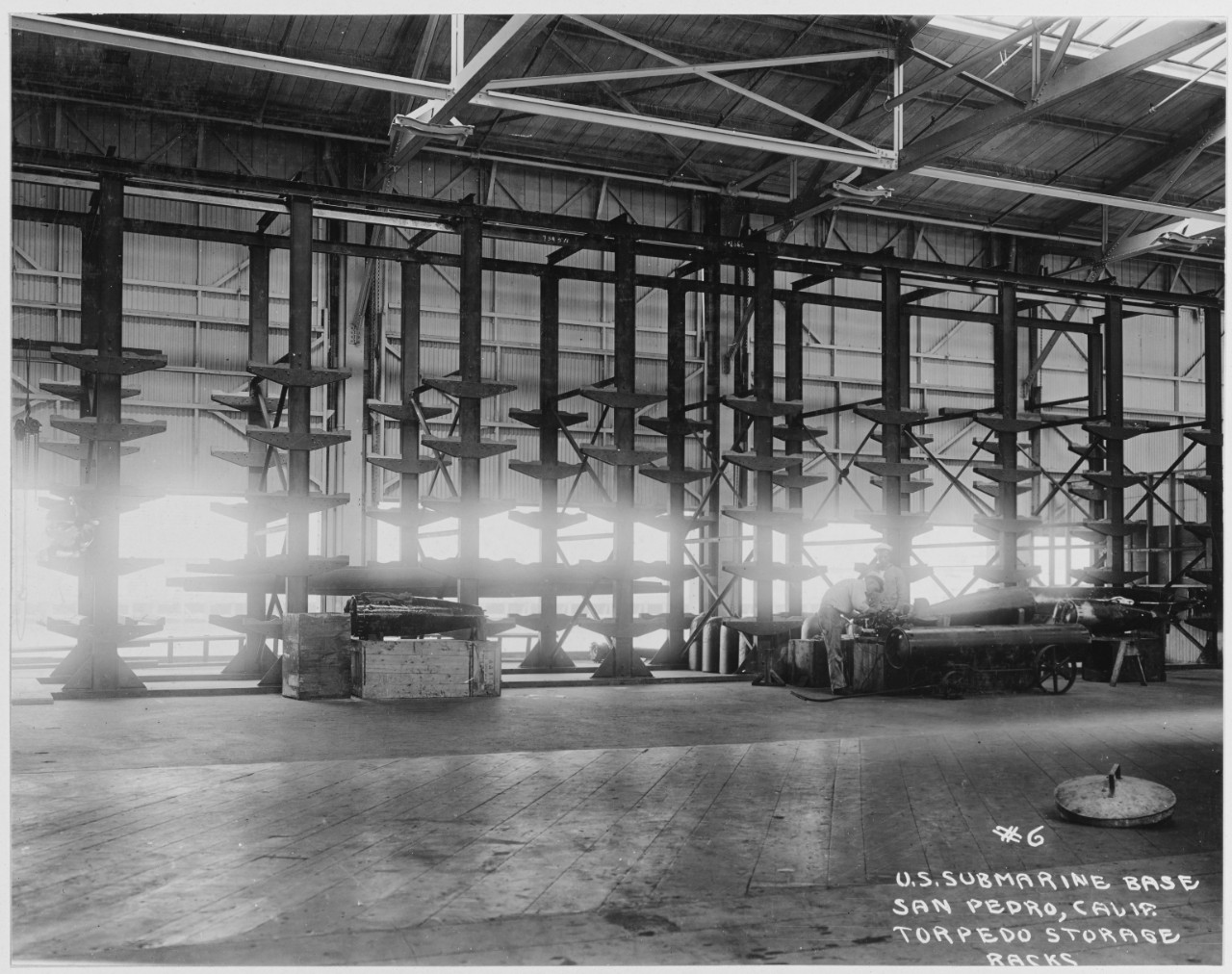
Torpedo racks at the San Pedro Submarine Base. Undated photo circa 1917-1923. (Credit: Naval History and Heritage Command website, U.S. Navy)

After the war ended, four more submarines moved to the submarine base. In addition, a German U-boat identified as UB88 also was brought to the base in March 1919. It was one of six seized by England when the war ended.

After studying and examining it, Submarine Base crews used it for target practice, sinking it on March 1, 1921. (Divers discovered its wreckage off the coast 82 years later in the summer of 2003.)

The rapid business growth at the Port of Los Angeles indirectly may have cost San Pedro its short-lived submarine base. With the end of the war, commercial interests began eyeing the very valuable and well-located submarine base site as a perfect place to set up shipping operations.

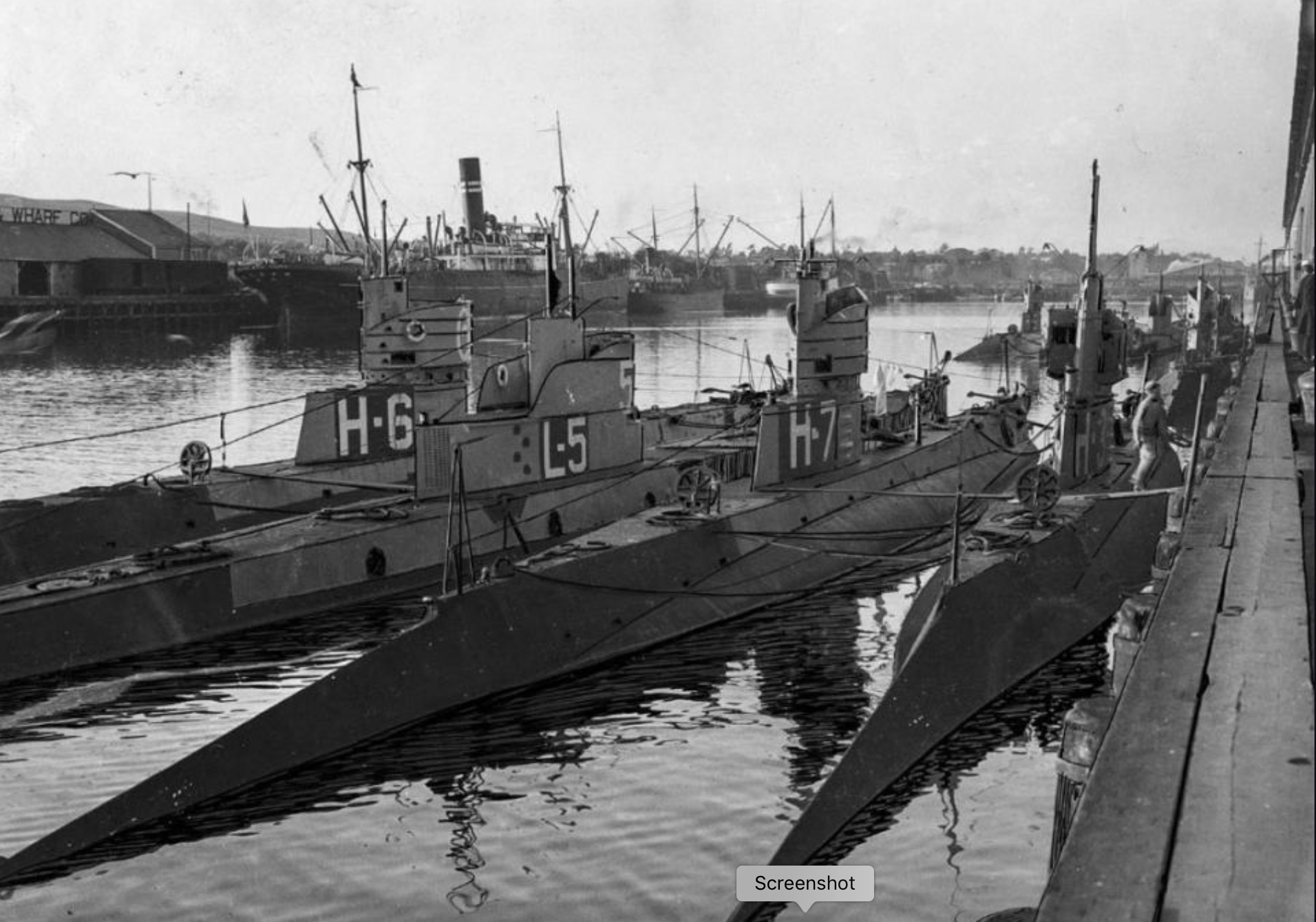
Submarines at the San Pedro Submarine Base. Undated photo circa 1917-1923. (Credit: Wikimapia)

During the summer of 1922, rumors flew that the submarine base at San Pedro would be moved. Civic officials (and the San Pedro Daily News) vehemently denied that the base would close. In fact, they worked hard on a plan to increase the size of the base and attract an even greater and more permanent naval fleet presence.

In January 1923, the Navy balked at spending the money for the plan, which involved moving the base from its location in order to give over that prime land to private maritime companies. It chose instead to close the base in San Pedro, moving its West Coast submarine operations to San Diego.

It was the end of San Pedro’s submarine base, though the ships would still use Port facilities for many years afterward. The Port served as anchorage for a good chunk of Pacific Fleet warships from 1919 to 1940.

Additional nearby military assets included Reeves Field on Terminal Island, which served as a training center for Navy pilots during World War II, and the U.S. Army base at Fort MacArthur.

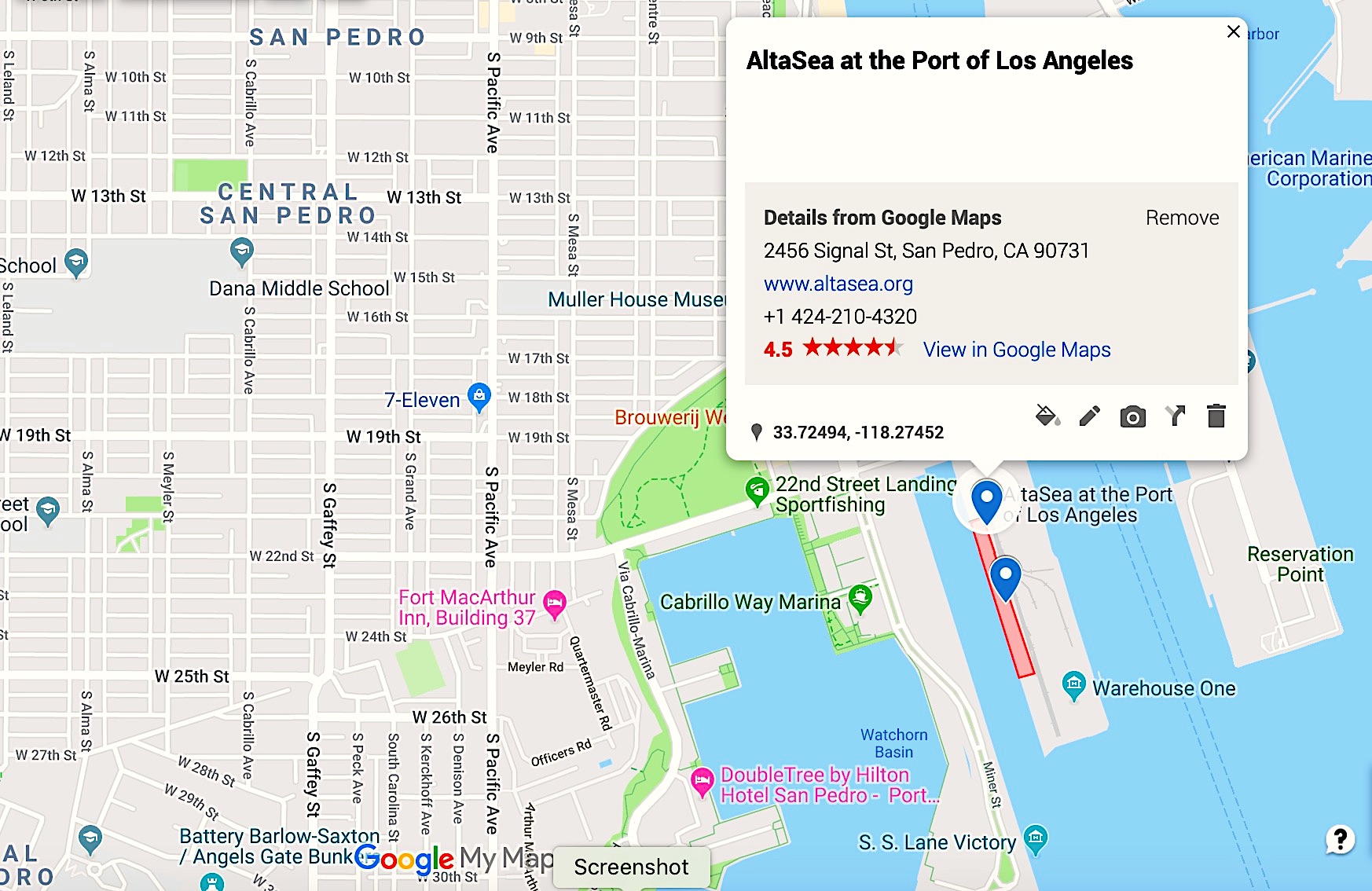
After years of use as a commercial wharf, the area on the East Channel that once was home to the San Pedro Submarine Base has become part of the Port of L.A.’s massive AltaSea development project, a multimillion dollar marine research joint venture along the southern terminus of Signal Street that also includes Warehouse No. 1.

Red-shaded area shows location of the San Pedro Submarine Base. The area is now part of the AltaSea project. Click to enlarge. (Credit: Google Maps)

Note: Post corrected to fix spelling of the Merrimack and clarify details of the Civil War Battle of Hampton Roads. Thanks to Ron Johnson for the correction.

Sources:

“The City of Los Angeles . . . An Inland City with the First Submarine Base on the Pacific Coast,” by Mark J. Denger, California Naval History website, Feb. 8, 2016.

Daily Breeze files.

Los Angeles Herald Examiner files.

Los Angeles Times files.

Port of Los Angeles: An Illustrated History from 1850-1945, by Ernest Marquez and Veronique de Turenne, Los Angeles Board of Harbor Commissioners, 2007.

San Pedro News Pilot files (including the San Pedro Daily News and San Pedro Daily Pilot).

“Unterseeboot UB-88: Lost for 82 years, WWI German U-Boat found in San Pedro Bay, California,” by Brendan Coyle, Diver magazine, May 2005.

Wikipedia.


Great photos:

https://tendertale.com/ttd/ttd9/ttd9.html

Portvideo:

https://www.youtube.com/watch?v=iQMgaRMX_SU

Unbelievable photos

https://www.history.navy.mil/content/history/nhhc/search.html?q=submarine+base+San+Pedro+california

Check port of la book,port video says 1923.


Vista Del Mar offers spectacular ocean views, but better keep your eyes on the road

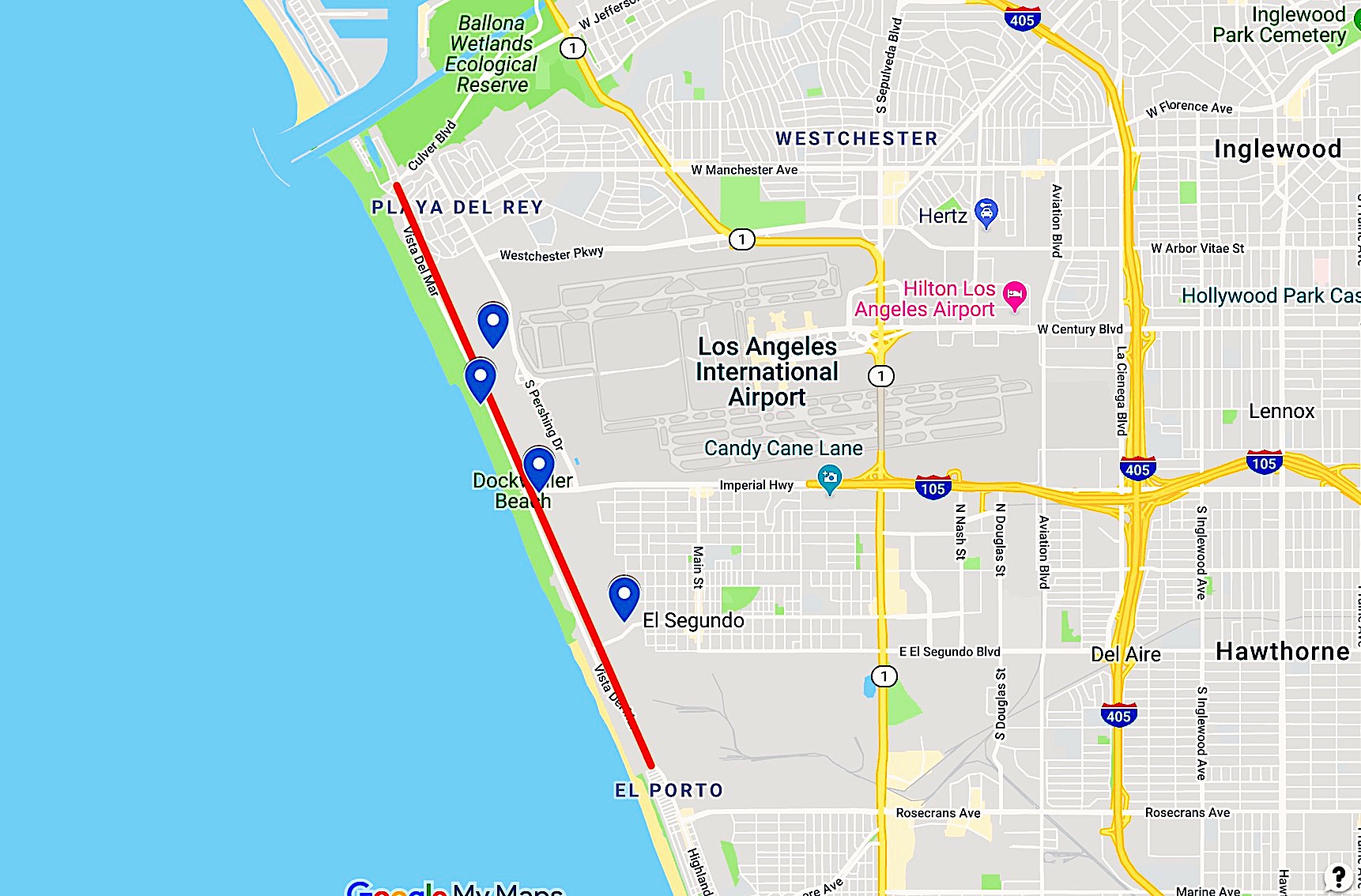
Vista Del Mar’s coastal route is shown in red. Blue markers, from top to bottom: LAX ghost town, Dockweiler State Beach, Hyperion sewage plant, Scattergood power plant. (Credit: Google Maps)

Vista Del Mar translates from Spanish as “sea view,” and that’s just one of the features, though probably the most spectacular, that this venerable South Bay roadway offers.

Its four-mile path takes drivers from Culver Boulevard in Playa del Rey to 45th Street in El Porto at the northern tip of Manhattan Beach, where it becomes Highland Avenue.

Along the way, you’ll pass by not only gorgeous beach scenery, but also, in order from north to south, the deserted Surfridge housing development at the western end of Los Angeles International Airport, Dockweiler State Beach, the Hyperion sewage plant and the Scattergood electric power generating station.

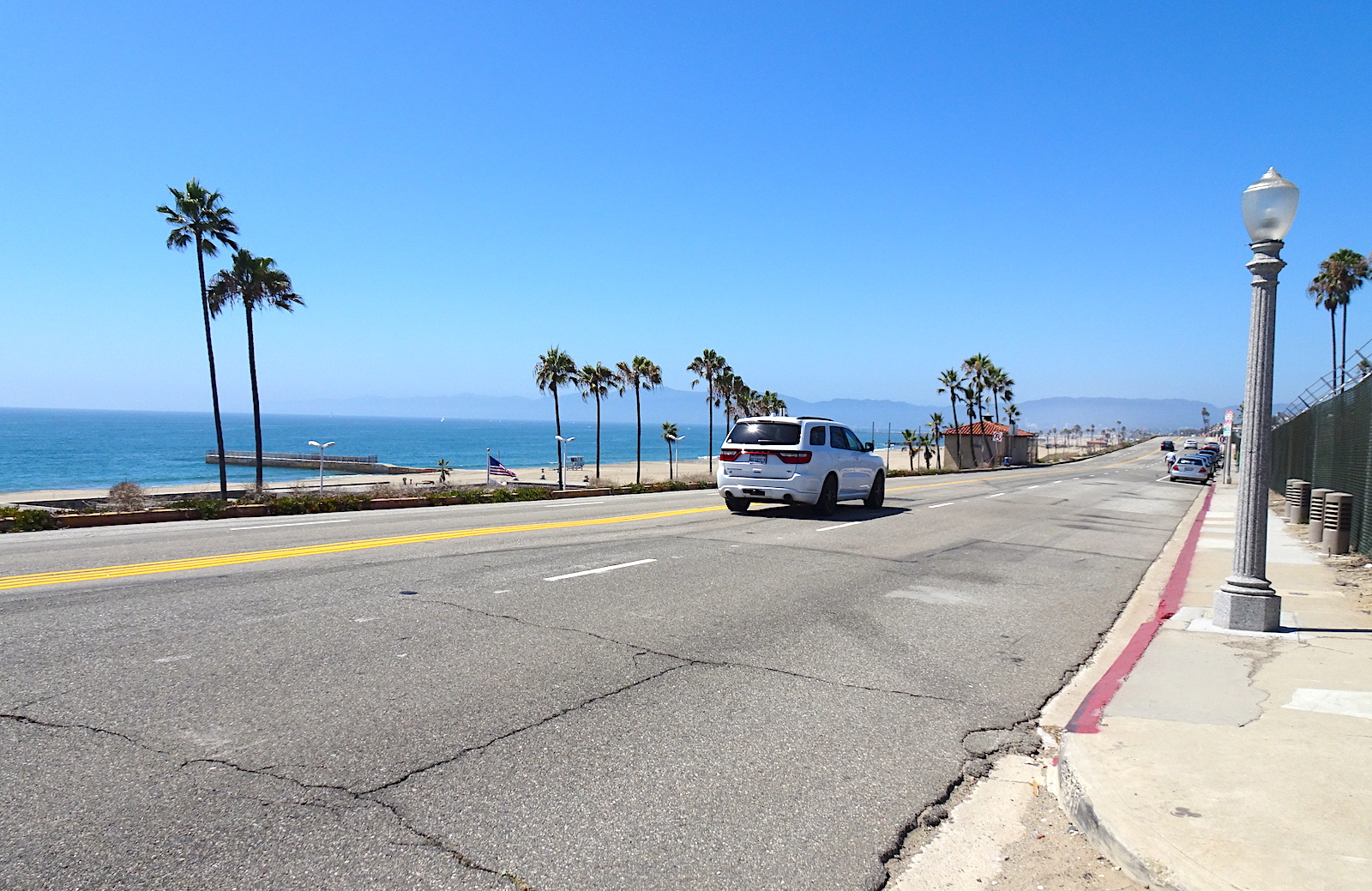
An SUV  heads north on Vista Del Mar near Vista Del Mar Park west of LAX. (Aug. 2019 photo by Sam Gnerre)

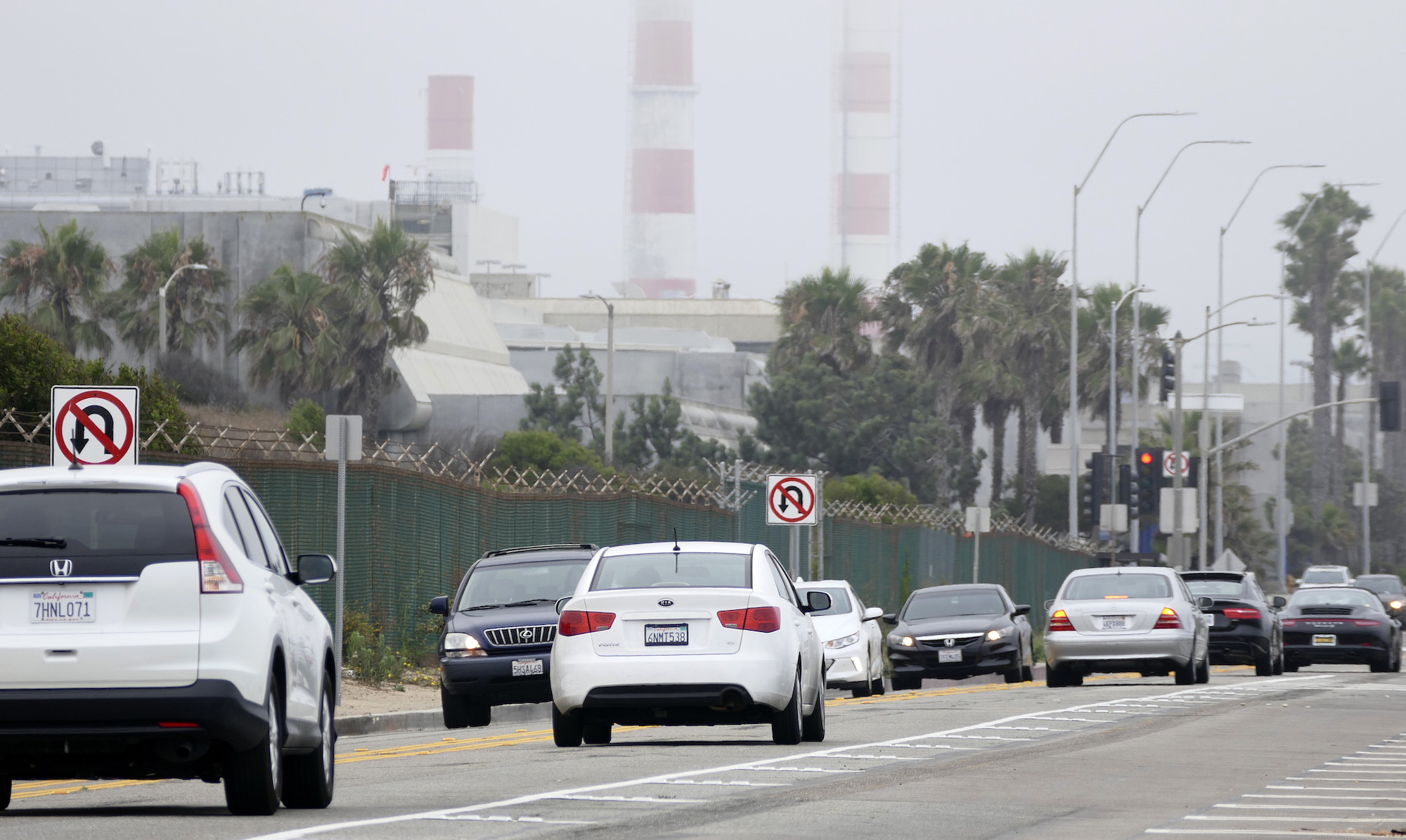
Not that most regular drivers on Playa del Rey take the time to notice. Many are taking advantage of the relatively open nature of the road, often using it as a faster north-south route than the often-clogged Pacific Coast Highway or the 405 Freeway.

The roadway’s origins lie in the development of Playa del Rey in the late 19th and early 20th centuries. The Port Ballona development at Del Rey Lagoon in the late 1880s was the earliest of these, built around the arrival of a new railroad line in the area, but it had to be abandoned after harsh storms damaged its structures.

Vista Del Mar as a viable roadway began with the arrival of Henry Barbour of the Beach Land Company, who saw the Playa del Rey’s great potential and bought up acreage that he began selling for housing development in 1902.

The roadway thus was extended from Venice down to the new Playa del Rey townsite, and then from there to nearby Del Rey Beach by 1905, according to Bernice Kimball’s exhaustive reference work Street Names of Los Angeles. Together with the arrival of Red Car lines to the area, the new road allowed better access to potential land buyers.

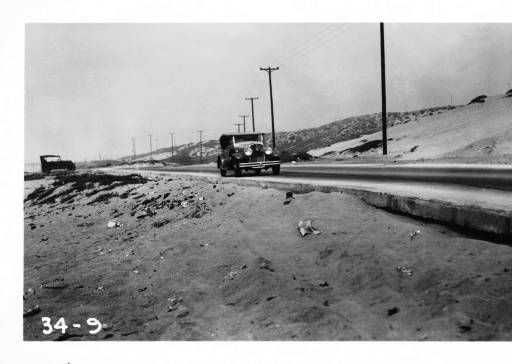
Vista del Mar along the South Bay coast is a two-lane highway in this 1934 photo. (Credit: Automobile Club of Southern California collection, USC Digital Library)

From there, the city began to slowly extend Vista Del Mar southward, with the eventual goal being to link up with Manhattan Beach and settlements further south.

The next part of the link was tied to two more housing developments: the large Palisades Del Rey housing tract, and the Surfridge tract just a bit further south. Kimball’s Streets notes increased building activity for the oceanfront highway in the mid-1920s, indicating that its southern terminus had reached Imperial Highway, just south of present-day LAX, by 1925.

After World War II ended, the section of the thoroughfare near the Hyperion sewage plant actually was closed for a one-mile stretch for six years while that facility underwent a complete transformation from a rudimentary filtering station to a full waste treatment plant. After the construction work, the shuttered Vista Del Mar segment reopened to traffic on Nov. 15, 1951.

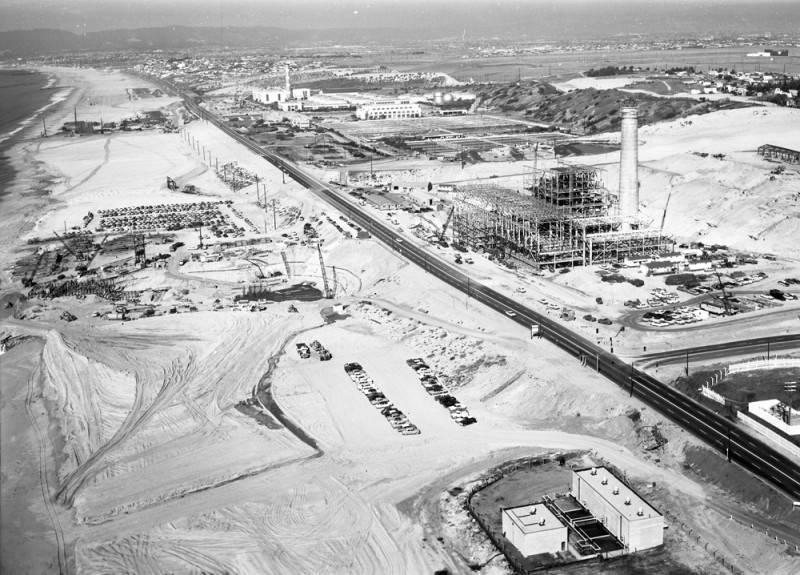
Vista Del Mar, now four lanes, diagonally bisects this view looking north from  the Scattergood Steam Plant construction site at 12700 Vista Del Mar. Grand Avenue is at far right. Jan. 14, 1958 photo. (Credit: Los Angeles Public Library Photo Collection)

The growing popularity of the Venice-Hyperion State Beach State Park in (opened in 1948, renamed Dockweiler State Beach in 1955) was one of  the many factors leading to increasing traffic on Vista Del Mar.

Over the years, the four-lane roadway was widened and otherwise improved. A series of highway projects between 1955 and 1963 completed Vista Del Mar down to its southern terminus at 45th Street in the El Porto section of north Manhattan Beach.

As its utility increased, so did traffic. As traffic increased, so did accidents, especially in the 1950s and 1960s. The increase in population density led to even more traffic in the area, and the relatively wide-open Vista Del Mar thus became the shortcut of choice for drivers traveling between the Westside and the South Bay.

(Aug. 2019 photo by Sam Gnerre)

For safety reasons, L.A. city planners were asking for a 35 mph speed limit on the roadway as far back as 1954. Currently, the speed limit is an optimistically low 40 mph.

Various solutions have been tried to keep the beachside roadway from becoming a speedway. Most of the parallel parking on the street has been removed in an attempt to cut down accidents involving beachgoers crossing the busy highway from their parked cars.

“That road has been the scene of a lot of traffic accidents over the years and cars move really quickly on that road – anything that increases safety on Vista del Mar is welcome,” the late former El Segundo Mayor Kelly McDowell told the Daily Breeze in 2007, reacting to a new parking lot aimed at reducing danger on the road.

But no attempt to calm traffic caused more clamor and havoc than L.A. City Councilman Bill Bonin’s “road diet” plan instituted in June 2017.

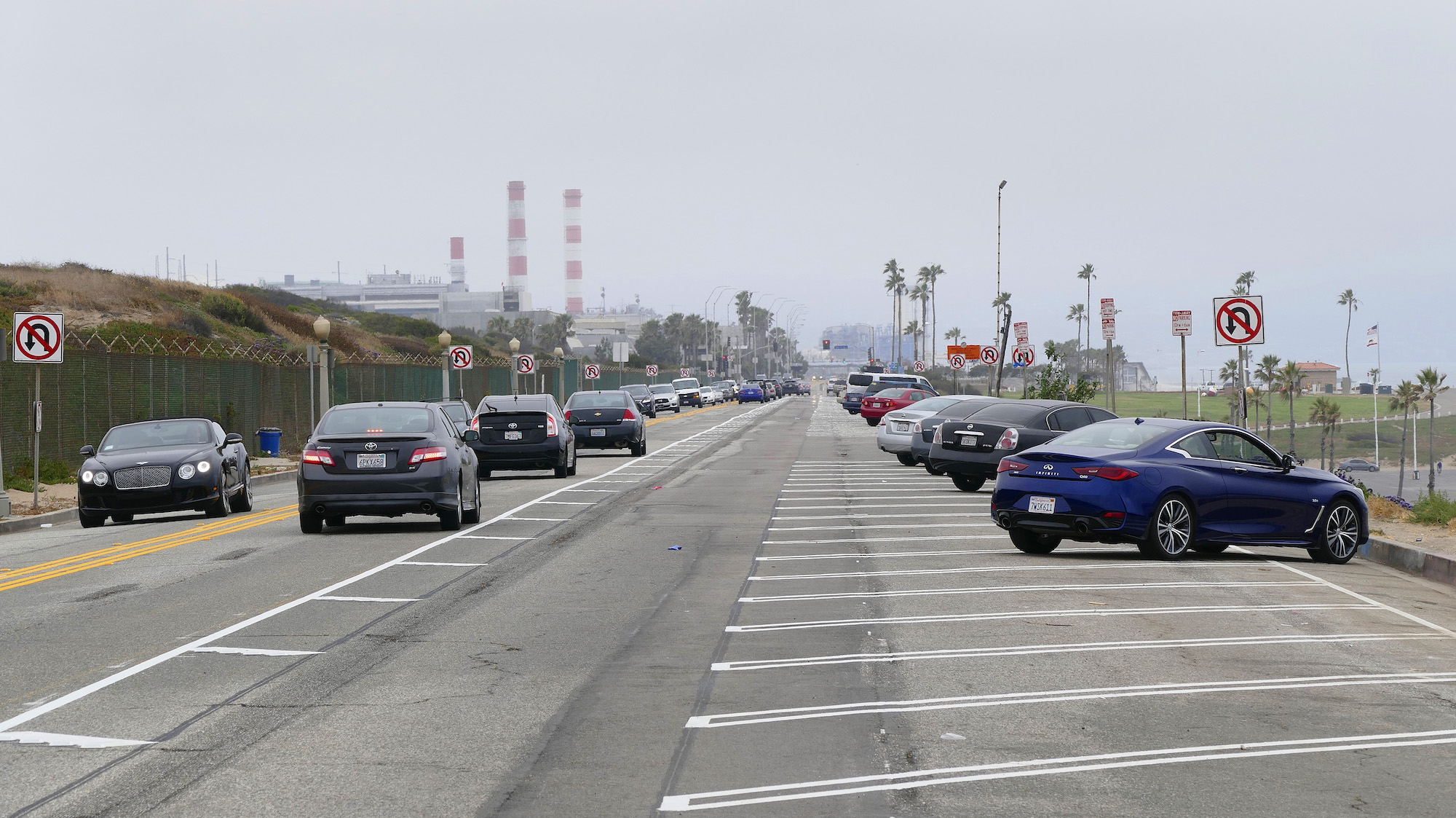
This view looking  south on Vista Del Mar shows a revamp of parking and driving lanes near Dockweiler State Beach that was instituted in June 2017. Diagonal parking spaces and safety area for backing up can be seen at right. The plan called for only one lane in each direction, and no parking on the east side of the street. June 1, 2017. (Daily Breeze staff file photo)

Bonin’s plan called for the reduction of lanes from four to two, with diagonal parking and a safety area on the west side of Vista Del Mar taking the place of the removed lanes. Similar plans were put into effect on Culver and Jefferson boulevards in Playa Vista and Playa del Rey that included adding bike lanes.

To put it plainly, the road diet concept did not go over well at all. Cites along and near the roadway complained they received no advance warning of the plan, which they claimed pushed congestion onto their own streets as a result. Traffic snarled on Vista Del Mar, and the number of accidents actually increased with the new format. 

And regular commuters went bonkers.

Traffic backs up on Vista Del Mar following the implementation of the “food diet” traffic plan. June 22, 2017. (Daily Breeze staff file photo)

They protested vigorously to Bonin’s office. Lawsuits were threatened, and an anti-road diet group, Keep L.A. Moving, gathered thousands of signatures on petitions against the change, even threatening to recall Bonin at one point.

Finally, on July 26, 2017, one day before the city of Manhattan Beach was set to file a lawsuit, Bonin relented, admitting that he had been wrong, the traffic changes hadn’t worked, and that the roadways, including Vista Del Mar, would go back to their original configurations. The lanes were restored beginning that Aug. 21.

More recently, the city of L.A.’s sanitation department announced that a 1,500-foot segment of one of the northbound lanes of Vista Del Mar would be closed for the installation of a new 54-inch diameter pressurized sewer line running from Venice to the Hyperion Water Reclamation Plant in Playa del Rey.

The closure just north of LAX in Playa del Rey will begin on Sept.7, 2019, and last until the summer of 2020.

Note: Special thanks to librarian Nicholas Beyelia of the History Dept. of the Los Angeles Public Library’s central branch for research assistance.

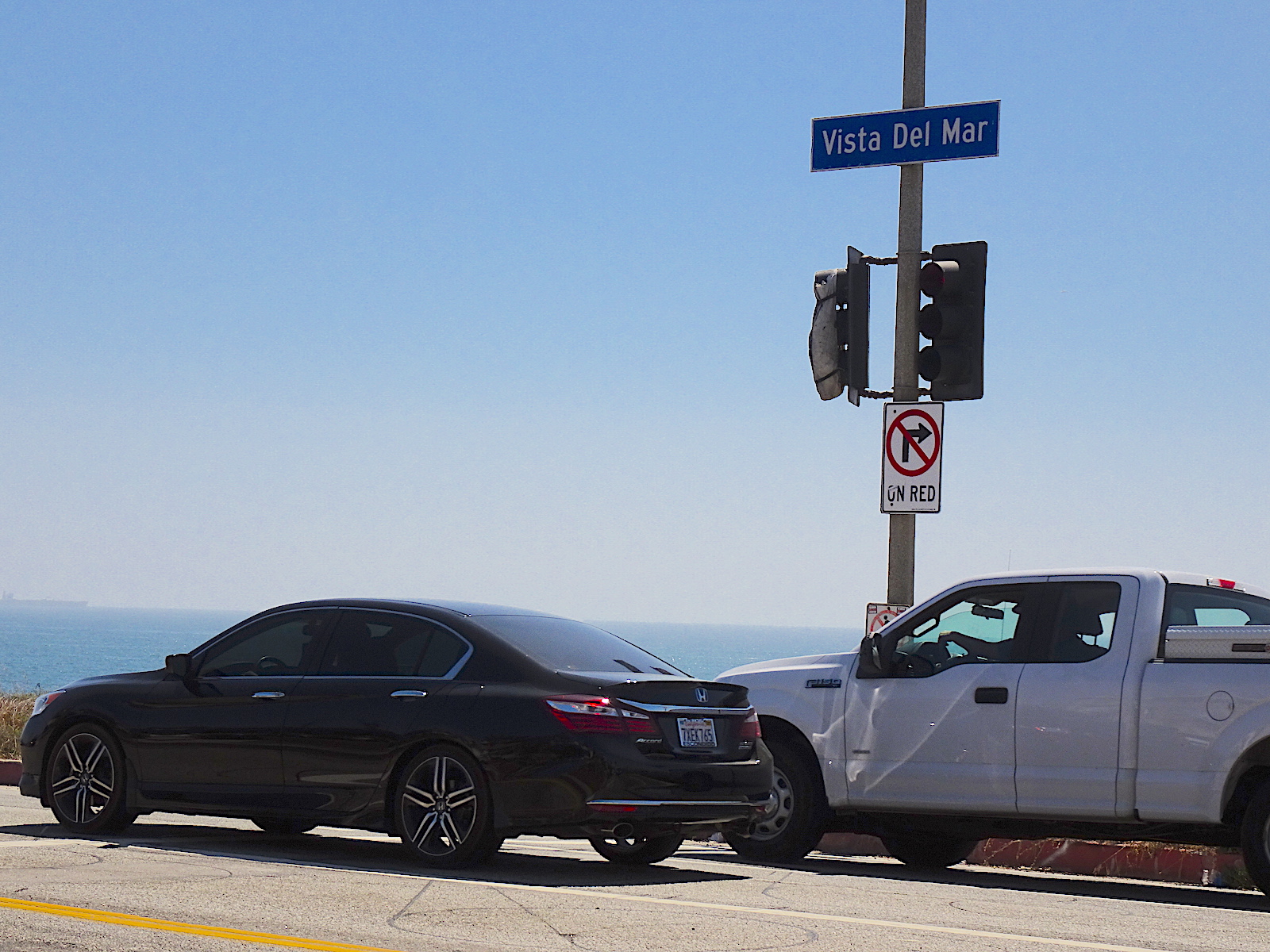
Autos on Vista Del Mar wait at a red light atWaterview St. in Playa del Rey. (Aug. 2019 photo by Sam Gnerre)

Sources:

Daily Breeze files.

Los Angeles Times files.

Redondo Reflex files.

Street Names of Los Angeles, By Bernice Kimball, City of Los Angeles Bureau of Engineering, 1988.